

Listen to this podcast in the app for free: Download for free in the App Store
radio.net
Sleep timer
Save favourites
303 episodes
302. Is Your MRI Telling the Full Story? A New Way to Measure MS Disease Activity
16/09/2026 | 37 mins.If you've ever walked out of an MRI appointment still wondering what's actually happening inside your body right now… this episode is for you.
In this episode, I'm joined by Jennifer Chester, a neurology nurse practitioner who works with Octave Bioscience, to talk about a blood test (available in the US) built specifically for multiple sclerosis (MS). Not a diagnostic test, and not a replacement for your MRI. It's a way to measure MS disease activity between scans, using proteins in your blood.
We get into what biomarkers actually are, how the test works, what the number means, and how to bring it up with your neurologist without feeling like you're overstepping.
Here's what we cover 🔑:
🔬 What a biomarker actually is. A biomarker is anything measurable in your body that tells you something about what's going on inside it. Cholesterol is a biomarker. Blood sugar is a biomarker. In MS, researchers have identified specific proteins that show up in the blood when there's inflammation, myelin breakdown, or nerve fiber damage happening. Measuring those proteins gives your care team information they can't get from asking how you feel.
🩸 How an MS-specific blood test works. The Octave MSDA (Multiple Sclerosis Disease Activity) Test measures 18 different proteins in a standard blood draw, then factors in your age and sex to generate a disease activity score. Why 18 and not one? Because MS isn't one process. It's immune activity, inflammation in the nervous system, myelin biology, and nerve fiber damage happening at different rates in different people. A single protein only tells you about one of those. A panel gives a fuller picture.
📊 What the number actually means. The test produces a score from 1 to 10, along with subscores tied to those four biological pathways. On its own, one score is a snapshot. Tracked over time, it becomes a trend line, and the trend is where the useful information lives. Your neurologist is looking at whether your number is holding steady, climbing, or dropping while you're on a particular treatment.
🧠 Blood test versus MRI (they're not competing). This is the part I want you to hear clearly. An MRI shows lesions, which is damage that has already occurred. A blood-based biomarker test is designed to reflect biological activity that's happening now, at a level that may not have shown up on a scan yet. Jennifer explains why the test is intended to complement imaging and your clinical exam, not replace either one. More data points, not fewer.
❓ "Is this MS, or is it something else?" If you've ever had a new symptom appear and spent three weeks trying to figure out whether it's a relapse, an old symptom flaring in the heat, stress, perimenopause, or a virus… you know how exhausting that guessing game is. An objective disease activity score gives your neurologist one more piece of information to weigh alongside your history and your exam. It isn't a yes or no answer by itself, and it can't tell you what a symptom is caused by. But it can help your team sort signal from noise.
🗣️ How to bring this up with your neurologist. Jennifer walks through what that conversation can sound like, what to ask, and why it's completely reasonable to bring a testing option to your provider rather than waiting for them to bring it to you. You are allowed to ask questions about your own monitoring plan.
💵 The practical stuff: coverage, cost, and timing. We talk through how the test is typically ordered, what to expect around insurance coverage, and how often testing tends to be repeated. Coverage and cost vary quite a bit depending on your plan and where you live, so this is a "confirm with your own provider and insurer" situation rather than a one-size-fits-all answer.
This episode is for you if:
✅ You've had an MRI come back "stable" but you don't feel stable
✅ You're not sure whether a new symptom is a relapse or something else entirely
✅ You're on a disease-modifying therapy and you want to know if it's working
✅ You want more information about your MS than a scan every 12 months can give you
✅ You like understanding the science behind a recommendation, not just being handed one
About Jennifer Chester
Jennifer Chester is a nurse practitioner with over a decade of experience in MS care who now works at Octave Bioscience, helping bring a brand-new blood test to people with MS, and it's one that can actually measure disease activity in real time. (One important note, this text is only available in the US).
Where to reach Jennifer & Octave Bioscience:
YouTube: https://youtube.com/@eventsoctave?si=vHCktRGw5NBq8q_g
Facebook: https://www.facebook.com/OctaveBioscience?mibextid=wwXIfrhttps://www.linkedin.com/company/octave-bio/
Website: https://www.octavebio.com/
Resources mentioned in this episode:
Conversation guide for your doctor: https://www.octavebio.com/patients
Additional Resources: https://www.doctorgretchenhawley.com/insider
Reach out to Me: hello@doctorgretchenhawley.com
Website: www.MSingLink.com
Social:
★ Facebook: https://www.facebook.com/groups/mswellness
★ Instagram: https://www.instagram.com/doctor.gretchen
★ YouTube: https://www.youtube.com/c/doctorgretchenhawley?sub_confirmation=1
→ The Progress Method for MS: https://www.doctorgretchenhawley.com/the-progress-method-for-ms
→ Total Core Program: https://www.doctorgretchenhawley.com/TotalCoreProgram
→ The MSing Link: https://www.doctorgretchenhawley.com/TheMSingLink301. How to Choose the Right Mobility Aid for MS (Cane, Walker, Rollator & More)
09/09/2026 | 17 mins.If walking is taking more out of you than it used to… this episode is for you.
In this solo episode, I'm walking you through how to choose the right mobility aid when you have multiple sclerosis (MS). Canes, trekking poles, walkers, rollators, and wheelchairs. This isn't a ranked list of products. It's my top strategy for figuring out what your body actually needs, so you're not spending money on something that sits in the closet.
Here's what we cover 🔑:
The one question to ask before you choose anything. Most people start with "which device is best?" That's the wrong starting point. The better question is what specifically is happening when you walk. Are you unsteady side to side? Is one leg dragging? Are you fine for the first ten minutes and wobbly after that? The answer points you toward a very different device in each case, and I'll walk you through how to figure out which bucket you're in.
Base of support, and why it changes everything. Base of support is the area between your points of contact with the ground (your two feet, plus anything else touching down). The wider that area, the more stable you are. This is the reason a cane feels like it does something and a walker feels like it does more. Once you understand this one concept, the whole category of mobility aids starts to make sense instead of feeling like a wall of options.
Canes and trekking poles. A cane adds a third point of contact and widens your base of support on one side. Trekking poles do something different: they keep you symmetrical, upright, and swinging both arms, instead of shifting your weight toward one hand. If your unsteadiness shows up on both sides, or you're mostly looking for confidence on uneven ground, poles may be a better fit than a single cane. I'll explain when I'd suggest each one.
Walkers and rollators. A rollator gives you a wide base of support, hand brakes for control, and a seat. That seat isn't a small detail. Having a place to sit means you can go out without calculating whether there will be somewhere to rest, which for a lot of people with MS is the actual barrier to leaving the house. We'll talk about the trade-offs, including how a rollator changes your posture if the height isn't set correctly.
Wheelchairs, scooters, and the Alinker. Using a wheeled device for part of your day doesn't mean you stop walking. For many people it's the opposite: energy saved on the long distances is energy available for the walking that matters most to you. The Alinker is a walking bike that keeps you upright and at eye level with the people around you while your own legs do the moving. I'll share my honest thoughts on where it fits and where it doesn't.
Matching the device to the day, not just to the diagnosis. Your symptoms may not be the same at 9am and 4pm, or in July versus January. A lot of people with MS use more than one device: poles for the neighborhood walk, a rollator for the grocery store, a scooter for the zoo with the grandkids. That's not inconsistency. That's energy conservation, and it's a strategy.
Getting the fit right. A device that's the wrong height sends you right back into the postural habits you're trying to get out of. I'll cover the basics of height and positioning, and why it's worth having your physical therapist or healthcare provider check the fit before you commit.
This episode is for you if:
✅ You're tripping more, or you've had a fall (or a close call) that shook your confidence
✅ You've been putting off getting a mobility aid because of what you think it says about you
✅ You already own something that isn't quite working and you're not sure why
✅ You've noticed you're skipping outings because the walking involved feels like too much
✅ You're the type of person with MS who has always been independent and wants to stay that way
✅ You want to understand why something works, not just be told to buy it
A mobility aid isn't a step backward. It's a tool that changes what your day can hold. The right one, fitted correctly, can mean more distance, more energy left over, and more of the things you actually want to do. Progress, not perfection. You've got this. 🧡
Resources mentioned in this episode:
MS Mobility Equipment Guide - https://www.doctorgretchenhawley.com/ms-mobility-equipment-guide-podcast
Additional Resources: https://www.doctorgretchenhawley.com/insider
Reach out to Me: hello@doctorgretchenhawley.com
Website: www.MSingLink.com
Social:
★ Facebook: https://www.facebook.com/groups/mswellness
★ Instagram: https://www.instagram.com/doctor.gretchen
★ YouTube: https://www.youtube.com/c/doctorgretchenhawley?sub_confirmation=1
→ The Progress Method for MS: https://www.doctorgretchenhawley.com/the-progress-method-for-ms
→ Total Core Program: https://www.doctorgretchenhawley.com/TotalCoreProgram
→ The MSing Link: https://www.doctorgretchenhawley.com/TheMSingLink300. 300th Episode: Progress Is Possible With MS: Real Stories of Walking, Balance, and Strength
02/09/2026 | 27 mins.300 episodes ago, I hit record for the first time and hoped a handful of people living with multiple sclerosis (MS) would find something useful in it.
Now there are people in 27 countries doing these exercises. Some of you have been here since episode 1. Some of you found us last week, three days after diagnosis, at 2am, looking for anything that made sense.
This one is for you.
I'm not teaching a new exercise this week. I'm sharing what's actually worked for people in this community, and pointing you back to the episodes that keep helping the most people.
Here's what we cover 🔑:
The stories you've sent me. Progress with MS almost never looks like a before-and-after photo. It looks like standing up from the couch without using your hands. Getting through a grocery store without scanning for somewhere to sit. Walking your dog to the end of the street and back. I'm sharing some of these in this episode because when you hear someone describe your exact symptom and then describe what helped, it changes what you believe is possible for you.
Why MS-specific exercise is different. Generic exercise programs train muscles. MS-specific, physical therapy-based exercise trains the signal… that wifi connection between your brain and your muscles. Repetition with intention is what strengthens that pathway. It's why 10 focused minutes can do more for your walking than an hour of the wrong thing.
📚 The MSing Link book and membership. What made me write it, what's inside, and how the membership works for people who want live feedback on how they're actually moving instead of guessing from a video.
What 300 episodes have taught me. Mostly this: people with MS are not out of options nearly as often as they've been told they are. Not everything about MS can be changed. Some things are permanent, and I'm never going to pretend otherwise. But there is almost always something you can work on.
This episode is for you if:
✅ You're newly diagnosed and looking for a place to start
✅ You've been living with MS for years and feel like your progress has stalled
✅ You want to hear from other people with MS who understand what your day actually looks like
✅ You're not sure which episodes to start with out of 300
✅ You want strategies you can use this week, not someday
✅ You need a reminder that small progress still counts
Thank you for 300 episodes. Thank you for the emails, the questions, the wins you send me, and the ones you didn't think were big enough to mention (they were).
Here's to the next 300. You've got this.
Progress, not perfection. 🧡
Special Promo for this episode: https://www.doctorgretchenhawley.com/offers/7d8oE6Cn/checkout
Resources Mentioned in the episode:
The MSing Link Episode 1, What Is An MS Specialist & Why Did I Become One?, Apple || Spotify
The MSing Link Episode 249, Spilling the Tea: My Interview on the Messy Podcast with Christina Applegate & Jamie-Lynn Sigler, Apple || Spotify
The MSing Link Episode 173, Early Symptoms of MS & MS Prodrome w/ Dr. Barry Singer, Apple || Spotify
The MSing Link Episode 246, MS Walking Problems? Real Results from MS‑Specific Exercises & Expert Insights, Apple || Spotify
The MSing Link Book: Amazon
Additional Resources: https://www.doctorgretchenhawley.com/insider
Reach out to Me: hello@doctorgretchenhawley.com
Website: www.MSingLink.com
Social:
★ Facebook: https://www.facebook.com/groups/mswellness
★ Instagram: https://www.instagram.com/doctor.gretchen
★ YouTube: https://www.youtube.com/c/doctorgretchenhawley?sub_confirmation=1
→ The Progress Method for MS: https://www.doctorgretchenhawley.com/the-progress-method-for-ms
→ Total Core Program: https://www.doctorgretchenhawley.com/TotalCoreProgram
→ The MSing Link: https://www.doctorgretchenhawley.com/TheMSingLink299. MS & Vibration Plates: Benefits, Risks, and How to Use Them Safely with Debby Pelletier
26/08/2026 | 49 mins.If MS has your legs feeling tight, heavy, or slow to respond… this episode is for you.
In this episode, I'm joined by vibration therapy expert Debbie Pelletier to answer the questions I get asked most about vibration plates and multiple sclerosis (MS). Not in a "here's a fancy piece of equipment" way. In a "here's what's actually happening in your body, here's how to use it, and here's what to check before you spend the money" way.
Here's what we cover 🔑:
What is vibration plate therapy, actually? A vibration plate sends rapid, repeated movement up through your feet and into your muscles. Those quick changes in length trigger your muscle spindles (the sensors inside your muscle that track stretch), which fire a reflex response and pull more muscle fibers into the action. It also floods your brain with sensory information from your feet and legs… which matters a lot when MS has dulled that signal.
Oscillating vs. vertical: why the difference matters for you. Oscillating plates tip side to side around a center point, like a seesaw, so one foot rises while the other drops. Vertical (or linear) plates move the whole surface straight up and down. They load your body differently, they feel different, and one may suit your balance and symptoms better than the other. Debbie breaks down how to tell which is which when you're shopping.
Can you use one if you're brand new to exercise or have mobility concerns? Short answer: often yes, with the right setup. We talk through seated use, holding onto a stable support, standing with a chair in front of you, and how to position your knees so you're not locking them out.
How long should you actually stand on it? We get specific about session length, how to build up gradually instead of starting at the longest setting on day one, and how often per week makes sense alongside your strength work.
Where it fits (and where it doesn't). A vibration plate is one tool. It can help prime your muscles before you exercise or take the edge off tightness, but it doesn't replace the exercises that build strength and retrain the wifi connection between your brain and your muscles. We talk about how to stack the two so the plate is supporting your routine, not standing in for it.
What to know before you buy. Frequency range, amplitude, weight capacity, platform size, handles or no handles, warranty, price range, and the features that sound impressive but don't change your results. Bring a notebook for this part.
Safety and who should check with their doctor first. There are situations where a vibration plate isn't the right call, or needs medical clearance first. We name them clearly so you can have an informed conversation with your provider.
What the research does and doesn't show. Whole body vibration has been studied in people with MS, and some findings are encouraging for spasticity and muscle activation. But the studies are small and the results are mixed. I'll tell you honestly where the evidence is strong, where it's thin, and what that means for your decision.
This episode is for you if:
✅ Spasticity or tightness in your legs is part of your daily life
✅ You've seen vibration plates online and can't tell if they're legit or hype
✅ You're wondering if you can use one from a seated position or with a mobility aid
✅ Fatigue makes long workouts feel impossible and you're looking for tools that work with your energy
✅ You want to understand why something works before you try it
A vibration plate isn't a shortcut, and it isn't magic. Used well, it can be a useful piece of a plan that's built for your symptoms and your goals. Progress, not perfection. 🧡
About Debby Pelletier
Debby Pelletier is a vibration plate specialist and clinical educator with nearly two decades of experience developing safe progression-based protocols both for home and clinical settings.
She's a LifePro trainer, has been featured in Consumer Reports, and supports hospitals and doctors globally who are using vibration therapy. She knows this technology inside and out, and she's super passionate about making it accessible and understandable for everyday people.
Where to reach Debby:
YouTube: https://www.youtube.com/@debbypelletier
Facebook Group: https://www.facebook.com/groups/586296542104578
Website: https://debsvibe.com/
Resources mentioned in this episode:
LifePro: https://lifeprofitness.com/DEBBYLP
Additional Resources: https://www.doctorgretchenhawley.com/insider
Reach out to Me: hello@doctorgretchenhawley.com
Website: www.MSingLink.com
Social:
★ Facebook: https://www.facebook.com/groups/mswellness
★ Instagram: https://www.instagram.com/doctor.gretchen
★ YouTube: https://www.youtube.com/c/doctorgretchenhawley?sub_confirmation=1
→ The Progress Method for MS: https://www.doctorgretchenhawley.com/the-progress-method-for-ms
→ Total Core Program: https://www.doctorgretchenhawley.com/TotalCoreProgram
→ The MSing Link: https://www.doctorgretchenhawley.com/TheMSingLink298. Why You Feel Like a Different Person in the Summer With MS
19/08/2026 | 20 mins.If MS symptoms feel heavier in the summer… or after a hot shower, a walk in the sun, or a workout that didn't used to wipe you out, this episode is for you.
In this episode, I'm walking you through heat sensitivity and heat intolerance in multiple sclerosis (MS). Why heat can make fatigue, brain fog, spasticity, and walking difficulties ramp up, what's actually happening inside your nerves when it does, and what you can do about it. Not in a "just stay inside until October" way. In a "here's the mechanism and here's your plan" way.
Here's what we cover 🔑:
What heat actually does to nerve signals in MS. MS damages myelin, the coating around your nerves that helps signals travel quickly and cleanly. Even a small rise in your core body temperature can slow those signals down further, or block them entirely along nerves that are already working hard to get the message through. That's why heat doesn't create new symptoms so much as it turns up the volume on the ones you already have.
Uhthoff's phenomenon (aka the temporary worsening of MS symptoms when your body temperature rises). This has a name, it's been documented for over a century, and it's not in your head. I'll explain what qualifies, why it's considered a pseudo-exacerbation rather than a relapse for most people, and why that distinction matters for how you respond in the moment.
Why symptoms often ease back down once you cool off. For many people with MS, heat-related changes are temporary and reverse as core temperature drops. Knowing that can take some of the panic out of a bad heat day. It doesn't always mean nothing can be done about it, and it doesn't mean you should white-knuckle through it. It means cooling down is a legitimate intervention, not a rest break.
How to actually cool your core body temperature. Not just "drink water." I'll get specific about pre-cooling before activity, which parts of your body give you the most cooling for the least effort (hands, feet, neck, and face have blood vessels close to the surface that help dump heat quickly), and how cold liquids and ice work from the inside out.
Which cooling products are worth it. Cooling vests, neck wraps, cooling towels, fans, cold packs. Some do real work, some are mostly marketing, and some are worth it only for specific situations. I'll walk through what to look for and how to think about the cost, including the fact that some MS organizations offer cooling equipment programs.
How to modify your exercise routine in hot weather. Time of day, room temperature, seated versus standing options, shorter bouts with cooling breaks built in, and water-based movement. The goal isn't to stop exercising in the summer. It's to keep the neuroplasticity work going (that wifi connection between your brain and your muscles) without overheating in the process.
How to keep your progress through heat season. Consistency is what builds new pathways between your brain and your muscles, so the strategy is adjusting your routine, not pausing it. I'll walk you through what to scale back, what to protect, and how to tell the difference between a heat day and a day your body needs rest.
This episode is for you if:
✅ Your fatigue, brain fog, or leg weakness gets noticeably worse in warm weather
✅ A hot shower leaves you more wobbly than when you got in
✅ You've been told heat "affects everyone" and you know what you're feeling is more than that
✅ You've been skipping your exercises all summer and you're worried about losing ground
✅ You want to understand why something works, not just be told to do it
You don't need to hide from summer to protect your progress. You need to know what heat is doing to your nervous system, and you need a few specific strategies you can actually use on a 90 degree day. Progress, not perfection. You've got this 🧡
Resources Mentioned in the episode:
Dr. Gretchen’s Amazon Storefront (Dr. Gretchen gets a small commission): https://www.amazon.com/shop/doctor.gretchen
The MSing Link Episode 242, How to NOT Overdo Exercise with MS: 7 Strategies by an MS Physical Therapist, Apple || Spotify
Free Walking Webinar: https://www.doctorgretchenhawley.com/Walking-Webinar
Additional Resources: https://www.doctorgretchenhawley.com/insider
Reach out to Me: hello@doctorgretchenhawley.com
Website: www.MSingLink.com
Social:
★ Facebook: https://www.facebook.com/groups/mswellness
★ Instagram: https://www.instagram.com/doctor.gretchen
★ YouTube: https://www.youtube.com/c/doctorgretchenhawley?sub_confirmation=1
→ The Progress Method for MS: https://www.doctorgretchenhawley.com/the-progress-method-for-ms
→ Total Core Program: https://www.doctorgretchenhawley.com/TotalCoreProgram
→ The MSing Link: https://www.doctorgretchenhawley.com/TheMSingLink
More Alternative Health podcasts
 Sleep Magic: Sleep Hypnosis & Meditation for Sleep PodcastAlternative Health, Education, Health & Wellness, Self-Improvement
 I Can’t SleepAlternative Health, Health & Wellness, Mental Health, Science
 Feel Better, Live More with Dr Rangan ChatterjeeAlternative Health, Health & Wellness
 The Holistic Healing ProjectAlternative Health, Education, Health & Wellness, Religion & Spirituality, Self-Improvement, Spirituality
 Get Sleepy: stories for sleepAlternative Health, Drama, Fiction, Health & Wellness, Kids & Family, Stories for Kids
 The Wellness ProcessAlternative Health, Health & Wellness
 Tracks To Relax Sleep MeditationsAlternative Health, Health & Wellness, Mental Health
 Live Well Be Well with Sarah Ann Macklin | Health, Lifestyle, NutritionAlternative Health, Health & Wellness, Mental Health
 Homeopathy Hangout with Eugénie KrügerAlternative Health, Health & Wellness
Trending Alternative Health podcasts

About The MSing Link
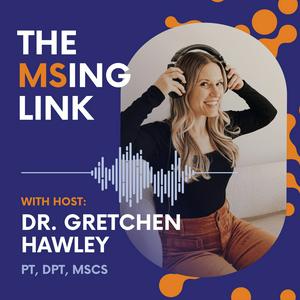
Do you have Multiple Sclerosis and have goals of improving your mobility, energy, and motivation? On this show, you’ll learn MS-specific exercises and symptom management strategies to help you gain control over your life with MS. I also bring in other MS Experts in the healthcare industry to share their insights and advice so you’ll be armed with research-driven education. You’ll leave each episode feeling empowered and ready to take action!
Podcast websiteListen to The MSing Link, Sleep Magic: Sleep Hypnosis & Meditation for Sleep Podcast and many other podcasts from around the world with the radio.net app
Get the free radio.net app
- Stations and podcasts to bookmark
- Stream via Wi-Fi or Bluetooth
- Supports Carplay & Android Auto
- Many other app features
Get the free radio.net app
- Stations and podcasts to bookmark
- Stream via Wi-Fi or Bluetooth
- Supports Carplay & Android Auto
- Many other app features

The MSing Link
Scan code,
download the app,
start listening.
download the app,
start listening.
 Ireland