
Listen to this podcast in the app for free: Download for free in the App Store
radio.net
Sleep timer
Save favourites
128 episodes

126. When Children Resist or Refuse - Part 6: Encouragement, or coercion?
15/10/2026 | 1h 11 mins.This is part 6 of our "When Children Resist or Refuse" series.
This series explores what a child's resistance or refusal might mean. When a child says no, our job isn't to immediately decide what the no proves. It's to understand what might be happening, notice what every adult is bringing to the interpretation, and work out how to respond without losing sight of the child.
When a child resists or refuses spending time with a parent, adults are often told that the child needs encouragement. But what does meaningful encouragement actually look like? And at what point does encouragement become coercion?
In Part 6 of When Children Resist or Refuse, experienced post-separation parenting coach Danielle Black explores one of the most difficult questions in post-separation parenting: how to support a child's relationship with a parent without dismissing their experiences, overriding their distress or making them responsible for repairing a struggling relationship.
This episode examines the difference between ordinary discomfort and distress that warrants closer attention. Danielle considers the responsibilities of both the preferred and resisted parent, the importance of historical caregiving and relational attunement. She also explores what happens when a parent is genuinely encouraging contact but a child continues to resist, why compliance should not be confused with connection, and the risks of treating a child's distress as something to overcome rather than information to understand.
Supporting a meaningful parent-child relationship isn't simply about getting a child through the next changeover. It's about understanding what that child needs to feel safe, supported and connected within the relationship.
This podcast provides general educational information and is not a substitute for legal advice or individual coaching specific to your circumstances.
Support: If you are in Australia and need to talk to someone, 1800RESPECT (1800 737 732) is available 24/7. In an emergency, call 000.
Explore the supports offered by Danielle Black Coaching
1:1 Coaching
👉 https://www.danielleblackcoaching.com.au/1-1-coaching
The Post-Separation Parenting Blueprint™
👉 https://www.danielleblackcoaching.com.au/the-post-separation-parenting-blueprint-1
AI Danielle - Your 24/7 Digital Coach
👉 https://www.danielleblackcoaching.com.au/meet-ai-danielle
Claim Your Name™: Burning the Good Girl Contract
👉 https://www.danielleblackcoaching.com.au/the-contract-you-never-agreed-to
The music you hear in this outro is 'Stronger, Braver, Together' - an original track created exclusively for the Post-Separation Abuse Podcast and Danielle Black Coaching.
About Danielle Black Coaching:
Danielle Black is a respected authority in child-focused post-separation parenting in Australia. With over twenty years’ experience across education, counselling and coaching - alongside her own lived experience navigating a complex separation and family court journey - she supports parents to think strategically, build capacity, and protect their children’s safety and wellbeing within complex legal and relational systems.
Through Danielle Black Coaching, she leads a growing team of specialist coaches and a structured support ecosystem designed to provide professionally held, evidence-informed guidance for parents navigating high-conflict separation and family court processes.
Learn more at danielleblackcoaching.com.au
This podcast is for educational purposes only and not legal advice. Please seek independent legal, medical, financial, or mental health advice for your situation.125. When Children Resist or Refuse - Part 5: Whose job is it to "fix" the relationship?
08/10/2026 | 36 mins.This is part 5 of our "When Children Resist or Refuse" series.
This series explores what a child's resistance or refusal might mean. When a child says no, our job isn't to immediately decide what the no proves. It's to understand what might be happening, notice what every adult is bringing to the interpretation, and work out how to respond without losing sight of the child.
When a child resists or refuses spending time with a parent, there's often an enormous amount of attention directed towards the parent the child does want to be with.
Are they encouraging the relationship?
Are they influencing the child?
Are they doing enough to facilitate contact?
...But what about the parent whose relationship with the child is struggling?
What responsibility do they have for understanding why their child doesn't want to spend time with them - and for doing something about it?
In Part 5 of this series, we're turning the spotlight towards the parent-child relationship itself.
We're talking about the difference between having parenting time and having a relationship. Between demanding contact with a child and demonstrating the capacity for connection. Between wanting your child to love you and being willing to understand their experience of you.
And we're asking some uncomfortable questions.
Can you tolerate your child having a mind that exists separately from yours?
Can you hear something about your relationship that you don't like without immediately dismissing, correcting or blaming somebody else?
Can your child disagree with you without feeling that your love, approval or emotional wellbeing is at stake?
We'll also look at the responsibilities of the child's preferred parent, because nobody gets immunity from assessment. However, supporting a child's relationship with their other parent is not the same as being responsible for creating or repairing that relationship on somebody else's behalf.
I'll share some of my own experience, including what happened when my son's father insisted on equality rather than listening to what our son was telling him.
And we'll explore why you can win the parenting-time argument and still lose the relationship.
Because eventually, the parenting arrangement ends. The changeovers stop. The Court orders can not determine where an adult child spends their time.
And whatever relationship exists will have to stand on its own.
Your child can belong deeply with you. But they do not belong to you.
This podcast provides general educational information and is not a substitute for legal advice or individual coaching specific to your circumstances.
Support: If you are in Australia and need to talk to someone, 1800RESPECT (1800 737 732) is available 24/7. In an emergency, call 000.
Explore the supports offered by Danielle Black Coaching
1:1 Coaching
👉 https://www.danielleblackcoaching.com.au/1-1-coaching
The Post-Separation Parenting Blueprint™
👉 https://www.danielleblackcoaching.com.au/the-post-separation-parenting-blueprint-1
AI Danielle - Your 24/7 Digital Coach
👉 https://www.danielleblackcoaching.com.au/meet-ai-danielle
Claim Your Name™: Burning the Good Girl Contract
👉 https://www.danielleblackcoaching.com.au/the-contract-you-never-agreed-to
The music you hear in this outro is 'Stronger, Braver, Together' - an original track created exclusively for the Post-Separation Abuse Podcast and Danielle Black Coaching.
About Danielle Black Coaching:
Danielle Black is a respected authority in child-focused post-separation parenting in Australia. With over twenty years’ experience across education, counselling and coaching - alongside her own lived experience navigating a complex separation and family court journey - she supports parents to think strategically, build capacity, and protect their children’s safety and wellbeing within complex legal and relational systems.
Through Danielle Black Coaching, she leads a growing team of specialist coaches and a structured support ecosystem designed to provide professionally held, evidence-informed guidance for parents navigating high-conflict separation and family court processes.
Learn more at danielleblackcoaching.com.au
This podcast is for educational purposes only and not legal advice. Please seek independent legal, medical, financial, or mental health advice for your situation.124. When Children Resist or Refuse - Part 4: Your barrister is not an oracle
03/10/2026 | 1h 7 mins.This is part 4 of our "When Children Resist or Refuse" series.
This series explores what a child's resistance or refusal might mean. When a child says no, our job isn't to immediately decide what the no proves. It's to understand what might be happening, notice what every adult is bringing to the interpretation, and work out how to respond without losing sight of the child.
Your barrister might be excellent.
Your lawyer might know family law inside out.
They may have decades of experience, strong professional judgement and a far better understanding of the legal system than you do.
They still cannot see the future.
In Episode 4 of the When Children Resist or Refuse series, Danielle turns the spotlight toward legal advice, professional opinion and the enormous temptation to turn uncertainty into certainty when the stakes feel impossibly high.
Because there is a difference between:
“My barrister thinks this is a risk.”
and:
“This is definitely going to happen.”
There is a difference between what you believe, what you've told your lawyer, what your legal team considers relevant, what is actually in evidence, the case your barrister is advancing - and the orders you've ultimately been advised to seek, oppose or accept.
And those things don't always line up as neatly as we imagine.
This episode explores what it means to use professional legal advice strategically without handing over responsibility for understanding your own case; why a professional opinion is still an opinion rather than a prediction; how fear can turn legal advice into prophecy; and why you and your legal team need to be looking at the same fucking map.
Danielle also explores an uncomfortable possibility: sometimes the legal advice you're receiving isn't the problem.
Sometimes you've heard “there is a risk” and your nervous system has translated it into “this is inevitable.”
And sometimes you've spent months documenting something you believe is central to your case without ever asking whether your legal team agrees, or whether they're actually running the case you think they're running.
Your lawyer cannot run the case that exists only in your head.
And you cannot make informed decisions about the case that exists only in your lawyer's head.
This isn't about becoming your own lawyer. Rather, it's about becoming a better-informed client of the lawyer you already have.
Good professional advice should help you make decisions under uncertainty it shouldn't require you to pretend the uncertainty has disappeared.
This episode also mentions the Post-Separation Parenting Blueprint™ turning ONE on 27 September 2026, with information about the birthday celebration and limited-time offer - from midnight Saturday 26 September 2026 to midnight Saturday 3 October 2026 the Blueprint (usually $1497 AUD) will be available for $899!! No codes to remember - discount applied automatically at checkout.
This podcast provides general educational information and is not a substitute for legal advice or individual coaching specific to your circumstances.
Support: If you are in Australia and need to talk to someone, 1800RESPECT (1800 737 732) is available 24/7. In an emergency, call 000.
Explore the supports offered by Danielle Black Coaching
1:1 Coaching
👉 https://www.danielleblackcoaching.com.au/1-1-coaching
The Post-Separation Parenting Blueprint™
👉 https://www.danielleblackcoaching.com.au/the-post-separation-parenting-blueprint-1
AI Danielle - Your 24/7 Digital Coach
👉 https://www.danielleblackcoaching.com.au/meet-ai-danielle
Claim Your Name™: Burning the Good Girl Contract
👉 https://www.danielleblackcoaching.com.au/the-contract-you-never-agreed-to
The music you hear in this outro is 'Stronger, Braver, Together' - an original track created exclusively for the Post-Separation Abuse Podcast and Danielle Black Coaching.
About Danielle Black Coaching:
Danielle Black is a respected authority in child-focused post-separation parenting in Australia. With over twenty years’ experience across education, counselling and coaching - alongside her own lived experience navigating a complex separation and family court journey - she supports parents to think strategically, build capacity, and protect their children’s safety and wellbeing within complex legal and relational systems.
Through Danielle Black Coaching, she leads a growing team of specialist coaches and a structured support ecosystem designed to provide professionally held, evidence-informed guidance for parents navigating high-conflict separation and family court processes.
Learn more at danielleblackcoaching.com.au
This podcast is for educational purposes only and not legal advice. Please seek independent legal, medical, financial, or mental health advice for your situation.123. When Children Resist or Refuse - Part 3: Your nervous system is not an oracle
25/09/2026 | 57 mins.This is part 3 of our "When Children Resist or Refuse" series.
This series explores what a child's resistance or refusal might mean. When a child says no, our job isn't to immediately decide what the no proves. It's to understand what might be happening, notice what every adult is bringing to the interpretation, and work out how to respond without losing sight of the child.
What does your nervous system have to do with a child resisting or refusing time with a parent?
Quite a fucking lot, actually.
In the first two episodes of this series, we've turned our attention toward children: their relationships, their experiences, their resistance and the many different things that can sit underneath a child's "no".
In this episode, Danielle turns the spotlight around.
Because if we're serious about understanding children's resistance accurately, nobody gets diplomatic immunity from scrutiny and assessment - including the preferred or primary caregiver.
For parents who have experienced family violence, coercive control, abuse or prolonged post-separation conflict, hypervigilance can make enormous sense. Sometimes the alarm is detecting a very real fire. Sometimes it's burnt toast. And sometimes there's a complicated combination of current concern and a nervous system shaped by what has happened before.
The answer isn't to ignore the alarm.
It's to get better at understanding what it's telling you.
Danielle explores the difference between distress, dysregulation, functional impairment and parenting capacity; why a trauma response is information rather than automatic proof of present danger; the difference between receiving support and actually building capacity; and why a parenting arrangement cannot become the treatment plan for a parent's nervous system.
She also asks some uncomfortable questions.
Can you tolerate evidence that your child was okay?
What happens when every possible outcome confirms the conclusion you already hold?
Has being the historic primary caregiver become your entire identity - and what happens when your child begins to need you differently?
And can you remain standing while your child experiences something you can't control?
This isn't an invitation to minimise risk, dismiss children's distress or pretend that trauma disappears because somebody tells you to regulate better.
Sometimes there really is a fucking fire.
It's an invitation to become more discerning about the difference between what you know, what you're observing, what you're anticipating and what your nervous system is making it mean.
Because you can be 0% responsible for what somebody did to you and still become responsible for what you do with the injuries they left behind.
And, you do not need to remain injured to prove somebody injured you.
This episode also continues the countdown to the Post-Separation Parenting Blueprint™ turning ONE on 27 September 2026, with information about the birthday celebration and limited-time offer - from midnight Saturday 26 September 2026 to midnight Saturday 3 October 2026 the Blueprint (usually $1497 AUD) will be available for $899!! No codes to remember - discount applied automatically at checkout.
This podcast provides general educational information and is not a substitute for legal advice or individual coaching specific to your circumstances.
Support: If you are in Australia and need to talk to someone, 1800RESPECT (1800 737 732) is available 24/7. In an emergency, call 000.
Explore the supports offered by Danielle Black Coaching
1:1 Coaching
👉 https://www.danielleblackcoaching.com.au/1-1-coaching
The Post-Separation Parenting Blueprint™
👉 https://www.danielleblackcoaching.com.au/the-post-separation-parenting-blueprint-1
AI Danielle - Your 24/7 Digital Coach
👉 https://www.danielleblackcoaching.com.au/meet-ai-danielle
Claim Your Name™: Burning the Good Girl Contract
👉 https://www.danielleblackcoaching.com.au/the-contract-you-never-agreed-to
The music you hear in this outro is 'Stronger, Braver, Together' - an original track created exclusively for the Post-Separation Abuse Podcast and Danielle Black Coaching.
About Danielle Black Coaching:
Danielle Black is a respected authority in child-focused post-separation parenting in Australia. With over twenty years’ experience across education, counselling and coaching - alongside her own lived experience navigating a complex separation and family court journey - she supports parents to think strategically, build capacity, and protect their children’s safety and wellbeing within complex legal and relational systems.
Through Danielle Black Coaching, she leads a growing team of specialist coaches and a structured support ecosystem designed to provide professionally held, evidence-informed guidance for parents navigating high-conflict separation and family court processes.
Learn more at danielleblackcoaching.com.au
This podcast is for educational purposes only and not legal advice. Please seek independent legal, medical, financial, or mental health advice for your situation.122. When Children Resist or Refuse - Part 2: What the fuck is a "meaningful relationship" anyway?
18/09/2026 | 33 mins.This is part 2 of our "When Children Resist or Refuse" series.
This series explores what a child's resistance or refusal might mean. When a child says no, our job isn't to immediately decide what the no proves. It's to understand what might be happening, notice what every adult is bringing to the interpretation, and work out how to respond without losing sight of the child.
What the fuck is a "meaningful relationship" anyway?
We use phrases like meaningful relationship, substantial time, shared care, attachment and best interests so often in separated-parenting conversations that sometimes we stop asking what they actually mean.
And that matters, because somewhere along the way, "children benefit from healthy relationships with both parents" can quietly become "children need equally strong relationships with both parents" - and then "more parenting time creates a 'better relationship' ."
But are those actually the same proposition?
In Episode 2 of When Children Resist or Refuse Danielle explores the assumptions hiding inside familiar family-law and separated-parenting language.
We look at the difference between a parenting arrangement and a parent-child relationship; why attachment and relationship history cannot be reduced to a percentage of nights; what research can - and cannot - tell us about quantity of parenting time; and why a child can love a parent without wanting to live with them for a particular amount of time.
We also ask a question that will keep appearing throughout this series:
Are we protecting the relationship - or are we protecting the parenting schedule?
Because a Court can allocate parenting time. It cannot allocate emotional intimacy.
And apparently the sophisticated critical-thinking methodology for this entire discussion is now:
TABLE. Stop. Define the fucking thing.
This episode also continues the countdown to the Post-Separation Parenting Blueprint™ turning ONE on 27 September 2026, with more information about the birthday celebration and limited-time offer coming soon.
This podcast provides general educational information and is not a substitute for legal advice or individual coaching specific to your circumstances.
Support: If you are in Australia and need to talk to someone, 1800RESPECT (1800 737 732) is available 24/7. In an emergency, call 000.
Explore the supports offered by Danielle Black Coaching
1:1 Coaching
👉 https://www.danielleblackcoaching.com.au/1-1-coaching
The Post-Separation Parenting Blueprint™
👉 https://www.danielleblackcoaching.com.au/the-post-separation-parenting-blueprint-1
AI Danielle - Your 24/7 Digital Coach
👉 https://www.danielleblackcoaching.com.au/meet-ai-danielle
Claim Your Name™: Burning the Good Girl Contract
👉 https://www.danielleblackcoaching.com.au/the-contract-you-never-agreed-to
The music you hear in this outro is 'Stronger, Braver, Together' - an original track created exclusively for the Post-Separation Abuse Podcast and Danielle Black Coaching.
About Danielle Black Coaching:
Danielle Black is a respected authority in child-focused post-separation parenting in Australia. With over twenty years’ experience across education, counselling and coaching - alongside her own lived experience navigating a complex separation and family court journey - she supports parents to think strategically, build capacity, and protect their children’s safety and wellbeing within complex legal and relational systems.
Through Danielle Black Coaching, she leads a growing team of specialist coaches and a structured support ecosystem designed to provide professionally held, evidence-informed guidance for parents navigating high-conflict separation and family court processes.
Learn more at danielleblackcoaching.com.au
This podcast is for educational purposes only and not legal advice. Please seek independent legal, medical, financial, or mental health advice for your situation.
More Education podcasts










Trending Education podcasts
























About The Post-Separation Abuse Podcast
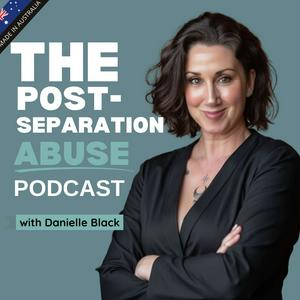
The Post-Separation Abuse PodcastHosted by Danielle BlackA direct, evidence-based podcast for people navigating all-things separation and divorce, including; post-separation abuse, family violence, parenting, property settlement and the family law system - with a relentless focus on protecting children and building a life beyond separation. Because, the advice your lawyer gives you is only the beginning. Family law tells you what the system can do. This podcast helps you understand what to seek, what to challenge, what to bring into the room - and how to live with the decisions, and move on with your life, afterwards.Danielle Black is a specialist post-separation parenting coach and the founder and principal coach of Danielle Black Coaching. Having navigated her own complex separation, and guided hundreds of clients to successful outcomes, Danielle and her coaching team specialise in helping protective parents to optimise the outcome for themselves and their children, and support clients to navigate post-separation situations that other professionals don't properly address. Drawing on her extensive tertiary qualifications, developmental science, research, trauma-informed practice and both professional and lived experience, she examines how abuse can continue after separation, how systems and professionals respond, and what genuinely informed decision-making and credible advocacy requires when risk, fear or power imbalance is present.Because understanding family law is not enough.Having a lawyer is not enough.A lawyer can advise you about the law, legal process and evidence. But optimising your parenting outcome also requires knowledge of child development, attachment, coercive control and trauma; the capacity to remain strategic under pressure; and the confidence to advocate for what you and your children genuinely need.This podcast examines all of those layers.It challenges the assumptions that routinely shape post-separation outcomes: the fixation on 50/50 shared care, the misuse of “friendly parent” ideals, the belief that compromise is always constructive, and the fantasy that engaging the right professional means you can safely hand over the strategy, decision-making and advocacy.Across the podcast, Danielle explores:how post-separation abuse operates through parenting, financial and legal processes;what children need after separation - and why adult notions of fairness are an inadequate guide;what lawyers and other post-separation professionals were, and were not, trained to understand;why standard co-parenting frameworks often fail families affected by coercive control and other forms of family violence and post-separation abuse;how to assess the benefits, risks and real-world costs of negotiation, litigation and other pathways;how knowledge, capacity and advocacy can materially change outcomes;and what comes next, when separation and survival no longer occupy the centre of your life.Expect direct language, research-backed analysis, practical guidance and a few cuss words - not platitudes, false balance or simplistic promises of justice.This is not only about understanding what happened in your situation.It is about making informed decisions now - and becoming the author, and authority, of what comes next.To go deeper, explore The Post-Separation Parenting Blueprint™, Danielle’s flagship program for parents building the knowledge, capacity and advocacy skills needed to make informed, protective decisions after separation.Learn more at danielleblackcoaching.com.au.
Podcast websiteListen to The Post-Separation Abuse Podcast, IMO with Michelle Obama and Craig Robinson and many other podcasts from around the world with the radio.net app
Get the free radio.net app
- Stations and podcasts to bookmark
- Stream via Wi-Fi or Bluetooth
- Supports Carplay & Android Auto
- Many other app features
Get the free radio.net app
- Stations and podcasts to bookmark
- Stream via Wi-Fi or Bluetooth
- Supports Carplay & Android Auto
- Many other app features

The Post-Separation Abuse Podcast
Scan code,
download the app,
start listening.
download the app,
start listening.
 Ireland