PodcastsAlternative HealthEquine Assisted World with Rupert Isaacson

Equine Assisted World with Rupert Isaacson

Rupert Isaacson
Equine Assisted World with Rupert Isaacson
Latest episode

55 episodes

  • Equine Assisted World with Rupert Isaacson

    What Happens After the Horse? Neuroscience Tools for Home & Beyond | Kim Barthel & Leana Tank | EAW 54

    14/05/2026 | 2h 11 mins.
    Kim Barthel is an occupational therapist, international educator, and author based in British Columbia, Canada, trained in sensory integration, neurodevelopmental therapy, and holotropic breathwork. Leana Tank is an occupational therapist and consultant working with complex populations including individuals in the criminal justice system, combining equine-assisted practice with deep expertise in movement, trauma, and the nervous system.

    Together, they bring a rare combination of neurological precision and on-the-ground practicality to one of the most overlooked questions in equine-assisted work: what are you doing with your clients when they are not on — or with — the horse?

    This conversation digs into the neuroscience of the vestibular system, interoception, bilateral stimulation, and why movement is far more than muscles. Kim and Leana share concrete tools — from saddle stools at home to pickle juice to the long gaze — and explore why the relational environment may ultimately matter even more than the physical one.

    ✨ "The brain can change until you stop breathing." – Kim Barthel

    If you want to support the show, you can do so at Patreon: https://www.patreon.com/LongRideHome

    🔍 What You'll Learn in This Episode
    Why what happens off the horse — at the barn, at home, in the community — is just as important as the session itself
    How the vestibular system develops in utero and why almost every developmental difference affects it
    What the inner core muscles (diaphragm, pelvic floor, transverse abdominis, multifidus) have to do with regulation, interoception, and feeling safe
    Why the horse's three-dimensional movement provides a backdrop the brain cannot easily access in stillness
    What interoception is, why many autistic individuals experience a blurred boundary between self and world, and how horseback riding supports this
    How to design simple home environments and daily activities that continue the neuroplasticity work between sessions
    Why stimming is not a problem to fix but a movement toward wholeness — and how to support it constructively
    What a "sensory diet" is and why individualized approaches work better than generic protocols
    How bilateral stimulation (crossing the midline) integrates the two brain hemispheres and why this matters for both autism and trauma
    Why the relational environment — feeling seen and supported — may be the most powerful variable of all
    What the Default Mode Network and Salience Network are, and why nature shifts the brain into restoration
    Practical at-home tools: the long gaze, saddle-shaped stools, office chair rotation, barefoot movement, pushing/pulling exercises, and foraging tasks
    How holotropic breathwork connects shamanic tradition to modern neuroscience through rhythm, movement, and breath
    🎤 Memorable Moments from the Episode
    [00:09:44] Kim explains why the horse is "so much more than a horse" — the unappreciated relational variable in equine work 
    [00:16:08] Kim breaks down the inner core system: diaphragm, pelvic floor, and why posture on a horse activates all of it 
    [00:18:43] Kim defines interoception — the internal awareness of "this is me and this is not me" — and how the horse enables it 
    [00:23:02] Leana describes transforming a collapsed young man through intentional off-road nature walks 
    [00:43:00] Kim shares the story of a 13-year-old who hadn't slept more than 20 minutes a night — and how a spinning office chair changed everything 
    [01:00:28] Rupert and Leana discuss what to give overworked care staff when the therapist walks out the door 
    [01:19:00] Leana tells the story of a client who alchemized profound trauma into gratitude — a conversation that happened while walking [01:48:00] Kim's story: sitting silently on the curb beside an unhoused young man, saying "I see you" — and meeting him two years later at Walmart with a job [01:53:47] Kim explains the Default Mode Network vs the Salience Network — why nature restores us 
    [02:00:53] Kim introduces "the long gaze" — how even a screensaver can shift the brain toward restoration
    📚 Contact, Projects, and Resources Mentioned
    Kim Barthel – Occupational Therapist, Educator, Author https://kimbarthel.ca 
    Autism Matters – Kim Barthel's online webinar series https://kimbarthel.ca 
    Leana Tank – OT, Constellations Consulting https://constellationsconsulting.org 
    My Octopus Teacher – Netflix documentary featuring Craig Foster https://www.netflix.com/title/81016226 
    New Trails Learning Systems – Horse Boy Method, Movement Method & Takhin Equine Integration https://ntls.co 
    Rupert Isaacson / Long Ride Home https://rupertisaacson.com 
    Patreon Support https://www.patreon.com/LongRideHome

    🌍 Follow Us
    Long Ride Home 
    https://longridehome.com 
    https://facebook.com/longridehome.lrh 
    https://instagram.com/longridehome_lrh 
    https://youtube.com/@longridehome 
    New Trails Learning Systems 
    https://ntls.co 
    https://facebook.com/horseboyworld 
    https://instagram.com/horseboyworld 
    https://youtube.com/newtrailslearningsystems

    📊 Affiliate Disclosure
    Links to books and products may include affiliate tracking. We may earn a commission if you make a purchase, at no extra cost to you. Thank you for supporting the show.
  • Equine Assisted World with Rupert Isaacson

    Horses Don't Lie to Veterans | Jane Strong | EAW 53

    30/04/2026 | 2h 38 mins.
    ✨ "The horses don't see the stories. They see who you are right now — and what you brought with you." – Jane Strong
    Jane Strong is the founder and executive director of The Equus Effect, a nonprofit based in Connecticut, USA, that uses equine-assisted experiences to help veterans and first responders rebuild healthy relationships — with themselves, each other, and their communities.
    What sets Jane's work apart is her refusal to treat trauma as a diagnosis to manage. A former ethnographic researcher who spent decades studying subcultures for corporate clients, Jane came to horses and veterans with the same tool she'd always trusted: genuine curiosity. The Equus Effect's 16-hour curriculum blends somatic body-based practices, emotional agility training, and progressive groundwork with horses — all without metaphor, without therapy-speak, and without telling a veteran what anything means.
    This conversation covers Jane's unusual path — from advertising research to Monty Roberts to a 30-year-old Mustang who taught her that guilt is a waste of time — and dives deep into why horses are uniquely suited to reach the people hardest to reach: the ones still scanning for threats, still waiting for the playbook, still paying a nervous system tax no one else can see.
    If you want to support the show, you can do so at Patreon: https://www.patreon.com/LongRideHome
    🔍 What You'll Learn in This Episode
    Why veterans and first responders experience transition stress as a nervous system cost — and why talk therapy often falls short
    How ethnographic research trained Jane to enter any culture with curiosity instead of assumptions — and why that's essential for working with military populations
    Why The Equus Effect never uses metaphor in their horse work, and what happens when they let veterans find their own meaning instead
    How the program's somatic body scan and joint warmup prepare participants neurologically before they ever touch a horse
    Why horses respond differently to officers than to enlisted personnel — and what that reveals about internal organization
    What "uncoupling" means in trauma work, and the story of the veteran who found his focus again — safely — while leading a horse in a circle
    Why Jane advises against letting participants know each other's rank, and what she learned the hard way when she didn't follow this rule
    How The Equus Effect's 16-hour curriculum unfolds across four sessions — from barn introduction to liberty work — and why soak time between sessions matters
    What the Enneagram's three centers of intelligence (body, heart, mind) have to do with how people move and communicate with horses
    Why you don't need a military or first responder background to serve this population — and why Jane believes it may actually help not to have one
    How the program uses movie clips to open conversations about fear, vulnerability, anger, and depression — without singling anyone out
    Why curiosity and compassion are inseparable, and what gets lost when we enter any population believing we already know who they are
    How Jane finally secured a VA grant after 12+ years of program delivery — and what she learned about navigating that process
    🎤 Memorable Moments from the Episode
    [00:02:34] Jane describes the 22-suicides-a-day statistic that launched The Equus Effect in 2008 
    [00:04:57] Four years of meetings before the VA agreed to send veterans — and what finally changed their minds 
    [00:16:49] Jane explains why "helping" can hide a fixing mentality — and what curiosity looks like instead 
    [00:41:00] Why Jane never introduces participants by rank — and the session that taught her this the hard way 
    [00:57:34] Jane recalls losing her horse as a teenager and the moment she walked away from riding for years 
    [01:17:25] A 35-year-old Mustang named Noche who couldn't be touched — and the message he gave her about guilt 
    [01:57:48] The veteran who felt his focus return while leading a horse in a circle — and heard the words "this time, you were safe" 
    [02:06:00] Jane explains how to access The Equus Effect's facilitator training and upcoming workshops 
    [02:11:42] The nightmare of VA grant applications — and how hiring a grant writer made the difference 
    [02:20:04] The closing reflection: can you have compassion without curiosity?

    📚 Contact, Projects, and Resources Mentioned
    Jane Strong – Founder & Executive Director, The Equus Effect https://theequuseffect.org 
    New Trails Learning Systems – Horse Boy Method, Movement Method & Takhin Equine Integration https://ntls.co 
    Rupert Isaacson / Long Ride Home https://rupertisaacson.com 
    Patreon Support https://www.patreon.com/LongRideHome 
    🌍 Follow Us
    Long Ride Home 
    https://longridehome.com 
    https://facebook.com/longridehome.lrh 
    https://instagram.com/longridehome_lrh 
    https://youtube.com/@longridehome 
    New Trails Learning Systems 
    https://ntls.co 
    https://facebook.com/horseboyworld 
    https://instagram.com/horseboyworld 
    https://youtube.com/newtrailslearningsystems

    📊 Affiliate Disclosure
    Links to books and products may include affiliate tracking. We may earn a commission if you make a purchase, at no extra cost to you. Thank you for supporting the show.
  • Equine Assisted World with Rupert Isaacson

    Curiosity Over Fear: Building Resilience in Horses and Humans | Kira Julius | EAW 52

    16/04/2026 | 2h 12 mins.
    ✨ "The healing process is there in service of your life, not the other way around. Do the healing in order to live." – Kira Julius 
    Kira Julius is a German-Danish horse trainer and equine assisted practitioner whose career has taken her from working young horses in Tanzania at 16, to eight years alongside Australian warmblood specialist Will Rogers — first in the Netherlands, then Germany — to therapeutic work with autistic children and families across Germany, Denmark, Ireland, and the UK. She now runs her own practice through horserealms.com, working with horses, families, and individuals at the intersection of horsemanship and resilience.
    What makes Kira's perspective unusual is that she has lived the subject she now teaches. A lifelong relationship with anxiety and fear around horses, a family crisis at 18 when her father suffered a stroke that pulled her into an early adult role, and years inside the hyper-demanding world of sport horse training — including a period where her own anxiety became so acute she could barely ride — all of it has shaped a practitioner who speaks from earned experience, not theory.
    In this conversation, Rupert and Kira go deep on what resilience actually means — for horses, for humans, and for the practitioners who work with both. They move through the groundwork methodology Kira developed starting sensitive warmbloods, the specific exercises that release tension and build connection, and how those same principles apply when working with autistic children. They explore why always being calm may be the wrong goal, how to move through fear rather than wait for it to pass, and why the trauma conversation risks tipping into a place that keeps people stuck. This is a wide-ranging, experience-backed conversation that will resonate with anyone who works with horses, with neurodivergent individuals, or with their own inner life.

    If you want to support the show, you can do so at Patreon: https://www.patreon.com/LongRideHome
    🔍 What You'll Learn in This Episode
     How curiosity overrides anxiety — and why doing the thing is often more healing than waiting until you feel ready
     Why "always being calm" is not the goal for horses or humans, and what heart rate variability tells us about genuine resilience
     How to distinguish between protective fear and anxious mental noise — and how gut instinct becomes the tool for telling them apart
    The groundwork methodology Kira used starting sensitive warmbloods: approach and retreat, shoulder yields, hindquarter yields, and why crossing the midline triggers BDNF and neuroplasticity
    Why the shoulder-in position is both a tension-release tool and a safety tool — and how having it reliably in place can get a handler out of serious trouble
    How Kira's experience of her father's stroke at 18 shaped her understanding of grief, family strain, and the cost of going into management mode when you're struggling yourself
    How Kira's own severe anxiety crisis mid-career — when she could barely get on a horse — became the turning point that led her toward therapeutic work with humans
    Why seeing possibilities rather than problems is the key reframe in both horse training and equine assisted work with neurodivergent clients
    Why the trauma conversation risks becoming a place people stay rather than move through — and what the spiral model of grief and healing offers instead
    How projecting limitations onto horses or children blocks their capacity to surprise us, and why listening to the person in front of you matters more than the story others gave you
    Why joy and play are not extras in equine assisted work — they are the mechanism by which change happens
    Why practitioners who want horses or clients to make big changes need to be making changes themselves

    🎤 Memorable Moments from the Episode
    [00:12:38] Kira explains why waiting to feel "ready" often keeps anxiety alive — the doing of the thing is what changes your storyline
    [00:15:00] Kira describes what happened when her father had a stroke at 18 — and how managing practical needs meant disconnecting from her family emotionally at the same time
    [00:30:17] Kira takes us inside the Will Rogers yard: how they started sensitive warmbloods using groundwork, approach and retreat, and the principle of explaining the human world to the horse rather than demanding compliance
    [00:37:12] The connection between lateral movement, crossing the midline, and BDNF — why these classical exercises produce neuroplasticity in horses just as they do in humans
    [00:45:16] Why shoulder yields and hindquarter yields are not just gymnastic tools but safety tools — and how they can get a handler out of serious trouble when a horse reacts unexpectedly
    [00:49:08] Tarp training in front of thousands of people: how Will Rogers conditioned sharp warmbloods to treat a crashing plastic sheet as a signal to exhale, not explode
    [00:56:57] Kira's own anxiety crisis at Will's yard — when the pressure to produce calm horses while managing a conflict between the horse's needs and client expectations sent her into a spiral she couldn't ride through
    [01:00:21] The "calm at all times" myth — why both Rupert and Kira push back on the idea that triggering is a failure, and what Rupert's experience walking with lions in the Kalahari reveals about appropriate fear
    [01:12:23] Kira reframes the goal with horses: not calm at all times, but maintaining connection through whatever arises
    [01:39:14] Working with an autistic child: why listening to what the person is actually telling you matters more than the story others have given you about them
    [01:54:00] The grief spiral: going down to meet it, then spiraling back up to build from it — and why many people only do the first half
    [02:05:35] Rupert's challenge to practitioners: if you want a horse or child to make a big change, what changes are you currently making yourself?
    📚 Contact, Projects, and Resources Mentioned
    Kira Julius – Horse trainer and equine assisted practitioner https://horserealms.com
    Instagram: https://www.instagram.com/kira.horses_/ 
    New Trails Learning Systems – Horse Boy Method, Movement Method & Takhin Equine Integrationhttps://ntls.co
    Patreon Support https://www.patreon.com/LongRideHome
    Alan Pogue – Trick training / Imagine a Horse https://imaginehorse.com
    🌍 Follow Us
    Long Ride Home
    https://longridehome.com
    https://facebook.com/longridehome.lrh
    https://instagram.com/longridehome_lrh
    https://youtube.com/@longridehome
    New Trails Learning Systems
    https://ntls.co
    https://facebook.com/horseboyworld
    https://instagram.com/horseboyworld
    https://youtube.com/newtrailslearningsystems
    📊 Affiliate Disclosure
    Links to books and products may include affiliate tracking. We may earn a commission if you make a purchase, at no extra cost to you. Thank you for supporting the show.

  • Equine Assisted World with Rupert Isaacson

    From Problem Horse to Professional Practice: What Trauma Teaches Us About Training | Petra Vlasblom of 2Moons.nl, Netherlands | EAW 51

    02/04/2026 | 2h 8 mins.
    Petra Vlasblom is a Dutch horse behavior specialist based in the Netherlands, founder of 2Moons, and one of Europe's most sought-after trainers for problem horses — particularly in the high-stakes world of elite sport horses. She came to the profession not through a traditional equestrian route, but as a former graphic designer from the city who fell in love with an "unrideable" horse that nobody else could manage, and whose path to becoming a professional was shaped as much by personal crisis as by equine knowledge.
    What makes Petra's story and her work unusual is the degree to which her own life has mirrored the horses she works with. Her first horse, Two Moons — still alive today — broke her arm, dislocated her hip, and ultimately catalyzed years of deep personal work. A later riding accident broke her neck and forced a four-month recovery period that fundamentally changed how she listens: not with her head, not with her heart, but with her gut. That shift is now at the core of everything she teaches.
    In this conversation, Rupert and Petra cover the full arc of her journey — from a childhood with no horses and a career in graphic design, to buying an impossible horse on a whim in Belgium, to running a professional school for horse behavior in France, to the neck injury that changed everything. They go deep on her methods for trailer loading, her framework for reading horse body language at the moment of decision, her "software install" philosophy for training both horse and owner, and what she believes all therapeutic equine programs need to address around herd dynamics and horse wellbeing. The conversation closes with a shared invitation: Petra and Rupert will be running a joint workshop in the Netherlands in June 2026 — details at https://longridehome.com/events.
    If you want to support the show, you can do so at Patreon: https://www.patreon.com/LongRideHome
    🔍 What You'll Learn in This Episode
     How a horse that no professional trainer could ride became the catalyst for Petra's entire career — and what that says about the horses that come to therapeutic programs as "donations"
    Why Petra distinguishes between listening to the heart versus listening to the gut — and why the gut is the more reliable guide for both horse and human practitioners
    How to read the precise moment a horse is making a mental decision during trailer loading: what to look for in the eyes, ears and head carriage, and why forcing that moment produces a dangerous animal in transit
    Why Petra's trailer loading method involves letting the horse exit freely after going in voluntarily — and how this counterintuitive step produces lasting compliance versus temporary compliance
    How the "software install" metaphor helps owners understand why training the horse without training the owner always fails — and how Petra uses this framing to set up her client education evenings
    What the rehab of a problem horse offers as its own form of therapy — for people returning from military service, abuse, or chronic anxiety — and why Rupert's programs use prospective therapy horse rehabilitation as a standalone treatment modality
    Why the chronic use of stabled horses in therapeutic settings creates specific stress and behavioral problems, and what practical solutions — including "crazy time" and companion animals — can address these without large financial outlay
    How Petra's approach differs from classical natural horsemanship in one key respect: the horse is not asked to make the wrong thing harder, but to make a genuine, uncoerced choice
    What a broken neck, a dislocated hip, and a broken arm taught Petra about the difference between professional obligation and gut instinct — and how running on exhaustion impairs even experienced practitioners' ability to read horses accurately
    Why Petra now requires all horse owners to attend a three-hour education evening before she will train their horse — and what changed in her success rate when she introduced that condition
    How self-disconnection — particularly through overwork and screen-based living — undermines a handler's ability to connect with a horse, and what both Rupert and Petra suggest as entry-level solutions for practitioners facing this

    🎤 Memorable Moments from the Episode
    [00:01:00] Rupert introduces Petra — the Dutch problem-horse specialist he first saw in action with a nervous horse at one of his retreats
    [00:06:10] Petra describes the moment she saw Two Moons in Belgium: eight years old, "very dangerous, very untrainable" — and fell in love immediately
    [00:11:00] "I thought with my love, everything will be okay" — Petra on what happened next, and why she spent a lot of time in hospitals
    [00:15:06] The big accident: Petra describes breaking her neck after seven weeks of back-to-back teaching, arriving exhausted, and ignoring her gut
    [00:38:03] The shift after the neck break: from running on obligation to listening to intuition — the lesson she took from four months in a harness
    [00:56:34] Rupert describes watching Petra work with "Eddie" — a horse hard to catch — and the 12-minute process in which the horse chose to be haltered
    [01:00:23] Petra explains her trailer loading philosophy: "When I'm finished, the horse only wants to get into the trailer. He doesn't want the trailer out anymore."
    [01:41:25] The "software install" metaphor — Petra explains why she trains the owner as well as the horse, and why she refuses jobs when owners won't attend her education evening
    [01:55:01] The disconnection problem: Petra on why people who can't connect with themselves can't connect with their horses — and the modern crisis of screen-based living
    [02:00:36] Closing: Petra and Rupert announce their joint June 2026 workshop in the Netherlands — details at longridehome.com/events
    📚 Contact, Projects, and Resources Mentioned
    Petra Vlasblom – Horse Behaviour Specialist, 2Moons https://www.2moons.nl
    New Trails Learning Systems – Horse Boy Method, Movement Method & Takhin Equine Integration https://ntls.co
    Rupert Isaacson / Long Ride Home https://rupertisaacson.com
    Patreon Support https://www.patreon.com/LongRideHome
    Joint Workshop — Petra Vlasblom & Rupert Isaacson, Netherlands, June 2026 Details: https://longridehome.com/events
    🌍 Follow Us
    Long Ride Home
    https://longridehome.com
    https://facebook.com/longridehome.lrh
    https://instagram.com/longridehome_lrh
    https://youtube.com/@longridehome
    New Trails Learning Systems
    https://ntls.co
    https://facebook.com/horseboyworld
    https://instagram.com/horseboyworld
    https://youtube.com/newtrailslearningsystems
    📊 Affiliate Disclosure
    Links to books and products may include affiliate tracking. We may earn a commission if you make a purchase, at no extra cost to you. Thank you for supporting the show.

  • Equine Assisted World with Rupert Isaacson

    Urban Horses, Hidden Access & Equine Therapy in the City | Lucy Dillon of ChildVision Dublin | EAW 50

    19/03/2026 | 1h 53 mins.
    In this episode of Equine Assisted World, Rupert Isaacson speaks with Lucy Dillon, who runs the equine unit at ChildVision in Drumcondra — right in the center of Dublin, Ireland.
    ChildVision (formerly St. Joseph’s School for the Blind) provides services for children and young people with visual impairments and complex needs. Unlike most equine‑assisted programs located in rural areas, Lucy’s program operates in the middle of a major city — serving populations who would otherwise have little or no access to horses.
    Lucy shares the realities of running an urban equine therapy program: balancing horse welfare with limited space, designing programs for children with visual impairment and multiple disabilities, and maintaining high standards of horsemanship within a therapeutic setting.
    The conversation explores Lucy’s path through traditional British horse training, riding schools, equine education, and professional qualifications before transitioning into therapeutic work. She discusses how the structure and discipline of classical horsemanship become essential foundations for safe and effective equine‑assisted programs.
    Together, Rupert and Lucy examine how horses support children with sensory and neurological challenges, how urban equine programs can remain sustainable, and why good horsemanship remains the backbone of any meaningful therapeutic practice.
    If you want to support the show, you can do so at Patreon: https://www.patreon.com/LongRideHome
    🔍 What You’ll Learn in This Episode
    How Lucy Dillon built and now leads the equine unit at ChildVision in Dublin
    What makes an urban equine therapy program fundamentally different from rural centers
    How children with visual impairments experience horses and equine environments
    Why horses can support sensory integration and body awareness in visually impaired riders
    How to design equine programs for children with multiple disabilities and complex needs
    Why strong horsemanship foundations are essential in therapeutic riding
    How Lucy’s background in traditional British riding schools shaped her approach to therapy work
    The importance of horse welfare when programs run in limited urban space
    How urban programs provide access for communities who would otherwise never encounter horses
    Why therapeutic programs must balance clinical needs with genuine horse knowledge
    How equine units operate within larger educational and medical institutions
    The daily logistical realities of maintaining horses in a city environment
    Why joy, fun, and relationship with the horse remain central to therapeutic outcomes
    🎤 Memorable Moments from the Episode
    [00:00:44] Introducing Lucy Dillon and the ChildVision equine unit in central Dublin
    [00:05:31] Lucy’s early path through British horse training and equine education
    [00:13:04] Working in traditional riding yards before moving toward therapy work
    [00:22:40] How horses help children with visual impairments experience movement and space
    [00:34:10] Designing equine programs for children with multiple disabilities
    [00:46:18] Why strong horsemanship matters inside therapeutic riding programs
    [01:02:14] Managing horse welfare and logistics inside a city‑based equine facility
    [01:15:22] The realities of maintaining horses for therapy in a dense urban environment
    [01:32:40] Why access to horses matters for children growing up in cities
    [01:47:12] What makes equine‑assisted work sustainable over the long term
    📚 Contact, Projects, and Resources Mentioned
    Lucy Dillon – ChildVision Equine Unit (Dublin) Search: Lucy Dillon ChildVision Dublin https://childvision.ie/what-we-do/equine-assisted-activities/
    New Trails Learning Systems – Horse Boy Method, Movement Method & Takhin Equine Integration https://ntls.co
    Rupert Isaacson / Long Ride Home https://rupertisaacson.com
    Patreon Support https://www.patreon.com/LongRideHome
    🌍 Follow Us
    Long Ride Home 
    https://longridehome.com 
    https://facebook.com/longridehome.lrh 
    https://instagram.com/longridehome_lrh 
    https://youtube.com/@longridehome
    New Trails Learning Systems 
    https://ntls.co 
    https://facebook.com/horseboyworld 
    https://instagram.com/horseboyworld 
    https://youtube.com/newtrailslearningsystems
    📊 Affiliate Disclosure
    Links to books and products may include affiliate tracking. We may earn a commission if you make a purchase, at no extra cost to you. Thank you for supporting the show.

More Alternative Health podcasts
About Equine Assisted World with Rupert Isaacson
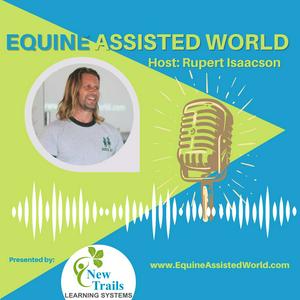
Here on Equine Assisted World. We look at the cutting edge and the best practices currently being developed and, established in the equine assisted field. This can be psychological, this can be neuropsych, this can be physical, this can be all of the conditions that human beings have that these lovely equines, these beautiful horses that we work with, help us with. Your Host is New York Times bestselling author Rupert Isaacson. Long time human rights activist, Rupert helped a group of Bushmen in the Kalahari fight for their ancestral lands. He's probably best known for his autism advocacy work following the publication of his bestselling book "The Horse Boy" and "The Long Ride Home" where he tells the story of finding healing for his autistic son. Subsequently he founded New Trails Learning Systems an approach for addressing neuro-psychiatric conditions through horses, movement and nature. The methods are now used around the world in therapeutic riding program, therapy offices and schools for special needs and neuro-typical children.  You can find details of all our programs and shows on www.RupertIsaacson.com.
Podcast website

Listen to Equine Assisted World with Rupert Isaacson, Let's Talk Yoga and many other podcasts from around the world with the radio.net app

Get the free radio.net app

  • Stations and podcasts to bookmark
  • Stream via Wi-Fi or Bluetooth
  • Supports Carplay & Android Auto
  • Many other app features
Equine Assisted World with Rupert Isaacson: Podcasts in Family