
Listen to this podcast in the app for free: Download for free in the App Store
radio.net
Sleep timer
Save favourites
200 episodes
3 Advanced Ways Herbalists Work with the Heart | Free Webinar
21/10/2026 | 1 mins.Hey friends, Rosalee here! I wanted to make sure you knew that I’m co-hosting a free webinar with my friend and fellow herbalist Rich Mandelbaum. We’ve teamed up to talk about 3 Advanced Ways Herbalists Work with the Heart.
Sign up for the free webinar here: https://freeherbwebinar.com/
Heart health is one of the most common reasons people turn to herbalists, and chances are someone you love is thinking about their blood pressure, their cholesterol, or the medications they’re taking. There’s so much herbs and simple daily practices can offer the heart, and Rich and I are excited to share some of the ways we approach heart health that go well beyond the basics.
Whether you’re a practitioner, a student, or someone who wants to care for your own heart or your family’s, I think you’ll walk away with new ways of seeing heart health and plenty of practical ideas.
It’s free, it’s live, and there will be time for your questions. I’d love to see you there!
Webinar details
Topic: 3 Advanced Ways Herbalists Work with the Heart
When: Thursday, October 22, at 4 PM Pacific, 7 PM Eastern
Sign up for the free webinar here: https://freeherbwebinar.com/
And if you can’t make it live, register anyway and we’ll do our best to get the recording out to you.3 Hawthorn Questions Answered: Berries vs. Flowers, Harvesting, and Heart Medications
21/10/2026 | 4 mins.Hawthorn is one of my favorite herbs, and I get a lot of questions about it! In this video, I answer three of the most common ones.
Should you use the berries or the flowers and leaves? Can you safely harvest hawthorn from trees in your neighborhood? And what should you know about using hawthorn alongside heart medications?
We’ll explore different ways to prepare hawthorn, practical tips for responsible wild harvesting, and research on hawthorn extract used alongside conventional heart failure medications. I’ll also share why understanding the whole person is such an important part of the herbalist’s approach to heart health.
Want to learn more about herbal approaches to heart health?
Join my friend and fellow herbalist Rich Mandelbaum and me for our free webinar, 3 Advanced Ways Herbalists Work with the Heart, on Thursday, October 22, 4 PM Pacific / 7 PM Eastern.
Sign up here. If you can’t attend live, register anyway so you can receive the replay if it becomes available.Borage for Eczema, PMS, Hot Flashes, and Stress with Bridget Giuffrida
14/10/2026 | 1h 1 mins.Many gardeners are familiar with borage: those gorgeous, starry blue flowers that bees absolutely adore. But what if there’s more to borage than just a pretty face?
In this episode, I sit down with Bridget Giuffrida to discuss the many virtues of borage (Borago officinalis). During our conversation, Bridget shares how she loves to work with borage as a cooling, soothing ally for the skin, emotional overwhelm, and the changes that come with perimenopause.
We also talk about the simple pleasure of spending time with borage in the garden—and what we might discover when we slow down enough to really pay attention to a plant.
Bridget also shares her recipe for Borage Blossom Honey, a simple and delicious way to work with this lovely flower. Download your beautifully illustrated recipe card here!
By the end of this episode, you’ll know:
► How borage can offer gentle support when life feels like it’s running at full throttle
► What makes borage such a wonderful herbal ally for the skin
► How this plant became associated with courage—and why that reputation has endured for centuries
► Over a dozen ways to bring borage into your kitchen and apothecary (from the prettiest of ice cubes, to tinctures, liniments, and more!)
► What to consider before using borage internally
► and so much more…
For those of you who don’t know her, Bridget Giuffrida is a community herbalist, educator, herbal formulator, and founder of Sweet Herb Medicinals, a handcrafted herbal apothecary in California’s Santa Cruz Mountains. Her relationship with plants began in the foothills of Northern California’s Sierra Nevada, and for 30 years she has studied, grown, gathered, and worked with herbs.
For 20 years, Sweet Herb Medicinals has been a place for herbal education, handcrafted preparations, botanical skincare, and hands-on learning for adults and youth. She is also co-founder of Bella Flora Expeditions, combining her love of plants, travel, food, culture, and landscape to create immersive botanical journeys around the world.
There’s something lovely about a plant that brings so much life to a garden while inviting us to find a little more steadiness in our own. May borage bring you a fresh appreciation for the everyday wonders growing all around you.
----
Get full show notes, transcript, and more information at: herbswithrosaleepodcast.com
Would you prefer watching this episode? If so, click here for the video.
You can find Bridget at SweetHerbMedicinals.com.
For more behind-the-scenes of this podcast, follow @rosaleedelaforet on Instagram!
Working successfully with herbs requires three essential skills. Get introduced to them by taking my free herbal jumpstart course when you sign up for my newsletter.
If you enjoy the Herbs with Rosalee podcast, we could use your support! Please consider leaving a 5-star rating and review and sharing the show with someone who needs to hear it!
On the podcast, we explore the many ways plants heal, as food, as medicine, and through nature connection. Each week, I focus on a single seasonal plant and share trusted herbal knowledge so that you can get the best results when using herbs for your health.
Learn more about Herbs with Rosalee at herbswithrosalee.com.
----
Rosalee is an herbalist and author of the bestselling book Alchemy of Herbs: Transform Everyday Ingredients Into Foods & Remedies That Heal and co-author of the bestselling book Wild Remedies: How to Forage Healing Foods and Craft Your Own Herbal Medicine. She's a registered herbalist with the American Herbalists Guild and teaches many popular online courses. Read about how Rosalee went from having a terminal illness to being a bestselling author in her full story here.Marshmallow for Heartburn, Sore Throats, and Gut Healing with Amy Boldt
07/10/2026 | 54 mins.Marshmallow (Althaea officinalis) is one of those plants that can be easy to overlook. It’s gentle, pleasant, and uncomplicated—but that simplicity is exactly what makes it so useful.
In this episode, Amy Boldt and I explore what makes marshmallow such a versatile plant ally, along with some of the ways she has come to work with it over the years, from cold infusions to adding the powdered root to food, and even old-fashioned marshmallow candy!
We discuss marshmallow’s moistening, demulcent qualities, and why it has such a strong affinity for soothing hot, irritated tissues throughout the body.
Amy also shares her recipe for Marshmallow Root Electuary Balls, a staple in her apothecary perfect for soothing a dry, irritated throat. Download your beautifully illustrated recipe card here!
By the end of this episode, you’ll know:
► How marshmallow’s gifts can benefit your GI tract from top to bottom
► Why many herbalists prefer working with marshmallow as a cold infusion rather than a hot tea
► What the taste and consistency of your marshmallow infusion might tell you about the quality and freshness of the root
► Why marshmallow’s moistening qualities make it less appropriate for certain kinds of coughs
► How growing some of your own herbs can help you to become a better herbalist
► and so much more…
For those of you who don’t know her, Amy started her journey on the path to herbalism having been inspired by self-sufficiency. Her interest in medicinal plants and foraging led her to the Maryland University of Integrative Health (now Notre Dame of MD University) where she earned a Masters of Science in Therapeutic Herbalism. Since graduating from MUIH Amy has become a Registered Herbalist with the AHG and is one of Margi Flint’s Legacy Teachers.
Amy also has a private practice as a clinical herbalist specializing in sleep, anxiety, and digestive-related issues, and grows many of the herbs she uses on her herb farm in Westminster, MD. When not seeing clients, she can be found teaching classes in local community spaces, as well as at a number of herb schools and community colleges.
I’m delighted to share our conversation with you today!
----
Get full show notes, transcript, and more information at: herbswithrosaleepodcast.com
Would you prefer watching this episode? If so, click here for the video.
You can find Amy at TheWildWomanMedicine.com.
For more behind-the-scenes of this podcast, follow @rosaleedelaforet on Instagram!
Working successfully with herbs requires three essential skills. Get introduced to them by taking my free herbal jumpstart course when you sign up for my newsletter.
If you enjoy the Herbs with Rosalee podcast, we could use your support! Please consider leaving a 5-star rating and review and sharing the show with someone who needs to hear it!
On the podcast, we explore the many ways plants heal, as food, as medicine, and through nature connection. Each week, I focus on a single seasonal plant and share trusted herbal knowledge so that you can get the best results when using herbs for your health.
Learn more about Herbs with Rosalee at herbswithrosalee.com.
----
Rosalee is an herbalist and author of the bestselling book Alchemy of Herbs: Transform Everyday Ingredients Into Foods & Remedies That Heal and co-author of the bestselling book Wild Remedies: How to Forage Healing Foods and Craft Your Own Herbal Medicine. She's a registered herbalist with the American Herbalists Guild and teaches many popular online courses. Read about how Rosalee went from having a terminal illness to being a bestselling author in her full story here.Same Herb, Different People, Opposite Results: Here's Why
30/09/2026 | 37 mins.Have you ever tried an herb that everyone swears by, and it did nothing for you—or even made things worse? Good news: it all comes down to energetics, and once you learn to see people and plants through this lens, you’ll be able to choose the right herbs with confidence.
Over the last few weeks, I’ve asked you to send in your questions about herbal energetics—and send them in you did!
In this episode, I’m answering some of the questions I heard most often:
Why would an herb work for one person, but not for someone else?
What if your signs are mixed and you don’t fit into neat categories of hot or cold, dry or damp?
What to do when your body changes over time?
Can you keep working with the herbs you love, even if they’re not a great energetic match?
Along the way, I'll give you a few simple questions you can ask yourself tonight about your constitution and energetics, so you can begin to apply these principles to your own herbal practice.
By the end of this episode, you’ll know:
► What to do when choosing herbs for a person who runs hot—but whose symptoms are cold
► Why your energetics can shift dramatically during different seasons of life
► How preparation can change the energetic experience of an herb
► How combining herbs can help you work around qualities that are too warming, cooling, drying, or moistening
►Why the way an herb is grown can matter—and how to use your tastebuds to determine whether it will work for you
►and so much more…
If this episode has you wanting to go deeper, my Herbal Energetics Course is a great place to learn more. In the course, we’ll move beyond the basic framework and into hands-on practice with taste, temperature, moisture, herbal actions—and yes, lots of plants! Enrollment closes this Saturday, October 3rd, so don’t delay! Learn more and sign up here.
----
Get full show notes, transcript, and more information at: herbswithrosaleepodcast.com
Would you prefer watching this episode? If so, click here for the video.
For more behind-the-scenes of this podcast, follow @rosaleedelaforet on Instagram!
Working successfully with herbs requires three essential skills. Get introduced to them by taking my free herbal jumpstart course when you sign up for my newsletter.
If you enjoy the Herbs with Rosalee podcast, we could use your support! Please consider leaving a 5-star rating and review and sharing the show with someone who needs to hear it!
On the podcast, we explore the many ways plants heal, as food, as medicine, and through nature connection. Each week, I focus on a single seasonal plant and share trusted herbal knowledge so that you can get the best results when using herbs for your health.
Learn more about Herbs with Rosalee at herbswithrosalee.com.
----
Rosalee is an herbalist and author of the bestselling book Alchemy of Herbs: Transform Everyday Ingredients Into Foods & Remedies That Heal and co-author of the bestselling book Wild Remedies: How to Forage Healing Foods and Craft Your Own Herbal Medicine. She's a registered herbalist with the American Herbalists Guild and teaches many popular online courses. Read about how Rosalee went from having a terminal illness to being a bestselling author in her full story here.
More Alternative Health podcasts



Trending Alternative Health podcasts

About Herbs with Rosalee
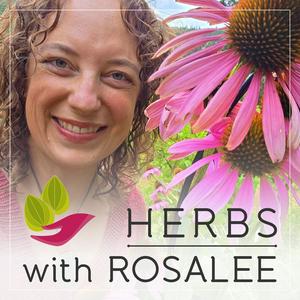
Curious about the healing nature of plants? You're in the right place. I’m Rosalee de la Forêt and I'm passionate about helping people discover the world of herbalism and natural health.
On this podcast, we explore the many ways plants heal, as food, as medicine, and through nature connection. Each week, I focus on a single seasonal plant and share trusted herbal knowledge so that you can get the best results when using herbs for your health.
My goal is that you’ll walk away from each episode feeling empowered, knowledgeable, and inspired to start working with herbs in your everyday life.
Sometimes you’ll sit down with just me and other times I may have special guests join the conversation. We’ll hear what their favorite herb and recipe is for the season.
All you have to do right now is make sure you’re subscribed to this podcast in your favorite podcast player so you don’t miss a thing.
Podcast websiteListen to Herbs with Rosalee, Sleep Magic: Sleep Hypnosis & Meditation for Sleep Podcast and many other podcasts from around the world with the radio.net app
Get the free radio.net app
- Stations and podcasts to bookmark
- Stream via Wi-Fi or Bluetooth
- Supports Carplay & Android Auto
- Many other app features
Get the free radio.net app
- Stations and podcasts to bookmark
- Stream via Wi-Fi or Bluetooth
- Supports Carplay & Android Auto
- Many other app features

Herbs with Rosalee
Scan code,
download the app,
start listening.
download the app,
start listening.
Herbs with Rosalee: Podcasts in Family
 Ireland
