

Listen to this podcast in the app for free: Download for free in the App Store
radio.net
Sleep timer
Save favourites
13 episodes
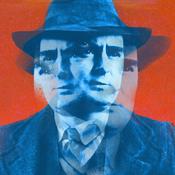
13. Joseph LaBine: Flann O'Brien and Radio
28/01/2026 | 44 mins.A special edition of the Radio Myles podcast dedicated to Tobias W. Harris and Joseph LaBine's special edition of the Journal of Flann O'Brien studies which focuses on Flann O'Brien and radio. You can read each article named here at no cost on the Parish Review website here:
https://parishreview.openlibhums.org/issue/1700/info/General Editors: Ruben Borg, Alana Gillespie, Maebh Long
Cover image credit: Michéal Ó Nualláin, Kilroy Is Here (Michéal Ó Nualláin, 2009), 28.
Cover design: Ellie Hastings, https://www.eehastings.com/about
This is a public episode. If you would like to discuss this with other subscribers or get access to bonus episodes, visit radiomyles.substack.com12. Elliott Mills: Brian, Myles and the Civil Service
02/01/2026 | 40 mins.Toby talks to Elliott Mills about the fascinating ways in which Brian O’Nolan the bureaucrat manifests in the writing of Flann O’Brien and Myles na gCopaleen.
Buy the book Elliott Mills has recently co-edited, Irish Writers in the Civil Service, from Liverpool University Press here: https://liverpooluniversitypress.co.uk/doi/book/10.3828/9781836244929
Read the Double Special Issue of The Parish Review on Flann O'Brien and the Irish civil service co-edited by Elliott Mills:Part 1: https://parishreview.openlibhums.org/issue/845/info/Part 2: https://parishreview.openlibhums.org/issue/868/info/
This is a public episode. If you would like to discuss this with other subscribers or get access to bonus episodes, visit radiomyles.substack.com11. Katherine Ebury: Flann O’Brien, death and the law
05/11/2025 | 57 mins.Katherine and Toby dissect death in 'Two in One' before exploring Irish executions, reading Achille Mbembe's necropolitics and turning to Flann, the energy humanities, and the geological turn.
Transcript
Toby: Hello and welcome to another episode of Radio Myles, the podcast which hopes to entertain, intrigue, and maybe change your perspective on the figure known variously as Flann O’Brien Myles na gCopaleen, Myles na gCopaleen, George Knowall, and many other names. This episode is made of a support of Birkbeck College, university of London, and today I am joined by Katherine Ebury.
Katherine is a senior lecturer in modern literature with an established international reputation as a literary historian and scholar of modernism. She has written a lot including two well reviewed monographs and led to collection many peer reviewed articles and book.
Chapters, including on Flann O’Brien and science, [00:01:00] writing in the Problems of Authority collection, and on Flann O’Brien in the Death Penalty in the Gallows Humour collection. She was an editor of Flann O’Brien and the Nonhuman, the most recent collection of essays about Flann O’Brien. She was awarded an AHRC Fellowship for her research project: “Literature, psychoanalysis and a death penalty, 1900 to 1950”, which was a basis for her recent monograph in the area of law and literature, modern literature and the death penalty, 1890 to 1950.
She has mentored several postdoctoral researchers funded by the AHRC and the Leverhulme Trust who have gone on to successful roles elsewhere. We are going to try to focus on today’s topic, which is Flann O’Brien and the law.
Welcome, Katherine.
Katherine: Thank you Toby. Thank you for having me. It’s great to be on the podcast. I’m a fan and it’s really good timing for me ‘cause I’m working on a chapter on Flann O’Brien and the law for the new Cambridge Companion for Catherine Flynn. She commissioned it from me, so is wonderful to be here talking to you about this topic.
[00:02:00] Thank you for the generous introduction.
Toby: And before we go on just in case there are any listeners who are totally new to Flann O’Brien, AKA Myles na gCopaleen, aka Brian O’Nolan, I do wonder at this point if there are any listeners that are totally new because presumably they’ve listened to an episode, but just in case and it’s also interesting to find this out from the different guests: would it be possible for you to give us a, thumbnail sketch of this writer and his major work? What’s the brief image of him that appears in your head?
Katherine: Well, thanks Toby. Yeah, I do like the conceit that you have on the podcast of getting everyone to introduce Flann. I hope you won’t stop no matter how long the podcast goes on for, because everyone does have a different take.
I think about an Irish mid-century writer who’s amazingly funny and perishingly sad. He’s the author of at least three great novels. The others we could fight about At Swim-Two-Birds, An Béal Bocht and The Third Policeman, as well as [00:03:00] these brilliantly flawed novels again, that we could fight about, as I was saying, The Dalkey Archive and The Hard Life. And recently, we’ve been discovering more short stories and plays and teleplays. I think I’m fondest of the Myles na gCopaleen persona, but at the same time, I’m conscious of all the columns. I’ve not read, you know, the limits of my expertise. Like with the students’ fearing that there’s jokes they’re not getting.
I know that there are lots of people who are much better versed on Cruiskeen Lawn than I am, particularly ‘cause I’m only a novice Irish speaker. God knows where I am in Duolingo. But I do love that persona.
I find it very fun. In recent years, I’ve devoured Flann’s letters wonderfully edited by Maebh Long, but I found that I learned less about the man than I expected from that exercise. He was a civil servant and a drinker. He has a crumpled, hard boiled look in photographs. Thinking of crime fiction, I think of him as a, a George Smiley or a Sam Spade [00:04:00] type.
He’s a radical experimenter and he’s also conservative, as you’ve explored recently in your own book on him in the avant-garde, which I was recently reading. You were kind enough to give me a copy and I’ve properly read it and reviewed it. You can read it in Modernism/modernity fairly soon.
Flann O’Brien’s eyes are really kind. But what’s he up to? I’ve planned out what I would say, but I also feel that he can’t be defined, you know, he’s much more mysterious to me as a person than most of the other authors I’ve worked on. I’ll keep reading and writing about him despite this, because of this.
I think despite this the sort of pursuit of Flann O’Brien as a person is certainly never ending. I think you’ll have found the same.
Toby: Yes, absolutely. The real person behind the figure almost disappears into a kind of void, into a kind of negative space, which is really [00:05:00] interesting.
Thank you for mentioning my book by the way, So thank you for reading that and indeed for your review.
I would say that, I also had the same impression from, Maebh Long’s, brilliant, collected letters. It’s such a useful resource and we learned so much. One of the biggest impressions I came away from that collection with was. The idea that letters of themselves performative, they’re transactional, they’re shaped by who they’re intended by the intended audience and what that audience’s reaction might be.
The letters are often irascible, funny, sometimes simply businesslike, but they don’t seem to reveal much of what Myles na gCopaleen as a person was like. This is strange because you hear very different things. He certainly comes across as being very irascible and keen to get into scraps with his friends and colleagues.
Yet on a personal level, we know [00:06:00] indirectly from the family members, that. He seemed to be quite a kind person. He mentioned kind eyes, you know, he seemed to be quite a trustworthy and reliable person at the same time. It is interesting that, letters are, like a surface, you can cut into a figure, and reveal something but they don’t necessarily give us any real insight.
He’s not bearing his soul by any means.
Katherine: I would agree with you. I do believe that version of him is a kind figure who mostly had it together, despite a lot of evidence, comparing him with George Smiley or Sam Spade, a gentle spy or a hard boiled detective.
These people are kind and patient of other people’s mistakes, even when they are unfeeling themselves, you know? There, there’s something in that idea, of a certain kind of mid-century masculinity that I pursue in Flann and in Brian, in Myles. I do think crime fiction is a good place to go for someone so mysterious
the [00:07:00] kinds of secrets those detectives, those spies are keeping, you know, plan and Brian is keeping his
Toby: Absolutely, there’s an interesting, idea to investigate the stories that are hidden or the kind of hidden, crimes, he’s committed.
This idea of truths being buried, comes across just everywhere in a way that, family relationships are depicted the way that family histories are depicted, things are so easily forgotten. Such as, in The Third Policeman where there’s a very eerie depiction of, the sort of loss of the family.
This kind of inability to communicate with the family. And yet you also get the sense as you do in crime fiction, but whatever’s been buried is sort of echoing, right? It kind of repeats in different ways, in different symbolic ways throughout the text. Is that something you’re working on, at the moment.
Katherine: The fascination of fun and Brian as a figure. No, it just animates what I’m doing. I’m trying to write something quite businesslike, for the Cambridge [00:08:00] Companion, student friendly, it would be something that doesn’t necessarily teach students or new scholars in the field about my bafflement. But for me, writing about the law, there’ll be some space for contradiction, certainly, in Flannn his attitude to crime and punishment. But, I keep my pursuit of the kind of character that he would be to one side.
I have read a couple of novels. There’s one called The Blood Dimmed Tide, I think it’s about Yeats. I would be interested to read, such a novel about Flann if someone would care to write one for me.
Toby: The other question that I ask, all the guests is how you in particular came across Flann because I would say your reputation is a much more wide ranging than that.
So you published a frequency on Joyce, you’ve written on Finnegans Wake, you published on Beckett, Dorothy Sayers. So you really have a quite global perspective. And of course there is gonna be a Cambridge Companion about Flann O’Brien [00:09:00] now, which is a fantastic, achievement, for his reputation.
But that’s not always been the case, you know, outside of Ireland. It’s really been quite a niche writer for many decades. how did you first come across Flann O’Brien?
Katherine: Credit where credit is due. I found Flann through friends and it’s friendship and collegiality that keeps me in the field of Flann O’Brien studies, particularly as you’re saying. I’m a magpie, a picker up of many things, perhaps sometimes more things than my beak can carry. I’m a cultural historian. I write these, certainly the modern literature and the death penalty was a sort of cultural history of the death penalty through modernism. So that means you get a lot of authors. My formal studies taught me this particular cannon of modernism, Joyce, Beckett, Bowen, and I came to many other authors who are important to me today, sayers or Rebecca West through my voracious reading. I first heard about Flann O’Brien through a friend from my masters. I did my masters at the [00:10:00] University of York with Adam Winstanley, who maybe you met at some point.
Toby: Yeah.
Katherine: He suddenly came into our MA seminar, wanted to talk about fun o’ Brian. Just very passionate, he had discovered something. Why are we not reading him? He said He’s better than Joyce. I wasn’t sure about that. I was mad keen on Joyce at the time.
But I don’t know. Intrigued enough. Provoked enough to follow up. And began reading Flann. From there, Adam also pursued a PhD and became a pioneering Flann critic but I think he’s left higher education now because UK academia is so punishing at the moment. But if he is listening now, all the same, still keen on Flann:
“Hello, thank you Adam, for teaching me about Flann.”
Joyce to me is still foundational. He’s the writer I go to first when I check a new idea, but when I read Flann, I saw what Adam meant, although I dunno if we were seeing the same Flann [00:11:00] because he has these many faces. But I didn’t start writing about Flann O’Brien for quite a while.
To make that leap I needed another set of friends. And this time it was Paul Fagan and Ruben Borg fellow Joyce Critics who set up the International O’Brien Society. Although academia is meant to be quite solitary my way of working, I tend to need quite a lot of support and infrastructure, encouragement and invitations, more than some people.
I’ll often write something because somebody asked me to. And I’m so glad to have been asked. And would I have done it without the invitation? I’m not sure. I loved what Paul and Ruben had made and they asked me to write something for their Problems with Authority volume about Flann and science.
And then I kept working on Flann. That was on Flann and the Nonhuman with Paul Fagan and John Greeny. And I’m interested in keeping working with Flann and making him more central to my next book, hopefully.
Toby: Yeah. I know what you [00:12:00] mean about being drawn into something through a network of, collaboration.
Because when you have to put it in the context of the other pressures you’re under embarking on a new project is quite daunting. it only really happens when someone says you have to do this, or you should do this. And you agree and you feel beholden to that person.
So, it is a productive way to work ‘cause it keeps you pursuing. The next thing, I think, Adam and Catherine Ahearn produced a really useful document of the extant books that we had in Myles na gCopaleen’s personal library which is held at the Burns Library in Boston College.
That was a really, really fantastic resource because it helped us see, you said it’s so hard to pin Flann O’Brien down and the library that we have in addition to all the other stuff he was reading, shows he was a very expansive thinker, much more of a polymath than we might imagine.
And I know that we’ve recently seen work published by Paul Fagan, for example, on his interest in economics in quite a detailed [00:13:00] way. we really do get this impression that Flann O’Brien is a bit of labrinth. I don’t think he’s really just a magpie looking for stuff in daily newspaper and reading reviews.
I think if the accounts of a family or anything to go by, he would’ve read quite a lot. He was probably reading quite voraciously of many different genres. we want to focus on Flann O’Brien and the law.
another feature of a podcast Is to read from one of your favorite passages to kick off, that discussion. So I believe you’ve prepared something for us today. if you wanted to give us a bit of context about what you’re gonna read and then share it we’ll be able to start looking at this topic of the law and the death penalty through that reading.
Katherine: Thank you, Toby. Yeah, I do. It’s great to have a chunky passage in front of us, and I did appreciate, being asked to choose a favorite passage. is it really my favorite passage? I mean, it certainly is. A favorite passage that will get us talking about fun obrien and the death [00:14:00] penalty.
I really do like the story that I’ve chosen which is ‘Two in One’, one of the later short stories, can easily be read by our podcast audience. I chose the passage from the very end of that story. The story is about a murder. But how much is it about a murder, I’ve been wrestling with, I’ve been trying to write about this for Catherine Flynn.
How interested is Flann in murder or crime more broadly or breaking the law and how much of those things are as Jennika Baines has argued, an occasion, for fantastical things to happen. So in two, in one the murderer, the narrator of the story named Murphy. And he is a taxidermist. He kills his employer Kelly, in a fit of rage. The employer seems to be a bit of a bully, but we’d have to investigate further how reliable this narrator would be. And murder is never justified. Let’s put that out there
Toby: We’re not endorsing murder even for [00:15:00] comic purposes.
Katherine: Specifically not murder of employees or by employees of employers. Um, in case anyone at work is listening. So we are not endorsing that. Anyway, so he murders his employer and that’s the occasion for the story, but the occasion goes elsewhere. The narrator is thinking about how he might get away with the crime ‘cause it was unpremeditated, so he has very little chance and very little time to cover up the crime. he decides to use his taxidermy skills to preserve the body of Kelly, his employer, so that he can dress up as Kelly and seem to be alive. Unfortunately for the narrator, the suit fantastically can’t be removed.
Very unfortunate to impulsively murder, but also, how can’t the suit be removed? It’s mysterious on that point because it fused with his body to the extent that you couldn’t even cut it [00:16:00] off with all the skills of a taxidermist.
Eventually he’s caught because the police are looking for Murphy. They think that Kelly, the employer, has murdered Murphy, the employee. We know otherwise the narrator knows otherwise. But how could that help him? It can’t. And would they believe him?
I’ve chosen the passage from the very end of the story in which the police catch him. This narrator, we realise that by the end of the story is speaking to us from near the scaffold. he will be executed soon.
“There followed more days of terrible tension. My own landlady called me one day inquiring about me of Kelly. I told her I had been on the point of calling on her to find out where I was. She was disturbed about my disappearance. It was so unlike me and said she thought she should inform the police.
I thought it wise not to try to dissuade her. My disappearance would eventually come to [00:17:00] be accepted, I thought. My Kellyness, so to speak, was permanent. It was horrible, but it was a choice of that with a scaffold. I kept drinking a lot. One night after many drinks, I went to the club for a game of snooker. This club was in fact, one of the causes of Kelly’s business towards me.
I had joined it without having been aware that Kelly was a member. His resentment was boundless. He thought I was watching him and taking note of the attentions he paid the lady members. On this occasion, I nearly made a catastrophic mistake. It is a simple fact that I’m a very good snooker player, easily the best in that club.
As I was standing, watching another game in progress, awaiting my turn for the table, I suddenly realized that Kelly did not play snooker at all. For some moments, a cold sweat stood out on Kelly’s brow at the narrowness of this escape. I went to the bar. There, a garulous lady who thinks her unsolicited conversation is fair exchange for a drink, began talking [00:18:00] to me.
She marked the long absences of my nice Mr. Murphy. She said he was missed a lot in the snooker room. I was hot and embarrassed and soon went home to Kelly’s place. A real sense of danger was to me my next portion in this adventure.
One afternoon, two very casual strangers strolled into the workshop saying they would like a little chat with me. Cigarettes were produced. Yes, indeed. They were plain clothes men making a few routine inquiries. This man Murphy had been reported missing by several people. Any idea where he was? None at all.
When had I last seen him? Did he seem upset or disturbed? No, but he was an impetuous type. I had frequently reprimanded him for bad work. On similar other occasions, he had threatened to leave and seek work in England. Had I been away for a few days myself? Yes. Down in Cork for a few days on business? Yes.
Some people thinking of starting a natural museum down there, [00:19:00] technical school people, that sort of thing. Then it happened. The two detectives came back accompanied by two other men in uniform. They showed me a search warrant. It was purely a formality. It had to be done in the case of all missing persons.
They’d already searched Murphy’s digs and found nothing of interest. They were very sorry for upsetting the place during my working hours. A few days later, the casual gentlemen called and put me under arrest for the willful murder of Murphy. They proved the charge in due course with all sorts of painfully amassed evidence, including the remains of human bones in the furnace.
I was sentenced to be hanged, even if I could now prove that Murphy still lived by shedding the accursed skin, what help would that be? Where, they would ask, is Kelly? This is my strange and tragic story, and I end it with the thought that if Kelly and I must each be either murderer or murdered, it is perhaps better to accept my present fate as philosophically as [00:20:00] I can and be cherished in the public mind as the victim of this murderous monster Kelly. He was a murderer anyway.”
Toby: It is such a fascinating passage and quite brilliantly chosen because there’s lots of funny elements in that story. This final passage epitomizes all of it and draws it together. And it’s this strange combination of this sort of very practical issue in that he is almost condemned to be executed for his own murder because he’s, made this rather silly decision to wear the taxidermied skin of the person he murdered.
Almost like drawn to it by his practical skill as a taxidermist, which is a fantastic and quite ridiculous joke. But at the same time it is quite a philosophical element and almost debate that’s brought up because it comes to this question of: living in [00:21:00] the context of a society where the death penalty is a default penalty for a murderer and, you know, the gallows is a destination you can end up in pretty easily. made a choice. The situation between Murphy and Kelly, between himself, Murphy and Kelly, was such that someone had to die in the end. Both of them had to die. His choice is then to decide which side he’s going to be, you know, so he gets to be cherished in the public mind as a victim of this murderous monster Kelly by murdering Kelly.
So this very strange reversal, and it’s something that’s really struck me about the death penalty is the sense of doubling or mirroring that happens because you can’t help but understand that the person who’s being executed is in turn being murdered. It’s just one that’s sanctioned by the state, right?
Katherine: Yes, that’s right. If we were to see it in the narrator’s way, that sense that he was a murderer anyway, it sounds to us as [00:22:00] readers like completely wild. But I suppose, speaking from that position of someone who feels that they’ve been goaded to their crime, that they’ve been bullied into it – for him, Kelly’s behaviour has caused Kelly’s death, but also caused his death: Murphy.
So if we were to, we would take, to take a sort of unionized perspective um, on this, he’s not, Kelly isn’t necessarily a murderous monster, but a bully creating a toxic work environment. There are consequences for that in the form of these two deaths, That’s not necessarily, how I see it.
in the story, there really is no premeditation of the crime, It is an opportunistic crime, Toby, isn’t it? His employer Kelly putting on his bicycle clips, bent down, looking away, and there’s a tool right there and he hits him with it. But he’s not plotted to take revenge on his employer. It is not like the murder of Mathers in The Third Policeman. He’s a victim of [00:23:00] circumstance in that he’s capable of committing murder. And he’s put in a situation where he’s likely to commit it.
I wanted to get out there before you respond to me, you know? He doesn’t just hit him once and called the ambulance which is a more natural thing perhaps, but he hits him and then hits him again multiple times.
Toby: And with that passage, I was wondering about this idea of transfer of properties between different, human and non-human objects.
It’s a bit like if you were to badly injure an animal at a time when ordinary people would be more involved in killing animals than they are now . You would maybe, keep killing it to try to put it out of his misery, not being willing to care for it.
And certainly, no one would’ve grown up in a time where that was a bit more widespread than it is now like, killing kittens and so on. But he is a taxidermist working with dead animals, and he does murder Kelly in a fit of rage, he does murder him like an animal. And he does treat [00:24:00] him like an animal afterwards by removing his skin.
Katherine: Yeah. And then the major conflicts between the two men are, are about taxidermy. there’s not a subplot about sort of money or. women really, although that is sort of alluded to is the problem with the snooker club..
The main conflicts that the narrator describes are about the practice of taxidermy. So, if you took a kind of animal studies approach, you would think about how the violence of the taxidermy trade has brutalized both men, the narrator who actually kills to a greater extent than the victim of course.
But, if you were to take that animal studies perspective, you would see the effect of that everyday violence causing a much more extreme form of violence.
Toby: Yeah. And, and of course this is an area that you’ve edited and, and thought about, um, quite extensively as well in terms of environments, animals and machines, it’s a really productive area to explore: the non-human is such an important part of [00:25:00] his work. the other part of a passage that I wanted to comment on was the choice of words, when Murphy says, he thought it was not to dissuade the landlady to call the police about Murphy.
Because he could make this transition: “my disappearance would eventually come to be accepted. I thought my Kellyness, so to speak, was permanent. It was horrible, but it was a choice of that or the scaffold.” His Kellyness gives him a kind of promotion, in a working sense because Kelly is his boss.
But I wanted to draw upon what this taxidermy of the dead m an is suggesting about human characteristics and the way we’re perceived Kelly is constituted by his mannerisms.
And hence, nearly catastrophic mistake of like, playing snooker too well is a compromise in Kellys. But that’s quite an interesting idea, [00:26:00] isn’t it? That there is no integral identity to a person, it’s simply a sort of adjectival identity, which can be traded and absorbed, by other people.
Katherine: Yeah, because the police detectives seem quite efficient. they’ve worked it out. They’ve got the physical evidence, but the mystery of who’s died is completely beyond them.
they haven’t worked out that further secret. The bones in the furnace don’t belong to the person they think they do. They haven’t caught the criminal they think they have. that sense of intrinsic identity, like internal self, that’s not something we can investigate in terms of clues and evidence, at least in the world of this story, which is more fantastical.
He has stood very deliberately performing his Kellyness, though the skin can’t be taken off. But, you know, he’s constantly, like, I went home to Kelly’s home. Um, he still feels like [00:27:00] Murphy even though he’s inside that’s a choice that O’Nolan has made.
He still thinks he’s Murphy despite this fantastical encasement in another body.
Toby: Yeah. one of the names is, is, um, ‘The Dead Spit of Kelly’, which is like a later version. And the other is, ‘Two in One’, a powerful reading of the opposition between one and another, duality and the possibility of anything being singular. Philosophically the story echoes that. thinking about your focus on the law and the death penalty, it’s a very good point the casual gentleman. It is interesting, they’re described repeatedly as casual gentleman as well, suggesting they kind of go about, that seems like a bit of a crime fiction trope, a kind of gothic trope about never being sure exactly who’s investigating you.
It also for me, evokes Kafka’s stories in which often figures of authority appear very casual and very casual settings. In fact, [00:28:00] at the end of the trial the two people that take Joseph K to be executed are described as actors, as opposed to people who are really doing this job. So there’s this interesting piece about arbitrariness and the need to punish someone for a murder, but not the need to prove that this is the person that did it. The evidence against Kelly for a fictitious murder of Murphy by Kelly was the sort of powerful circumstance, isn’t it?
It’s like, well, Kelly’s still here. Murphy isn’t. It must be Kelly. You have, elsewhere written about, the connection between the execution of a potential murderer named McCabe, the Malahide Murderer. In connection to Beckett’s story, Dante and the Lobster, as you write about McCabe he was potentially really the victim of circumstance in the sense of he, he was a gardener.
He reported the death by fire and potentially [00:29:00] by poisoning of an entire family. When he was executed it was celebrated proof of a deterrent power. of capital punishment.
I think Flann O’Brien absolutely hits the nail on the head in this respect. There’s always a sense that an execution is symbolic. At some point whether the crime was committed becomes detached from that actual act by the state to execute.
Because it’s always defended on the integrity of the state. if you were to really do it on the basis of the guilt of the person, you would endlessly get lost in this idea because it can always be debated. There’s always a form of defense, there’s never exactly the smoking gun we need.
do you think that Brian O’Nolan in his thoughts about the death penalty is, is kind of tapping into that ultimately arbitrary nature of execution? as you’ve written Irish history is riddled with this complete arbitrator of when people are chosen to be executed when they’re not.
It’s often very political, you know, it’s not really about whether anyone did anything. there’s another underlying sense in which [00:30:00] many people of a certain generation, many men involved in revolutionary violence in particular, had done stuff. It was probably worthy of execution, but you couldn’t execute all of them ‘cause then he wouldn’t have had any government.
Katherine: Oh yeah. Thanks, Toby. the complexity of law in Ireland is something that people are trying to work with at the moment. I was writing about Adam Hanna and Eugene McNulty’s book Law and Literature: the Irish case, and they, in their introduction, but also in the chapters are trying to think about how law and literature might look differently in Ireland because of the colonial context.
The sense that law was being imposed in Ireland, in a form that it wouldn’t otherwise have taken, as well as the traditional role of the artist, the writer, the poet to speak more for the community and for their sense of what justice might be. I think it’s tricky in Flann O’Brien, that he is thinking about all these complexities and the uniqueness of the Irish case.
Definitely. But then when we start to [00:31:00] apply it, we wonder! Golden age crime fiction, when they write first person sort of confessional narratives by murderers, they are supporting the death penalty in one sense. You know, however much the person is humanized, however much their psychology is explored. Confession is the queen of proofs that this person is doing exactly what they say they’re doing. The finite solution for a criminal who confesses in a death penalty culture is for them to be executed.
And so when you write these first person, ‘I definitely killed him’. What do readers do with that? They may read it with a sense of opposition to the death penalty. He definitely killed him, but he shouldn’t be executed. But these fictions are constructed to sort of do away with that doubt to a certain extent.
And then you fold it over and you’re like this man is mad [00:32:00] potentially. Like, is, he Murphy? So there’s this first person confession that seems to be: this person killed this person. We can argue about what should be done about that.
But then when you introduce literature skills and a sense of an unreliable narrator, and we start to worry at the idea of confession, that is truly destabilizing. You know, you’ve written in your book about the ways in which Flann is both radical and conservative. His way of writing the end of ‘Two in One’ could be either in terms of the death penalty, is he supporting it? This person confesses, they are guilty, they are deserving of the death penalty. Or the opposite?
Toby: Yeah, and it’s interesting, this sense of in Golden Age crime fiction, the necessity of the confession as a first person witness to the crime, which [00:33:00] then justifies the execution or the punishment and moves the story along.
But then also the sense that confession may well be the product of an unusual psychological state, or simply, an unreliable narrator, which is one means by which an unusual psychological state can be t ransmitted into a text. So we suddenly start to realize we can’t really rely on a narrator.
I’m thinking of, ‘John Duffy’s Brother’, where there is this fantastical story, which arguably involves a sort of double substitution, a double self murdering in the sense of the figure of John Duffy’s brother. Um, both, turns turn, seems to turn into a train and then turns back into a frightened man again.
At the beginning of that story, it obviously refers to a Joycean short story as its main context, but it kind of distances itself again and again from the subject it kind of says, well, you know, we, we don’t even know who this brother was.
[00:34:00] It’s not even Sure who any real details about him Attack the possibility that a short story could be realistic So there’s something here about, the necessity of the fiction of true guilt or true crime.
I would connect that historically to the necessity of executions for foundational, movements of the free state. If you think of the Easter rising and the narrative of blood sacrifice, is it really an execution? Which is completely unfair when the goal of the exercise has been to bring about that in order to cause the outrage.
There’s both an honesty and a dishonesty in it. By transposing that back into this slightly bizarre scenario of Murphy accepting that one of them had to die, then he’d rather be commemorated as a victim of the cruel person called Kelly by becoming that person, Kelly himself, it [00:35:00] does seem like this really interesting engagement with the continued use of the death penalty by the Treaty side in particular, after the Civil War as a kind of unpleasant necessity, you know, because they couldn’t, disavow one of the very practices that had helped to bring the state into being, they had to continue it. So there’s a sense of we’re compelled around certain patterns, but we’re not able to come down, morally on either side.
Katherine: Yeah, absolutely. And, a stark example of that we’ve been talking about recently is the Irish state continuing to hire the executioner who was used to kill Roger Casement in 1916. Why should that be? It is not even so much the principle of the death penalty that’s at stake, that it’s so practical and yet so nonsensical to keep paying the man who killed one of your nationalist heroes for, fairly petty work that other people could do.
Toby: And so in your essay for the Gallows Humour collection you write that Flann [00:36:00] and I quote, ‘empties out the legal subject, the individual living human, who is a target of a death penalty through a quote, life in death logic that anticipates the writing of Maurice Blanchot and Jacques Derrida on capital punishment.
Myles column is clear that for the death penalty to be humanized, the human would have to be dehumanized as of the bicycle horse and dead man at The Third Policeman, all of human executed, And yet the column’s fantastic solution or rationalization does hold the dream that this could happen.’ Um, so in um, Necropolitics, Achille Mbembe writes of how martyrdom and sacrifice as a response to occupation involves what he describes as a new semiosis of killing. He writes, the besieged body becomes a piece of metal whose function is through sacrifice to bring eternal life into being the body duplicates itself and in death, literally and metaphorically escapes the state of seeds and occupation.
Flann [00:37:00] O’Brien seems to focus on this idea of death as a physical and semiotic transformation. he signals this in my interpretation by the state of, in-betweenness a status. Between life and death and also between object and human. You wanted to discuss with how does a theorist like him help us to better understand this, political context we’ve been talking about, of death and the legal subject in Flann?
Katherine: Thanks, Toby. I really like Mbembe’s work. I used Derrida’s work quite a lot, but I’m drawn to the work of Mbembe in various ways. I used him most directly in my chapter on race and the death penalty But I still think that his concept of necropolitics which he’s designed to build on weaknesses that he finds in the term biopolitics.
I think it’s a really useful term, especially in the Irish context. So necropolitics most simply refers to a politics of death. And then biopolitics most simply [00:38:00] refers to a politics of life In a colonial context, the colonial oppressor is not really thinking about managing the lives, the health, the population growth of the people being ruled over, rather, the colonial oppressor is dealing out death in particular ways.
In the bit that you lifted out for us, I think that’s present in the sense that the only response to colonialism is more politics of death. in order to escape from a colonizer and to establish a national myth, there must be these kind of sacrificial deaths that we’re talking about in relation to the Easter Rising.
The state’s exercise of necropolitics is not just about the death penalty, but rather how. The lives of colonized people are restructured towards death once the colonizer gains control through reduced access to law, resources, healthcare, and homes. Certain groups will have more or less exposure to the risk of death but biopolitics [00:39:00] might only apply in relation to the colonizer. To be fair to Foucault, whose work Mbembe is responding to and adding a new concept, Foucault mentions in his history of sexuality that he feels a similar book could have been written on the death penalty. So his instinct might have next been towards a necropolitics or politics of death.
We can only imagine what that book could have been. Perhaps most of all because of the HIV/AIDS crisis, which involved its own kind of necropolitics. There’s a horrible kind of irony there. Applying all this Flann. I’m wondering as you wonder how fantastical fun experimental versus how gothic/ghastly/conservative, the politics of texts like ‘Two in One’ or The Third Policeman might be.
Flann suggests the death penalty is unjustifiable if it’s horrific, and if people suffer within capital punishment, but also shows us [00:40:00] scenes in which the death penalty is grotesque or even fun. In terms of Mbembe’s necropolitics concept, we can wonder if Flann is describing, exploring and thus critiquing a politics of death or if he is describing, exploring, and thus embracing a politics of death.
I do wonder about that. In my monograph, I’ve imagined how opposition to the death penalty or defense for it was deeply felt and even personal for lots of modernist authors. There are some limit cases where the supposed author’s real feelings about capital punishment are not really revealed even through close reading or historical analysis.
I think there’s a lot of mystery and this aspect of his politics is mysterious. And this discussion reminds me that in Britain at least, but I also think it was the case in Ireland, the abolition of the death penalty occurred in operation to a pure politics unconnected with people power. MPs defied public [00:41:00] opinion on the issue, the people of Britain at least still wanted a law and sovereignty expressed by the death penalty, but the lawmaking power of Parliament removed that power from the people.
What kind of necropolitics occurs when the true politician stands between the criminal and the death dealing public? When we think of Ireland in colonial and post-colonial contexts, Mbembe’s work on necropolitics looks different again, and Flann’s position could become clearer in these terms.
For example, in an essay for a Estudie Irlandese from 2017, Daniella Petkovic uses Mbembe’s work as a way to analyze the depiction of the great famine - An Gorta Mór – relation to necro-power. They do this more broadly and also in relation to Joseph O’Connor’s 2002 novel Star of the Sea. I’d really like to see Irish studies scholars do more work with Mbembe in their own context and treat it as a new tool that we could be using.
Toby: Yeah, [00:42:00] and you bringing this up certainly inspires me to apply Mbembe’s, idea on necropolitics more widely. I mean, really applicable to the irish context. And also to many contexts as well. as soon as, you enter any kind of colonial context, you find that, a political discourse starts to be more defined by numbers of deaths or the extent that life can be lived that kind of status between death and life, which always seems to hold the potential for death to happen. you can see in the contemporary, world what’s happening in Gaza as a kind of necropolitics in which we understand this conflict, not through the possibility of life for the participants, but through the possibility of death: we’re constantly, hearing of the numbers of Palestinians that have died, the numbers that might die, the impossibility of their survival and the need to embrace death in order to survive and likewise on the other side, the justifications [00:43:00] are linked with the attack on Israel and the number of deaths there, and then a diminishing number of hostages.
But it’s a bit like we also saw during the Coronavirus pandemic where we had this daily death toll, you know, so we weren’t really describing life anymore. We were describing death. And, this competition, this idea of death is what really defines political power I think is something that is not gone anywhere Ireland is a really interesting case of that long colonial history in which death seems to be so important. In Ireland it’s linguistic as well because accompanying the death of people, you also have a death of languages.
You also have a death of culture. In O’Nolan’s unpublished essay written around 1947, the ‘Pathology of Revivalism’, he discusses this idea of implications of a dark night experienced by Irish speakers during the Penal Laws where they were, you know, as well as during the plantation. they’ve been sort of isolated [00:44:00] in areas far to the west with poor quality agricultural land.
Mbembe would describe this as a death world. it was a death world in many ways because many Irish speakers died during the famine, but many more immigrated and kind of died in a different way where, you know, the links to local culture was lost. And the immigration experience was like death in many ways because many people died in the crossing and families could expect never to see relatives again once they emigrated because of the expense of the journey. In terms of, thinking about Mbembe and, and the kind of, um, the positivity element of this: the attempt to crush Irish as a written tongue, fortified it as a spoken tongue, created an oral culture around Irish that wouldn’t have existed if it hadn’t been isolated in an attempt to destroy it.
This seems to connect to, Mbembe’s force on sacrifice and death and a link between death and gaining freedom where there’s no other option. And it just seems like this [00:45:00] idea of a death world really does apply to a number of O’Nolan’s texts and notably The Third Policeman, right, which you’ve already been discussing, and that is quite literally a death world where everyone in it is apparently dead, right?
Katherine: Thank you Toby, that was a powerful intervention. Thank you. I mean, both on the subject of COVID and also in relation to Gaza certainly. And Mbembe’s concept looks really important in the present day. I think I would agree with everything that you’ve said there about sort of the way that death is weaponized not just through that literal exercise of the death penalty or killing in war time, but also through a sense of whose life has more value and who has more access to resources, another example of the kinds of things you were talking about in the contemporary world might include the migrant crisis as well.
You were talking about the aftermath of the famine and huge amounts of emigration that occurred in Ireland. And [00:46:00] that sense that people are willing to risk death in order to escape the situations they’re in as well as the sort of rhetorical treatment of them in public discourse when they do die: it’s another really important use of Mbembe. I think we also, yeah, you were talking about the idea of the death world applying to The Third Policeman. But because you brought up the sort of Irish language question we might think of An Béal Bocht, in relation to all this, in the sense that death is everywhere in that text and people’s lives are structured by death.
There are lots of examples that we might give, the narrator briefly has a wife and child and they’re very soon lost in ways that he doesn’t understand.
Toby: Yeah. Absolutely. and this is, a feature that. Continues to be interesting into the 1950s: the idea of Ireland is a place where people disappear. There was some kind of moral panic around [00:47:00] the idea that the Irish race might be disappearing. This is almost like a racialized version of that link between, necropolitics and, the history of the Irish state and the colonial struggle. There was a book published in 1953 called The Vanishing Irish.
And it was a moral panic about the fact that the 1956 census three years after that book was published, bore out, the fact that in the past since the last census, rather than the population growing 60,000 Irish people had disappeared. But at the same time, in his columns, Myles comments on the fact that the border with the United Kingdom is quite fluid, so it means that it’s not that obvious to measure how many Irish people there are.
But yet there is this big concern: they seem to be diminishing and that in turn is linked to emigration and, that the Irish people might be absorbed, into other ethnic groups. I do think there’s something here about the imposing nature of death [00:48:00] preordained, predestined fate in general characters are only living a certain time before a sense of inevitable death, does definitely connect to what we’ve been talking about, which is that psychological impact of a necropolitics, a colonial necropolitics where the control of death and the suspension of people in a state near to death is the mechanism of power.
And it seems to be really reflected in O’Nolan’s work.
Katherine: Yeah, definitely, thank you, Toby. I was thinking as you were speaking about other examples but I guess the ways of controlling the environment and contemporary examples where necropolitics are useful and where there would be some sense of having an impact on that, the sense of the climate in Corcha Dorcha in An Béal Bocht being such a difficult place, that if you’re out there for two minutes, you might die of exposure.
Toby: Yes.
Katherine: And yet that landscape will have been made by [00:49:00] colonialism as well. There’s not enough trees, there’s not enough firewood, it’s really stormy because there’s not enough trees. You know, that kind of thinking about how death worlds might be structured environmentally as well.
Toby: Yeah, absolutely. Let’s finish on that question of energy, politics and environment. Robert Kiely has his brilliant essay on this topic where he suggests that, O’Nolan with his peat-eating trains and, the internalization of a colonial gaze in The Poor Mouth creates a satire that can be described as world ecological insofar as it highlights how the Irish environment and energy regime is reorganized by systems of power. In Strabane recently, I did suggest that we take a bit of a geological turn where we look to the soil and the strata beneath it for a wider angle on questions of language and linguistics and culture that seem to happen above the surface, but are deeply influenced by what is happening beneath and, [00:50:00] you know, In that paper I mentioned owner explicitly comments on the idea that the Irish have peat resources, the British have more coal resources, and that the British have, chopped down most of their forests, and then in turn chopped down the Irish forests and how this characterizes the land. Your projects now are focused on this idea of, energy sources and how sustainable they are and the idea of, extraction and to bring that back t o Mbembe. Mbembe describes necropolitics is integrally about the intentional use and shaping of geography to control populations, to border populations into smaller and smaller areas.
And in the Irish example, very much to push Irish speakers and Catholic Irish people during the Plantation away from areas that were productive agriculturally and towards more difficult places, which in turn shapes national character because it changes the kind of people that you need to be.
So there’s [00:51:00] double determination, you know, looping backwards and forwards between culture and politics and geography. And, I do think it’s really interesting ‘cause how do you disentangle energy sources and energy resources from that very necropolitical move? Because if you build an infrastructure that relies on high intensity energy sources and push your colonized enemy, into areas that are just not amenable to that, you push them off that land dynamic, don’t you, where nature and geography is implicated in forms of, oppression and resistance? And that’s obviously a, major lens on the debate about the environment and energy sources today that forgone The peoples resisting the conquest of pristine environments, in search of new, natural resources - they didn’t go to those environments voluntarily. They had to go there because they were pushed off more productive agricultural land by the colonizers themselves.
Katherine: Oh yeah. Thanks Toby. You’re right that I’m hoping my next big project will be about the energy [00:52:00] humanities.
And I think ideas of extractivism would be really interesting to think about in relation to the topic of this podcast, the law in Flann, and especially in relation to Ireland and Flann. Robert Kiely’s piece is really field changing if we keep building on it as you’ve been recently with your work on a geological turn in Flann: the concept of extractivism makes us consider how we can really own nature, who owns it. it draws attention to how natural resources are literally exploited rather than metaphorically exploited. We often say, we’re exploiting our natural resources in a more neutral way. But extractivism highlights, the actual exploitation of people and landscapes that things like large scale mining, whether that’s of peat or coal, would involve in legal terms. Nation states control territory, and individuals’ own land: even if on a philosophical or artistic level we might not fully accept that [00:53:00] land can be owned in this way,
Toby: Mm-hmm.
Katherine: Applying this to Flann: from his MA thesis on nature writing and Irish language poetry, he will have been thinking about how the Irish landscape was shaped by colonialism. As you’ve been touching on the effect of violence, felling native trees led to fuel poverty. The plantation led to people being pushed into hostile areas. Stealing bicycles is a big plot in The Third Policeman, but stealing cattle, would be a big plot historically. When Ireland gained legal independence, it tried to invest in energy independence through peat-fuelled power stations. Harvesting of peat for energy was only fully phased out in 2024, even though Irish environmentalists, authors and artists have been arguing for the preservation of peatlands for a really long time. Some aspects of this might explain Flann’s deep interest in fantastical energy sources. So, you know, omnium in The Third Policeman in The Dalkey Archive. Omnium is [00:54:00] deeply connected with certain kinds of extreme crime in both texts, including murder and atomic weaponry. And yet omnium is also offered as a kind of wish fulfillment for all the problems experienced by the characters in these texts.
Within environmental energy and energy humanities, people talk about energy angst and energy euphoria. Energy angst means being made to think about, feel conscious of the energy sources you’re using. And energy euphoria means you’ve been able to repress and enjoy the energy you’re consuming. In Flann energy angst and energy euphoria might look a little bit different when they’re placed into a legal context, but we need to question further historic understandings of the ownership of land as authors like Flann often do in the Irish context.
Toby: I think what we’re pointing to here to come back to some of the themes we began with about objects [00:55:00] and animals and the work you’ve done is that, Myles is definitely very valuable if we want to expand our frame of reference to what goes into character fate and human culture and activity, you know, beyond that level of human interactions with each other and through to our connection to the environment and, to the land and how our own bodily energies are rooted in the sources of energy. And we’ve been talking a lot about, necropolitics and death and inevitability of death, but I think on a more positive point, there’s also something really interesting, you mentioned omnium right, but there’s also something interesting about the potential for possibilities, that might see things turn out in a different way. We do have the ability to change our relationship to energy and to the environment around us.
Katherine: Yeah, thank you Toby. A more open version of the energy humanities would be called energy futures, you know, but that is a particular kind of scholarship. But also in the texts and [00:56:00] works and history that energy future scholars might imagine: they would be trying to work their way out of the troubles we’ve been having today in describing just how we find necropolitics to be everywhere.
Toby: Mm-hmm. And maybe that’s some kind of title for a panel or paper of like, necropolitics and energy futures, just to like directly counter pose, those two seemingly contrary areas.
Katherine, it’s been, fantastic to, have you on the podcast. Thank you, for your contribution and for all the brilliant work you’ve done in this area. And yeah, really looking forward to, potentially what you do next.
Katherine: Well, thank you Toby, for having me. I really enjoyed reading your book over the summer and I’d be interested, are you gonna be working on the geological turn in the future?
Toby: I hope so. I think so. It seems like there’s more places to take it. Certainly. There’s a lot of geology in Finnegans Wake, for example, so potentially I might be doing that. Thanks so much for joining me, Katherine.
[00:57:00]
This is a public episode. If you would like to discuss this with other subscribers or get access to bonus episodes, visit radiomyles.substack.com10. The Society in Strabane
15/10/2025 | 37 mins.In this guest edition of Radio Myles, Maebh Murphy presents a compilation of voices and atmospheres, scholarly ideas and craic agus ceol from the 8th International Flann O'Brien conference in Strabane.
Credits:
Recording, editing, mixing and transcription by Maebh Murphy (Cheasty)
Additional mixing and mastering by David Murphy
This is a public episode. If you would like to discuss this with other subscribers or get access to bonus episodes, visit radiomyles.substack.com9. Oisín Ó Nualláin: Eccentric state builders
06/05/2025 | 43 mins.In this episode of Radio Myles Toby welcomes Oisín, the nephew of the celebrated Irish writer Brian Ó Nualláin, also known as Flann O'Brien and Myles na gCopaleen.
Oisín shares personal reflections and anecdotes about his father, Micheál Ó Nualláin and his uncle, Brian, detailing family dynamics and the intellectual and creative environment he grew up in. We learn about Brian Ó Nualláin's role as a craftsman and paternal figure and the importance of the history and environment of Counties Tyrone and Armagh, now in Northern Ireland, for the family's mindset.
Oisín also reflects on his father's extensive inventions and contributions to education, art, and politics in Ireland and concludes with a discussion of concept of the entire family's role as 'ex-centros' or 'eccentric state builders' who felt a duty to contribute to the Irish state's strength and development by attacking the centre from the periphery.
This is a public episode. If you would like to discuss this with other subscribers or get access to bonus episodes, visit radiomyles.substack.com
More Arts podcasts
 The MothArts, Performing Arts
 ArenaArts, Film Reviews, TV & Film
 Fresh AirArts, Books, Society & Culture, TV & Film
 Sunday Miscellany PodcastArts, Books
 Table Manners with Jessie and Lennie WareArts, Food, Kids & Family, Music
 The Bookshelf with Ryan TubridyArts, Leisure, Society & Culture
 The New Yorker: FictionArts, Books
 99% InvisibleArts, Design
 THEMOVEArts, Sports
Trending Arts podcasts
 Off The Shelf with Morgann BookArts, Books, Entertainment News, Film Reviews, News, TV & Film
 The Book Club ReviewArts, Books, Fiction
 Between The Covers : Conversations with Writers in Fiction, Nonfiction & PoetryArts, Books, Fiction
 The OdysseyArts, Books, Drama, Fiction
 Love Laura PodcastArts, Fashion & Beauty
 This Life of Mine with James CordenArts
 Think Again - a Big Think PodcastArts, Society & Culture
 Not A Podcast ASOIAF Re-Read PodcastArts, Books
 Jane Austen Bedtime StoriesArts, Books
 The Art AngleArts, News, Visual Arts
 The Iliad AudiobookArts, Books
 State of the Arc PodcastArts
 Comfort Eating with Grace DentArts, Food
 NPR's Book of the DayArts, Books
 The Run-Through with VogueArts, Fashion & Beauty
 Ruthie's Table 4Arts, Food
About Radio Myles: the Flann O'Brien Podcast
Poised somewhere between the pub and peer review, this podcast will entertain, intrigue and perhaps change your perspective on the writer known variously as Flann O'Brien, Myles na gCopaleen and Brian O'Nolan. Featuring special guests, archival sounds and interesting theories about this fascinating figure. Made with the support of Birkbeck College, University of London.
Ident and artwork by Will de Villiers: https://www.instagram.com/willdevilliersillustration/ radiomyles.substack.com
Podcast websiteListen to Radio Myles: the Flann O'Brien Podcast, The Moth and many other podcasts from around the world with the radio.net app
Get the free radio.net app
- Stations and podcasts to bookmark
- Stream via Wi-Fi or Bluetooth
- Supports Carplay & Android Auto
- Many other app features
Get the free radio.net app
- Stations and podcasts to bookmark
- Stream via Wi-Fi or Bluetooth
- Supports Carplay & Android Auto
- Many other app features

Radio Myles: the Flann O'Brien Podcast
Scan code,
download the app,
start listening.
download the app,
start listening.
 Ireland