
Listen to this podcast in the app for free: Download for free in the App Store
radio.net
Sleep timer
Save favourites
500 episodes
Build stronger brand–category co-occurrence and contextual signals - Maryanna Franco
21/10/2026 | 16 mins.Maryanna Franco shares that citation visibility is very 2025. In 2026 SEO can only move the needle by building stronger brand–category co-occurrence and contextual signals, because being part of AI's bibliography doesn't mean being part of its shortlist. Discussion points include: The Citation Fallacy: Why being cited in an AI response's bibliography is entirely different from being recommended, and how a high volume of citations can create a dangerously misleading illusion of true brand visibility. Co-Occurrence vs. Topical Authority: How establishing strong brand–category co-occurrence connects your entity directly to the exact commercial category you want to dominate, moving far beyond generic topical authority. The Content Volume Trap: Why publishing thousands of pages demonstrating expertise no longer guarantees a spot on AI's shortlist when a buyer asks for recommendations in your category. The Power of External Validation: The crucial role of third-party mentions in forging unbreakable category associations when your brand, expertise, and category consistently appear together across the wider web. Mastering Query Fan-Out: How AI search behavior deconstructs user intent into a wide web of sub-queries, requiring your brand to maintain contextual relevance across the entire conceptual tree rather than just optimizing for a single head term. Redefining Performance Metrics: Why modern SEO measurement must sharply distinguish between being referenced as a background source, being passively mentioned, and actually securing a spot among recommended market leaders.Never treat localization as the last step - Kseniya Dvarakouskaya
14/10/2026 | 16 mins.Kseniya Dvarakouskaya says that the biggest mistake in international SEO in 2026 is treating localization as the last step — real ranking growth in new markets starts with local keyword research from scratch, not translating what already works in English. Talking points include: Why translation is not localization when it comes to SEO — and where teams lose ranking potential - What local keyword research actually looks like (native speakers, local SERPs, market-specific search intent) - Cultural differences in search behavior — examples from Japanese, Korean, German, Spanish markets - Common mistakes: word-for-word translation of English keywords, ignoring local competitors, mixing Simplified and Traditional Chinese, using LATAM Spanish for Spain - Real case: what changes when the localization team is involved from day one vs at the end of the launch - How localization teams and SEO teams should collaborate in practiceMisinformation isn't just an SEO problem — it's a user safety problem - Sean Barber
07/10/2026 | 19 mins.In YMYL spaces like health, misinformation isn't just an SEO problem — it's a user safety problem. Macmillan Cancer Support shares how they proactively fight misinformation while staying visible in an AI-driven, zero-click search world. Talking points include: - Why is misinformation especially dangerous in YMYL sectors like health? - How does Macmillan approach content strategy proactively rather than reactively? - Which E-E-A-T signals matter most for building trust at scale? - How do you issue corrections without undermining user confidence? - How do you stay visible in AI-summarised, zero-click results? - What tools help you catch misinformation trends early? Read the full transcript of Sean's interview at https://majestic.com/seo-in-2026/additional-insights/sean-barberSitemaps are often treated as an afterthought - Carlos Manuel Sánchez Donate
30/09/2026 | 16 mins.Carlos Manuel Sánchez Donate shares that sitemaps are often treated as an afterthought, but they're a direct line of communication with both search engines and LLMs about what matters on your site. Splitting and customizing them by content type can unlock better crawl visibility and sharper Search Console auditing. Talking points: - Why do you think sitemaps are so underrated in SEO today? - How exactly do sitemaps help LLMs understand a site better than llms.txt? - What's your process for splitting content into separate sitemaps? - Any real example where sitemap segmentation improved indexing or visibility? - How do segmented sitemaps make Search Console auditing easier? - What's a common sitemap mistake you see sites making? Read the full transcript of Carlos's interview at https://majestic.com/seo-in-2026/additional-insights/carlos-sanchez-donateForget keywords. AEO is about going deep - Jenna Hannon
23/09/2026 | 15 mins.Jenna Hannon suggests that you forget keywords. AEO is about going deep: build public documentation on your site that answers every specific question a prospect might ask at each stage of the buying journey. Key talking points: What sort of public documentation are you referring to? How do you know the specific questions that your prospects might ask? How do you prioritise the questions to answer? How do you know the volume and type of content required to answer a question? How do you know how the questions map to the different stages of the buyer journey? How do you go about mapping the answers? Read the full transcript of Jenna's interview at https://majestic.com/seo-in-2026/additional-insights/jenna-hannon Watch the original SEOin2026 series: https://www.youtube.com/playlist?list=PLOr75FiG9ta37FH130S-qu3H9N0h7Ly0I Watch more SEOin2026: Additional Insights: https://www.youtube.com/playlist?list=PLOr75FiG9ta3j5bYmsVBggEsBxwhGSX41
More Business podcasts



Trending Business podcasts

















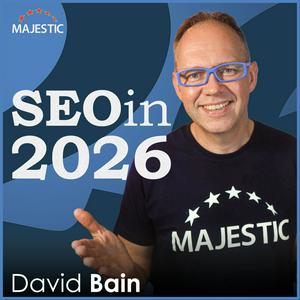
About SEO in 2026
SEO is continuing to change at an alarming pace. And yet, in some sense, the principles of good SEO remain the same.
Hello, and welcome to SEO in 2026 – a significant repository of current thinking from many of the world’s leading SEOs.
We're pleased to be able to welcome you to the fifth book and fifth series in this podcast, now well and truly an annual tradition, brought to you by Majestic.
“How people search has seen a bigger shift in the last 12 months than the last 12 years, and this makes SEOin2026 a must-read for anyone working in the industry. Majestic has brought together 117 of the SEO industry's brightest minds to share their insights into what matters, and what doesn't, to continue to drive growth with organic search during a period of massive uncertainty, and the book should be seen as a valuable reference point to keep your strategy on the right track.”
JAMES BROCKBANK
Managing Director and Founder, Digitaloft
“I highly recommend that every SEO professional set aside a couple of days for SEOin2026. You'll thank me for helping you plan your year effectively. I'm extremely grateful to have the opportunity to work alongside some of the world's leading SEO champions.”
NITIN MANCHANDA
Founder & Chief SEO Consultant, Botpresso
“This collection of wisdom from many of the best minds in SEO today is a great line in the sand of where we as an industry are, what problems we face, and how we tackle them. Anyone in SEO or marketing should be dipping into this on a regular basis.”
SIMON COX
Technical SEO Consultant, Cox and Co. Creative
“This series continues to be the industry’s leading source of the most timely advice a marketer could ever want. The most forward-thinking SEO experts in the world come together once a year to create this invaluable collection of new knowledge that should never be passed up on!”
PAM AUNGST CRONIN
President and Founder, Pam Ann Marketing and Stealth Search and Analytics
“2025 has been a sprint for the SEO industry, with AI reshaping how we understand visibility, relevance, and authority. SEOin2026 is not just another trends book; it’s a roadmap for what’s actually coming. I loved being part of it and seeing how experts around the world approach the same challenges from different angles.”
RAMONA JOITA
SEO Consultant and Founder
“David is good at drawing out the substance of a conversation. He will explore the topic and challenge assumptions, steer the conversation into an unexpected direction, and build on your ideas – making you think a bit deeper and sharper. Our recent conversation flew by as always, and as always – I’ve come out energised about the topic with more to think about.”
SUKHJINDER SINGH
Freelance SEO Consultant
Podcast websiteListen to SEO in 2026, The Business and many other podcasts from around the world with the radio.net app
Get the free radio.net app
- Stations and podcasts to bookmark
- Stream via Wi-Fi or Bluetooth
- Supports Carplay & Android Auto
- Many other app features
Get the free radio.net app
- Stations and podcasts to bookmark
- Stream via Wi-Fi or Bluetooth
- Supports Carplay & Android Auto
- Many other app features

SEO in 2026
Scan code,
download the app,
start listening.
download the app,
start listening.
SEO in 2026: Podcasts in Family
 Ireland
