

Listen to this podcast in the app for free: Download for free in the App Store
radio.net
Sleep timer
Save favourites
175 episodes
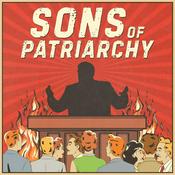
Introducing: Sons of Patriarchy
08/07/2026 | 2 mins.Media inquiries: https://www.sonsofpatriarchy.com/contact
Patreon: patreon.com/sonsofpatriarchy
Website: sonsofpatriarchy.com
Email us: contact@sonsofpatriarchy.com
Patriarchy, we're coming for you.
Sons of Patriarchy is brought to you by
Producer, Writer, Editor, and Host: Peter Bell
Original Music, Sound Design, and Mixing: https://aaronfeeneymusic.com/
Assistant Producer: Examining Doug Wilson and Moscow
Social Media: Sarah Bader
Graphic Design: Anonymous Survivors
FOR THE SURVIVORS.Sons of Patriarchy Promo
08/07/2026 | 5 mins.Media inquiries: https://www.sonsofpatriarchy.com/contact
Patreon: patreon.com/sonsofpatriarchy
Website: sonsofpatriarchy.com
Email us: contact@sonsofpatriarchy.com
Cover by Ængel Greenfield.
Sons of Patriarchy is brought to you by
Producer, Writer, Editor, and Host: Peter Bell
Original Music, Sound Design, and Mixing: https://aaronfeeneymusic.com/
Assistant Producer: Examining Doug Wilson and Moscow
Social Media: Sarah Bader
Graphic Design: Anonymous Survivors
FOR THE SURVIVORS.The War on the Evangellyfish
08/07/2026 | 1h 14 mins.Media inquiries: https://www.sonsofpatriarchy.com/contact
Patreon: patreon.com/sonsofpatriarchy
Website: sonsofpatriarchy.com
Email us: contact@sonsofpatriarchy.com
SURPRISE! We're a day early.
From fringe to mainstream. Maybe you've heard of them, maybe you haven't. One thing is for sure, they're influential. What started in the late 70s has blossomed into a worldwide movement, making Christian Nationalism... national. From a small college town, Moscow, Idaho, meet the pastor and movement that is influencing American politics, and infiltrating American churches.
In this inaugural episode, Kristin Kobes Du Mez talks about the decades leading up to the rise of Doug Wilson. He's both the natural trajectory of conservative evangelicalism, and a reaction to it. Find out how, and why. Throughout this series we'll dive into the man himself, Christian Nationalism both local and abroad, schooling systems, marketing and publishing industry, theology and cultural issues, and stories of abuse.
Let's get to know this movement.
Episode Resources
Jesus and John Wayne by Kristin Kobes Du Mez
Sons of Patriarchy is brought to you by
Producer, Writer, Editor, and Host: Peter Bell
Original Music, Sound Design, and Mixing: https://aaronfeeneymusic.com/
Assistant Producer: Examining Doug Wilson and Moscow
Social Media: Sarah Bader
Graphic Design: Anonymous Survivors
FOR THE SURVIVORS.When VICE Broke the Dam: Abuse in the CREC, Part 1
08/07/2026 | 1hMedia inquiries: https://www.sonsofpatriarchy.com/contact
Patreon: patreon.com/sonsofpatriarchy
Website: sonsofpatriarchy.com
Email us: contact@sonsofpatriarchy.com
Meet Sarah Stankorb, whose 2021 VICE article, "Inside the Church That Preaches 'Wives Need to be Led with a Firm Hand,'" broke open the floodgates. She then followed it up with Disobedient Women in 2023, which built on, and expanded upon, her original article. She talks through reporting on abuse, speaking with and listening to abuse survivors, the dynamics surrounding women who come forward with abuse stories, the environment(s) that perpetuate abuse, and much more.
Subscribe to Sarah's Substack: In Polite Company
This begins our Thursday segment, profiling dozens of abuse stories, ranging from within the CREC, throughout the Reformed world, and beyond. It's worse than you think.
Episode Resources
Disobedient Women by Sarah Stankorb
Sons of Patriarchy is brought to you by
Producer, Writer, Editor, and Host: Peter Bell
Original Music, Sound Design, and Mixing: https://aaronfeeneymusic.com/
Assistant Producer: Examining Doug Wilson and Moscow
Social Media: Sarah Bader
Graphic Design: Anonymous Survivors
FOR THE SURVIVORS.The Apostle to the Patriarchs
08/07/2026 | 1h 12 mins.Media inquiries: https://www.sonsofpatriarchy.com/contact
Patreon: patreon.com/sonsofpatriarchy
Website: sonsofpatriarchy.com
Email us: contact@sonsofpatriarchy.com
The emergence of the Young, Restless, and Reformed in the late 1990s and 2000s didn't come out of nowhere. Most were known by their rhetorical power, calvinistic soteriology, and movement-building prowess. But they've all got a spiritual father, a Patriarch, if you will. Maybe you listened to the 2021 podcast series "The Rise and Fall of Mars Hill," and wondered, "Where did Driscoll come from?" Well, he took what Doug Wilson had written, and preached it. Driscoll appealed to men like never before, with an in-your-face message, that beat you up and left you satisfied, longing for more. Many others have followed in his wake, but like all modern philosophers to Plato, they're simply building on Wilson.
Listen in as we talk with Nick Gier, Professor Emeritus at the University of Idaho (Doug's former professor), and Russell Moore, Editor in Chief at Christianity Today, about Doug's beginnings, those whom he's influenced, and where they see this going.
Sons of Patriarchy is brought to you by
Producer, Writer, Editor, and Host: Peter Bell
Original Music, Sound Design, and Mixing: https://aaronfeeneymusic.com/
Assistant Producer: Examining Doug Wilson and Moscow
Social Media: Sarah Bader
Graphic Design: Anonymous Survivors
FOR THE SURVIVORS.
More Religion & Spirituality podcasts
 Moral MazeReligion & Spirituality, Society & Culture
 Saturn Returns with CaggieEducation, Health & Wellness, Mental Health, Religion & Spirituality, Self-Improvement
 Our Paranormal Afterlife : Finding Proof of Life After DeathAlternative Health, Documentary, Health & Wellness, Religion & Spirituality, Society & Culture, Spirituality
 The Spiritual Life with Fr. James Martin, S.J.Christianity, Religion & Spirituality
 The UnfoldingChristianity, Religion & Spirituality
 Tara BrachBuddhism, Health & Wellness, Mental Health, Religion & Spirituality
 The Fr. Mike Schmitz Catholic PodcastChristianity, Religion & Spirituality, Society & Culture
 The Bible in a Year (with Fr. Mike Schmitz)Christianity, History, Religion & Spirituality
Trending Religion & Spirituality podcasts
 Sober Speak- Alcoholics Anonymous Recovery InterviewsEducation, Religion & Spirituality, Self-Improvement, Spirituality
 ALIGNED | The Path to PurposeAlternative Health, Education, Health & Wellness, Religion & Spirituality, Self-Improvement, Spirituality
 Tafsiirka Quraanka Kariimka ah - Shiikh Cumar Faaruuq (Raximahullaah)Islam, Religion & Spirituality
 The ConfessionalsChristianity, Personal Journals, Religion & Spirituality, Society & Culture
 Miracle Voices - A Course In Miracles Podcast (ACIM)Religion & Spirituality, Spirituality
 The David Ghiyam PodcastReligion & Spirituality, Spirituality
 Dharma Seed: dharma talks and meditation instructionBuddhism, Religion & Spirituality
 Escaping SamsaraReligion & Spirituality, Spirituality
 Joyce Meyer Enjoying Everyday Life® TV Audio PodcastChristianity, Religion & Spirituality
 Joyce Meyer Enjoying Everyday Life® Radio PodcastHealth & Wellness, Mental Health, Religion & Spirituality
- The Spiritual Life with Fr. James Martin, S.J.Christianity, Religion & Spirituality
 The Bible RecapChristianity, Religion & Spirituality
 Little by LittleChristianity, Religion & Spirituality
 神仙補習班Comedy, Leisure, Religion & Spirituality
About Sons of Patriarchy
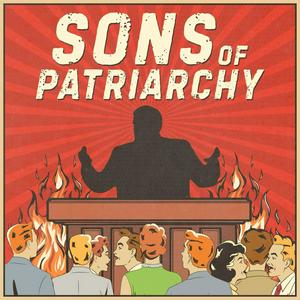
What happens when biblical patriarchy, christian nationalism, and a theology of authority and submission become the pillars of a movement? Scores of abuse stories in marriages, schools, churches, families, and more. Though these ideas have filtered throughout the United States for decades, they found a home in Moscow, Idaho, through the ministry and work of Doug Wilson. From there, they have influenced churches across the United States, and across the world.
In this series, you'll hear from experts on all aspects of these movements, and the stories of abuse from those who survived. Some are Christian, some are not, but one thing they've got in common?
They're finally speaking out.
This is their story.
Podcast websiteListen to Sons of Patriarchy, Moral Maze and many other podcasts from around the world with the radio.net app
Get the free radio.net app
- Stations and podcasts to bookmark
- Stream via Wi-Fi or Bluetooth
- Supports Carplay & Android Auto
- Many other app features
Get the free radio.net app
- Stations and podcasts to bookmark
- Stream via Wi-Fi or Bluetooth
- Supports Carplay & Android Auto
- Many other app features

Sons of Patriarchy
Scan code,
download the app,
start listening.
download the app,
start listening.
 Ireland