
Listen to this podcast in the app for free: Download for free in the App Store
radio.net
Sleep timer
Save favourites
183 episodes
Building Muscle After 40: Fat Loss, Menopause & Training Smarter
30/10/2026 | 1h 1 mins.Can you still build serious muscle as you get older? Does being vegan make muscle growth harder? And is dropping your calories faster really the best way to accelerate fat loss?
In this episode, Kim Constable answers questions about strength training, fat loss, vegan nutrition, menopause, hormones and building a strong, muscular body as we age.
Drawing on more than a decade of bodybuilding and coaching experience, Kim shares her personal approach to training, the lessons she's learned from demanding competition preparations and how her priorities have changed over time.
The conversation begins with a question about accelerating fat loss by moving to a lower-calorie diet earlier than planned.
Kim discusses the difference between being motivated to make faster progress and being able to sustain a demanding training and nutrition routine.
She also explains why the hardest part of a workout is sometimes simply getting yourself to start.
INSIDE THIS EPISODE
• Why aggressive calorie restriction can make training and everyday life more difficult
• How Kim approaches motivation, discipline and showing up consistently
• The importance of good exercise technique without becoming obsessive about every movement
• Whether vegan women can build as much muscle as women eating animal products
• Why weighing ingredients accurately can matter when following a structured meal plan
• The relationship between menopause, ageing and changes in muscle development
• Kim's personal experience with hormone replacement therapy and testosterone
• Her interest in emerging research around NAD+, CJC-1295 and ipamorelin
• Sleep, energy and recovery during menopause
• Kim's favourite gym exercises for building glutes
• The difference between focusing exclusively on glute growth and developing a balanced physique
• Why training priorities and consistency matter over the long term
Kim also talks candidly about her own body, the changes she's noticed as she's aged and why she's chosen to structure her training around three heavy gym sessions rather than training five days a week.
One of the biggest themes is accepting that different goals require different priorities.
If you want to develop one particular muscle group, you may need to dedicate more training time to it. But if your goal is a strong, balanced physique, your training may look very different.
This conversation is for women interested in building muscle, improving body composition and understanding how their training needs may change with age.
Important: This episode reflects Kim's personal experiences and opinions. It is intended for general education and is not medical advice. Peptide compounds discussed may be investigational, with limited evidence for the outcomes described. No compound, hormone treatment or personal protocol is recommended. Speak with an appropriately qualified healthcare professional before making decisions involving medication, hormones, extreme calorie restriction or health conditions.
✨ FOLLOW KIM CONSTABLE ONLINE
📺 YouTube: https://www.youtube.com/@besculptedbykim
📸 Instagram: https://www.instagram.com/thesculptedvegan
🎵 TikTok: https://www.tiktok.com/@kimconstableofficial
🌐 Website: https://www.thesculptedvegan.comCalories, Loose Skin & Building a Body That Lasts
23/10/2026 | 59 mins.How do you build a strong, sculpted body without spending the rest of your life obsessing over calories, macros and workouts?
In this episode, Kim Constable answers questions about fat loss, calorie tracking, maintaining results, loose skin, recovery and finding a training routine that works for your lifestyle.
Kim begins by discussing one of the most common mistakes people make when following a structured meal plan: assuming that similar foods contain similar calories.
She explains why using a different protein powder can significantly change the calories in your meal plan, particularly when you're having multiple servings throughout the day.
The conversation then moves into the psychology of tracking food, including the challenges faced by people with a history of disordered eating and the importance of protecting your relationship with food.
Kim also shares how her own eating habits have evolved over the years, why she believes consistency matters and what it takes to create sustainable habits beyond a short-term fitness challenge.
INSIDE THIS EPISODE:
• Why different protein powders can affect your calorie intake
• How to approach meal-plan substitutions
• Calorie tracking, food awareness and the risks of obsessive eating behaviours
• Building long-term nutrition habits after a fitness challenge
• What to expect from the upcoming Be Sculpted app
• Loose skin after weight loss and the role of collagen
• Kim's personal interest in GHK-Cu, NAD+ and emerging peptide research
• Why Kim now trains three days a week instead of five
• Her current weekly gym training split
• Whether resistance bands can build and maintain muscle
• Modifying exercises around shoulder discomfort and injuries
• The importance of recovery, training consistency and listening to your body
• How to approach fitness as a long-term lifestyle rather than an eight-week project
Kim also shares stories from her personal fitness journey, explains how she has adapted her training as her lifestyle has changed and offers her perspective on maintaining muscle without spending every day in the gym.
This episode is for women who want to get stronger, improve their body composition and develop sustainable habits without making fitness unnecessarily complicated.
Important: If calorie tracking has triggered disordered eating, protecting your recovery and working with a qualified eating-disorder professional should take priority over pursuing weight-loss targets. Similarly, unusual pain, dizziness or nausea during training should not be treated as proof of an effective workout.
This podcast is intended for general education and reflects Kim's personal experiences and opinions. It is not medical advice. Research compounds mentioned are not established treatments for the conditions discussed, and no personal use or treatment protocol is recommended.
✨ FOLLOW KIM CONSTABLE ONLINE FOR MORE REAL TALK AND DAILY MOTIVATION
📺 YouTube: https://www.youtube.com/@besculptedbykim
📸 Instagram: https://www.instagram.com/thesculptedvegan
🎵 TikTok: https://www.tiktok.com/@kimconstableofficial
🌐 Website: https://www.thesculptedvegan.comNew to Peptides? How to Start Without Getting Overwhelmed
08/09/2026 | 15 mins.If you're curious about peptides but have absolutely no idea where to begin, you're not alone.
One of the biggest problems with entering the world of peptide research is simply the sheer number of compounds being discussed.
GLP-1s. BPC-157. TB-500. GHK-Cu. NAD+. Thymosin Alpha-1. And then dozens more names that can make the entire subject feel impossibly complicated.
In this episode, Kim answers one of the questions she hears most often:
“I'm interested in peptides, but where on earth do I start?”
Kim’s advice is simple: don't start with the peptide. Start with the problem you want to understand.
If your primary interest is metabolic health, begin there. If you're interested in the research surrounding collagen and skin, investigate that. If your interest is recovery, sleep or immune signalling, make that your starting point.
You don't need to understand the entire peptide world before you can begin learning.
Kim also explains why expectations matter. Peptides are frequently discussed online as though every compound produces an immediate and predictable result. The research landscape is far more complicated than that.
Outside established medicines such as GLP-1 therapies, many peptide compounds remain areas of emerging research, with varying levels of evidence and considerable uncertainty around outcomes.
Inside this episode:
• How beginners can approach peptide research
• Why starting with your biggest question simplifies everything
• Why peptide signalling is different from the way we think about conventional medication
• Kim’s simple Lego analogy for understanding the research
• Why some research questions require patience
• Why GLP-1 therapies are different from many research peptides
• BPC-157, TB-500, GHK-Cu and NAD+ research areas
• Why trying to understand everything at once creates unnecessary confusion
• The importance of separating emerging research from established clinical evidence
• Why there may not be a definitive answer for every peptide
• Why anyone exploring this subject needs to become comfortable with uncertainty
The central message is simple: choose the area you're most interested in, investigate the evidence around it and build your knowledge gradually.
This podcast discusses peptide research for educational purposes only. It is not a recommendation to purchase, use, dose, reconstitute or administer research compounds.
Kim is not a doctor or licensed medical practitioner. Nothing discussed should be interpreted as medical advice, prescribing guidance or a personal protocol. Many peptides discussed are not licensed medicines, and the quality and quantity of evidence varies substantially between compounds.
✨ Follow Kim Constable online:
📺 YouTube: https://www.youtube.com/@besculptedbykim
📸 Instagram: https://www.instagram.com/thesculptedvegan
🎵 TikTok: https://www.tiktok.com/@kimconstableofficial
🌐 Website: https://www.thesculptedvegan.comWhich GLP is best? I’ve tried all three. Here’s my honest take.
27/08/2026 | 52 mins.Semaglutide, tirzepatide and retatrutide are often spoken about as though they are simply different versions of the same thing.
They are not—and Kim Constable’s personal experience with each one was very different.
In this episode, Kim moves beyond receptor science and shares what exploring all three compounds was actually like for her: the benefits she noticed, the side effects she experienced, the results that surprised her and which option she personally preferred.
Kim’s interest in GLP-1s originally extended far beyond weight loss.
As she moved further into menopause, she was struggling with persistent gluteal tendinopathy, joint pain, digestive discomfort, bloating, morning headaches, brain fog, broken sleep and repeated nighttime bathroom trips. Foods she had eaten comfortably for years—including beans, lentils and cruciferous vegetables—had become increasingly difficult to tolerate.
After hearing GLP-1s discussed in relation to inflammation, digestion, sleep and metabolic health, Kim began exploring semaglutide. She later tried tirzepatide and retatrutide, allowing her to compare her personal response to all three.
The compounds target different combinations of pathways:
• Semaglutide primarily targets GLP-1
• Tirzepatide targets GLP-1 and GIP
• Retatrutide targets GLP-1, GIP and glucagon
Kim explains why those differences matter and why a compound that feels transformative for one person may feel far less effective—or create more unwanted effects—for another.
Inside this episode:
• Why Kim first became interested in GLP-1s during menopause
• The difference between semaglutide, tirzepatide and retatrutide
• Why more receptor activity does not automatically mean better results
• Kim’s personal experiences with appetite and food noise
• The differences she noticed in inflammation and physical pain
• Changes she observed in digestion, headaches, brain fog and sleep
• How each experience affected fat loss and weight maintenance
• Why she initially felt hesitant to admit that easier fat loss appealed to her
• The judgment surrounding GLP use
• Fatigue, headaches and digestive slowing
• An unexpected herpes flare-up pattern Kim noticed while taking semaglutide
• Why anecdotal observations do not prove clinical causation
• The benefits that felt meaningful to Kim and the effects that did not
• Which of the three she personally preferred
• Why another person’s experience or dose should never become your protocol
This episode is not intended to tell listeners which compound they should choose. It is a candid account of Kim’s individual experience with three different compounds and why she believes the decision is far more nuanced than simply asking which one is “strongest.”
This episode contains candid discussion of genital herpes, digestive symptoms and medication side effects.
Kim’s experience is personal. Nothing discussed should be treated as proof that another person will experience the same benefits, risks or side effects.
This podcast is for educational and informational purposes only. Kim is not a doctor or licensed medical practitioner. Nothing in this episode should be interpreted as medical advice, a diagnosis, prescribing guidance or instructions for purchasing, reconstituting, dosing or administering any compound.
Always consult an appropriately qualified healthcare professional before beginning, stopping or changing any medication or treatment. Some compounds discussed may be prescription medicines or investigational products depending on jurisdiction and current regulatory status.
✨ Follow Kim Constable online for more real talk and daily motivation:
📺 YouTube: https://www.youtube.com/@besculptedbykim
📸 Instagram: https://www.instagram.com/thesculptedvegan
🎵 TikTok: https://www.tiktok.com/@kimconstableofficial
🌐 Website: https://www.thesculptedvegan.comWired but Tired - Exactly how I stopped waking at 3AM & eliminated hot flushes and night sweats
21/08/2026 | 1h 2 mins.Links: Elite Sleep by Live Momentus https://crrnt.app/MOME/y8DxMOjN Use the code SCULPT25 and sign up for the monthly subscription and you’ll get 35% off. You can cancel any time!
Magnesium Malate by Live Momentus https://crrnt.app/MOME/y8DxMOjN Use the code SCULPT25 and sign up for the monthly subscription and you’ll get 35% off. You can cancel any time!
Also mentioned: Progesterone tablets Estrogen gel Selank DSIP Ipamorelin
For several years, Kim Constable woke at approximately 3:45 or 4 a.m. almost every morning.
Because she was running a rapidly growing company, managing a worldwide team, raising four children and constantly thinking about the next idea, she did not initially see it as a problem. She assumed her brain was simply ready to work.
The early mornings were productive—but behind that productivity, Kim was exhausted.
As she moved further into perimenopause, the disrupted sleep became increasingly difficult to ignore. She began experiencing night sweats, headaches, racing thoughts, frequent nighttime bathroom trips and the deeply frustrating feeling of being exhausted while still unable to fall or remain asleep.
In this candid episode, Kim shares the personal story of how menopause changed her sleep and the research journey she began in an attempt to understand it.
She discusses her experience with HRT, the roles she believes estrogen and progesterone played in her symptoms and what happened after she had a Mirena coil fitted and was no longer taking oral progesterone. Kim also explains why she returned to her menopause doctor to discuss her sleep and anxiety.
The episode then moves into Kim’s exploration of GLP-1s and emerging peptide research. She shares the changes she personally noticed in her sleep after beginning a GLP-1 and describes what she observed while investigating DSIP and ipamorelin.
Inside this episode:
• Why Kim treated years of 4 a.m. waking as productivity rather than a symptom
• How perimenopause disrupted her sleep over time
• Night sweats, headaches, racing thoughts and repeated bathroom trips
• The impact of living and working under sustained pressure
• Kim’s personal experience with HRT, estrogen and progesterone
• What changed after having a Mirena coil fitted
• Why low blood sugar and going to bed hungry sometimes affected her sleep
• The mistake Kim and Ryan made by taking NAD+ at night
• How Kim discovered delta sleep-inducing peptide, or DSIP
• What she personally observed through her Oura Ring
• Why DSIP did not feel like a conventional sleeping tablet
• Kim’s exploration of ipamorelin and the changes she noticed in her night sweats
• Why personal experience should never be mistaken for medical evidence or a protocol
This is an honest, unscripted conversation about one of the most disruptive—and often misunderstood—parts of perimenopause and menopause.
Kim’s experience is individual. Nothing in this episode should be interpreted as medical advice, a treatment recommendation or evidence that another person will experience the same results.
This podcast is for educational and informational purposes only. Kim is not a doctor or licensed medical practitioner. Nothing discussed is a recommendation to purchase, reconstitute, dose, administer or use any research product. Research products supplied by Verified Vials are intended strictly for laboratory research and are not for human consumption or medical use.
Always speak with an appropriately qualified healthcare professional about persistent sleep disruption, menopause symptoms, HRT or any health-related decision.
✨ Follow Kim Constable online for more real talk and daily motivation:
📺 YouTube: https://www.youtube.com/@besculptedbykim
📸 Instagram: https://www.instagram.com/thesculptedvegan
🎵 TikTok: https://www.tiktok.com/@kimconstableofficial
🌐 Website: https://www.thesculptedvegan.com
More Business podcasts






Trending Business podcasts



















About The Kim Constable Podcast
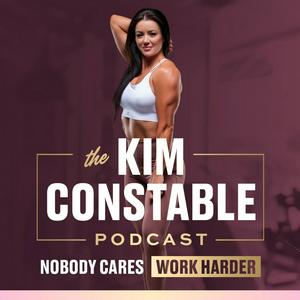
The Sculpted Vegan is the Worlds largest online Vegan Body Building Company.
Owner and founder, Kim Constable is a world-renowned fitness icon. Her motivational, no-BS mentality has inspired countless people all over the globe to reinvest in their health and get started on a path towards fitness.
In her tenure as a pro bikini athlete, she’s written hundreds of fitness articles and has sold thousands of body sculpting programs worldwide.
Follow us on social media:
Instagram: https://www.instagram.com/thesculptedvegan/
Facebook: https://www.facebook.com/thesculptedvegan
Youtube: https://www.youtube.com/@TheSculptedVegan
Twitter: https://twitter.com/sculptedvegan
Website: https://thesculptedvegan.com/
TikTok: https://www.tiktok.com/@thesculptedvegan
Podcast websiteListen to The Kim Constable Podcast, Unhedged and many other podcasts from around the world with the radio.net app
Get the free radio.net app
- Stations and podcasts to bookmark
- Stream via Wi-Fi or Bluetooth
- Supports Carplay & Android Auto
- Many other app features
Get the free radio.net app
- Stations and podcasts to bookmark
- Stream via Wi-Fi or Bluetooth
- Supports Carplay & Android Auto
- Many other app features

The Kim Constable Podcast
Scan code,
download the app,
start listening.
download the app,
start listening.
 Ireland

