
Listen to this podcast in the app for free: Download for free in the App Store
radio.net
Sleep timer
Save favourites
350 episodes
Matt Reviews: MIDNIGHT, SLAM FRANK + Sooo Much Off-Broadway
22/10/2026 | 1h 44 mins.Matt’s a Drama Desk Voter, have ya heard? Which means he sees SO much theatre. YAY! But also that means he doesn’t have as much time to record. BOO! Solution for now? A giant Review Round Up Episode covering over a dozen different performances!! What came out on top? What was forgettable? And what evening made Matt weep from start to finish? Also…how exactly does Elizabeth Holmes play into all of this??
Important Links:
* Broadway Breakdown: THE GREEN ROOM (Patreon)
* Broadway Breakdown: DISCORD
* Broadway Breakdown: SUBSTACK
* Broadway Breakdown: YOUTUBE
Time Stamps:
0:00 Hello and a New Review
2:20 Shuffle Along Reunion Concert
7:54 Garry Starr Classic Penguins
11:57 Music City
12:52 Truly, Howard Hughes
14:02 In Honor of Jean-Michel Basquiat
15:44 Arias with a Twist
17:56 Delirium
22:00 Pre-Existing Condition
27:30 A Ghost in Your Ear
30:09 Anon
36:20 Soon
49:20 Slam Frank
1:02:50 Midnight
Listener Questions:
“Is being controversial synonymous with being important?”
“Are there story ideas that are actually off-limits?”
“Should we cater to shorter attention spans or do we need to challenge them?”
This is a public episode. If you would like to discuss this with other subscribers or get access to bonus episodes, visit bwaybreakdown.substack.comPatreon Preview: JUKEBOX THAT MUSICAL Lady Gaga w/ Ali Gordon and John Wascavage
15/10/2026 | 38 mins.Fame, humanity...DEMONS?!?!?
We’re reviving Jukebox That Musical!! And who better to bring it back than Bio Mother John Wascavage and Podmother Ali Gordon?
Matt, John and Ali go through the catalogue of Lady Gaga (thanks to your votes) and come up with a bonkers musical that’s part social commentary, part lusty monster mash. We’d say more but you should hear it to believe it. DONATELLA!
Important Links:
* Broadway Breakdown Discord: Join Here
* Broadway Breakdown Green Room (Patreon): Join Here
* Broadway Breakdown Substack: Join Here
* Broadway Breakdown Youtube: Join Here
This is a public episode. If you would like to discuss this with other subscribers or get access to bonus episodes, visit bwaybreakdown.substack.comMatt’s London Trip (aka WE’RE BACK!)
10/10/2026 | 2h 4 mins.Matt went to London and saw 8 shows. Also…we’re back!!!! Take a journey as Matt struggles to travel anywhere and wipes himself out seeing more shows than he had days in England.
Important Links:
* Broadway Breakdown Discord: Join Here
* Broadway Breakdown Green Room (Patreon): Join Here
* Broadway Breakdown Substack: Join Here
* Broadway Breakdown Youtube: Join Here
Time Stamps:
2:00 Voting for the next Deep Dives
5:30 Matt and London: A History
9:54 Midnight at the never Get
25:30 Avenue Q
35:33 Sinatra
52:42 How the Other Half Loves
1:06:21 Cats
1:15:13 Kimberly Akimbo
1:25:02 The Producers
1:35:48 Thelma and Louise
1:59:40 What’s Next
This is a public episode. If you would like to discuss this with other subscribers or get access to bonus episodes, visit bwaybreakdown.substack.comPatreon Preview: FANTASY DRAFT (Best Actress in a Musical Tony Winners)
06/09/2026 | 27 mins.Full Episode Here: The Broadway Breakdown Green Room
INTRODUCING! The debut of the Broadway Breakdown FANTASY DRAFT! It’s like Fantasy Football. Except without the pesky football. And without a cash prize. Just all of your opinions on what we picked.
Breakdown regulars Adam Elsberry (@adamels), Margaret Hall (@itsmargarethall), Rob W. Schneider (@robwschneider) and newcomer Steve Tipton (@stevetiptonnyc) all stop by the Green Room for a new Round Table. Drafting the Tony winners for Best Performance by a Leading Actress in a Musical!!! Who gets Patti in Gypsy? Did someone choose Mary Martin in South Pacific? And what of Diahann Carroll in No Strings or Barbara Harris in The Apple Tree? FIND OUT!!! .
Let us know YOUR Fantasy Draft Picks as well!
Categories:
One and Done (One nomination/One win. Nothing else)
Second Wins (Second win in THIS category, not overall)
Singularly Anointed (Only actress out of many to win for this role)
Contentious
Untouched/Iconic
Soap Box
Final Girl (The performance you just can’t NOT pick)
This is a public episode. If you would like to discuss this with other subscribers or get access to bonus episodes, visit bwaybreakdown.substack.comMatt Reviews: Summer Drama Desk Shows & theater.games w/ Matt Rodin!
03/09/2026 | 1h 34 mins.Matt is a fancy Drama Desk voter now, which means he has to see a LOT more shows! It’s quiet on Broadway right now, so Matt’s been seeing a whole bunch of Off-Broadway productions and he’s coming back early on the Breakdown to do a Summer Review Wrap Up! Followed up by a talk with Matt Rodin (@whoismattrodin) about his new site theater.games and how it’s combining fun and education for theater lovers everywhere!!!
Broadway Breakdown Links:
* The Broadway Breakdown Green Room (Patreon!)
* Broadway Breakdown: Discord
* Broadway Breakdown: Substack
* Broadway Breakdown: Youtube
02:32 - A Walk on the Moon
08:40 -An American Daughter
14:36 - Giulia: The Poison Queen of Palermo
22:47 - The Winter’s Tale
26:58 - The Circuit
28:28 - The Pass
32:55 - Disruption
36:06 - Are You Mad at Me?
38:53 - The Maids
42:05- The Saviors
46:24 - Birthright
52:50 - Talk w/ Matt Rodin
This is a public episode. If you would like to discuss this with other subscribers or get access to bonus episodes, visit bwaybreakdown.substack.com
More Arts podcasts





Trending Arts podcasts

















About Broadway Breakdown
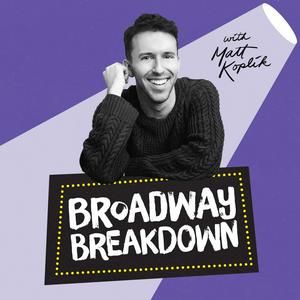
Matt Koplik is the most opinionated, foul-mouthed, and passionate theatre geek with access to a mic. Every week, Matt and a guest explore Broadway history by diving into the careers of the artists who shaped it. Whether discussing Sondheim and Sweeney or Herman and Dolly, Matt is sure to give you fun facts, deep analysis, and lots of four letter words. Tune in!! bwaybreakdown.substack.com
Podcast websiteListen to Broadway Breakdown, Stories of Art and many other podcasts from around the world with the radio.net app
Get the free radio.net app
- Stations and podcasts to bookmark
- Stream via Wi-Fi or Bluetooth
- Supports Carplay & Android Auto
- Many other app features
Get the free radio.net app
- Stations and podcasts to bookmark
- Stream via Wi-Fi or Bluetooth
- Supports Carplay & Android Auto
- Many other app features
Broadway Breakdown
Scan code,
download the app,
start listening.
download the app,
start listening.
 Ireland
