
Listen to this podcast in the app for free: Download for free in the App Store
radio.net
Sleep timer
Save favourites
1284 episodes
Anthropic IPO Reveals $46B Run Rate, Microsoft Cuts 27% of Staff & Americans Reject CEO Pay Gaps
26/10/2026 | 46 mins.October 27, 2026: I unpack Anthropic's IPO filing showing revenue that jumped from under $1 billion a quarter last year to $11.6 billion this quarter, why Wall Street is valuing the company at up to $2 trillion despite $80 billion in reported losses that are mostly accounting charges tied to how they raised money, and what it means when more than half the Fortune 500 are paying six figures or more but spending less than 0.1% of their operating budgets on AI. Then I get into Microsoft offering voluntary buyouts to 60,000 employees including teams in Xbox, Windows, Copilot, and Finance while excluding data centers and sales, why this is a trade of buildings and chips in and people out as the company spends $175 billion on AI infrastructure this year, and why I think we're about to see a massive influx in hiring for communication, PR, and marketing roles because companies are doing a terrible job explaining what AI means to employee. Finally, I look at a Bentley University and Gallup survey showing 84% of Americans say companies should avoid big pay gaps between CEOs and employees but only 15% think their companies are doing a good job of it, why I don't think you should ever care how much your CEO makes as long as you're being paid what you're worth, and the four situations where pay gaps actually do matter. I break down when the explanation doesn't match the decision, when accountability only runs in one direction, when your pay doesn't match your worth, and when leaders' incentives shape your daily life, and why Elon Musk's pay package tied to goals like hitting $8.5 trillion valuation and delivering 1 million humanoid robots shows what happens when compensation is structured around ridiculous astronomical milestones that actually get achieved.
Chapters
00:00:00 Google's IPO Warning and the Privacy-to-Scrutiny Trade: What Anthropic's Public Debut Reveals
00:01:10 Anthropic's IPO Filing: The Numbers Behind Claude and What They Tell Us About AI Adoption
00:12:04 The Bear Case: High Valuation, Fixed Costs, and the Dependency Dilemma
00:15:15 Investment Strategy: Who Should Buy Anthropic and Who Should Stay Away
00:24:10 The Bigger Economic Shift: From Tech Hubs to Trades and the 700 Billion Dollar Infrastructure Wave
00:26:48 CEO Pay Gaps Get Failing Grades: When Fairness Matters and When It Doesn't
00:35:54 The Four Times You Should Actually Pay Attention to Pay Gaps and Executive CompensationMusk Gives SpaceX Shares to 73M Kids, Anthropic $100B Promise & ASML Ties CEO Pay to Employee Morale
23/10/2026 | 37 mins.October 23, 2026: I unpack two very different approaches to sharing AI wealth after Anthropic pledged 5% of its shares to a public benefit fund it controls while Elon Musk announced he'll give one SpaceX share directly to every kid in America, why one approach hands people ownership and the other hands them a promise, and what history teaches us about foundations that drift away from their founders' vision like the Ford Foundation that eventually told Henry Ford's grandson that hospitals weren't part of the program. I explore why Musk's companies support somewhere between 400,000 and a million jobs worldwide, why more than 4,400 SpaceX employees could become millionaires when the company went public, and why giving 73 million children actual equity respects people enough to let them own something instead of waiting for experts to decide who deserves help. I break down the effective altruism philosophy behind Anthropic's approach, why it feels dystopian when the company building technology that might displace millions of jobs also gets to decide which displaced people receive relief, and why Milton Friedman said nobody spends somebody else's money as carefully as he spends his own. Then I get into why AI is everywhere except in the GDP numbers, why companies spent hundreds of billions on AI in 2025 but 95% of projects produced no measurable profit impact, and why the stock market just had its worst day since June with the NASDAQ dropping 2.6% as investors panic about two opposite things at once. I explore why Meta fell 7% after saying it will spend up to $145 billion on capital projects, why CoreWeave's stock crashed from $163 to $54 as local governments put moratoriums on new data centers, and why the real bottleneck isn't chips but power with the U.S. short about six Californias worth of electricity by 2050. I break down why only 2% of U.S. households pay for AI tools, why the most important jobs in the AI era are linesmen and electricians not prompt engineers, and why leaders need to stop asking how to do the same work cheaper and start asking what they'd build if they could build 10 times as much. Finally, I look at ASML, Europe's most valuable company and the only firm that can build the machines needed to make cutting edge chips, tying executive pay to employee satisfaction by measuring whether people understand their roles, whether teams are organized, and whether managers care about them as people, and why this shifts leadership from lagging indicators like revenue to early warning signs that show up before the numbers drop.
Chapters
00:00:00 Ownership Versus Promises: Musk's SpaceX Shares and Anthropic's Public Benefit Fund
00:13:23 The Ford Foundation Warning: When Founders Lose Control of Their Legacy
00:23:16 The Real AI Bottleneck: Power Plants, Not Processors
00:26:54 Beyond Cost Cutting: Moving from Bucket One to Bucket Two AI Strategy
00:33:54 The Efficiency Trap: Why Measuring Everything Turns People Into Line ItemsAI Agents Work 6X Longer, Princeton PhD Job Hunt Fails After 2,300 Tries , & Why AI Means More Work
20/10/2026 | 31 mins.October 20, 2026: I get into why AI is launching a brand new first phase that's landing on knowledge workers who are already in phase three, why Jensen Huang says companies cutting employees due to AI just lack imagination, and why the near future isn't less work but more ambition per person with human attention and judgment becoming the scarce resource. Then I explore who actually owns the AI agents inside your organization, why 82% of enterprises discovered agents in the past year they didn't even know they had, and why employees not IT or HR are going to own the bots because they're spinning them up without asking permission just like they did with iPhones and Dropbox. I break down the coming shift toward bring your own agent policies, why interviews will soon include questions like what can your agents do, and why an agent trained on your expertise will follow you from job to job like a carpenter's tools or a chef's knives. Finally, I look at the Wall Street Journal story about a Princeton PhD in chemical engineering who applied to 2,300 jobs over two years and still doesn't have one, why his story is painful but may not reflect the rule, and why unemployment at 4.2% with low layoffs and rising demand in healthcare and construction suggests the market isn't closed but shifting toward different kinds of work that require flexibility, relocation, and real world networking instead of spray and pray online applications.
Chapters
00:00:00 Jevons Paradox: Why AI Makes Us Work More, Not Less
00:06:05 The Industrial Revolution Lesson: When Better Tools Meant Longer Hours
00:11:52 The Ambition Multiplier: Jensen Huang's Imagination Argument
00:20:09 Agent Fatigue: Why My Team Ignores Our Slack Bot
00:21:49 The Princeton PhD Who Applied to 2,300 Jobs and Still Can't Get Hired
00:28:45 When Robots Talk to Robots: AI Applications Meet AI ScreeningAccenture’s $29 AI Limit, Bank of America’s 1,000 AI-Driven Jobs & Teen Pays $500 to Shadow Stranger
16/10/2026 | 25 mins.October 16, 2026: I unpack why Accenture, one of the world's largest consulting firms that sells AI transformation to thousands of companies, just told its employees it will only pay $29 a month for Claude after some consultants ran up bills between $500 and $1,000 monthly, and why this marks the end of the era where companies assume one frontier model works for everything. I explore why AI costs keep rising even as intelligence gets 10 times cheaper every year, how 73% of organizations say their AI costs came in above projections, and why companies are learning that summarizing a meeting doesn't require the same model as building multi-step agents. I break down how AT&T cut costs by 56% with only a 2% quality dip by routing requests to cheaper models, why AI policies inside organizations are starting to look like corporate travel policies with tiers and escalation rules, and how being good at AI is no longer just about prompting but knowing which tool to use for what task. Then I get into Bank of America hiring a thousand contractors to patch software vulnerabilities exposed by Anthropic's Mythos model, why a tool so capable at finding problems actually created jobs instead of eliminating them, and how AI didn't replace the security team but handed them a much bigger to-do list. I explore the radiologist lesson from 2016 when Geoffrey Hinton said people should stop training them because AI would replace them, why the field instead became one of the most in-demand careers with salaries rising faster than others, and how AI-related roles at major banks jumped 49% this year to almost 140,000 listings. Finally, I look at a 16-year-old in New York City who spent $500 to plaster flyers across the city asking to shadow people at their jobs because he's so anxious about his future he lies awake at night, why this points to a real gap in how young people learn about work today, and why we need to bring back apprenticeship programs that let people see what work actually looks like beyond a laptop screen.
Chapters
00:00:00 Accenture's AI Budget Cap: When the Consulting Giant Hits the Brakes
00:05:40 The AI Cost Paradox: Cheaper Intelligence, Higher Bills
00:10:20 Bank of America Hires 1,000 Contractors to Fix What AI Found
00:13:45 The Radiology Lesson: When AI Creates Jobs Instead of Destroying Them
00:17:46 The 16-Year-Old Who Plastered NYC with 'Let Me Shadow You' FlyersListening Device at OpenAI, McKinsey’s AI Interviews & Anthropic’s Fear Factory Targets Toasters
14/10/2026 | 29 mins.October 14, 2026: I unpack the arrest of an OpenAI engineer who allegedly planted a hidden recording device wrapped in toilet paper inside an executive conference room where discussions about super intelligence were taking place, why the FBI and Justice Department are treating frontier AI companies like national security assets, and whether these organizations should require U.S. citizenship for anyone working near the core technology. I explore the tension between attracting global talent and protecting what may be the most powerful technology humans have ever built, why AI companies can no longer be treated like ordinary tech firms, and what it means when the government describes your product as super intelligence technology. Then I get into McKinsey's new hiring process where job candidates argue with an AI avatar playing a client while partners watch from behind glass, why using AI to pull out human judgment from humans is backwards, and how this turns interviews into AI versus AI gladiator matches with a human audience. I break down the concept of human prompting, why rehearsed candidates are a people problem that requires a people solution, and what message you send when your brand is human consulting but your interview process removes humans from the room. Finally, I look at Anthropic's research warning that small AI models could soon copy themselves onto smart ovens and off brand Android devices, why David Sacks calls this a fear factory and says we've gone from the Terminator is coming to your toaster might kill you, and why Coinbase's fraud detection model that beats Anthropic's own frontier system while running faster and cheaper actually points toward a safer AI future, not a scarier one.
Chapters
00:00:00 Spy Device at OpenAI: The Recording Device Wrapped in Toilet Paper
00:12:18 Human Prompting: Why AI Can't Test for Human Judgment
00:18:35 Anthropic's Fear Factory: Your Toaster Might Kill You
00:21:50 Intelligence at Design Time Versus Runtime: The Car Analogy
00:27:10 Everyone is a Manager Now: What AI Agents Mean for Pay and Titles
More Business podcasts








Trending Business podcasts





















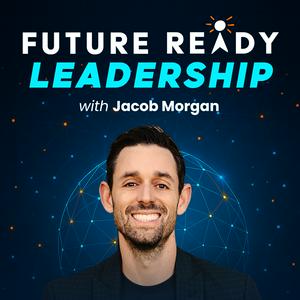
About Future Ready Leadership With Jacob Morgan
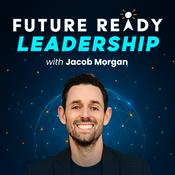
The future of work isn't coming. It's already here — and it's moving fast. Future Ready is the podcast for leaders who want to stay ahead of AI, workplace transformation, and the forces reshaping how organizations operate and compete. Hosted by Jacob Morgan, futurist and bestselling author, this is where strategy meets reality.
Every week, two formats in one feed: honest, unfiltered conversations with the CEOs, CHROs, and senior executives actually building the future of work — and sharp, no-fluff daily briefings that take the most important developments in artificial intelligence, AI agents, leadership, hybrid work, and organizational strategy and tell you exactly what they mean for your business.
No hype. No filler. Just the insights, frameworks, and real-world playbooks that help you lead smarter, build resilient teams, and make better decisions in a world that won't slow down.
If you're serious about leading what's next — this is your podcast. Subscribe to Future Ready wherever you listen.
Podcast websiteListen to Future Ready Leadership With Jacob Morgan, Money Talks and many other podcasts from around the world with the radio.net app
Get the free radio.net app
- Stations and podcasts to bookmark
- Stream via Wi-Fi or Bluetooth
- Supports Carplay & Android Auto
- Many other app features
Get the free radio.net app
- Stations and podcasts to bookmark
- Stream via Wi-Fi or Bluetooth
- Supports Carplay & Android Auto
- Many other app features

Future Ready Leadership With Jacob Morgan
Scan code,
download the app,
start listening.
download the app,
start listening.
Future Ready Leadership With Jacob Morgan: Podcasts in Family
 Ireland