
Listen to this podcast in the app for free: Download for free in the App Store
radio.net
Sleep timer
Save favourites
348 episodes
The French Revolution's disastrous money experiment - Part 2
21/10/2026 | 45 mins.The French Revolution was a bloody fight for liberty, equality and fraternity. But it was also a battle over money.
In part two of our series on the French Revolution, host Robin Wigglesworth tackles the transformation of France’s monetary system with Rebecca Spang, historian and author of Stuff and Money in the Time of the French Revolution.
As the country descended into war, political turmoil and the Reign of Terror, the experiment with the currency known as the Assignat became increasingly troubled. Robin and Rebecca examine why trust in money matters. Plus, did the revolution’s economic turmoil pave the way for Napoleon Bonaparte’s rise to power?
Further reading:
Stuff and Money in the Time of the French Revolution by Rebecca L Spang
To enjoy future episodes, be sure to subscribe to The Story of Money wherever you get your podcasts, also on the show's dedicated YouTube channel here: https://www.youtube.com/@FTTheStoryOfMoney
Hosts: Robin Wigglesworth
Senior producer: Michela Tindera
Executive producer: Kate Ford
Original music and sound design: Breen Turner
Video editor: Michael Saliba
Podcast development: Laura Clarke
FT global head of audio: Flo Phillips
Learn more at www.ft.com/tsom or get in touch at thestoryofmoney@ft.com.
Read a transcript of this episode on FT.com
Hosted on Acast. See acast.com/privacy for more information.The French Revolution's disastrous money experiment - Part 1
14/10/2026 | 48 mins.The French Revolution was a bloody fight for liberty, equality and fraternity. But it was also a battle over money.
In part 1 of our series on the French Revolution, host Robin Wigglesworth explores the revolution’s economic origins with Rebecca Spang, historian and author of Stuff and Money in the Time of the French Revolution. They look at the time of the ‘ancien régime’ and the reign of King Louis XVI, to the storming of the Bastille and the development of a controversial new currency called, at different times, both a “saviour of France” and a “poison".
Further reading:
Stuff and Money in the Time of the French Revolution by Rebecca L. Spang
Vote for us! The Story of Money has been nominated for a Signal Award in the Money & Finance category. It’s a Listener Choice award, which means we need your help. Vote for us to win here. We appreciate your support!
To enjoy future episodes, be sure to subscribe to The Story of Money wherever you get your podcasts, also on the show's dedicated YouTube channel here: https://www.youtube.com/@FTTheStoryOfMoney
Host: Robin Wigglesworth
Senior Producer: Michela Tindera
Executive producer: Kate Ford
Original music and sound design: Breen Turner
Video editor: Michael Saliba
Podcast development: Laura Clarke
FT global head of audio: Flo Phillips
Learn more at www.ft.com/tsom or get in touch at thestoryofmoney@ft.com.
Read a transcript of this episode on FT.com
Hosted on Acast. See acast.com/privacy for more information.How the US financed World War I using Charlie Chaplin and Girl Scouts
07/10/2026 | 40 mins.The first world war was one of the deadliest conflicts the world has ever seen. And when the US entered the war in 1917, it faced a massive financial challenge: how to pay for its contribution? Enter Treasury Secretary William McAdoo who launches the groundbreaking Liberty Loan Programme and - alongside an unprecedented national propaganda campaign featuring silent film stars like Charlie Chaplin, Girl Scouts, even a captured German submarine in Central Park - encourages thousands of Americans to ‘buy a bond’ as part of their patriotic duty.
But did it work? And what was the longtime impact? Hosts Gillian Tett and Robin Wigglesworth discuss how this campaign raised over $21 billion - the equivalent of around $9 trillion today - and in doing so, birthed the modern US Treasury market and transformed America into a nation of investors.
Further reading: A Fabulous Debt: How Bonds Made the Modern World by Robin Wigglesworth
To enjoy future episodes, be sure to subscribe to The Story of Money wherever you get your podcasts, also on the show's dedicated YouTube channel here: https://www.youtube.com/@FTTheStoryOfMoney
Hosts: Gillian Tett and Robin Wigglesworth
Senior Producer: Michela Tindera
Executive producer: Kate Ford
Original music and sound design: Breen Turner
Broadcast engineer: Gregory Bobillot
Video editor: Michael Saliba
Podcast development: Laura Clarke
FT global head of audio: Flo Phillips
Learn more at www.ft.com/tsom or get in touch at thestoryofmoney@ft.com.
Read a transcript of this episode on FT.com
Hosted on Acast. See acast.com/privacy for more information.The bloody birth of the bond market
30/09/2026 | 43 mins.The US Treasury market - the world's largest government bond market - is worth about $32tn today, making it the largest pile of debt accumulated in history. But its roots lie in medieval Venice, a bloody military disaster and a leader who was forced to raise a loan to fund a war against the Byzantine Empire.
What followed was a catastrophe involving pestilence, defeat and the brutal murder of the Doge, or leader, himself on the streets of Venice. But out of this crisis emerges a financial tool that transformed global capitalism: a tradable loan that offered transparency, accountability and formed the foundations of the modern bond market.
In a special live recording from New York, Gillian Tett and Robin Wigglesworth dive into the origins of the world’s first tradable bond. Plus, why bonds remain the ultimate check on government power today and what 12th-century Venice can teach us about current market turmoil.
Further reading: A Fabulous Debt: How Bonds Made the Modern World by Robin Wigglesworth
To enjoy future episodes, be sure to subscribe to The Story of Money wherever you get your podcasts, also on the show's dedicated YouTube channel here: https://www.youtube.com/@FTTheStoryOfMoney
Hosts: Gillian Tett and Robin Wigglesworth
Senior Producer: Michela Tindera
Executive Producer: Kate Ford
Video Producer: Michael Saliba
Original music and sound design: Breen Turner
Broadcast engineers: Bianca Wakeman and Petros Gioumpasis
Podcast development: Laura Clarke
FT Global Head of Audio: Flo Phillips
Read a transcript of this episode on FT.com
Hosted on Acast. See acast.com/privacy for more information.Does history show that fraud is the sign of a healthy economy?
23/09/2026 | 45 mins.How do you tell if an economy is actually working? Most economics classes point to controlled inflation, steady growth, or low unemployment - but what if the level of financial fraud is the real hidden indicator?
Robin Wigglesworth and Gillian Tett talk to Dan Davies, financial historian and author of Lying for Money, to hear about some of the wildest and most shocking frauds in history. From 'the great salad oil swindle,' which almost brought down American Express to a fake gold mine in Borneo that ended with a mysterious fall from a helicopter. Together they explore how trust drives modern economies - and how fraudsters continuously exploit it.
Further reading: Lying for Money: How Legendary Frauds Reveal the Workings of Our World by Dan Davies
To enjoy future episodes, be sure to subscribe to The Story of Money wherever you get your podcasts, also on the show's dedicated YouTube channel here: https://www.youtube.com/@FTTheStoryOfMoney
Hosts: Gillian Tett and Robin Wigglesworth
Senior Producer: Michela Tindera
Executive producers: Kate Ford and Manuela Saragosa
Video producer: Michael Saliba
Original music and sound design: Breen Turner
Broadcast engineers: Bianca Wakeman and Petros Gioumpasis
Podcast development: Laura Clarke
FT global head of audio: Flo Phillips
Learn more at www.ft.com/tsom or get in touch at thestoryofmoney@ft.com
Read a transcript of this episode on FT.com
Hosted on Acast. See acast.com/privacy for more information.
More Education podcasts



Trending Education podcasts

















About The Story of Money
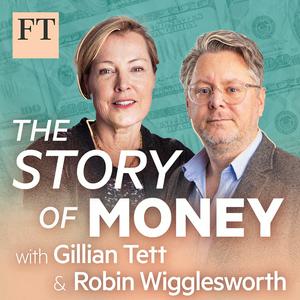
FT columnist Gillian Tett and FT Alphaville editor Robin Wigglesworth dig into the ideas, personalities and institutions that have shaped the history of finance. Hosted on Acast. See acast.com/privacy for more information.
Podcast websiteListen to The Story of Money, Begin Again with Davina McCall and many other podcasts from around the world with the radio.net app
Get the free radio.net app
- Stations and podcasts to bookmark
- Stream via Wi-Fi or Bluetooth
- Supports Carplay & Android Auto
- Many other app features
Get the free radio.net app
- Stations and podcasts to bookmark
- Stream via Wi-Fi or Bluetooth
- Supports Carplay & Android Auto
- Many other app features

The Story of Money
Scan code,
download the app,
start listening.
download the app,
start listening.
The Story of Money: Podcasts in Family

 Ireland
