

Listen to this podcast in the app for free: Download for free in the App Store
radio.net
Sleep timer
Save favourites
209 episodes
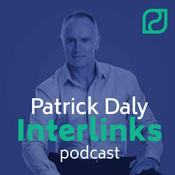
The Resilience Illusion: When Macro Performance Hides Micro Fragility
11/08/2026 | 29 mins.In this solo episode of Interlinks, I explore the difference between resilience and endurance. Businesses and supply chains may continue to perform through disruption, but that does not necessarily mean they are resilient. Endurance is the ability to keep going through a demanding event; resilience is about the condition in which you emerge from it — whether you can recover, adapt and retain the capacity to respond again.
I look at how organisations can maintain performance for long periods by drawing on hidden reserves: management attention, employee goodwill, workarounds, deferred investment and constant firefighting. Over time, this can consume what I describe as the organisation’s resilience margin and create resilience debt in people, processes, assets, decisions and capability. The warning signs often appear at the micro level in burnout, delayed projects, overloaded managers, recurring exceptions and growing dependence on individual effort.
From a Macro-to-Micro Strategy perspective, this distinction matters because strong macro performance can conceal serious strain underneath. The goods may still move, customers may still be served and headline results may still look healthy, while the organisation itself is becoming more brittle. True resilience should show up at the micro level in fewer workarounds, clearer ownership, protected capacity, lower burnout and the ability to face disruption repeatedly without risking service failure, resignation or loss of critical capability. Resilience is not simply crossing the finish line; it is retaining the capacity to run again.
Patrick Daly
★ The Macro-to-Micro Strategist™╽ Turning Global Turbulence into Operational Clarity ╽ Helping Business Leaders Build Resilient, Profitable Supply Chains ╽ Multilingual Trusted Advisor ╽ Call/WhatsApp ☎️ +353868116030 ╽
Hosted on Acast. See acast.com/privacy for more information.Macro-to-Micro: Orchestrating Intelligent Access Across Borders
29/07/2026 | 28 mins.In this episode of Interlinks, I am joined by Paul Davison of AECOM and Vardmar Lunkar of TRT Trasporti e Territorio, both members of the team behind Project ISAC—Intelligent Access to the European Road Network for Freight Transport. Sponsored by CEDR, the Conference of European Directors of Roads, the project is exploring how better data, governance and digital processes can ensure that the right freight vehicle, carrying the right load, uses the right road at the right time. This is another in a series of Interlinks episodes tracking the progress of this important European project over the past two years.
We discuss why Intelligent Access is becoming increasingly urgent as Europe confronts rising freight volumes, ageing infrastructure, new vehicle configurations and decarbonisation requirements. Paul and Vardmar explain the project’s five building blocks—data provision, operational management, post-trip monitoring, digital permitting and compliance control—and the practical roadmap they offer for phased implementation. We also examine the barriers identified across Europe, including fragmented regulation, inconsistent data, privacy considerations and differing levels of digital maturity, alongside the potential benefits for road authorities, freight operators and other road users.
Project ISAC provides a strong illustration of the Macro-to-Micro Strategy perspective in action. At the macro level, it aims to help Europe’s road management authorities create an integrated, cross-border system for the intelligent access of freight-carrying vehicles to the road network—improving infrastructure utilisation, safety, sustainability and competitiveness. At the micro level, the project has clearly articulated the practical challenges and capabilities required to make that ambition real, from machine-readable infrastructure data and interoperable systems to streamlined permitting, compliant route planning and effective collaboration among the many stakeholders involved.
Patrick Daly
★ The Macro-to-Micro Strategist™╽ Turning Global Turbulence into Operational Clarity ╽ Helping Business Leaders Build Resilient, Profitable Supply Chains ╽ Multilingual Trusted Advisor ╽ Call/WhatsApp ☎️ +353868116030 ╽
Hosted on Acast. See acast.com/privacy for more information.Why Resilience Is Replacing Efficiency in Global Logistics
07/07/2026 | 29 mins.In this episode of Interlinks, Patrick Daly speaks with Simon Legg, Managing Director Ireland for DP World, about DP World’s ambitions in Ireland and the changing role of logistics providers in a more disrupted and uncertain global trading environment.
DP World is one of the world’s major trade, ports and logistics businesses, with activities spanning ports and terminals, contract logistics, freight forwarding, marine services and end-to-end supply chain solutions. In Ireland, the company is building its presence across Dublin, Cork and Shannon, with the aim of offering customers a broader and more integrated alternative to traditional freight forwarding.
Simon discusses his own career journey in freight forwarding, DP World’s development from ports and terminals into end-to-end logistics, and the company’s plans for the Irish market. He explains how DP World is focusing on key export sectors such as pharmaceuticals and medtech, and how Ireland-based multinationals can benefit from global reach, sector-specific expertise and connected supply chain networks across Europe, the US, Asia and beyond.
The conversation also explores practical logistics challenges in Ireland, including congestion at Dublin Airport, cargo handling constraints, cold chain requirements, driver waiting times and the need for more efficient export consolidation. Simon outlines DP World’s plans for a specialist temperature-controlled facility on the outskirts of Dublin to support pharmaceutical and other sensitive shipments.
Patrick and Simon then move from local issues to global disruption, looking at the impact of instability in the Gulf, the Red Sea, the Suez Canal and other trade routes on lead times, warehousing, inventory and planning. They discuss why businesses now need to move beyond efficiency-only supply chains and think more seriously about resilience, adaptability, visibility and risk.
This conversation is a clear example of how macro-to-micro strategy is manifesting in the current environment, where the strategic requirements of business are shifting from efficiency to resilience and service providers such as DP World are tailoring their services and solutions to help international businesses execute that strategy.
Hosted on Acast. See acast.com/privacy for more information.Localisation: Much More than Translation
16/06/2026 | 29 mins.In this episode of Interlinks, Patrick Daly speaks with Patrice Dussault, a Montreal-based communications consultant working at the intersection of translation, writing, localisation and cross-cultural business communication. Patrice brings more than two decades of experience in the language professions, with a particular focus on helping companies communicate effectively across linguistic, cultural and commercial boundaries.
The conversation explores how the translation profession has been reshaped by artificial intelligence, and why the future of the field is not simply about humans competing with machines to convert words from one language to another. Patrice explains how AI has accelerated the commoditisation of basic translation, but also exposed where the real value lies: in helping businesses craft messages that resonate with specific audiences, markets and cultures. For Patrice, localisation is not just translation. It is about tone, context, buyer psychology, cultural references, commercial intent and whether a message actually lands in the market it is meant to reach.
This discussion is also a powerful example of Macro-to-Micro thinking in action. First, it shows that successful international communication requires a systemic view of language, culture, trust and market behaviour — especially in cross-border business and supply chain relationships. Second, Patrice’s own career illustrates how professionals can respond intelligently to technological disruption. Rather than defending a commoditised model of word-based translation, he recognised early the threat posed by AI and repositioned his work around business value, client outcomes and strategic communication. In doing so, he offers a practical example of how to adapt when technology changes the rules of the game.
Hosted on Acast. See acast.com/privacy for more information.Agility by Design: How Fractional Support Helps Businesses Adapt
28/04/2026 | 29 mins.In this episode of Interlinks, I’m joined by Rebecca Boyle, Brand Strategist, Copywriter and Chief Marketing Officer at Lissah and Boyle, a Northern Ireland-based business providing fractional support to companies through branding, communications and wider business growth services across the island of Ireland, Great Britain and further afield. Rebecca brings a background in journalism, NHS communications, copywriting and brand strategy to her work with business leaders who often know their industries inside out, but need practical support in communicating, positioning and growing their businesses more effectively.
Our conversation explores what fractional business support really means in practice: a model that sits somewhere between consultancy and agency support, combining strategic input with hands-on delivery. We discuss why this approach appeals to companies that need expertise but may not require, or be ready for, a full-time senior hire. Rebecca also explains how branding is not just about looking good, but about helping businesses become clearer about who they are, how they speak, who they want to attract, and how they build trust with customers, employees and partners.
From a macro-to-micro perspective, this kind of tailored support is especially relevant in a wider context of skills shortages, demographic change, AI disruption, economic uncertainty and continuous pressure to adapt. At the tactical level, these forces show up as specific, time-bound needs: sharper messaging, better staff attraction and retention, stronger leadership communication, or specialist support for a growing business. Fractional support offers one practical way to bridge that gap between big external pressures and the immediate work that has to be done inside the business.
Hosted on Acast. See acast.com/privacy for more information.
More Business podcasts
 Better With MoneyBusiness, Education, Investing, Self-Improvement, Tutorials
 The Prof G Pod with Scott GallowayBusiness, Entrepreneurship
 Understanding Money with Eoin McGeeBusiness, Education, Society & Culture
 A Bit of OptimismBusiness, Careers, Education, Self-Improvement
 Informed Decisions Independent Financial Planning & Money PodcastBusiness, Education, Investing
 The Diary Of A CEO with Steven BartlettBusiness, Education, Society & Culture
 Inside Business with Ciaran HancockBusiness
 Working Hard with Grace BeverleyBusiness, Education, Health & Wellness, Marketing, Self-Improvement
 Money TalksBusiness
 Prof G MarketsBusiness, Investing
Trending Business podcasts
- Patrick Daly Interlinks PodcastBusiness, Education, Management
 CruthaighBusiness, Entrepreneurship
 Money Clinic with Claer BarrettBusiness, Business News, Investing, News
 The Property PodcastBusiness, Business News, Education, Investing, News
 The Master Investor Podcast with Wilfred FrostBusiness, Investing
 Rule Breaker InvestingBusiness, Investing
 Get Started InvestingBusiness, Education, Investing
 Money Stuff: The PodcastBusiness, News, Society & Culture
 Morning Brew DailyBusiness, Business News, News
 Look Who I FoundBusiness, Entrepreneurship
 The Ramsey Show HighlightsBusiness, Education, Investing, Self-Improvement
 Garys EconomicsBusiness
 Breakfast Business with Joe LynamBusiness
 声动早咖啡Business, Entrepreneurship, Investing, Technology
 The McKinsey PodcastBusiness, Business News, Management, News
 The Economics ShowBusiness, Business News, News, News Commentary
 Thoughtful Money with Adam TaggartBusiness, Investing
 PBD PodcastBusiness
 TrumponomicsBusiness, Investing
 CNBC's "Fast Money"Business, Investing, News
 The BusinessBusiness, Entrepreneurship
About Patrick Daly Interlinks Podcast
Interlinks is a program about business. technology and globalization. In each episode, I have a sit-down conversation with a person from the world of business, politics, or academia to understand from their perspective how the great trends of our time, namely - geopolitical fragmentation, demographic change, digital transformation, and climate change - are affecting their life, work, and view of the world. The conversations with my invitees from all over the world are wide ranging touching on both the professional and the personal aspects of their experience. International Business, Supply Chain, Globalized Economy, Geopolitical Fragmentation, Climate Change, Digital Transformation, Demographic Stagnation.Patrick Dalyhttp://www.albalogistics.com/ Hosted on Acast. See acast.com/privacy for more information.
Podcast websiteListen to Patrick Daly Interlinks Podcast, Better With Money and many other podcasts from around the world with the radio.net app
Get the free radio.net app
- Stations and podcasts to bookmark
- Stream via Wi-Fi or Bluetooth
- Supports Carplay & Android Auto
- Many other app features
Get the free radio.net app
- Stations and podcasts to bookmark
- Stream via Wi-Fi or Bluetooth
- Supports Carplay & Android Auto
- Many other app features

Patrick Daly Interlinks Podcast
Scan code,
download the app,
start listening.
download the app,
start listening.
 Ireland