
Listen to this podcast in the app for free: Download for free in the App Store
radio.net
Sleep timer
Save favourites
55 episodes
EP. 56: “If you want to generate alpha, you can’t be sharing this information.” with Sagar Kadakia, CEO & Founder, Qualitate
21/10/2026 | 48 mins.Free Personalized AI Moderator Trial
“If you want to generate alpha, you can’t be sharing all this information.”
“That interviewer needs to think and feel and act like you do. It needs to have all the context that you do.”
“We’re just making primary research faster, cheaper, and embedded. If I had to summarize the whole thing, that’s what Qualitate is doing.”
Sagar Kadakia has spent nearly 20 years in primary research. He joined Tom DelVecchio at ETR in 2011, ran buy-side survey work for six years, and later built research and data products at 7Park Data and CB Insights.
In 2023, as ChatGPT and voice capture crossed human parity, he founded Qualitate: an AI interviewer that runs 45–65 minute expert conversations autonomously and is grounded in what he describes as the fastest-growing AI-moderated interview library in the world.
Crew Capital wrote the first $1M check when few others wanted to fund a company building its own expert panel. This week, Qualitate announced a $25M Series A led by Insight Partners, with net revenue retention above 300% and run-rate revenue up 10x in nine months.
Sagar walks through Qualitate’s two products: a proactive library built using Qualitate’s own capital and questions, and a private channel-check product where clients bring their own questions, interviewer, library, and internal inputs — without that proprietary information being mixed back into the broader system.
We also get into why the architecture matters: grounding instead of retraining for every new model, persistent memory so call five knows calls one through four, and transcripts structured so investors can query them for time series instead of simply searching.
“You can search through transcript files, but you can’t actually query that data. On Qualitate, you can actually query transcripts.”
“We don’t train or fine-tune anything. Because if you do that and the next version comes out, all of that work you just did goes to zero. We ground it.”
💡 This episode is presented by:Fiscal.AI — Delivering Modern Financial Data Infrastructure. 15% discount with code PITCH: https://fiscal.ai/?via=pitch
Highlights:
(00:33) Twenty years in primary research: ETR, 7Park Data, CB Insights
(01:40) ChatGPT, voice capture and “continuous expert intelligence”
(03:20) $25M Insight Partners Series A, NRR above 300%
(04:34) Qualitate’s proactive AI-moderated research library
(09:06) Private channel checks: your questions, interviewer and library
(12:57) Uploading transcripts and memos into the interviewer
(15:15) Human bias vs. AI-moderated interviews
(21:08) The $2,000 expert call problem
(21:30) One-third to one-quarter of the price; 20–40 calls in days
(23:18) Building an expert panel with agents
(26:35) Do the first two calls yourself, then hand off 50
(29:07) Structured, queryable transcripts and longitudinal analysis
(31:45) Hedge funds moving channel checks to Qualitate
(47:12) Continuous intelligence: AI, humans, simulations and synthetics
(51:12) Faster, cheaper, embedded primary research
(52:23) Sagar’s biggest entrepreneurial mistakes
Topics: Expert Networks, AI Interviewing, Primary Research, Channel Checks, Qualitate, GLG, Guidepoint, AlphaSense, Tegus, Snowflake, Insight Partners, Grounding vs. Fine-Tuning, Proprietary Data, Agents, Hedge Funds, Private Equity Diligence
Research Sponsors:
Oxford Data Plan - The Home of Alternative Data.
The Home of Alternative Data Carbon Arc — The Infrastructure for the AI Economy. 30 days free with code PTPM30:
Pitch The PM:
Substack: https://pitchthepm.substack.com
LinkedIn: https://linkedin.com/in/doug-garber-42aa508
Sagar Kadakia:
LinkedIn: https://linkedin.com/in/s-kadakia
Qualitate: https://qualitate.io
Not Investment Advice.EP. 55: Token Price Indexes Are Falling on Model Shifts Not Price Cuts with Carmen Li, CEO of Silicon Data & Compute Exchange
16/10/2026 | 56 mins.Carmen Li, CEO of Silicon Data and Compute Exchange, joins the show to explain how compute is becoming a brand-new asset class. A former energy options market maker at DRW who later ran global data integrations at Bloomberg, Carmen was pre-seeded by DRW founder Don Wilson to build the GPU industry benchmarks. Silicon Data is the referee — "the Bloomberg for compute" — while Compute Exchange is the liquidity layer where GPUs, tokens and servers change hands.
We get into why token price indexes are falling, recent token & model consumption trends, why GPU residual values are above accounting depreciation schedules, and how neoclouds, their lenders, and compute users can hedge GPU exposure to reduce business volatility.
• "The A100 has been around for six years at this point, and we still see three-year contracts signed on A100s." Residual values are still hovering above five-year straight-line depreciation.
• “we'd definitely be looking at 30 trillion of [GPU] derivatives every year."
Topics: Compute as an asset class, GPU indices, CME compute futures, GPU depreciation and useful life, neoclouds, token pricing, AI chip supply chain,
💡 This episode is presented by: Oxford Data Plan–The Home of Alternative Data
Not Investment Advice.
Highlights:
(0:00) Doug introduces Carmen Li, CEO of Silicon Data and Compute Exchange
(0:20) From energy options market maker at DRW to Bloomberg Data, and why AI startups' swinging GPU costs made compute an industry-wide hedging problem
(4:09) How DRW founder Don Wilson pre-seeded Silicon Data, and building products with no product or sales team
(6:10) Two sides of the coin: Silicon Data as "the Bloomberg for compute" and Compute Exchange as "the Nasdaq for compute"
(7:49) Licensing indices to CME for H100 and B200 compute futures, and four ETFs filed before the futures even trade
(10:22) What makes an index the source of truth: tracking supply-demand, resisting manipulation, staying neutral
(12:57) Normalizing 50 B200 server configurations, and what earns a premium or a discount to the benchmark
(16:04) Sizing the market: from 1–3 trillion in spot compute to a potential 30 trillion in derivatives notional
(18:13) Who hedges first: neoclouds, hyperscalers and the financiers holding GPUs on their balance sheets
(21:06) Michael Burry's depreciation bear case vs. the physical market: A100s still signing three-year contracts after six years
(22:49) Why older chips stay productive: cooling, floor weight, wait times and the second-hand market
(26:20) 300+ neoclouds and why more data sources make an index harder to manipulate
(28:48) B200s at ~$5 per GPU hour, the implied forward curve and the shift into contango
(31:18) Why an index provider can't give forward guidance, or own the assets.
(33:59) Token indices on the Bloomberg Terminal, and a leading indicator for AI revenue
(37:03) Why token prices are falling: workflows moving to open-source and open-weight models
(38:51) Token pricing has no transparency, and why customers will demand control
(41:49) Where to invest in the AI stack, lessons from the internet era and why "AI is a gigantic baby"
(45:03) Homegrown silicon, fab capacity and why a hundred chip designers can't create a bubble
(48:56) Why compute futures enable price discovery, not a bubble
(49:29) Running a data company and a marketplace at the same time
(52:47) Carmen's lesson for entrepreneurs: pick something you love
(54:08) The vision: the liquidity provider and the referee for every layer of the cake
Research Sponsors:
Fiscal.AI - Delivering Modern Financial Data Infrastructure. 15% discount with code PITCH
Oxford Data Plan–The Home of Alternative DataAlphaSense–Decision Grade AICarbon Arc–The Infrastructure for the AI Economy
Pitch The PM Links:📩Early episode drops episode feedback on Substack Daily industry chatter and market color on LinkedIn
Carmen Li Links:
Carmen LI on LinkedIn:
Silicon Data: https://www.silicondata.comCompute Exchange: https://compute.exchangeEP. 54: Is The AI Boom Causing Machinery Scarcity?
08/10/2026 | 45 mins.My long time confidant, Jarrett Harris, Director of Research at IronAdvisor Insights joins the show to share his latest insights. He is quintessentially mid-western and was my go to source for learning about the on the ground pulse of the industrial economy when I was at Citadel and Millennium. As part of IronConnect, a heavy equipment industry service provider, Jarrett has unparalleled access to equipment dealers, rental companies, and industry executives.
My key takeaways from our conversation:
The industrial economy’s growth is being driven by Data Center related activity from power gen, to heavy equipment, to trucking and even landscaping and coal.
“A second-tier AWP manufacturer's entire inventory being bought out by a national rental house”
“I don't think we've ever had a time in my [Jarrett’s] 22 years where all three of those industries [for CAT] were firing at the same time.”
“We're having conversations with executives in that component supply chain, I think all of them are looking for an uptick in 2027 volumes. And that was not necessarily the case three or six months ago.
“We're hearing about a coal demand resurgence.”
“There is a risk that there are projects [Data Center] that developers are proposing in multiple states because they don't know which is going to move forward.”
Stocks: CAT, DE, PCAR, CMI, OSK, TEX, SITE, POOL, BTU, SNDK
*Not Investment Advice.
💡 This episode is presented by:Fiscal.AI–Delivering Modern Financial Data Infrastructure. 15% discount with code PITCH
(0:00) Introduction/highlights
(0:40) Doug introduces Jarrett Harris who is the axe in equipment-industry channel checks.
(1:59) How joining Iron Connect expanded Jarrett’s industry access and dealer network by 10x
(4:08) The Industrial economy is being driven by the data center buildout.
(5:23) Data center demand expands from construction equipment and power generation into new equipment categories.
(6:11) Landscaping, coal, transportation, and flatbed trailers emerge as derivative beneficiaries of the Data Center boom.
(9:38) Coal demand begins strengthening as power providers require higher base loads.
(12:01) Jarrett says he has never seen all three major Caterpillar end markets firing this strongly at the same time.
(12:34) Previously bearish industry contacts become more constructive on the 2027 outlook.
(13:36) The risk that data center project backlogs include projects proposed across multiple locations.
(15:58) Longer lead times, lighter used inventory, and highly utilized rental fleets keep equipment scarce.
(17:34) Jarrett describes an unprecedented buyout of a second-tier aerial equipment manufacturer’s inventory.
(21:03) Haul trucks and articulated trucks approach new-equipment pricing as lead times stretch toward a year.
(23:59) Trucking combines pent-up replacement demand with stronger data center and energy-related freight activity.
(25:53) Component suppliers become increasingly constructive on 2027 truck volumes.
(32:59) Trucking demand looks unusually industrial and project-driven rather than consumer-driven.
(33:47) Signs of improvement in agriculture collide with cautious dealers still recovering from used-equipment losses.
(36:40) A major trailer dealer estimates data centers drive
______________________________________________________________________Research Sponsors:Oxford Data Plan–The Home of Alternative DataAlphaSense–Decision Grade AICarbon Arc–The Infrastructure for the AI Economy
______________________________________________________________________
Pitch The PM Links:📩Early episode drops episode feedback on Substack Daily industry chatter and market color on LinkedIn
Jarrett Harris Links:Jarrett Harris LinkedInIron Connect
Highlights:EP. 53: Why is DKNG not Benefiting from the Prediction Markets Surge? Is it the VC Sydney Sweeney Effect on Customer Acquisition Cost (CAC)?
01/10/2026 | 50 mins.Prediction markets are surging, but DraftKings is moving in the opposite direction. Is the issue market share? Rising customer acquisition costs? Or simply a reset from last year’s growth expectations?
In this episode, Bernie McTernan, CFA, Managing Director and Senior Analyst at Needham & Company, breaks down the rapidly changing prediction-market landscape. We discuss Kalshi’s first-mover advantage, DraftKings’ strategy to replicate its regulated sportsbook playbook in currently unregulated states, Novig’s aggressive customer-acquisition push, and whether prediction markets meaningfully expand the long-term TAM for companies like DKNG.
With negative estimate revisions weighing on the stock, elevated short interest, and DraftKings trading at roughly 11x forward EV/EBITDA, the debate becomes increasingly interesting: how much of the bad news is already priced in—and could today’s investments create a much larger earnings opportunity over time?
“The stock's probably fifty percent lower than it was and the TAM's doubled.”
“Prediction markets aren't just sports. Soon you'll be able to bet the whisper number.”
“This is gonna be Robinhood on steroids.”
“The numbers are going down, short interest is going up. Why do you think that the investments and lower revisions this year are actually gonna have a benefit next year?”
Stocks: $DKNG, $FLUT
Topics: DraftKings, Kalshi, Prediction Markets, Sports Betting, FanDuel, iCasino, Novig, Polymarket, Customer Acquisition Cost, Market Share, Regulation, EBITDA, Sportsbooks
Not Investment Advice
[00:00:00] Introduction to Bernie McTernan, Managing Director and Senior Analyst at Needham & Company.
[00:01:40] Kalshi's rumored $40 billion private valuation.
[00:02:45] What DraftKings' first NFL week of prediction-market share actually looked like.
[00:04:30] The retention data that killed the original bear case on sportsbooks.
[00:05:00] Mid-teens to 30–40% share — the playbook DraftKings wants to run again.
[00:08:00] Why the prediction-market regulatory battle could end up at the Supreme Court.
[00:11:40] The data showing almost no customer overlap between Kalshi and DraftKings.
[00:18:00] Hedge fund hit rates and betting the number instead of the stock.
[00:20:15] Fast futures, crypto, and the iCasino land grab.
[00:21:50] The potential path from $1 billion to $5–6 billion of EBITDA.
[00:27:45] Why states legalize gambling — budget deficits, not morality.
[00:31:25] A trough multiple on estimates burdened by TAM expansion investments.
[00:43:45] Novig's $50 million ad and the Caesars cautionary tale.
💡 This episode is presented by:
Carbon Arc — The Infrastructure for the AI Economy.
Free trial with code PTPM30:
https://www.carbonarc.co/onboarding?flow=professional&billing=monthly&source=lenses
Research Sponsors:
Fiscal.AI — Delivering Modern Financial Data Infrastructure.
15% discount with code PITCH:
https://fiscal.ai/?via=pitch
Oxford Data Plan — The Home of Alternative Data:
https://oxford-dp.com/demo
AlphaSense — Decision Grade AI:
https://www.alpha-sense.com/Pitch/
Pitch The PM Links:
📩 Subscribe to our Substack for early episode drops, research updates, episode feedback, and the Pitch The PM Job Board:
https://pitchthepm.substack.com/
Doug Garber on LinkedIn:
https://linkedin.com/in/doug-garber-42aa508
Bernie McTernan, CFA Links:
LinkedIn:
https://www.linkedin.com/in/bernie-mcternan-cfa-84045a23/
Needham & Company:
https://www.linkedin.com/company/needham-&-company/EP.52 Why Point72 Wins–20 Years Next to Steve Cohen with Chandler Bocklage, Head of Business Development
24/09/2026 | 37 mins.Chandler Bocklage spent nearly two decades working alongside Steve Cohen, managing a portfolio before leading Business Development at Point72. In this episode, we discuss what separates good investors from great ones, how Point72 develops portfolio managers, why intellectual curiosity matters more than almost anything else, and how AI is reshaping the future of fundamental investing.
If you've ever wondered what it really takes to become a successful PM, this is one of the most candid conversations from inside the walls of legendary investment firm Point72.
“Alpha decay has been compressing and compressing. There are more and more people chasing the same alphas.”
“You have to have different duration, you have to have different catalyst paths, you have to have different thought processes because”
“Honestly, I think that's what it really comes down to. The sacrifices…”
"We don't think AI replaces analysts or PMs."
Highlights:
(01:31) The intellectual curiosity that defines Steve Cohen
(04:24) The unspoken sacrifices behind being great at this job
(04:56) The Kobe, Jordan, and Brady comparison to elite investing
(07:48) The origins of LaunchPoint and building a real development path
(10:24) Why AI won't replace analysts or portfolio managers
(14:41) What actually makes an investment process repeatable
(29:47) The talent war, mega-guarantees, and buy versus build
(33:12) The biggest mistake of his career — and what it taught him
(35:18) Why Steve Cohen stepped back from trading to build the firm
Topics: Point72, Steve Cohen, Portfolio Management, AI, Fundamental Investing, Risk Management, Analyst Development
______________________________________________________________________
💡 This episode is presented by Carbon Arc–The Infrastructure for the AI Economy. 30 Days free with code PTPM30
Research Sponsors:Oxford Data Plan–The Home of Alternative Data. Ping Makay Redd for a trial.
AlphaSense–Decision Grade AI. Free trial at https://www.alpha-sense.com/pitch/ Fiscal.AI–Delivering Modern Financial Data Infrastructure. Use code PITCH for 15% off______________________________________________________________________
Pitch The PM Links:📩 Subscribe to our Substack for research updates and new high-conviction episodes from top PMs, and our Job Board: https://pitchthepm.substack.com Doug Garber on LinkedIn for daily market color: https://linkedin.com/in/doug-garber-42aa508
Point72 Links:Chandler Bocklage on LinkedIn: https://www.linkedin.com/in/chandler-bocklage-476518a6/Point 72: https://point72.com/ ______________________________________________________________________
More Business podcasts






Trending Business podcasts


















About Pitch The PM
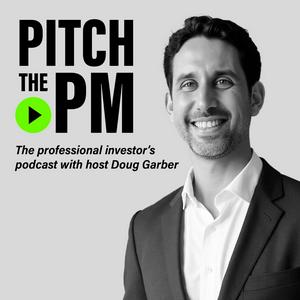
Pitch The PM is the professional investor’s podcast where host Doug Garber dives deep into high-conviction stock ideas using his Variant View Investment Checklist.
It’s a real-time look at the research process, blending lessons from Buffett, Munger, and Lynch with modern AI tools. Join Doug, ex-Citadel top analyst and Millennium Sr PM, as he works through his Buffett-inspired 20-slot punch card. Learn, laugh, and sharpen your edge.
Podcast websiteListen to Pitch The PM, Prof G Markets and many other podcasts from around the world with the radio.net app
Get the free radio.net app
- Stations and podcasts to bookmark
- Stream via Wi-Fi or Bluetooth
- Supports Carplay & Android Auto
- Many other app features
Get the free radio.net app
- Stations and podcasts to bookmark
- Stream via Wi-Fi or Bluetooth
- Supports Carplay & Android Auto
- Many other app features

Pitch The PM
Scan code,
download the app,
start listening.
download the app,
start listening.
 Ireland
