
Listen to this podcast in the app for free: Download for free in the App Store
radio.net
Sleep timer
Save favourites
13 episodes
S2 Ep6: Sculpting Lives: Making Sculpture Public
06/12/2021 | 1h 2 mins.Over the last year public sculpture has become a hugely controversial issue. No longer passive objects that we simply walk past on our streets, public sculptures are part of a vigorous debate about contemporary society – who is commemorated and represented, and why. In this episode we delve further into this subject, interviewing the people associated with our most recent sculpture commissions of and by women, speaking to critics and researchers who are reflecting on the historical dimensions of this contemporary moment, and the contemporary sculptors who are making objects that occupy our streets and squares. Jo and Sarah also visit the Breaking the Mould Exhibition: Sculpture by Women Since 1945, organised by the Arts Council Collection, to talk to the curator and some of the artists involved in this landmark display. Together, they discuss the relevance of the public display and exhibition of the histories of women working with sculpture and broader questions about gender and representation in the art world and public sphere in 2021 .
Contributors:
Hettie Judah, Art Critic and WriterNatalie Rudd, Senior Curator, Arts Council Collection
Kate MacMillan, King’s College, London
Bee Rowlatt, Chairwoman of the Mary on the Green campaign
Natalie Rudd, PhD Researcher and formerly Senior Curator, Arts Council Collection
Bianca Chu, Kim Lim Estate
Holly Hendry, Artist
Katie Cuddon, Artist
Permindar Kaur, Artist
Rosanne Robertson, Artist
Digital image: Maggi Hambling, Statue for Mary Wollstonecraft, 2020. Photography: Sarah Victoria TurnerS2 Ep5: Sculpting Lives: Cathie Pilkington
30/11/2021 | 34 mins.'The thing about my work is that there is a tension between a passionate love and engagement with the traditions of the past and a complete impatience with their irrelevance and it’s trying to hold those things in tension and trying to engage people in the complexities of that.' Cathie Pilkington, R.A.
Cathie Pilkington creates surreal, uncanny and ambivalent forms which are designed to unsettle and provoke. She employs a deliberate lack of hierarchy in her materials, using textiles and found objects alongside more traditional sculptural practices. Her work is often presented as an immersive installation, bringing themes of the domestic and everyday life into the language of sculpture.
During our interviews with Cathie Pilkington in the Royal Academy, her studio and a sculpture foundry, we discuss the barriers to women pursuing careers as sculptors, how sculpture can remain relevant and how an artist can make figurative sculpture that speaks to contemporary audiences. We met her at a pivotal point in her career, taking increasing control and asking questions about the future of sculpture. Pilkington (who was the first female Professor of Sculpture at the Royal Academy Schools) is Keeper at the Royal Academy and uses her role to ask questions about the history of sculpture and women at an institutional level.
Contributors:
Cathie Pilkington, R.A.
Simon Martin, Director, Pallant House Gallery
Chloe Hughes, Foundry Manager, A.B. Foundry
Anna McNay, writer and curator
Image: Portrait of Cathie Pilkington in the RA Keeper’s Studio,
Digital image courtesy of Hayley BenoitS2 Ep4: Sculpting Lives: Alison Wilding
23/11/2021 | 31 mins.Alison Wilding emerged into the art world in the 1980s making powerful sculptural statements out of a myriad of materials. Taking sculpture out of the museum and off the plinth, Wilding’s work is some of the most enigmatic and beguiling sculpture being produced, and in a candid interview in her studio we ask her about influences, materials and her experiences of art school. We also speak to art historians and commercial galleries to get different perspectives on the Turner Prize nominated sculptor. Taking to the art historian Jo Applin about where Wilding 'fits' within the histories of sculpture, she observed: 'You can always search for peer group comparisons or historical, where she might fit in a longer historical trajectory but there's something utterly idiosyncratic to the way in which she thinks in abstract terms that is, for me, one of the most rewarding things about her work.'
With contributions from:
Alison Wilding, R.A.
Jo Applin, Courtauld Institute of Art
Tom Rowland, Karsten Schubert
Madeleine Bessborough, New Art Centre
Jessica Smith, New Art Centre
Image: Alison Wilding, courtesy of Karsten Schubert, London.S2 Ep3: Sculpting Lives: Gertrude Hermes
16/11/2021 | 38 mins.'She did cause a bit of a revolution in the Royal Academy, which has been only to the good,' Anne Desmet, R.A.
Gertrude Hermes was one of the most experimental sculptors of the twentieth century. She also changed the way women artists were treated at the Royal Academy forever – a story which had been overlooked until recently. Representing Britain at the Paris World Fair of 1937, selected for the British Pavilion at the 1939 Venice Biennale and the subject of a solo retrospective at the Whitechapel Gallery in 1967, Hermes’ reputation fell into obscurity and her reforming activism forgotten.
In the 1920s she was part of a group of artists including Henry Moore, Barbara Hepworth and Eileen Agar who were invigorating traditional techniques with a modernist approach. Working not only across sculpture and printmaking, but a variety of decorative and architectural forms such as door knockers and fountains, Hermes imbued her work with a vital energy that often focused on the elemental forces of nature.
This episode takes listeners to where she lived and worked along the Thames tracing her friendships and patrons, her art school networks and studios; and the work that remains around us. We speak to people who knew Hermes, worked with her, as well as contemporary artists who explain the allure of an artist they describe as a 'goddess'.
Image: Gertrude Hermes carving Diver at St Peter’s Square, 1937. Digital image courtesy of Leeds Museums and Galleries © Archive of Sculptors Papers, Leeds Museums _ Galleries Bridgeman Images,S2 Ep2: Sculpting Lives: Veronica Ryan
09/11/2021 | 36 mins.'I have been preoccupied all my life with a "sense of belonging." Growing up with an awareness of "being apart" has certainly defined who I am now. However, that alienation was in part to do with constantly moving – my parents never stayed in one place when we were younger for very long, so there was little chance of continued friendships, or a feeling of being settled. Being “out of place” characterized my growing up.' Veronica Ryan
In October 2021 Veronica Ryan (born 1956) unveiled her first permanent public sculpture, the Hackney Windrush Art Commission, which will be the first public artwork in the UK to honour the Windrush generation.
In this episode we interview the artist as we walk with her through her exhibition Along a Spectrum at Spike Island, Bristol, recipient of the annual Freelands Award. The award enables an arts organisation outside London to present an exhibition by a mid-career female artist who may not yet have received the acclaim or public recognition that her work deserves and serves to highlight the continued under-representation of women artists in arts organisations in Britain. This is Ryan’s largest and most significant exhibition to date, and we discuss her approach to materials, myriad influences and how visibility and critical acclaim came to her later in life. Along with the artist, museum curators and art historians we talk about issues of invisibility, belonging and identity.
Photo: Lisa Whiting, Veronica Ryan,
Digital image courtesy of courtesy of Alison Jacques, London, and Create, London
More Arts podcasts







Trending Arts podcasts


















About Sculpting Lives
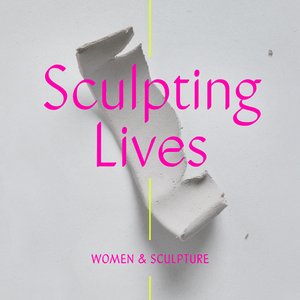
Sculpting Lives is a podcast series written and presented by Jo Baring (Director of the Ingram Collection of Modern British & Contemporary Art) and Sarah Victoria Turner (Deputy Director at the Paul Mellon Centre for Studies in British Art in London).
Dame Barbara Hepworth, Dame Elisabeth Frink, Kim Lim, Phyllida Barlow and Rana Begum – some of the most globally well-known British artists are women sculptors. Conversely, the profession and practice of sculpture was seen by many throughout the twentieth century (and before) to be very much a man’s world. Often using heavy and hard materials, sculpture was not typically viewed as suitable for women artists. Series one explores the lives and careers of these five women who worked (and are still working) against these preconceptions, forging successful careers and contributing in groundbreaking ways to the histories of sculpture and art. Series two features episodes on Dora Gordine, Gertrude Hermes, Veronica Ryan, Alison Wilding and Cathie Pilkington. At a moment when public sculpture is the subject of contentious debate, the final episode of the second series focuses on questions of gender, public sculpture and display, and explores women’s representation – both as subjects and artists – in our public spaces and exhibitions.
Each episode is recorded in places that are significant for the women sculptors featured – their studios, as well as galleries and public places where their work is on display – and includes new interviews with curators, friends, family and the artists themselves, creating intimate soundscapes of their private and public worlds.
The @SculptingLives Instagram feed contains more information about the podcast and the artists and artworks featured in it.
Written and hosted by: Jo Baring and Sarah Turner
Produced by: Clare Lynch
Research by: Isabelle Mooney (Series One) & Chloe Nahum (Series Two)
Music by: Pauline Oliveros, [Silence]
Visual identity by: Vanessa Fowler-Kendall
This podcast has been made possible through support from the Paul Mellon Centre for Studies in British Art.
We are also extremely grateful to Art UK and National Life Stories: Artists' Lives (British Library).
Podcast websiteListen to Sculpting Lives, Fashion Neurosis with Bella Freud and many other podcasts from around the world with the radio.net app
Get the free radio.net app
- Stations and podcasts to bookmark
- Stream via Wi-Fi or Bluetooth
- Supports Carplay & Android Auto
- Many other app features
Get the free radio.net app
- Stations and podcasts to bookmark
- Stream via Wi-Fi or Bluetooth
- Supports Carplay & Android Auto
- Many other app features

Sculpting Lives
Scan code,
download the app,
start listening.
download the app,
start listening.
 Ireland
