

Listen to this podcast in the app for free: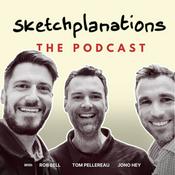 Download for free in the App Store
radio.net
Sleep timer
Save favourites
77 episodes
The Diderot Effect
02/06/2026 | 33 mins.Are you a slave to your possessions?
Do your possessions form part of your identity?
How easy is it to fall into a trap where one new purchase begets another, and another, and another...?
We explore the Diderot Effect - so called after an essay written in 1769 by French philosopher, writer, and art critic who served as one of the most influential figures of the Age of Enlightenment. "Regrets On Parting With My Old Dressing Gown" details how receiving a luxurious scarlet robe as a gift made his existing belongings look shabby, sparking an out-of-control spending spiral to replace all his old furniture to match the new garment.
In the episode Jono references that he first heard about it from James Clear who went on to include it in his highly successful book, Atomic Habits.
Episode Summary
00:00 Summer Break Notice
00:51 What Is the Diderot Effect
04:09 Diderot and the Dressing Gown
06:05 When Stuff Owns You
09:47 Our Diderot Moments
13:45 Tools Cars and Tech Spirals
20:23 Business Growth and Office Upgrades
28:00 How to Master the Effect
31:18 Final Quotes and Wrap Up
Hosted on Acast. See acast.com/privacy for more information.Why Only 2 Countries Are Double-Landlocked
19/05/2026 | 31 mins.In a double-landlocked country you must cross at least two national borders to reach a coastline connected to the world’s oceans.
In this episode we talk about the nuances of landlocked definitions (including why the Caspian Sea doesn’t count) and identify the only two double-landlocked countries: Liechtenstein, surrounded by Switzerland and Austria, and Uzbekistan, surrounded by landlocked “stans.”
We talk about why ports and sea access matter for trade and geopolitics. We also explore the ideas and definitions for landlocked US states (including Nebraska as “triple landlocked”), the furthest points from the sea, disputed borders, recursive islands, and a Google Maps oddity between the Shetlands and Faroe Islands. It's definitely one for maps and geography nerds!
References:
Tom mentions Tim Marshall's book, Prisoners of Geography
Jono also references some of his other sketches: Recursive Islands and Triple Landlocked States
We also reference the previous podcast episode on Antipodes for how so much of the Earth is water.
Episode Summary:
00:00 What Double Landlocked Means
04:17 The Only Two Countries
05:45 Caspian Sea and Definitions
06:53 Recursive Borders in UAE
08:33 Why Ports Matter
12:13 Bolivia and Africa Surprise
13:52 Distance From the Sea
18:02 Landlocked US States Debate
25:23 More Geography Oddities
28:48 Shetlands to Faroes Map Quirk
30:06 Closing Thoughts
Hosted on Acast. See acast.com/privacy for more information.How To Become An Overnight Success.
05/05/2026 | 35 mins.This discussion centres on “overnight success” as an illusion; prompted by Jono’s sketch of Twitter Cofounder, Biz Stone’s quote: “Timing, perseverance, and 10 years of trying will eventually make you seem like an overnight success.”
Using an iceberg metaphor (most work hidden below the surface), we explore how Twitter, Uber, Airbnb, GoPro, Pinterest and other “sudden” hits were built through long periods of effort, failed attempts, near-bankruptcies and luck-driven timing.
Tom shares his own journey from inventing the curved nail file in 2004 to major success after winning The Apprentice, plus later product launches, illustrating visible turning points built on years of groundwork. We also look at creative fields and sport, survivorship bias, and belief, persistence, readiness, and timing.
External Links
In the conversation, we referenced these items which you can find more information on here:
Our Listener Survey
Biz Stone's book: Things A little Bird Told Me
Jono's sketches on Iceberg Orientation & Survivorship Bias
Our previous episode on Optimism Bias
Episode Summary
00:00 Introduction
01:13 Biz Stone Quote
03:10 Iceberg Metaphor
04:09 Biz Stone Backstory
04:36 From Blogger to Twitter
07:37 Myth of Viral Success
09:59 Tom's Real World Examples
12:31 Sketchplanations Slow Burn
16:06 Perseverance and Belief
18:52 Timing and Viral Moments
20:59 The Turning Point
21:35 Apprentice Timing Advantage
24:43 Jono on Luck and Timing
26:34 Sports Overnight Success
28:42 Survivorship Bias Reality
29:47 Do Overnight Successes Exist
32:15 Advice Perseverance Mindset
34:29 Wrap Up and Credits
Hosted on Acast. See acast.com/privacy for more information.Play Until Something Gets Broken
21/04/2026 | 22 mins.In this fun and nostalgic conversation, we discuss Jono's observation that with indoor games especially, as the momentum builds, you keep playing until something gets broken!
There's a cheeky inevitability to it. It's a situation we've almost all certainly been in - whether you were the protagonist or not!
We share our childhood and adult stories of hallway ball games, broken lamps and mirrors, a university corridor culture of improvised sports, Nerf-gun firing ranges ending with a foam dart to the eye, and a school-trip pillow fight that took out a light fitting. The conversation expands to similar “stop conditions” in outdoor games and with sports injuries, and connects the idea to the Generalised Peter Principle: anything that works is pushed into progressively more challenging situations until it fails.
What are you experiences with this?
Links to items we discussed:
Jono's impossible "lamp thru TV" sketch has connotations of Escher's Impossible Staircase
Jono's sketch and our past podcast episode about The Peter Principle
Jono's sketch on The Generalised Peter Principle
Rob referenced a visit to the Belleek Pottery factory whilst filming in Northern Ireland.
Episode Summary:
00:00 Podcast popularity in USA
01:12 The Indoor Games Rule
02:48 Ball Games Banned
04:40 Injuries End The Game
08:09 Uni Corridor Games
08:58 Sketch Breakdown
10:37 Why Indoor Play Matters
11:00 Messy Space Dreams
14:02 Adult Injuries End Games
14:58 Pillow Fight Lamp Smash
16:05 Hide Underwater Tactic
16:40 Generalized Peter Principle
17:32 Sacrificial Breakables
21:11 Anger Smashing Question
21:44 Closing
Hosted on Acast. See acast.com/privacy for more information.Submarine Lessons for Business Leadership
07/04/2026 | 52 mins.US Navy submarine captain and author David Marquet discusses leadership lessons from turning the USS Santa Fe from worst to best, focusing on “pushing authority to information” rather than pushing information up a hierarchy. Marquet critiques industrial-age leadership language that seeks obedience and creates “bobblehead” agreement, arguing that real engagement comes from giving people decision-making authority,
He also explains “distancing,” as a leadership and decision-making tool: viewing oneself from a third-person, from a different time, and/or from a different place to reduce ego and defensiveness over previous decisions.
A thoroughly fascinating chat with a very talented and fun individual.
External Links for items referenced in the conversation:
David’s 3 books can be found here: Turn the Ship Around (+ workbook), Leadership is Language, and Distancing
Here are two of many of David's talks to be found on YouTube: What is leadership? and Turn the Ship Around at the World Web Forum
Here's the YouTube video of David rating submarine movies for how realistic they portray life under the waves.
David talks about advice given to him by Simon Sinek
Some of Jono's other skecthes references in this podcast include: Solvitor Ambulando (it is solved by walking); 9 windows (problem solving tool); Anchors and Tugboats (self-talk)
David talks about ultra-runner extraordinaire Courtney Dauwalter
Summary
00:00 From Cold War Kid to Submariner
03:02 Life Aboard a High-Performing Sub
03:53 The Arbitrary Officer Divide
04:40 Student Not "Expert"
05:51 Words That Kill Curiosity
08:44 What Leadership Was Taught
12:37 Pushing Authority to Information
16:03 Submarine Leave Approval Hack
20:02 Authority in Everyday Workplaces
21:59 Bias for Action and Excellence
22:46 Distancing to Decide Better
25:41 Put Them In Your Chair
26:12 Distancing In Space & Time
27:45 Inviting Feedback Culture
28:52 Nine Windows Thinking Tool
30:25 You Can Do It Self Talk
32:28 Regret Proof Decisions
38:04 Journaling Into A Book
39:41 Be Your Own Coach
45:50 Team Reviews Without Defensiveness
47:19 Live Big Bold Lives
48:14 Submarine Movies And Ambiguity
50:55 Wrap Up
Hosted on Acast. See acast.com/privacy for more information.
More Education podcasts



Trending Education podcasts


















About Sketchplanations - The Podcast
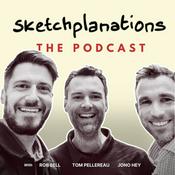
Big Ideas explored through Little Pictures. We offer up great conversations about ideas based on simple and insightful sketches in the Sketchplanations online collection, with the aim of giving listeners something fun and interesting to have their own conversations about.This is an explainer podcast for the curious-minded. Topics covered include science, behavioural economics, wellbeing, nature, psychology frameworks, business models, cognitive biases, and even domestic life-hacks. It's certainly not a self-help podcast, but you might take something away that helps you notice or even enjoy the world around you a little more.Sketchplanations illustrator and author Jono Hey joins lifelong friends Tom Pellereau (2011 Apprentice Winner) and Rob Bell (Engineer & Broadcaster) to share ideas and stories catalysed by each week's sketch. The 3 of us have been friends for over 20 years and have always enjoyed delving into all sorts of conversation topics - usually with some silliness along the way. Hosted on Acast. See acast.com/privacy for more information.
Podcast websiteListen to Sketchplanations - The Podcast, The Mel Robbins Podcast and many other podcasts from around the world with the radio.net app
Get the free radio.net app
- Stations and podcasts to bookmark
- Stream via Wi-Fi or Bluetooth
- Supports Carplay & Android Auto
- Many other app features
Get the free radio.net app
- Stations and podcasts to bookmark
- Stream via Wi-Fi or Bluetooth
- Supports Carplay & Android Auto
- Many other app features
Sketchplanations - The Podcast
Scan code,
download the app,
start listening.
download the app,
start listening.
 Ireland
