
Listen to this podcast in the app for free: Download for free in the App Store
radio.net
Sleep timer
Save favourites
252 episodes
SBP 247: SBP Interview - Foresight Doesn’t Get a Free Pass, with Jo Lepore.
27/10/2026 | 55 mins.Marketing science says buyer behaviour barely moves. Futurists sell the opposite: change, disruption, the thing nobody saw coming. Can both be true? Marc and Vassilis brought in someone who can referee it.
Jo Lepore built the foresight function inside Mars Wrigley and then McDonald’s, co-founded a network for people doing that work at some of the world’s biggest companies, and now leads foresight at Dig Insights. She also hosts the podcast Looking Outside. Her starting point is refreshingly blunt: foresight doesn’t get a free pass on proving its value, and neither does marketing.
In this one:
→ Foresight isn’t futurism. It’s not a crystal ball or a dart at the board. It’s throwing the dart toward where you want to go, then rehearsing multiple paths to get there. As Jo puts it, rehearse for every future rather than bank one.
→ “Isn’t this just market research with a longer horizon?” No. You can’t ask a future consumer anything, they don’t exist. Insights are past-based facts; foresight is weak signals and carefully weighed assumptions.
→ Nobody gets rewarded for preventing a fire. How foresight earns buy-in by helping put out the fire that’s already spreading, with the GLP-1 work Jo’s team ran at McDonald’s six months early as the proof.
→ The pandemic test. Jo’s Mars work found the big shifts were accelerated, not caused, by COVID, and those were the ones they were already tracking.
→ The bridge to marketing. Backcasting and innovation roadmaps (the three-horizons model), plus why foresight should sit as a capability across the business, not trapped in one team.
Plus three things any marketer can do Monday morning, and a Big Mac No Meat dare that becomes a real-world experiment.
Enjoy the show!
Our Guest: Jo Lepore
Global Foresight Strategist, Dig Insights | Host, Looking Outside
LinkedIn: https://www.linkedin.com/in/joannalepore/
Chapters
00:00 Cold open: foresight should prove its value too
01:40 Meet Jo Lepore, and “double lucky”
02:30 What foresight is, and why it isn’t futurism
04:50 Is this just market research with a longer horizon?
09:00 Vitamin vs painkiller: earning buy-in
11:50 The GLP-1 call at McDonald’s, six months early
12:58 WestJet, COVID, and planning in crisis mode
15:30 The Mars pandemic work: accelerated, not caused
18:00 Horizon scanning: bringing the pockets together
19:30 Canada, OCAD, and where foresight lives today
20:30 Beyond chicken little: anticipatory leadership and antifragility
25:00 Does a business actually need a foresight function?
28:00 The bridge to marketing: backcasting and three horizons
34:00 “Foresight doesn’t get a free pass”
37:00 Creative vs effectiveness: let the teams battle it out
41:00 Cultural foresight, and layering in the whole business
45:30 Victim of your own success, and getting typecast
47:00 Building McDonald’s generative AI Center of Excellence
48:56 Three things to do Monday morning
53:40 Big Mac No Meat: the experiment
54:30 Thanks and close
Hosts
Marc Binkley
Quatical - https://quatical.com/
LinkedIn - https://www.linkedin.com/in/marcbinkley/
Vassilis Douros
Personal Website: https://vassilisdouros.com
LinkedIn - https://www.linkedin.com/in/vassilisdouros/
Follow The Sleeping Barber
Website: https://sleepingbarber.ca
YouTube: http:s//www.youtube.com/@sleepingbarberpodcast
LinkedIn: https://www.linkedin.com/company/sleeping-barber/
Subscribe wherever you get your podcasts, and hit follow so you never miss a show.SBP 246: The Sharp Cut: Who Actually Buys on Sale?
22/10/2026 | 21 mins.Marketing runs on comfort blankets. The Sharp Cut cuts them up to see what’s inside. This week, with Black Friday five weeks out and someone already writing the 40% off email: the idea that a discount wins you new business.
Here’s the spine. A discount rents you this week’s sales, mostly from your own customers. When the price goes back up, the rental’s over. So every promotion has to pay for itself while it’s running.
This week:
→ Who actually buys on the deal. Ehrenberg-Bass looked across 18 categories: 77% of promo buyers had already bought the brand in their last five trips, against 81% at full price. Basically the same people, paying less.
→ How long the bump lasts. Soup and yogurt promotions faded in about two weeks, and in only 1 of 29 cases did a deal change sales for good. Then the dip, and people learning to wait for your price.
→ The math nobody runs. At 20% off with a 50% margin you need two-thirds more sales just to stand still. A German retailer celebrated a 19%-off sale that needed triple the traffic to break even.
→ Three people, three kinds of math. The store, the supplier, and the salesperson are each optimizing something different, and the brand on sale is usually renting its own buyers back.
→ What actually works. You can’t quit cold (ask JC Penney). McCain pulled promotions back slowly and moved the money into brand, and nine years later sells more chips at a higher price.
Plus the one takeaway: a discount gives the people who already buy from you a cheaper week, and you often pay for it twice.
Enjoy the show!
Stories & evidence this episode:
Which? Black Friday investigation: https://www.which.co.uk/policy-and-insight/article/dont-believe-the-hype-most-black-friday-deals-the-same-price-or-cheaper-at-other-times-of-the-year-which-finds-a3TbD5x5KADs
Ehrenberg-Bass / John Dawes, price promotions and buyer mix (SSRN): https://papers.ssrn.com/sol3/papers.cfm?abstract_id=2199169
McCain, “When the chips are down, margins matter” (IPA): https://ipa.co.uk/knowledge/case-studies/when-the-chips-are-down-margins-matter-how-a-focus-on-long-term-emotional-brand-building-reduced-price-elasticity-and-increased-profits-for-mccain
The Evidence Line (180+ models): https://quatical.com
Chapters
00:00 What the Sharp Cut is, and this week’s comfort blanket
00:50 Black Friday five weeks out, and the Which? study
02:18 How Black Friday became Black Friday month
03:50 Hermann Simon, BMW, and who really sets price (ep 18)
04:57 Who’s actually buying on the deal (Ehrenberg-Bass)
06:10 But explain P&G: the coupon cut and the share loss
06:50 How long the bump lasts, and the margin math
07:55 The 19%-off sale that needed triple the traffic
08:40 Soup, yogurt, Coke, and learning to wait
09:15 When the coupon becomes the price (Bed Bath & Beyond)
09:50 Loss leaders, pocket price, and a rebate that expired
11:58 B2B: value sellers vs price sellers, and commission math
14:49 Why not just stop? Walmart, good vs bad market share
15:40 JC Penney cold turkey vs McCain’s slow pullback
17:20 Honest pricing, anchoring, and the law
18:32 The one takeaway: you pay for it twice
19:00 Recap and what to change on Monday
Hosts
Marc Binkley
Quatical - https://quatical.com/
LinkedIn - https://www.linkedin.com/in/marcbinkley/
Vassilis Douros
Personal Website: https://vassilisdouros.com
LinkedIn - https://www.linkedin.com/in/vassilisdouros/
Follow The Sleeping Barber
Website: https://sleepingbarber.ca
YouTube: https://www.youtube.com/@sleepingbarberpodcast
LinkedIn: https://www.linkedin.com/company/sleeping-barber/SBP 245: The Barber's Brief - Apple Built a Kill Switch for Ad Tech
20/10/2026 | 29 mins.Marc and V are back with the Barber’s Brief: the good, the bad, and the overhyped from the last couple of weeks, with data, a few opinions, and Great Creative getting the last word.
This week:
→ Apple built itself a kill switch for ad tech. iOS 26’s Safari can quietly block hundreds of identity and data vendors, the list lives in a private repo, and only Apple knows the rules. Everyone’s calling it a privacy story. It’s a power story, and the real lesson is one we keep coming back to: stop renting your audience.
→ Phantom Reach. Ritson and Lumen clocked the same ad getting 16 seconds of attention on a living room TV and about 1.5 seconds in a web video player. Both count as one impression on your plan. So ask your agency for attentive seconds, not impressions.
→ Jaguar is finally coupled with a product. The rebrand tested with more 1s and 2s, and more 9s and 10s, than anything in its history. Polarizing is right for a six-figure niche. It’s a terrible lesson for a mass-market brand to copy.
→ Mbappé leaves Nike for On, part cash, part equity. The Jordan playbook, run against Nike, while On climbs and Nike slides.
Plus Ad of the Week: Robitussin hires a deadpan cough hitman named Robby Tussin, and turns the brand name into the character, the joke, and the mnemonic all at once.
Coming up: Joanna Lepore of Dig Insights on foresight and strategy.
Enjoy the show!
Chapters
00:00 Intro: welcome back to the Barber's Brief
00:51 Story 1: Apple's kill switch for ad tech
04:53 Why is so much of the industry built on rented land?
08:20 Story 2: Phantom Reach, attention vs impressions
10:48 Selling attentive seconds instead of impressions
13:18 How the platforms are moving (Meridian, Andromeda, MMM)
14:34 Story 3: Jaguar, finally coupled with a product
16:43 Polarization as a scalpel, not a strategy
17:48 Controversy with a product vs controversy for its own sake
20:47 Story 4: Mbappé leaves Nike for On
23:08 Do challenger-brand signings change how retailers buy?
25:35 Ad of the Week: Robitussin's cough hitman, Robby Tussin
28:03 Why the one-character platform beats weekly fresh creative
29:09 Coming up: Joanna Lepore, Dig Insights
Hosts
Marc Binkley
Quatical - https://quatical.com/
LinkedIn - https://www.linkedin.com/in/marcbinkley/
Vassilis Douros
Personal Website: https://vassilisdouros.com
LinkedIn - https://www.linkedin.com/in/vassilisdouros/
Stories this week
Apple’s ad-tech kill switch (AdExchanger): https://www.adexchanger.com/privacy/apple-has-far-reaching-plans-to-block-hundreds-of-programmatic-data-companies-from-ios/
Phantom Reach — Mark Ritson (The Drum): https://www.thedrum.com/opinion/why-the-reach-of-one-rule-is-built-on-ads-nobody-ever-actually-sees
Jaguar’s rebrand meets its product (Marketing Week): https://www.marketingweek.com/jaguars-rebrand-product/
Mbappé leaves Nike for On (Yahoo Sports): https://sports.yahoo.com/articles/kylian-mbappe-drops-nike-sponsorship-045914241.html
Ad of the Week
Robitussin’s “Take Care of Your Cough” / Robby Tussin (MM+M): https://www.mmm-online.com/news/meet-robby-tussin-robitussins-jacket-clad-cough-hitman/
Follow The Sleeping Barber
Website: https://sleepingbarber.ca
YouTube: https://www.youtube.com/@sleepingbarberpodcast
LinkedIn: https://www.linkedin.com/company/sleeping-barber/
Subscribe wherever you get your podcasts, and hit follow so you never miss a drop.SBP 244: SBP Interview - If You’re Not Selling Hours, What Are You Selling?
13/10/2026 | 58 mins.Everybody in this industry is arguing about what AI does to an agency. Almost all of it is agencies talking to themselves about their own cost structure. Clients are asking something else entirely.
So Marc and V put the real question to two of the people growing Canada’s agency business while the ground moves under it: if you are not selling hours, what are you selling?
Mélanie Dunn is President of Plus Company Canada and CEO of Cossette. Karine Courtemanche is EVP of Plus Company Canada and President of its media group, Strategy’s 2024 Media Leader of the Year, Chair of the Canadian Media Directors’ Council.
Inside the conversation: why clients now buy a connected system of tools rather than time, and why the shift off billable hours is being stalled by clients, not agencies. The biggest myth in the business, and the KPI guarantee they sold three times out of hundreds of clients. Why your agency’s tech stack is now a reason to hire them. In-housing done for the right and wrong reasons. Rethinking talent when the pyramid is gone and a junior can mentor a senior. And a genuine cry for help on supporting Canadian media, where the gap between an ethical placement and a cheaper one is often marginal.
The through line: agencies are being pushed to stop selling time and start selling judgment, and nobody has solved how you build judgment at scale.
Enjoy the episode!
Our Guests:
Mélanie Dunn: https://www.linkedin.com/in/dunnmelanie/
Karine Courtemanche: https://www.linkedin.com/in/karine-courtemanche-64896330/
Chapters:
00:00 The best time to be in this business
00:46 Barbell or pyramid? Setting up the debate
02:43 What is the role of a modern agency?
06:51 What clients actually buy now: a system, not hours
09:25 If you're not selling time, what are you selling?
12:51 The biggest myth: agencies do want outcomes
15:15 Why outcome models stall: predictability and risk
17:45 Attribution as the missing accountability layer
19:16 Choosing an agency on its tools, not just its people
22:05 Three conditions for integration that actually works
23:57 In-housing, for the right reasons
27:08 Why there is no single agency model
29:22 Building operational platforms, not just media tools
31:36 AI, governance, and building the same tool twice
34:19 Rethinking talent when the pyramid is gone
36:44 Hiring now: references, soft skills, hard questions
45:30 Monday takeaways: governance as an enabler
49:13 A cry for help on Canadian media
57:02 Calgary, and the centre of the worldSBP 243: The Sharp Cut - Let's talk about brand love
08/10/2026 | 26 mins.Marketing runs on comfort blankets. The Sharp Cut cuts them up to see what's inside. This week: brand love.
Start with motorcycles. In 2015, the happiest owners in the entire category rode Victory, ahead of Harley. Two years later, Polaris shut Victory down. The happiest customers in the category could not keep the brand alive. That should bother anyone who spent a career being told marketing's job is to make people love you.
So Marc and V take the believers at their word and run three tests on lovemarks, raving fans, and brand love. Are the most loved brands the biggest? Are they growing the fastest? Does the love come first, before the buying? The evidence, from the ACSI to double jeopardy to ten years of Ehrenberg-Bass data, keeps pointing the same way.
Then they own up to it. Marc's Heinz loyalty that is really just shelf placement. V's Golf Town thank-you notes, where every bit of love showed up after the money was already in the books.
The conclusion is not that love is worthless. It protects you, and losing it hurts. It just is not what grows a brand. Plus what to do with all of this on Monday.
Chapters
00:00 What the Sharp Cut is
00:45 Today's comfort blanket: brand love
00:50 Victory vs Harley: the happiest owners, gone in two years
02:36 Where the idea came from
05:43 The money angle, and the JC Penney lovemark
06:28 The case for love, taken seriously
08:33 Three tests for the believers
08:59 Test 1: are the most loved brands the biggest?
10:20 Double jeopardy, and why loyalty is everywhere
12:04 The Apple challenge
12:45 Test 2: do loved brands grow the fastest?
15:12 Test 3: does love come first?
18:17 Confessions: Heinz, Matouk's, and the Golf Town tees
22:04 So is love a moat? The Kroger debate
24:14 Do people even want a relationship with a brand?
26:31 What to do Monday
More Business podcasts

Trending Business podcasts








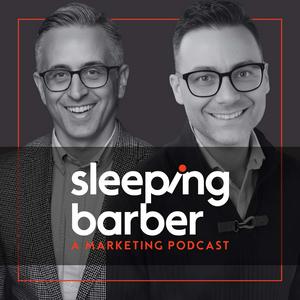
About Sleeping Barber - A Marketing Podcast
Ready to rethink business strategy and supercharge your marketing game?
Join hosts Marc Binkley and Vassilis Douros as they break down big questions at the crossroads of strategy, marketing effectiveness, and creative impact.
From real-world case studies to hot-off-the-press business news, each episode dives deep into how modern companies navigate complexity. Plus, interviews with global thought leaders bring you fresh insights and actionable strategies to drive growth and build unforgettable customer experiences.
This is your backstage pass to smarter thinking and better business results.
Podcast websiteListen to Sleeping Barber - A Marketing Podcast, Ask About Wealth and many other podcasts from around the world with the radio.net app
Get the free radio.net app
- Stations and podcasts to bookmark
- Stream via Wi-Fi or Bluetooth
- Supports Carplay & Android Auto
- Many other app features
Get the free radio.net app
- Stations and podcasts to bookmark
- Stream via Wi-Fi or Bluetooth
- Supports Carplay & Android Auto
- Many other app features

Sleeping Barber - A Marketing Podcast
Scan code,
download the app,
start listening.
download the app,
start listening.
Sleeping Barber - A Marketing Podcast: Podcasts in Family
 Ireland
