

Listen to this podcast in the app for free: Download for free in the App Store
radio.net
Sleep timer
Save favourites
57 episodes
Sound Healing, September 26, 2026
27/09/2026 | 57 mins.Sound Healing with David Gibson
The Harmonic Structure of Sound: Odd and Even Harmonics From Guitar Strings to Galaxies
David Gibson devotes the hour to the harmonic structure of sound, tracing odd and even harmonics from a plucked guitar string and the singing voice through gongs, crystal bowls, planetary distances, and the golden mean, closing with a live sound meditation for peace.
Inside the Sound Healing Center
David Gibson opens the broadcast with a tour of the Sound Healing Center's four branches: the Globe Institute, the Sound Healing Store, the Sound Therapy Center, and the Sound Healing Research Foundation. He describes Globe Institute as the only state-approved sound healing college in the United States, offering two sound healing certificates and an audio recording certificate, in person in Sausalito and online, with the online certificate program able to start September 29th and the recording program already underway. He walks through the Store's four hundred instruments and technologies, from crystal bowls and Tibetan bowls to Brainwave Assessment and voice analysis software, and mentions the contract bringing eight sound protocols into Northern California's largest dementia care company. He also describes the Research Foundation's library of over a thousand clinical papers, the Medical Sound Association's bimonthly treatment-plan meetings, and a $100,000 grant funding sound curriculum in Montessori schools, before inviting listeners to an October 4th open house in Sausalito.
The Harmonic Structure of Sound
Turning to the day's subject, Gibson explains the harmonic structure of sound, the mathematics behind why one instrument or voice feels different from another. He sings a single sustained "ah" and tells listeners they just heard over a hundred notes and frequencies stacked inside that one sound, since nearly every sound in nature is built from many frequencies at once rather than just one. Demonstrating on a guitar, he plucks the open E string at what he simplifies to 80 Hz, calling it the fundamental or root frequency, then rests a finger lightly on the twelfth fret to isolate the second harmonic at 160 Hz, an octave higher. He shows how the string is simultaneously vibrating in two, three, four, and dozens of smaller sections at once, each producing a frequency that is a whole-number multiple of the root, and explains that the voice's vocal cords generate roughly a hundred such vibrations in exactly the same mathematical pattern.
Odd Harmonics Versus Even Harmonics
Gibson then divides instruments and voices into two families based on which harmonics they emphasize. Metal instruments with bumps, reed instruments, and bagpipes, he explains, produce mostly odd-numbered harmonics, forming a dissonant, edgy chord that he calls activating, evident in gongs, Tibetan bowls struck with a wood stick, clarinets, and heavy metal guitar distortion. Instruments built from nylon string or wood, such as the harp, classical guitar, and wood tongue drum, produce even-numbered harmonics instead, forming a warmer, sweeter chord that calms the nervous system. He carries the same odd-even split into vowels, contrasting the tense, effortful "e" with the relaxed, resonant "oo," and into singers, naming Janis Joplin, Axl Rose, and Bob Dylan as odd-harmonic voices and Barry White and Norah Jones as even-harmonic ones, adding that Adele carries a slight edge of her own.
Matching Sound To The Nervous System
Gibson maps out when to reach for each family of sound. Odd harmonics, he says, break up stuck energy and emotion, energize a room, and help ease people out of depression once introduced gradually, and can speed blood flow for people in early-stage dementia. But he warns they can trigger panic attacks, overwhelm anyone fragile, freshly out of surgery, or living with advanced dementia, where even a Tibetan bowl must be handled carefully and gongs are off limits entirely. He lays out his spectrum of instruments running from most activating to most calming, gongs, noisemakers, the ocean drum, and wood-struck Tibetan bowls at one end, softening through rattles, drums, and frosted bowls, down to soft shakers, handpan, FreeNote xylophone, RAV drum, sansula, and koshi chimes at the other. He notes his own taste shifts through the day, favoring warm even harmonics in the morning, more activation in the afternoon, and calm again by evening.
Harmonics Across Nature And The Body
Zooming out, Gibson traces the same harmonic mathematics through the rest of the body and the cosmos. He describes alchemy crystal bowls carrying the vibrational signature of whatever gemstones or metals are embedded in them into every water droplet of the body, and recounts a visitor who had mapped harmonic chords for each organ, explaining that a person's voice takes on the harmonic structure of their weakest organ, fear-holding kidneys sounding one way, an angry liver another. He extends the pattern to the solar system, describing the distance from the Sun to Mercury as a root frequency multiplied outward through Venus, Earth, Mars, and the asteroid belt, a structure some spiritual teachers, he notes, associate with love. He adds that electron shells, vertebrae, and, in Fabien Maman's view, the human aura all follow the same one-times, two-times, three-times series, which is why acoustic instruments map to the body more precisely than electronic ones.
The Golden Mean And Closing Meditation
Gibson closes by setting the harmonic series against a second pattern, the Fibonacci sequence and its golden mean ratio of 1.618, which he calls nature's spiral, visible in the proportions of the fingers, hand, arm, and face and in shells and galaxies alike, and which he associates with the heart's own resonance when generating love. He calls the harmonic series the masculine structure of the universe and the golden mean its feminine counterpart. To let listeners feel the contrast directly, he plays his own recorded piece "Angelica," built on the odd, edgy harmonics of a tanpura, followed immediately by a mellow, even-harmonic piece he composed for sleep. He then leads listeners live in making the calmest, warmest sound they can manage with their own voice, and sends them off asking them to hold that peaceful state through the evening, the weeks, and the months ahead.Sound Healing, September 12, 2026
13/09/2026 | 56 mins.Sound Healing with David Gibson
Dynamic Curves: Shaping Sound Baths and Treatments From Activation to Stillness
David Gibson devotes the hour to dynamic curves, the practice of building and breaking down sound in baths, treatments, and his own recordings to carry listeners from activation into deep, healing stillness.
Inside the Sound Healing Center
David Gibson opens the broadcast from Sausalito with a tour of the Sound Healing Center's four branches: the Globe Institute, the Sound Healing Store, the Sound Therapy Center, and the Sound Healing Research Foundation. He describes the Institute as the only state-approved sound healing college in the United States, offering two sound healing certificates and an audio recording certificate, both in person and online, with a new online semester starting September 14th and a recording program beginning September 22nd. He walks through the Store's four hundred instruments and technologies, from crystal bowls and didgeridoos to Brainwave Assessment and Voice Analysis software, and mentions a contract bringing eight sound protocols into Northern California's largest dementia care company. He also describes the Sound Healing Research Foundation's library of clinical papers, the Medical Sound Association's bimonthly treatment-plan meetings, and a $100,000 grant funding sound curriculum in Montessori schools. He points listeners to the Sound Healing Center's website for further details.
Introducing the Dynamic Curve
David Gibson introduces the day's main topic: dynamic curves, the shaping of a sound bath, concert, or treatment so it builds and breaks down rather than simply floating in one mood. He explains that most practitioners create a pleasant atmosphere on a single instrument, like a crystal bowl, and never go anywhere with it, while a true curve intentionally moves in intensity, pitch, and volume over time. He calls this an advanced skill, one that makes sound work far more effective than staying flat. Demonstrating live, he tones and plays a singing bowl in what he calls a mountain curve, starting mellow, rising in loudness and pitch until it feels intense, then settling back down. He credits his own introduction to the idea partly to listening to Pink Floyd's Dark Side of the Moon, noting how the album opens with alarm clocks and gradually mellows before building again, and to the Grateful Dead, whose slow-building live jams keep audiences engaged for long stretches without ever moving so slowly that listeners lose interest.
Naming the Curves in Practice
Gibson walks through several named curve shapes he uses in practice. The floating curve, he says, is a beautiful but flat sacred space where nothing really builds, fine for a gentle sound bath but less transformative. A curve for treatments meets people where they are, often keyed up or anxious, brings them steadily down into deep calm, then lifts them gently back to alertness so they can drive home afterward. The mountain curve builds intensity before breaking down, useful for showing people they can handle more energy, though he warns it can overwhelm anyone fragile, freshly out of the hospital, or living with advanced dementia. His personal favorite is what he calls the mellow out curve, which grows quieter and slower through an entire session until, by the end, almost nothing is moving. He describes this profound stillness as the safest option in a room full of strangers, since no one knows in advance who might be too delicate to handle a gong or other intense sound.
Mapping Instruments From Activating to Calming
Gibson lays out a spectrum his program has mapped from most activating to most calming. Bagpipes, gongs, ocean drum, and Tibetan bowls struck with a wood stick sit at the activating end, followed by drums, djembe, frosted and alchemy bowls, flutes, and crystal harp, while soft shakers, handpan, free-note xylophone, sansula, and Koshi chimes sit at the mellow end. He recommends moving step by step through this list rather than jumping straight from a gong to Koshi chimes, so listeners are carried along smoothly. He then details the qualities that make any sound more calming or activating: even harmonics, complex tones, soft volume, low frequency, slow or absent tempo, sustained notes, simple melodies, and repetition all calm the nervous system, while odd harmonics, loud volume, high frequency, fast tempo, rhythm, harmony parts, and unpredictable change tend to activate it. He adds that lyrics engage the analytical left brain and judgment more than wordless vowel sounds, and that unfamiliar instruments bypass stylistic labeling altogether.
A Sound Bath and a One-On-One Treatment
Gibson maps his own sound bath, which opens fairly activating with gongs and large bowls, moves through rattles and drums, then settles into a three-bowl harmony chord before he demonstrates a binaural beat by singing slightly off pitch against a bowl. From there he layers Tibetan bowls, melodic instruments like the free-note xylophone and crystal harp, and finally Koshi chimes before letting a bowl fade into five or ten minutes of silence, which he says lets everyone arrive at stillness together. He then outlines his one-on-one treatment format: clients lie on a sound table for fifteen or twenty minutes, he opens with an invocation calling in guides and ancestors, moves through drums, rattles, a large Tibetan bowl, tingshas, and tuning forks, and closes with the frosted bowl and the words "may the healing continue, as appropriate for your highest good," then leaves the room so the person can rest in the stillness alone, sometimes falling asleep on the table.
Closing With Music and the Fibonacci Curve
Gibson closes the hour by playing examples of dynamic curves built into his own recorded music. He plays "Unconditional Love" as a mountain curve, adding octaves and higher frequencies until it peaks before mellowing back down, then "Uplift," a slow, building Stairway to Heaven style track he says is used in the integrative therapy department at Massachusetts General Hospital to help lift people out of depression without overwhelming them. He explains that the smoothest curves follow the Fibonacci sequence, one plus one is two, two plus three is five, and so on, calling it the pattern behind all growth in the universe. He notes that activation before mellowing helps the body feel fully present in the calm that follows. The broadcast ends with "Pure Light," a piece that slows to half speed and settles into deep stillness, after which Gibson tells listeners to carry that stillness through the evening, the weeks, months, years, and lifetimes ahead.Sound Healing, August 29, 2026
29/08/2026 | 58 mins.Frequency Keys: Exploring Resonance from the Body to the Soul
The Sound Healing Center and Its Programs
The episode begins with a promotional overview of the Sound Healing Center and its related organizations, including the Globe Institute, Sound Healing Store, Sound Therapy Center, Sound Healing Research Foundation, Medical Sound Association, and Sound Education Association. The introduction describes certificate programs in Sound Healing and audio recording, a physical and online educational presence, hundreds of instruments and sound technologies, research materials, therapeutic resources, and vibroacoustic equipment. It also highlights dementia-related protocols, treatment plans, educational curricula for children, and several websites through which listeners can learn more. David Gibson then introduces upcoming sound baths, open houses, certificate programs, online classes, and recording courses. The institutional material establishes the broader context for the episode: sound is presented not only as music but as a tool for education, relaxation, research, therapy, and personal exploration.
Where Frequencies Come From
David Gibson frames frequencies as “keys” capable of opening different physical, mental, emotional, and spiritual doors. He begins with the broad distinction that high frequencies tend to activate the mind while low frequencies tend to calm the body, then describes several ways people derive or identify frequencies. These include numerology, scientifically measured vibration, mathematical formulas, and intuitive methods such as muscle testing or pendulum work. He discusses Solfeggio frequencies, planetary frequencies, the Schumann resonance, tuning forks, tone generators, and the use of numbers such as 111 and 432. Gibson repeatedly distinguishes between methods that have clear physical measurements and those based on symbolism, numerology, intuition, or spiritual interpretation. His central point is that frequencies come from many different systems, and listeners should understand where a claimed frequency came from before assuming it has a particular meaning or effect.
Learning Frequencies Through the Body
A substantial section of the program becomes an experiential tour through audible frequencies. Gibson plays or describes frequencies beginning around 40 hertz and progressing through 45, 100, 111, 136.102, 200, 250, 300, several Solfeggio frequencies, 432, 528, 639, 741, 852, 1,000, 3,000, 5,000, 10,000, and 15,000 hertz. He encourages listeners to sing along where possible and notice where each tone resonates in the body. Along the way, he recounts claims and anecdotes involving bone density, cat purrs, hummingbirds, migraines, sacred sites, chakras, the Great Pyramid, water patterns, babies’ cries, the Sun, DNA, intuition, and speech intelligibility. Gibson emphasizes that some of these associations are scientific, some symbolic, some anecdotal, and some intuitive. His practical goal is for listeners to stop thinking of frequency only as an abstract number and begin recognizing how different ranges feel physically.
The Problem With Healing-Frequency Lists
Gibson then turns to one of the episode’s most skeptical themes: the lack of agreement among lists that claim particular frequencies for organs, illnesses, vitamins, minerals, or therapeutic effects. He discusses frequency work attributed to Peter Guy Manners, Rife-related frequency lists, GreatDreams.com, Electro-Herbalism.com, and other collections of proposed therapeutic frequencies. Although Gibson believes frequency can be useful, he repeatedly questions how specific numbers were derived, whether the methods involved scientific study, intuition, muscle testing, or only a small number of subjects, and why different sources often disagree dramatically. He argues that organs such as the heart contain many different kinds of vibration, including mechanical, cellular, atomic, electromagnetic, photon, and what he calls quantum or emotional frequencies. Because every person and every biological level may vary, he says a single universal number for an organ or condition may be an oversimplification.
Research, Measurement, and the Need for Better Evidence
The episode develops this skepticism into a broader discussion of research design. Gibson argues that identifying the “best” frequency for a condition is extraordinarily difficult because researchers would have to compare enormous numbers of possible sound, electromagnetic, light, and other frequencies. He discusses claims associated with Anthony Holland, cancer frequencies, 528 hertz, pollution research, and various frequency devices while cautioning that showing one frequency has an effect does not prove it is uniquely or optimally suited to that target. Gibson proposes that pure frequencies may often seem beneficial simply because they provide stable, consistent vibration rather than chaos or irregularity. He says stronger evidence would come from testing devices or techniques across hundreds or thousands of people and measuring the percentage helped for a specific condition. Ultimately, he envisions individualized measurement capable of identifying a person’s own frequencies rather than relying entirely on generalized charts.
Intuition, Personal Resonance, and the Frequency of Source
The final section moves from research back into experiential and spiritual territory. Gibson guides listeners through an exercise in which they focus on an uncomfortable area of the body, intuitively search for a tone associated with its healthier state, and then silently “send” that frequency to the area through breath and visualization. He describes personal frequencies associated with heart rate, brainwaves, respiration, metabolism, the soul, love, the universe, and ultimately Source. Gibson says peace and stillness make intuitive perception easier and compares the process to a shaman listening for the song of a plant. He closes by asking whether Source, if understood as containing all frequencies, might nevertheless possess a fundamental “home note,” while also recognizing the interplay of order and chaos throughout the universe. His final message is that individual frequencies are only one layer of a larger matrix that also includes relationships and flows among bodies, emotions, souls, planets, and the universe as a whole.
SEO Keywords / Key Phrases
sound healing frequencies, Solfeggio frequencies, 432 Hz resonance, frequency therapy, vibroacoustic therapy, healing sound technology, chakra frequencies, Rife frequencies, sound meditation, frequency researchSound Healing, August 15, 2026
16/08/2026 | 57 mins.Sound Healing with David Gibson
Transforming Negative Beliefs Through Sound, Resonance, and Self-Love
David Gibson explores how negative beliefs influence relationships, work, money, health, self-worth, and spiritual growth, then guides listeners through affirmations, vocal-toning practices, and embodied truths designed to replace limiting patterns with love, confidence, emotional balance, and a deeper sense of personal wholeness.
Sound Healing Center Resources and Programs
The episode opens with an overview of the Sound Healing Center and its related organizations, including Globe Institute, the Sound Healing Store, the Sound Therapy Center, and the Sound Healing Research Foundation. The introduction describes certificate programs, sound-healing instruments, vibroacoustic tools, research papers, treatment-plan resources, educational projects, and online information for listeners interested in sound therapy and related training.
How Negative Beliefs Shape Everyday Life
David Gibson identifies transforming negative beliefs as the central topic of the episode. He says limiting beliefs affect relationships, employment, income, health, self-image, and the ability to love oneself and others. He attributes these beliefs to sources such as mass consciousness, culture, religion, parents, education, advertising, and personal experiences, explaining that people often carry beliefs about not being intelligent, attractive, spiritual, emotional, successful, healthy, or worthy enough.
Replacing Limiting Beliefs With Believable Truths
Gibson teaches that a negative belief should be replaced with an affirmation the listener can believe completely, rather than with a statement that feels exaggerated or only partially true. For example, instead of claiming to be loving at all times, he suggests affirming, “My core essence is love.” He encourages listeners to speak or tone these truths aloud so they are felt physically and emotionally, not merely understood as intellectual ideas.
Self-Worth, Appearance, Emotion, and Sensitivity
The teaching addresses beliefs such as being unintelligent, undeserving, unattractive, too old, too emotional, insufficiently spiritual, overly critical, or too sensitive. Gibson reframes mistakes as part of human growth, the body as a vehicle for spirit, emotional awareness as something worthy of acceptance, and sensitivity as a strength that allows people to perceive subtle energy. Throughout the segment, he leads vocal-toning practices centered on intelligence, worthiness, physical acceptance, loving discernment, and the affirmation that sensitivity can be a superpower.
Belonging, Relationships, Judgment, and Abundance
Gibson also explores beliefs involving not fitting in, relationship difficulties, feeling unlovable, fearing other people’s opinions, being invisible, lacking patience, and not deserving financial abundance. He encourages listeners to view relationships as opportunities for learning, recognize their own value without depending entirely on outside approval, and replace competition with collaboration. His discussion of wealth emphasizes caring for oneself first and allowing resources to move through a person in ways that may benefit others.
Health, Self-Healing, and the Closing Self-Love Practice
The final teaching section addresses beliefs about chronic health problems, aging, limited time, declining energy, and the perceived inability to heal oneself. Gibson encourages listeners to imagine themselves healthy, send sound toward areas of the body that need attention, and affirm that they are worthy of health, wealth, harmonious relationships, and other positive experiences. The episode concludes with a music segment combining “Loving Yourself” and “Overcoming Fear,” followed by an invitation to hug oneself, say “I love you” aloud, send that loving sound toward the heart, and continue carrying the practice forward. These healing statements reflect Gibson’s views and should not be treated as medical advice or established scientific conclusions.Sound Healing, August 1, 2026
02/08/2026 | 57 mins.Sound Healing with David Gibson
Healing Modes: Finding Frequencies and Resonating What Is Right
David Gibson explains sound-healing methods for identifying physical, emotional, mental, and spiritual frequencies, then explores how frequency sweeps, intuition, muscle testing, pendulums, voice analysis, binaural beats, phase cancellation, homeopathy-style resonance, and Source connection may be used in healing work.
Sound Healing Center, Training, and the Episode’s Focus
In this Sound Healing — Healing Modes episode, David Gibson introduces the Sound Healing Center’s broader work, including the Institute, Sound Healing Store, Sound Therapy Center, Sound Healing Research Foundation, Medical Sound Association, and Sound Education Association. He also shares updates about programs, an open house, certificate training, recording classes, and voice-analysis software. The central focus of the episode is how to find the frequency of a body part, organ, emotional issue, disease pattern, or healthy state, and then what to do with that frequency once it is identified. The transcript notes that medical and healing claims are preserved as the host’s statements and should be reviewed before being presented as health guidance.
Two Healing Paths: What Is Wrong and What Is Right
David frames the teaching around two major approaches: finding the frequency of what is “wrong” and working to disrupt it, or finding the frequency of what is “right” and resonating that healthy state. He gives examples such as cancer, stuck emotion, chronic pain, and organ resonance to show how a practitioner might either break up a problematic vibration or strengthen the frequency of a healthy body part. Throughout the episode, he returns to the idea that stable, consistent sound, positive intention, and resonance may help bring a system back toward balance.
Frequency Sweeps, Intuition, Muscle Testing, and Pendulums
David describes several ways to locate frequencies. One method is a frequency sweep, where a person moves the voice up and down on a vowel until a body area vibrates most strongly. For parts of the body that cannot easily be felt, he suggests intuitive listening, where the right tone may arrive as a knowing, inner sound, or subtle signal. He also discusses muscle testing, balance testing, listening for chills, using a pendulum to narrow frequency ranges, and playing the twelve notes while observing which note strengthens the body.
Timbre, Vowels, Musical Flow, and Frequency References
The episode expands from single tones into timbre, which David describes as the combination of frequencies that make up an organ, cell, or body system. He explains that organs may have multiple layers of frequency, including material, cellular, atomic, photon, electromagnetic, and quantum levels, and he compares these combinations to vowel sounds. He also introduces the idea of listening for the “song” or musical flow of the nervous, circulatory, or digestive system. David mentions frequency charts, Rife-related sets, Qigong organ notes, and other references, while acknowledging that different sources often disagree.
Devices, Voice Analysis, and Scientific Measurement
David also discusses device-based methods for assessing or exploring frequency. He mentions galvanic skin response, HeartMath, voice-analysis tools, NES, QXCI, Zyto, Asyra, GDV/Kirlian photography, EKG, EEG, Chinese pulse reading, microscopy, spectroscopy, and MRI-related measurement. His own voice-analysis program is described as mapping notes connected to organs and physical or emotional issues, while also requiring interpretation to determine whether a frequency is excessive or deficient. This section presents technology as another pathway for exploring resonance, coherence, and body-system response.
Breaking Up Imbalance and Transforming Chaos
Once a problematic frequency is found, David outlines several possible methods for working with it. He describes a homeopathy-style approach in which a low dose of the problem frequency may bring the issue to the body’s attention, as well as techniques that match, meet, disrupt, or transform chaotic vibrations. He discusses binaural-beat-like differences, going slightly above and below a target frequency, crystal bowls, tone generators, destructive resonance, phase cancellation, reciprocal frequencies, and the use of chaotic sounds such as rattles or white noise to break up stuck energy. He also connects these ideas to emotional release, such as transforming painful relationship energy into peace.
Resonating Health, Balance, and Source
David ultimately emphasizes resonating what is right as the preferred direction. This includes singing, breathing, or playing the healthy frequency of a body part, balancing missing or excessive frequencies, working with a home note or brainwave rhythm, and using sound to support states such as sleep, creativity, presence, focus, and bliss. He closes by moving beyond specific frequencies into higher vibration, gratitude, joy, universal love, and Source, saying that connection to Source allows spirit to know what the body needs. The episode ends with an affirmation-like closing, sustained tones, repeated healing phrases, and music fading out.
More Education podcasts
 Gaeilge WeeklyEducation, Language Learning
 anything goes with emma chamberlainEducation, Personal Journals, Self-Improvement, Society & Culture
 Life KitBusiness, Education, Health & Wellness, Kids & Family, Self-Improvement
 The Comeback with Brenda DennehyEducation, Health & Wellness, Mental Health, Self-Improvement
 Good Life ProjectBusiness, Education, Health & Wellness, Self-Improvement, Tutorials
 The Mel Robbins PodcastEducation, Health & Wellness, Mental Health, Relationships, Self-Improvement, Society & Culture
 Coffee Break ItalianCourses, Education, Language Learning
 Begin Again with Davina McCallEducation, Health & Wellness, Mental Health, Self-Improvement, Society & Culture
 Living Your LegacyBusiness, Education, Entrepreneurship, Film Interviews, Self-Improvement, TV & Film
 Where do I go from here?Education, Self-Improvement
Trending Education podcasts
 Counselling Tutor podcastCourses, Education
 That'll Teach YouEducation, Society & Culture
 The Daily MotivationEducation, Self-Improvement
 Español con JuanCourses, Education, Language Learning
 Wedding Planning Collective PodcastEducation, Hobbies, Leisure, Relationships, Society & Culture, Tutorials
 Luke's ENGLISH Podcast - Learn British English with Luke ThompsonComedy, Education, Language Learning
 Therapists Talk TherapyEducation, Health & Wellness, Mental Health
 German for BeginnersCourses, Education, Language Learning
 Английский язык по плейлистам. Английский язык с нуля. Полный курсEducation, Language Learning
 Speaking IrishEducation, Language Learning
- Where do I go from here?Education, Self-Improvement
 Learn French by PodcastEducation, Language Learning
 Hoy Hablamos: Podcast diario para aprender español - Learn Spanish Daily PodcastCourses, Education, Language Learning
 Nuacht MhallEducation, Language Learning
 Quarks Science CopsEducation
 The BossticksBusiness, Education
 ALIGNED | The Path to PurposeAlternative Health, Education, Health & Wellness, Religion & Spirituality, Self-Improvement, Spirituality
 New Thinking Allowed Audio PodcastEducation
 Learning Easy EnglishEducation, Language Learning
 The Rich Roll PodcastEducation, Health & Wellness, Self-Improvement, Society & Culture
 Motivation Daily by MotiversityEducation, Health & Wellness, Self-Improvement
- Good Life ProjectBusiness, Education, Health & Wellness, Self-Improvement, Tutorials
About Sound Healing with David Gibson
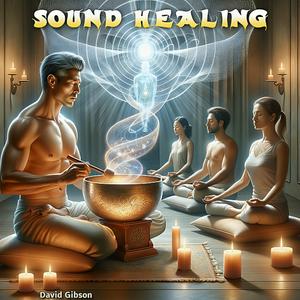
Study the effects of sound on the body, psyche and spirit LIVE with the Founder and Director of Globe Sound Healing Institute. Using the Voice for Sound Healing, Inner Sound Awareness and Transformation of matter and consciousness, and to connect to Spirit. The radio shows on this site will explore the full range of techniques and technologies used in the field of Sound Healing. Although the field is commonly called Sound Healing, it is also about maintaining health, raising consciousness and connecting to spirit. The show is a sound combination of discussion and experience including the following topics: Toning, Chanting and Overtone Singing - Root Frequency Entrainment - Sound to Improve Learning -Disabilities - Using Sound to Connect to Spirit - Tuning Fork Treatments - Voice Analysis Technologies - Chakra Balancing - Sound to Induce Desired States of Being - Tibetan/Crystal Bowl Massage - Electronic Nerve Stimulation - Water Sound Infusion Systems - Sound Visualization systems - Infratonics Holographic Sound - Scalar wave EESystem Drumming and Rhythm - HydroAcoustic Therapy - Neurophone Bio-Tuning - Sound Surgery - Cymatics Frequency based therapeutic devices - VibroAcoustic Sound Chairs and Tables
Podcast websiteListen to Sound Healing with David Gibson, Gaeilge Weekly and many other podcasts from around the world with the radio.net app
Get the free radio.net app
- Stations and podcasts to bookmark
- Stream via Wi-Fi or Bluetooth
- Supports Carplay & Android Auto
- Many other app features
Get the free radio.net app
- Stations and podcasts to bookmark
- Stream via Wi-Fi or Bluetooth
- Supports Carplay & Android Auto
- Many other app features

Sound Healing with David Gibson
Scan code,
download the app,
start listening.
download the app,
start listening.
Sound Healing with David Gibson: Podcasts in Family
 Ireland