
Listen to this podcast in the app for free: Download for free in the App Store
radio.net
Sleep timer
Save favourites
529 episodes
1,000 AI Agents, Four Human Decisions: Who's Accountable for the Outcome?
02/11/2026 | 41 mins.Send me a message
What should AI agents handle overnight, and what should be waiting for a person in the morning? Elon Salfati describes a workflow in which agents carry out tasks overnight and bring the decisions that need his input into one inbox. In his example, a thousand agent runs leave him with four decisions to make.
In this episode I speak with Elon Salfati, CEO of Salfati Group, about how to divide work between AI agents and people. We look at how an overnight workflow can keep projects moving and what happens to accountability when software starts doing the work.
Questions we cover
What should an overnight AI workflow hand back to the team? · 9:46
Elon describes opening an inbox in the morning and seeing the decisions that need his input. A short list lets him make the calls that will unblock several projects.
How does accountability differ between buying software and hiring a service provider? · 19:48
With conventional software, the customer uses the tool and owns the outcome. Elon contrasts that with a service provider taking responsibility for delivering the work, and asks where AI services fit between those arrangements.
Who should be accountable when an AI agent takes action? · 26:56
Elon argues that a person should remain accountable. His approach is to give agents the routine work and bring the decisions back to the people responsible for the result.
If disruption hit tomorrow, would you know where your supply chain was most exposed? In 15 minutes my free scorecard helps you assess 27 resilience statements, calculate your score, and turn the result into three priorities and a 30 day action plan. You can download the scorecard free at tomraftery.com/scorecard.
Support the show
Podcast supporters
I'd like to sincerely thank this podcast's generous Subscribers:
Alicia Farag
Kieran Ognev
Gary Lynch
And remember you too can become a Resilient Supply Chain+ subscriber - it is really easy and hugely important as it will enable me to continue to create more excellent episodes like this one and give you access to bonus episodes of topical, timely supply chain resilience analysis.
🎤 Looking for a keynote speaker on supply chain resilience, AI, and sustainability?
I help leaders understand the forces reshaping global supply chains, from geopolitical disruption and climate risk to AI and real-time decision-making.
Download my Speaker Pack: https://tinyurl.com/spkrpck
Finally
If you have any comments/suggestions or questions for the podcast - feel free to just send me a direct message on LinkedIn, or send me a message using this link.
If you liked this show, please don't forget to rate and/or review it. It makes a big difference to help new people discover it.
Thanks for listening.Misplaced Pallets, Buried Trailers: The Hidden Causes of Supply Chain Delays
26/10/2026 | 41 mins.Send me a message
A missed outbound load can begin long before anyone reaches the loading dock. A pallet in the wrong location or a trailer blocked behind others can drain labour, slow throughput and threaten delivery commitments.
I’m joined by Phil Newsome, COO of Lazer Logistics, and Todd Boone, VP North America at Dexory. They bring complementary perspectives from yard operations and warehouse inventory, where incomplete information often hides problems until someone urgently needs the freight.
We examine why 98% inventory accuracy can still leave thousands of errors in a large facility, why six people might become involved in resolving a single discrepancy, and why more labour isn't always the answer to a congested yard. The bigger question: what changes when yard and warehouse teams can anticipate problems rather than chase them?
Listen now to see where operational delays really begin, and which decisions can keep freight moving.
If disruption hit tomorrow, would you know where your supply chain was most exposed? In 15 minutes my free scorecard helps you assess 27 resilience statements, calculate your score, and turn the result into three priorities and a 30 day action plan. You can download the scorecard free at tomraftery.com/scorecard.
Support the show
Podcast supporters
I'd like to sincerely thank this podcast's generous Subscribers:
Alicia Farag
Kieran Ognev
Gary Lynch
And remember you too can become a Resilient Supply Chain+ subscriber - it is really easy and hugely important as it will enable me to continue to create more excellent episodes like this one and give you access to bonus episodes of topical, timely supply chain resilience analysis.
🎤 Looking for a keynote speaker on supply chain resilience, AI, and sustainability?
I help leaders understand the forces reshaping global supply chains, from geopolitical disruption and climate risk to AI and real-time decision-making.
Download my Speaker Pack: https://tinyurl.com/spkrpck
Finally
If you have any comments/suggestions or questions for the podcast - feel free to just send me a direct message on LinkedIn, or send me a message using this link.
If you liked this show, please don't forget to rate and/or review it. It makes a big difference to help new people discover it.
Thanks for listening.When the Right Supply Chain Decision Arrives a Month Late
19/10/2026 | 32 mins.Send me a message
When should a supply chain planner act before the forecast improves? If the likely error is small enough to manage and waiting would close the window to act, an earlier decision can be more valuable than a more accurate one a month later.
In this episode I speak with Benji Price, Co-founder and Chief Product Officer at Wild Ducks, about how to put that idea into practice. We look at how planners can account for the consequences of a stockout, use signals such as rainfall and drought to anticipate demand, and decide when an automated recommendation needs human approval.
Questions we cover
How should the cost of a stockout shape inventory decisions? · 2:37 and 5:12
Consider what happens to the customer when a part is missing. A missing tractor tyre can leave a customer unable to work, while a missing mirror may have far less impact. That difference matters when you decide which parts to keep in stock.
When should a planner override a system recommendation? · 6:03
Step in when you have information the system lacks. Benji gives the example of a planner who knows about an alternative supplier with a shorter lead time.
What leading indicators can improve a demand forecast? · 15:37
Benji describes a farm equipment supplier that looks at rainfall, heat, drought and factors affecting crop yields to anticipate changes that past sales alone may miss.
Which planning decisions should require human approval? · 22:19
Benji suggests setting limits based on what a decision could cost and how confident the system is. He gives human sign-off above $10,000 as an example of a threshold a business could choose.
If disruption hit tomorrow, would you know where your supply chain was most exposed? In 15 minutes my free scorecard helps you assess 27 resilience statements, calculate your score, and turn the result into three priorities and a 30 day action plan. You can download the scorecard free at tomraftery.com/scorecard.
Support the show
Podcast supporters
I'd like to sincerely thank this podcast's generous Subscribers:
Alicia Farag
Kieran Ognev
Gary Lynch
And remember you too can become a Resilient Supply Chain+ subscriber - it is really easy and hugely important as it will enable me to continue to create more excellent episodes like this one and give you access to bonus episodes of topical, timely supply chain resilience analysis.
🎤 Looking for a keynote speaker on supply chain resilience, AI, and sustainability?
I help leaders understand the forces reshaping global supply chains, from geopolitical disruption and climate risk to AI and real-time decision-making.
Download my Speaker Pack: https://tinyurl.com/spkrpck
Finally
If you have any comments/suggestions or questions for the podcast - feel free to just send me a direct message on LinkedIn, or send me a message using this link.
If you liked this show, please don't forget to rate and/or review it. It makes a big difference to help new people discover it.
Thanks for listening.Supply Chain AI Can Scale the Data Problems Humans Used to Fix
12/10/2026 | 39 mins.Send me a message
AI can make supply-chain decisions faster. It can also scale the data problems people have been quietly correcting for years. Once machines start acting rather than merely reporting, inconsistent definitions, missing context and weak governance become operational problems.
I speak with Sagar Paul, Chief Revenue and Growth Officer at The Modern Data Company, who brings nearly three decades across operations, enterprise data, manufacturing and supply chain. We look at what changes when AI in supply chain moves from helping humans interpret information to making decisions itself — and why that raises the stakes for procurement, manufacturing and operations.
We examine why “better data” depends on the decision being made, how tribal knowledge has been masking semantic inconsistencies, and why real-time data can become expensive noise rather than useful signal. We also challenge a dangerous assumption: that automating an existing process automatically improves it. Sometimes it simply automates the leakage.
Listen now to understand what your data needs to prove before you let machines act on it.
If disruption hit tomorrow, would you know where your supply chain was most exposed? In 15 minutes my free scorecard helps you assess 27 resilience statements, calculate your score, and turn the result into three priorities and a 30 day action plan. You can download the scorecard free at tomraftery.com/scorecard.
Support the show
Podcast supporters
I'd like to sincerely thank this podcast's generous Subscribers:
Alicia Farag
Kieran Ognev
Gary Lynch
And remember you too can become a Resilient Supply Chain+ subscriber - it is really easy and hugely important as it will enable me to continue to create more excellent episodes like this one and give you access to bonus episodes of topical, timely supply chain resilience analysis.
🎤 Looking for a keynote speaker on supply chain resilience, AI, and sustainability?
I help leaders understand the forces reshaping global supply chains, from geopolitical disruption and climate risk to AI and real-time decision-making.
Download my Speaker Pack: https://tinyurl.com/spkrpck
Finally
If you have any comments/suggestions or questions for the podcast - feel free to just send me a direct message on LinkedIn, or send me a message using this link.
If you liked this show, please don't forget to rate and/or review it. It makes a big difference to help new people discover it.
Thanks for listening.The Supply Chain Workarounds That Can Stop a Production Line
05/10/2026 | 37 mins.Send me a message
A production line can go down because two people are passing an Excel file back and forth with no audit trail. That is the uncomfortable reality behind this episode: some of the biggest supply-chain risks sit inside ordinary workarounds that nobody questions because, until they fail, they appear to work.
My guest is Patrick Van Hull, now an Agentic Operations Consultant at Salesforce and, when we recorded this conversation, an Industry Consultant at Tungsten Automation. Drawing on experience across companies including Dell, Rio Tinto, Apple and CVS Health, Patrick has seen how document flows, manual hand-offs and disconnected processes can create delays, downtime and business interruption far beyond the back office.
We examine why automating a broken process can simply make the inefficiency faster, why a single inbound supply chain can involve more than 30 documents, and what frontline teams know that formal process maps often miss. We also challenge the assumption that an AI strategy should come before clarity about the work itself — and ask where human judgement still matters most.
Listen now to understand where hidden workflow risk enters your supply chain — and what to fix before you automate it.
If disruption hit tomorrow, would you know where your supply chain was most exposed? In 15 minutes my free scorecard helps you assess 27 resilience statements, calculate your score, and turn the result into three priorities and a 30 day action plan. You can download the scorecard free at tomraftery.com/scorecard.
Support the show
Podcast supporters
I'd like to sincerely thank this podcast's generous Subscribers:
Alicia Farag
Kieran Ognev
Gary Lynch
And remember you too can become a Resilient Supply Chain+ subscriber - it is really easy and hugely important as it will enable me to continue to create more excellent episodes like this one and give you access to bonus episodes of topical, timely supply chain resilience analysis.
🎤 Looking for a keynote speaker on supply chain resilience, AI, and sustainability?
I help leaders understand the forces reshaping global supply chains, from geopolitical disruption and climate risk to AI and real-time decision-making.
Download my Speaker Pack: https://tinyurl.com/spkrpck
Finally
If you have any comments/suggestions or questions for the podcast - feel free to just send me a direct message on LinkedIn, or send me a message using this link.
If you liked this show, please don't forget to rate and/or review it. It makes a big difference to help new people discover it.
Thanks for listening.
More Business podcasts





Trending Business podcasts















About Resilient Supply Chain — How Leaders Keep Business Moving
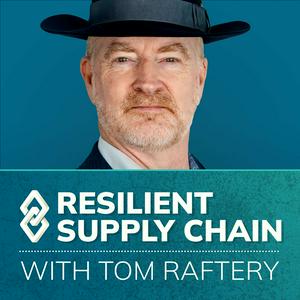
Resilient Supply Chain is for supply chain, operations, procurement and technology leaders who need practical ways to manage disruption, reduce risk and keep business moving.First launched in 2019 as Digital Supply Chain and later known as Sustainable Supply Chain, the podcast continues today as Resilient Supply Chain, with the same extensive archive of more than 525 episodes covering supply chain technology, resilience, logistics, procurement and sustainability.Each Monday, technology and sustainability analyst, keynote speaker and former SAP Global VP Tom Raftery speaks with the executives, operators, founders and innovators redesigning how goods, information and decisions move through global supply chains.These are candid conversations about what works in practice—not polished PR narratives or vague predictions. Guests explain how they are responding to supplier failures, geopolitical shocks, volatile costs, capacity constraints, changing regulations and rising pressure to improve both performance and sustainability.The podcast examines:Faster planning and decision-making under uncertaintySupplier risk, sourcing strategy and business continuityAI, automation, visibility and operational intelligenceWarehousing, logistics and fulfilment performanceScope 3 emissions, circularity and responsible sourcingThe systems, incentives and organisational changes needed to turn data into actionThe central question is simple: what helps a supply chain withstand disruption, adapt quickly and continue serving the business?New episodes are published every Monday at 7am CET. Resilient Supply Chain+ subscribers also receive bonus analysis, highlights and briefings on emerging industry trends.Follow Resilient Supply Chain for practical lessons from the people solving real operational problems—and building supply chains that perform when conditions do not go to plan.
Podcast websiteListen to Resilient Supply Chain — How Leaders Keep Business Moving, The Business and many other podcasts from around the world with the radio.net app
Get the free radio.net app
- Stations and podcasts to bookmark
- Stream via Wi-Fi or Bluetooth
- Supports Carplay & Android Auto
- Many other app features
Get the free radio.net app
- Stations and podcasts to bookmark
- Stream via Wi-Fi or Bluetooth
- Supports Carplay & Android Auto
- Many other app features

Resilient Supply Chain — How Leaders Keep Business Moving
Scan code,
download the app,
start listening.
download the app,
start listening.
Resilient Supply Chain — How Leaders Keep Business Moving: Podcasts in Family
 Ireland

