

Listen to this podcast in the app for free: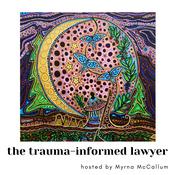 Download for free in the App Store
radio.net
Sleep timer
Save favourites
75 episodes
Building a Culture of Care: Compassion, Community & Law with River Shannon
23/08/2026 | 1hAbout River Shannon
River Shannon is a lawyer, a Soto Zen priest, and a deeply committed member of the queer and trans community she serves.
River is the Manager of Legal Services at QMUNITY, where she provides legal support to queer, trans, and Two-Spirit people across British Columbia. QMUNITY’s Legal Clinic offers free, low-barrier legal services and support around issues including human rights, employment, housing and tenancy, family law, name changes, and gender-marker changes.
But River’s work is about much more than the law.
As a trans lawyer serving her own community, she understands something that can be difficult to capture in a legal file: what it means to enter a legal system carrying your identity, your history, your vulnerability, and sometimes your fear of being misunderstood. Her work creates a different possibility—one in which legal advocacy can also be an act of recognition, dignity, relationship, and care.
River is also a Soto Zen priest in the lineage of Shunryu Suzuki Roshi. She received priest ordination in October 2023 from Myoshin Kate McCandless, a guiding teacher of Mountain Rain Zen Community in Vancouver. Her writing explores the intersection of Zen practice, transition, identity, impermanence, compassion, and what it means to live as a whole person.
That combination of lawyer, trans woman, community advocate, and Zen practitioner makes River’s perspective particularly powerful. There is a thread running through all of this work: how do we meet people where they are, with compassion, and help create the conditions for them to become more fully themselves?
In this conversation, we talk about law and community, trans identity and belonging, the importance of being seen by the people who serve us, and what it means to practice law with humility, care, compassion, and love. River’s work reminds us that legal practice does not have to be separate from humanity. Sometimes, the most transformative legal work begins simply with saying: I see you. I understand you. You don’t have to go through this on your own.
About QMUNITY’s Legal Clinic
QMUNITY’s Legal Clinic provides free, low-barrier legal services to 2SLGBTQIA+ individuals and families throughout British Columbia. The clinic offers consultations, referrals, and limited representation in areas including:
Human rights
Employment
Tenancy and housing
Family law
Name changes and gender-marker updates
Other legal issues affecting queer, trans, and Two-Spirit communities
QMUNITY also offers Trans ID Clinics to support people navigating legal name changes and gender-marker changes.
Learn more: QMUNITY Legal Clinic
QMUNITY: QMUNITY — Queer, Trans and Two-Spirit Resource Centre
Why this work matters
Trans and gender-diverse people continue to experience significant legal and social inequities in Canada.
The 2021 Canadian Census was the first national census to collect gender identity separately from sex assigned at birth. Among people aged 15 and older living in private households, 100,815 people identified as transgender or non-binary—about 0.33% of the population. Statistics Canada and the federal government note that this may be an underestimate because some people may not have felt comfortable disclosing their gender identity. (Canada)
Legal problems are also disproportionately common. A Canadian Justice Department review of research on trans people's legal needs found that 71% of trans respondents in one Ontario study had experienced at least one legal problem in the previous three years, compared with 48% of the general population. These problems included discrimination, employment, housing, healthcare, police interactions, family matters, immigration, and other areas of law. (Ministère de la Justice)
And while Canada has made important legal advances—including explicit human-rights protections based on gender identity—legal protection does not necessarily mean equal access to justice or equal treatment within legal systems. (Canada)
Further resources
QMUNITY Legal Clinic
Free, low-barrier legal support for 2SLGBTQIA+ people in British Columbia.
Visit the QMUNITY Legal Clinic
QMUNITY Programs & Services
Information about QMUNITY's broader community, counselling, peer-support, youth, seniors, and legal programs.
Explore QMUNITY's programs and services
Government of Canada — Facts, Stats and Impact: 2SLGBTQI+ Communities
Current Canadian statistics and information about stigma, discrimination, and the 2SLGBTQI+ population.
Read the Government of Canada's 2SLGBTQI+ facts and statistics
Statistics Canada — Socioeconomic Outcomes of Transgender and Non-Binary People in Canada
Research examining income, poverty, employment, and other socioeconomic inequities experienced by trans and non-binary people.
Read the Statistics Canada report
Department of Justice Canada — Legal Problems Experienced by Trans People
Research into the legal problems trans people experience and barriers to accessing justice.
Read the Justice Canada research
A final thought
River's work raises an important question for all of us working in law:
What would happen if we understood legal practice not simply as a profession, but as a relationship of care and responsibility to the communities we serve?
You can learn more about Myrna and her work at: www.myrnamccallum.caCuriosity as Resistance: Nonviolent Communication with Leonie Smith
30/07/2026 | 59 mins.In this episode, Leonie and I explore:
How systems of oppression show up in the everyday spaces we work and live in, and what it takes to name them honestly
Identity and the dominant culture — what gets placed on us as Black and Brown people, and the ongoing work of pushing back and reclaiming our own sense of self
Psychological safety as a precondition for trust — not a nice-to-have, but the ground everything else is built on
Liberation and justice as ongoing practices we return to, rather than destinations we arrive at
Trust as something built in relationship, tested in conflict, and repaired through honesty
Nonviolent Communication as a path to learning more about the self, not only a communication skill
Curiosity and compassion as the roots of meaningful connection — and why that matters more than arriving anywhere
Where our two practices — trauma-informed lawyering and NVC — meet, and where they push each other further
Leonie Smith is a first-generation Canadian of Jamaican heritage and a certified Nonviolent Communication trainer through the Center for Nonviolent Communication (CNVC). She's the founder of three organizations: The Thoughtful Workplace, a coaching and consultancy practice building people-centred work cultures; People of Colour for Nonviolent Communication (POC4NVC), a network for Black, Indigenous, and People of Colour connected to principles of nonviolence; and Necessary Trouble Collective (NTC), which supports movement and activist communities in finding harmonious, sustainable ways of working toward shared purpose. With over two decades of senior management experience across communications, fundraising, and human resources in the nonprofit sector, Leonie brings a deep, practiced understanding of how systems either support or undermine the people inside them.
Connect with Leonie:
Website: leoniesmith.ca
The Thoughtful Workplace
People of Colour for Nonviolent Communication (POC4NVC)
Necessary Trouble Collective (NTC)
You can also view her talk in our video library from our 2026 JAT Summit titled, Speaking Hope: A NVC Approach: https://myrnamccallum.ca/video-library/
You can learn more about Myrna and her work at: www.myrnamccallum.caEmotional Justice, Racial Healing and the Work We Must Do with Esther A. Armah
22/05/2026 | 1h 5 mins.In this episode Esther Armah and Myrna discuss her Emotional Justice framework. In this conversation, they get into the courage that racial healing actually requires, and who it asks the most of. Esther is a journalist, playwright, and global emotional justice advocate joining us from Accra, Ghana.
Drawing on her encounters with Winnie Mandela, Archbishop Desmond Tutu, and Nchiki Biko — the widow of Steve Biko who famously refused to forgive the officers who murdered her husband at the TRC — Esther unpacks why reconciliation is not liberation language, why Nelson Mandela's message of forgiveness placed an impossible emotional burden on Black people, and what the emotional work of white people actually looks like. Myrna brings her own reckoning: years of fawning for white audiences, softening the language of colonial trauma, and what it finally cost her to name it.
This is Part 1. Esther will be back.
Esther Armah is a Ghanaian-British journalist, playwright, radio host, and creator of the Emotional Justice framework. She is the author of Emotional Justice: A Roadmap for Racial Healing. She joins this episode from Accra, Ghana.
IN THIS EPISODE
— How Esther's mother's broken silence about the 1966 Ghana coup gave birth to Emotional Justice — and the insight that "you cannot PhD your way out of untreated trauma"
— What Winnie Mandela told Esther before she interviewed Desmond Tutu: listen to the women first
— Nchiki Biko's refusal to forgive at the TRC, the murder of Steve Biko, and why her "no" cracked open a new understanding of racialized forgiveness
— Why reconciliation bypasses justice and repair — and how Canada's TRC has replicated the same harm as South Africa's
— Nelson Mandela's forgiveness narrative: a political act of its time, and why it seeded a dangerous legacy
— The emotional work that belongs to white people — Intimate Reckoning, Emotional Patriarchy, and the difference between proximity to power and actual allyship
— The language of whiteness: how all of us are taught to center whiteness, and the emotional work of letting it go
— Myrna's own reckoning: years of fawning for white audiences and what it took to name it
— The three Cs — Courage, Comfort, and Convenience — and how we each choose to contribute to or resist systems of harm
— Why you cannot self-care your way towards liberation, and what communal care actually requires
— Isolation vs. solitude — why hiding can be part of healing, and why isolation is the death of liberation
— Wellness in the Face of Warfare: what it means to choose wellness when your health is considered a threat to whiteness
QUOTES
"You cannot PhD your way out of untreated trauma. There is no amount of education that will replace the emotional work we all have to do." — Esther Armah
"Reconciliation is not liberation language. It is conciliatory language designed to sustain how whiteness comforts and soothes itself." — Esther Armah
"In Canada, your superpower is to mask your violence in polite neutrality and somehow describe it as no longer violence. We see that — because that's part of British whiteness." — Esther Armah
PEOPLE MENTIONED
— Winnie Mandela — South African anti-apartheid activist
— Archbishop Desmond Tutu — South African human rights leader
— Nchiki Biko — widow of Steve Biko; her refusal to forgive at the TRC was pivotal to Esther's framework
— Nelson Mandela — discussed in relation to racialized forgiveness
— Resmaa Menakem — referenced by Myrna on having skin in the game
— Kwame Nkrumah — first independent president of Ghana; quoted on political and economic liberation
RESOURCES
Emotional Justice: A Roadmap for Racial Healing by Esther Armah - You can buy it here: https://www.amazon.ca/Emotional-Justice-Roadmap-Racial-Healing/dp/1523003367
estherarmah.com
https://www.theaiej.com/
myrnamccallum.co
You can learn more about Myrna and her work at: www.myrnamccallum.caRevolutionary Love: My Conversation with Dr. Samah Jabr
29/04/2026 | 1h 6 mins.In this powerful and unflinching conversation, Dr. Samah Jabr explains the psychological realities of Palestinian life under occupation in Gaza. We move beyond headlines to examine the lived experience of genocide, collective trauma, and the systematic use of brutality, torture, and humiliation as tools of control.
Dr. Jabr offers a deeply grounded analysis of colonial trauma—how it embeds itself not only in individuals, but in families, communities, and generations. Together, we unpack the psychological impact of ongoing violence, the erosion of dignity, and the ways in which survival itself becomes an act of resistance.
Yet this conversation is not only about harm—it is also about healing. We explore community as medicine, the role of collective care, and the power of solidarity across movements. Drawing on liberation psychology, Dr. Jabr reframes mental health beyond individual pathology, calling us toward a more political, relational, and justice-oriented understanding of healing. At its core, this episode is an invitation to witness, to feel, and to consider what revolutionary love looks like in the face of trauma.
Resources & Further Reading:
You can learn more about Dr. Jabr here: https://drsamahjabr.com/
Behind the Frontlines: Tales of Resistance and Resilience in Palestine by Dr. Samah Jabr
Content Note:
This episode includes discussion of genocide, war, torture, and systemic violence. Please listen with care.
You can learn more about Myrna and her work at: www.myrnamccallum.caDebriefing Justice as Trauma with Ally & Mariana
23/04/2026 | 1h 15 mins.In this episode, I’m joined by my team—Ally and Mariana—for a candid debrief after our recent conference. We take you behind the scenes of what it really took to bring this gathering to life.
We share:
The moments that stood out most—the powerful, the unexpected, and the deeply moving
Some of the challenges and pressure points we navigated along the way
The wins we’re celebrating (both visible and behind the scenes)
Reflections on the speakers, their messages, and the impact they left on us
The people and moments that shifted us in ways we’re still processing
This conversation is honest, reflective, and rooted in what it means to do this kind of work in real time—not just when things go right, but when they’re complex, emotional, and evolving.
If you’ve ever wondered what happens after the event ends, this is that conversation.
The closing Maori prayer of protection was given by Tere Davis who is the Chairperson of Hei Tatau Pounamu, a tikanga‑based restorative justice trust in Auckland.
You can learn more about Myrna and her work at: www.myrnamccallum.ca
More Education podcasts
 Good Life ProjectBusiness, Education, Health & Wellness, Self-Improvement, Tutorials
 The Comeback with Brenda DennehyEducation, Health & Wellness, Mental Health, Self-Improvement
 The Mel Robbins PodcastEducation, Health & Wellness, Mental Health, Relationships, Self-Improvement, Society & Culture
 Gaeilge WeeklyEducation, Language Learning
 Begin Again with Davina McCallEducation, Health & Wellness, Mental Health, Self-Improvement, Society & Culture
 IT IS WHAT IT IS!Education, Self-Improvement
 IMO with Michelle Obama and Craig RobinsonEducation, Self-Improvement, Society & Culture
 Science with Luke O'NeillEducation
 Nuacht MhallEducation, Language Learning
 How to Be a Better HumanEducation, Self-Improvement
Trending Education podcasts
 anything goes with emma chamberlainEducation, Personal Journals, Self-Improvement, Society & Culture
 Therapists Talk TherapyEducation, Health & Wellness, Mental Health
 Luke's ENGLISH Podcast - Learn British English with Luke ThompsonComedy, Education, Language Learning
 Obstetrics and Gynaecology Emergencies UCDEducation
 Learn Spanish: Fluency in Real Life with HandyspanishEducation
 Lead the Way | Education Leadership SkillsEducation
 The Daily StoicBusiness, Education, Self-Improvement, Society & Culture
 How to Touch GrassEducation, Science, Self-Improvement, Social Sciences, Society & Culture
 The Humans vs Retirement PodcastBusiness, Careers, Education, Investing, Personal Journals, Self-Improvement, Society & Culture
 读者 官方播客Education, Government, Relationships, Self-Improvement, Society & Culture
 The Jordan Harbinger ShowBusiness, Education, Science
 ALIGNED | The Path to PurposeAlternative Health, Education, Health & Wellness, Religion & Spirituality, Self-Improvement, Spirituality
 Coffee Break Italian AdvancedCourses, Education, Language Learning
 Motivation Daily by MotiversityEducation, Health & Wellness, Self-Improvement
 Conversations with TylerEducation, Society & Culture
 Dreaming Spanish Podcast – Chats in Beginner SpanishEducation, Language Learning
 Flow PodcastEducation, Self-Improvement
 80,000 Hours PodcastEducation, Technology
 The Art of DeclutteringEducation, Home & Garden, Kids & Family, Leisure, Parenting
 The Rich Roll PodcastEducation, Health & Wellness, Self-Improvement, Society & Culture
 Coffee Break ItalianCourses, Education, Language Learning
About The Trauma-Informed Lawyer
What if the way we were trained to work with people is actually causing harm?
Hosted by Myrna McCallum — Métis lawyer, trauma educator, and speaker — The Trauma-Informed Lawyer is for anyone who works with people: lawyers, social workers, educators, healthcare providers, first responders, advocates, and beyond.
Through inspiring interviews, courageous conversations, and honest commentary, Myrna and her guests explore the human side of professional practice — and go deeper, into the collective wounds that shape us all. These conversations examine trauma, liberation, and healing not just as individual experiences, but as communal and cultural ones, informed by Indigenous and racialized ways of knowing and being.
This is the education in trauma, resilience, compassion, vicarious trauma, boundaries, and collective healing that no training program ever gave you.
Because doing good work in the world starts with understanding people — and that requires understanding trauma.
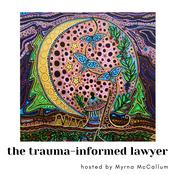
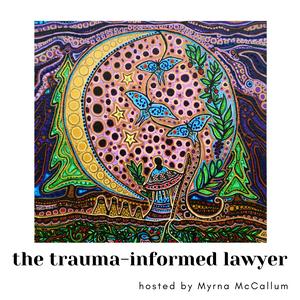
Artwork titled, "Myrna at Moonrise" by Métis artist Leah Marie Dorion.
Podcast websiteListen to The Trauma-Informed Lawyer, Good Life Project and many other podcasts from around the world with the radio.net app
Get the free radio.net app
- Stations and podcasts to bookmark
- Stream via Wi-Fi or Bluetooth
- Supports Carplay & Android Auto
- Many other app features
Get the free radio.net app
- Stations and podcasts to bookmark
- Stream via Wi-Fi or Bluetooth
- Supports Carplay & Android Auto
- Many other app features

The Trauma-Informed Lawyer
Scan code,
download the app,
start listening.
download the app,
start listening.
 Ireland