

Listen to this podcast in the app for free: Download for free in the App Store
radio.net
Sleep timer
Save favourites
151 episodes
BONUS: Lewis Lapham's The American Ruling Class
24/07/2026 | 19 mins.Two years ago today, Lewis Lapham’s voice joined all those other departed voices of the past. This summer we’ve been welcoming his voice back to the microphone of the present, and today, in commemoration of the anniversary of his death, we are sharing this bonus episode. In the first years of the new millennium, Lewis Lapham made a movie, a “dramatic documentary musical” called The American Ruling Class, released in 2005. On August 1, 2026, The American Ruling Class is coming to the Criterion Channel. Lewis wrote much of it, narrated much of it, and starred in much of it, playing himself, or a version of himself—a wise, mirthful, sardonic mentor in pinstripes guiding a pair of greenhorn youths who set out to uncover the secrets of the American ruling class. This episode collects audio excerpts from the film.
See Privacy Policy at https://art19.com/privacy and California Privacy Notice at https://art19.com/privacy#do-not-sell-my-info.America's Violent Birth (with Joseph J. Ellis and Holger Hoock)
17/07/2026 | 1h 10 mins.“America’s founding is not just your conventional heroic struggle for noble ideas and ideals,” says historian Holger Hoock on today’s episode of The World in Time. “It is also a profoundly violent civil war—America’s first civil war—and a civil war in the British Empire.”
This second, war-torn episode of Lapham’s Revolutionary America, a special series of The World in Time, collects historical dispatches from the battlefields, excerpting two conversations that Lewis Lapham recorded: one with Hoock about his 2017 book Scars of Independence: America’s Violent Birth, the other with Joseph J. Ellis, from 2022, about The Cause: The American Revolution and its Discontents, 1773–1783.
The ad-free, unabridged Substack edition of the episode concludes with an audio version of an essay adapted from Peter C. Mancall’s new book, Contested Continent: The Struggle for North America, c. 1000 to 1680, the most recent and chronologically earliest addition to The Oxford History of the United States, other volumes of which include Gordon S. Wood’s Empire of Liberty and Richard White’s The Republic for Which It Stands. Titled “The Mystic River Massacre,” Mancall’s essay takes readers and listeners into a violent colonial prologue to the country’s violent, revolutionary birth.
See Privacy Policy at https://art19.com/privacy and California Privacy Notice at https://art19.com/privacy#do-not-sell-my-info.Lapham’s Revolutionary America: Jill Lepore and Gordon S. Wood
03/07/2026 | 1h 24 mins.“What’s extraordinary in those speeches that Lincoln gave on the eve of the war,” says Gordon S. Wood in this episode of The World in Time, “is his realization of how diverse America
had become. We’ve got Frenchmen, we’ve got Spaniards, we’ve got Germans, we’ve got Irish, we’ve got all these different Scots, how are we going to hold together? We’re not a nation. Lincoln says, Well, we have an answer to that, and it’s that good old Declaration of Independence. All men are created equal.”
On June 7 of this year, news came that the American historian Gordon S. Wood had died at the age of 92. In commemoration of him, this episode presents in its entirety a conversation Wood recorded with Lewis H. Lapham in 2017 about Friends Divided: John Adams and Thomas Jefferson.
Lapham’s Revolutionary America, a special series of The World in Time, draws from archival conversations that Lewis H. Lapham recorded with scholars and historians of the American Revolution, occasionally complementing those archival conversations with new ones.
As introduction to the series, this episode begins with an excerpt from a 2018 conversation about These Truths, Jill Lepore’s single-volume history of the U.S. It concludes with an audio version of “‘As Though They Were Blood of the Blood’: Jefferson’s Declaration and the Problem of American Identity,” an essay adapted from the foreword Gordon S. Wood wrote to Ted Widmer’s new book, The Living Declaration: A Biography of America’s Founding Text.
See Privacy Policy at https://art19.com/privacy and California Privacy Notice at https://art19.com/privacy#do-not-sell-my-info.Lapham's Revolutionary America [Teaser]
30/06/2026 | 3 mins.A series from The World in Time, beginning Friday, July 3, 2026. Voices heard here: Lewis H. Lapham, Jill Lepore, Gordon S. Wood. Illustration: The 1795 flag that flew from Fort McHenry and inspired Francis Scott Key’s “Star-Spangled Banner.”
See Privacy Policy at https://art19.com/privacy and California Privacy Notice at https://art19.com/privacy#do-not-sell-my-info.Michael Pollan on Consciousness
26/06/2026 | 1h 9 mins.“We have language. That’s the best tool we have for understanding the consciousness of another,” says Michael Pollan on this week’s episode of The World in Time. “You can go pretty far with it, as Proust himself showed, but that is, in the end, the function of art: to translate one consciousness into another. That’s the only way we know how to do it right now, and it’s pretty powerful, but there’s still a remnant, some residue that can never be translated. Even Proust, who wrote millions of words and was a great believer in the power of words, said consciousness is not a verbal construction. He didn’t think that consciousness was made of words. The visual arts can tell us things, too. A Rothko painting conveys so much consciousness. That’s the importance of art—helping to ferry us from one island of consciousness to another.”
This week on the podcast, Donovan Hohn speaks with Michael Pollan, award-winning author and journalist, about his new book A World Appears: A Journey into Consciousness, in which Pollan explores one of our most complex and enduring mysteries: the “hard problem” of consciousness. Initially, he seeks the headwaters of consciousness in neuroscience, computer science, and in science that bridges computers and biology, but, midway through the book, and midway through this episode, suspecting that “third-person” science might be inadequate to the mystery, he looks elsewhere—to philosophy, literary history, the arts, and, as his journey ends, to Buddhism.
The ad-free, unabridged version of this episode, available on the Lapham’s Quarterly Substack, concludes with a bonus segment, an audio version of an essay on animal consciousness, by John Jeremiah Sullivan, that originally appeared in the Spring 2013 Animals issue of Lapham’s Quarterly.
See Privacy Policy at https://art19.com/privacy and California Privacy Notice at https://art19.com/privacy#do-not-sell-my-info.
More Arts podcasts
 Fashion Neurosis with Bella FreudArts, Fashion & Beauty, Relationships, Society & Culture
 99% InvisibleArts, Design
 Fresh AirArts, Books, Society & Culture, TV & Film
 DishArts, Comedy, Food, Society & Culture
 The Book ReviewArts, Books
 ArenaArts, Film Reviews, TV & Film
 The Bookshelf with Ryan TubridyArts, Leisure, Society & Culture
 THEMOVEArts, Sports
 Table Manners with Jessie and Lennie WareArts, Food, Kids & Family, Music
Trending Arts podcasts
 The New Yorker: The Writer's Voice - New Fiction from The New YorkerArts
 Jane Austen Bedtime StoriesArts, Books
 The Food ProgrammeArts, Food
 HomingArts, Design, Personal Journals, Society & Culture
 LuxeGen PodcastArts, Entertainment News, Fashion & Beauty, News, Relationships, Society & Culture
 Prime LensesArts, Technology, Visual Arts
 Every OutfitArts, Fashion & Beauty
 岩中花述Arts
 Talk ArtArts, Visual Arts
 All About Agatha ChristieArts, Books, Film Reviews, TV & Film
 Be My Guest with Ina GartenArts, Food
 The Shakespeare and Company InterviewArts, Books
 The Prancing Pony PodcastArts, Books, Film Reviews, TV & Film
 History of Westeros - A Song of Ice and Fire | Game of Thrones | HOTD | AKOTSKArts, Books
 GastropodArts, Food, History, Science
 A Good ReadArts, Books
 Selected ShortsArts, Books, Fiction, Society & Culture
 State of the Arc PodcastArts
 This Cultural LifeArts, Personal Journals, Society & Culture
About The World in Time / Lapham’s Quarterly
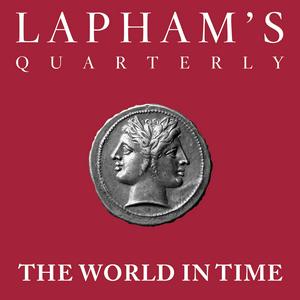
Donovan Hohn, the acting editor of Lapham's Quarterly, interviews historians, writers, and journalists about books that bring voices from the past up to the microphone of the present. New episodes are released bi-weekly.
Podcast websiteListen to The World in Time / Lapham’s Quarterly, Fashion Neurosis with Bella Freud and many other podcasts from around the world with the radio.net app
Get the free radio.net app
- Stations and podcasts to bookmark
- Stream via Wi-Fi or Bluetooth
- Supports Carplay & Android Auto
- Many other app features
Get the free radio.net app
- Stations and podcasts to bookmark
- Stream via Wi-Fi or Bluetooth
- Supports Carplay & Android Auto
- Many other app features

The World in Time / Lapham’s Quarterly
Scan code,
download the app,
start listening.
download the app,
start listening.
 Ireland