
Listen to this podcast in the app for free: Download for free in the App Store
radio.net
Sleep timer
Save favourites
402 episodes
When A Business Goes Bust: What Happens Next? | Carrie James
21/10/2026 | 1h 21 mins.#CarrieJames #Insolvency #HMRC #BusinessWithoutBS #SmallBusiness
What actually happens when a business goes bust? And what should you do before it gets that far?
It's Halloween on Business Without BS, so we're tackling the thing every business owner is frightened of and almost nobody understands: insolvency.
Carrie James is an insolvency partner at Oury Clark. She spends her working life with directors at their hardest moment: rescuing businesses that can be saved, closing the ones that can't, and making sure creditors are treated fairly along the way.
In this episode, Carrie joins Andy Oury (The Rebel Accountant) and Jemma Hotta (The Lovely Lawyer) to take the hocus pocus out of insolvency: why HMRC quietly becomes your lender, what a personal guarantee can really cost you, and why the biggest mistake directors make is not making a decision at all.
Why it matters: most business failures don't start with one disaster. They start with unpaid PAYE and VAT, a director's loan account nobody's watching, or a personal guarantee signed years ago. The earlier you spot the problem, the more options you have.
A conversation with your accountant and your lawyer, without paying for the meeting. Two expert lenses, one business problem, no jargon.
🎯 In this episode, you'll hear:
• Why HMRC becomes a "silent lender", and why PAYE and VAT were never your money to trade with
• When a company is actually insolvent (it's not always when you think)
• What insolvency practitioners really do, and why calling one early can save your business
• The options, from a quiet negotiation to CVAs, pre-packs, administration and liquidation
• Can a personal guarantee cost you your family home?
• The overdrawn director's loan account trap
• Pre-packs and phoenixing: rescue or stitch-up?
• Time to pay with HMRC, and who gets paid first when a company fails
• How sole traders and suppliers can protect themselves when a customer goes bust
• Awake at 3am worrying about your business? What to do first thing in the morning
• Carrie's scariest appointment, and a Halloween round of Business or Hocus Pocus?
⏱ Chapters
00:00 Cold open
00:14 Welcome and meet Carrie James
03:18 Quickfire questions
08:34 The scariest thing in business
10:16 Why HMRC becomes the "silent lender"
13:39 When is a company actually insolvent?
17:05 Statutory demands, wrongful and fraudulent trading
23:08 What an insolvency practitioner really does
26:20 Your options: negotiation, CVAs, pre-packs and liquidation
33:41 Personal guarantees and the family home
40:10 Overdrawn director's loan accounts
45:51 Administration, pre-packs and phoenixing
53:05 HMRC, time to pay and who gets paid first
1:00:27 When your customer goes bust
1:09:14 Carrie's scariest appointment
1:14:48 Awake at 3am? What to do next
1:19:04 Business or Hocus Pocus?
📌 About our guest
Carrie James is an insolvency partner at Oury Clark, working with companies and individuals in financial distress. Her approach: stay calm, look at every option, and don't delay the decision. The sooner directors take advice, the easier the solution.
📌 Meet the hosts
Andy Oury is a Chartered Tax Adviser, Chartered Accountant and CEO of Oury Clark. Through The Rebel Accountant, he helps entrepreneurs understand tax, build better businesses and challenge common misconceptions about the economy.
Jemma Hotta is a lawyer and co-host of Business Without BS, bringing a legal perspective, sharp questions and a refreshingly practical approach to conversations about business.
🔗 Connect with the hosts:
Andy Oury – LinkedIn
https://www.linkedin.com/in/andrewoury/
Jemma Hotta – LinkedIn
https://www.linkedin.com/in/jemma-hotta/
🔗 Connect with the guest:
Carrie James – LinkedIn
https://www.linkedin.com/in/carrieannjames/
🎧 Listen to Business Without BS wherever you get your podcasts:
▶ Apple Podcasts
https://podcasts.apple.com/gb/podcast/business-without-bs/id1528844106
▶ Spotify
https://open.spotify.com/show/6J1YMncmYCLODOKi8A0CFU
▶ Website
https://withoutbs.com
👉 Subscribe for more conversations with the experts you'd normally have to hire.
https://www.youtube.com/@bwblondon
This is general discussion, not professional advice. If your business is in difficulty, speak to a licensed insolvency practitioner, accountant or solicitor about your own situation.
Business Without BS is powered by Oury Clark.
Real-world business intelligence. No gurus. No fluff. No BS.Is AI Killing Accounting? Lucy Cohen on the Future of Accountants
07/10/2026 | 1h 23 mins.Is AI about to replace accountants, or are we overlooking what makes human expertise so valuable?
This week on Business Without BS, Andy Oury and Jemma Hotta are joined by Lucy Cohen, co-founder of Mazuma, the youngest-ever President of the Association of Accounting Technicians (AAT), and a doctoral researcher investigating artificial intelligence in accounting and finance.
Lucy started Mazuma at just 23 with £100, a laptop and an idea that challenged the traditional accounting industry. Nearly two decades later, she's questioning another major transformation: the rise of AI.
But while businesses rush to automate everything, are we creating a bigger problem?
Lucy explores the dangers of AI-generated financial information, what she calls “deep fake accounting”, and why replacing experienced accountants could leave businesses exposed to mistakes they don't even know they're making.
The conversation also covers Making Tax Digital, the realities of running a small business, the challenges of changing established systems and why accountants need to demonstrate their value beyond spreadsheets and tax returns.
In this episode:
Is AI really killing accounting?
Why AI-generated numbers could create serious problems for businesses
What is “deep fake accounting”?
How Lucy built Mazuma with just £100
Making Tax Digital: progress or unnecessary complexity?
Why human judgement and experience still matter
The future of accountants, entrepreneurs and professional services
Business Without BS brings you real-world business intelligence through honest conversations with people who challenge conventional thinking.
No gurus. No fluff. No BS.
Hosted by Andy Oury and Jemma Hotta.
Powered by Oury Clark.
Connect with the hosts:
Andy Oury: https://www.linkedin.com/in/andrewoury/
Jemma Hotta: https://www.linkedin.com/in/jemma-hotta/
🔗 Connect with the guest:
Lucy Cohen – LinkedIn
https://www.linkedin.com/in/lucycohen/
Lucy Cohen – Website
https://www.lucycohen.uk
Watch and follow Business Without BS:
YouTube: https://www.youtube.com/@bwblondon
Instagram: https://www.instagram.com/bwblondon/
Website: https://withoutbs.comThe Next UK Budget: What’s Coming for Your Taxes?
23/09/2026 | 33 mins.#UKBudget #BudgetPredictions #Tax #BusinessWithoutBS #TheRebelAccountant
What’s actually going to happen in the next Budget, and what’s just noise?
In this special episode of Business Without BS, Andy Oury and Jemma Hotta put the rumours, headlines and tax speculation under the microscope and make their predictions for the upcoming Budget.
From pensions and capital gains tax to wealth taxes, property, inheritance tax and frozen thresholds, they break down what they think could change, what probably won’t, and the consequences those decisions could have for entrepreneurs, business owners and taxpayers.
Think of this as a conversation with your lawyer and your accountant, you just don't have to pay for it.Honest opinions, practical insights and no unnecessary jargon.
🎯 In this special episode, you'll hear:
• Why Andy and Jemma think pensions could be targeted
• Could Capital Gains Tax increase again?
• Will the UK actually introduce a wealth tax?
• Why a land value tax keeps entering the conversation
• Could stamp duty and council tax ever be replaced?
• Why frozen tax thresholds matter more than they might seem
• What could happen to dividend taxes and the self-employed
• Could inheritance tax be changed again?
• Why Andy believes the tax system needs long-term reform rather than constant tinkering
🔮 Their predictions?
Andy expects tax thresholds to remain frozen or become less generous, and doesn't expect a wealth tax.
Jemma expects further changes around pensions, but doesn't expect stamp duty land tax to disappear.
Now the question is: how much will they get right?
📌 About the hosts
Andy Oury is a Chartered Tax Adviser, Chartered Accountant and CEO of Oury Clark. Through The Rebel Accountant**, he challenges conventional thinking around tax, entrepreneurship and the economy.
Jemma Hotta brings the legal perspective to Business Without BS, cutting through the complexity behind the rules and what they mean in practice.
🎧 Listen to Business Without BS wherever you get your podcasts:
▶ Apple Podcasts
https://podcasts.apple.com/gb/podcast/business-without-bs/id1528844106
▶ Spotify
https://open.spotify.com/show/6J1YMncmYCLODOKi8A0CFU
▶ Website
https://withoutbs.com
👉 Subscribe for more conversations with the experts you'd normally have to hire.
https://www.youtube.com/@bwblondonUK Budget Predictions: What’s Really Going to Change?
23/09/2026 | 33 mins.The UK Budget is coming — but what’s actually likely to change, and what’s just speculation?
In this special episode of Business Without BS, Andy Oury and Jemma Hossa break down their predictions for the upcoming UK Budget, looking beyond the headlines at the tax changes that could affect individuals, entrepreneurs and business owners.
From pensions and Capital Gains Tax to wealth taxes, property taxes, inheritance tax and frozen thresholds, Andy and Jemma look at the options available to the government, what they think could realistically happen and the potential consequences.
Could pensions be targeted? Will Capital Gains Tax rise? Is a UK wealth tax realistic? Could stamp duty eventually disappear? And are frozen tax thresholds already functioning like a tax rise?
Think of this as a conversation with your lawyer and your accountant — you just don’t have to pay for it.
In this episode:
• What could happen to pensions in the next Budget
• Capital Gains Tax — could rates rise again?
• Why wealth tax remains such a controversial proposal
• Stamp duty, council tax and the case for a land value tax
• Why frozen tax thresholds matter
• Inheritance tax and changing allowances
• The impact tax changes could have on entrepreneurs and SMEs
• Andy and Jemma make their Budget predictions
No political theatre. No unnecessary jargon. Just Business Without BS.Building an Award-Winning Drinks Brand From Scratch | Maya Bedeau
09/09/2026 | 59 mins.What does it really take to turn an idea into a consumer brand, and convince investors to back you before you've even finished the product?
Maya Bedeau is the founder of 'Onest Energy, a natural energy drink created to bring more transparency to a crowded category. Just eight months after launching, 'Onest won Best Sports & Energy Drink at the UK Soft Drinks Awards, competing against established brands with significantly more history and money behind them.
Maya joins Andy Oury and Jemma Hotta to talk about what building a physical consumer brand actually looks like behind the scenes - from raising £225,000 in early investment and establishing a valuation before launch, to manufacturing, distribution, marketing and finding the right audience.
They also get into the importance of authenticity in founder-led marketing, why your audience needs to see themselves represented in your brand, choosing investors for more than their money, and why listening to too many opinions can sometimes pull a founder away from the original vision.
And, of course, Maya faces Business or BS, with takes on first-mover advantage, revenue vs profit, VC investment, Bitcoin and more.
Think of this as a conversation with your lawyer and your accountant, you just don't have to pay for it. Honest opinions, practical insights and no unnecessary jargon.
In this episode:
• Building a consumer brand from scratch
• Raising investment before having a finished product
• SEIS and early-stage startup funding
• How founders value a business before meaningful revenue
• Breaking into a crowded drinks market
• Finding and understanding your target audience
• Authenticity and founder-led marketing
• Building in public and putting your team on camera
• Choosing the right investors
• Why founders shouldn't listen to every opinion
• First-mover advantage and competing with established brands
• Revenue vs profit
• Business or BS
About Maya Bedeau
Maya Bedeau is the founder of 'Onest Energy, a natural energy drink brand focused on transparency and providing an alternative within the traditional energy-drink category. Before launching 'Onest, Maya spent years working inside another drinks startup, where she gained hands-on experience across marketing and the realities of running a small business.
Connect with Maya
LinkedIn: https://www.linkedin.com/in/maya-bedeau-08951a109/
'Onest Energy Instagram: https://www.instagram.com/drinkonest/?hl=en
Connect with Business Without BS
YouTube: https://www.youtube.com/@bwblondon
Website: https://withoutbs.com
Connect with Andy Oury
LinkedIn: https://www.linkedin.com/in/andrewoury/
More Business podcasts

Trending Business podcasts









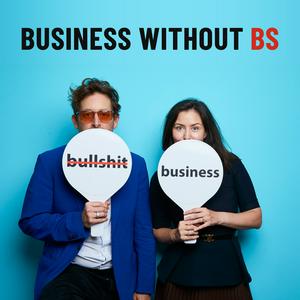
About Business Without BS
Your weekly dose of real-world business intelligence.
No gurus, no fluff - just practical lessons from people who’ve built, scaled, failed, adapted, celebrated, and done it all again.
We don’t admire success from afar - we dissect it, decode it, and deliver the lessons straight to you.
Subscribe for weekly insights and free resources that strip away the jargon and deliver the real-world lessons you wish you'd got at business school.
Podcast websiteListen to Business Without BS, A Bit of Optimism and many other podcasts from around the world with the radio.net app
Get the free radio.net app
- Stations and podcasts to bookmark
- Stream via Wi-Fi or Bluetooth
- Supports Carplay & Android Auto
- Many other app features
Get the free radio.net app
- Stations and podcasts to bookmark
- Stream via Wi-Fi or Bluetooth
- Supports Carplay & Android Auto
- Many other app features

Business Without BS
Scan code,
download the app,
start listening.
download the app,
start listening.
Business Without BS: Podcasts in Family
 Ireland
