
Listen to this podcast in the app for free: Download for free in the App Store
radio.net
Sleep timer
Save favourites
29 episodes
To Thin or Not To Thin with Conor Daly
10/11/2026 | 52 mins.To Thin or Not to Thin - that's the subject of todays podcast and joining me to talk it through is Conor Daly, Director at The Forestry Company. In this chat we discuss the pros and cons of thinning Irish plantation forests with a strong emphasis on our two main timber growing species - Sitka and Norway Spruce. Conor explains the silvicultural, economic and biodiversity benefits thinning delivers. Then we get into the practical considerations and we tease out the many different factors that are weighed up in each forest when deciding if, when and how often to thin your crop. Finally we discuss Conors involvement with SEEFA - SEEFA are the Social, Economic Environmental Forestry Association of Ireland. Conor explains SEEFA's priorities for increasing farm forestry across Ireland and what they are urging Government to do to increase planting rates.
This podcast is supported by the Irish Department of Agriculture Food and the Marine. If you're thinking of planting a new forest or if you want information on financial and technical supports to manage your existing forest then go to
http://gov.ie/forestryforyou
About Conor:
Conor Daly is the Managing Director of The Forestry Company. Conor is a graduate of the English National Forestry College with a Higher Diploma in Forestry. He has a depth of experience within the private forestry sector with over twenty years’ experience in the industry.
Conor runs his own farm so he knows just how forestry can work alongside the farming industry. He is based in Kenmare, Co. Kerry.
Key Points:
Silvicultural benefits of thinning
Operational considerations for thinning
Legal and licensing requirements
Economic benefits of thinning
Biodiversity and environmental impacts
Role of professional foresters
Forest policy and regulations
SEEFA's role in Irish forestry
Quotes:
"Time is the biggest issue in thinning."
"If you don't thin the plantation, you're pushing your clear fell out by ten years nearly."
"If you're making money out of thinning, something's wrong"
"Thinning allows light to reach the forest floor and boosts biodiversity"
"The one thing I'd say to farmers is go away and get a felling license. If you have that in the drawer, at least you have you have a piece of paper. It's like having the insurance policy in the back drawer."
Click here for the ForestryNow podcast newsletter signup
Follow the Guest on:
Linkedin: https://www.linkedin.com/in/conor-daly-the-forestry-company-b6924850/
The Forestry Company Website: https://www.theforestrycompany.ie/
Other Links of Note:
SEEFA - Social, Economic Environmental Forestry Association of Ireland: https://seefa.ie/
Teagasc Guide to Harvesting Including Thinning: https://teagasc.ie/crops/forestry/advice/timber-harvesting/
Follow the Forestry Now Podcast on:
Website: https://forestrynow.eu/
Linkedin https://www.linkedin.com/company/the-forestry-now-podcast/
YouTube: https://www.youtube.com/@ForestryNow
Instagram: https://www.instagram.com/forestry_now_podcast/
Facebook: https://www.facebook.com/ForestryNowPodcast/
Contact Dermot:
forestrynowpodcast@gmail.com
Or at Linkedin: https://www.linkedin.com/in/dermot-mcnally-90b06421/
Chapters:
00:00 Show introduction: To thin or not to thin?
01:12 Introducing Connor Daly and his forestry career
03:16 Felling licences, forest roads and preparing for harvesting
06:27 The silvicultural benefits of thinning and improving timber quality
13:06 Thinning, wind stability and the challenges of harvesting machinery
17:31 The economics of thinning and what forest owners can expect
20:16 Thinning versus clearfelling: a real-world financial comparison
24:08 Tree growth, timber volume and wind risk
27:34 Biodiversity benefits and assessing whether to thin
31:06 Access, soil conditions and assessing a plantation
34:30 Differences between Sitka spruce, Norway spruce and broadleaves
39:31 Choosing the number of thinnings and considering continuous cover forestry
42:26 Practical advice for forest owners and SEEFA’s priorities for Irish forestry
51:00 Final advice for forest owners and closing remarksIreland's Forest Industry with Mark McAuley
03/11/2026 | 52 mins.In this interview I speak with Mark McAulay from Forest Industries Ireland (a business group within IBEC). We discuss the positives and negative aspects of forestry in the past, as well as the size and benefit of the industry we now have. I ask Mark about environmental and social concerns opponents of commercial plantation forestry have. A further common criticism is that Ireland's conifer forests produce poor timber, so we address that, and Mark explains the many uses homegrown softwoods are put to. We discuss how Europes over zealous interpretation of "peatland" is restricting planting in Ireland but that it needs to be reconsidered on improved soils grasslands especially. Finally, we discuss why all landowners should consider planting trees and about the supports the government offer for establishment and management.
This podcast is supported by the Irish Department of Agriculture Food and the Marine. If you're thinking of planting a new forest or if you want information on financial and technical supports to manage your existing forest then go to
http://gov.ie/forestryforyou
Key Points:
The economic contribution of the Irish forestry sector
Public perception and biodiversity considerations
The impact of European regulations on Irish forestry
The importance of coniferous and native forests for climate and biodiversity
Management practices like clearfell and continuous cover forestry
Increasing afforestation in the future
Quotes:
"90% plus of the population think that forests are a good thing and that we should have more of them."
"Forests are a major tool in combating climate change"
"Timber locks away carbon and keeps it out of the atmosphere"
"Clearfell areas green up very quickly, usually within a few years"
"Let's say you're getting 200,000 euro in forestry premiums... over 20 years. Could we look at front loading some of that?"
Explaining low afforestation: "We always have found in forestry in Ireland over the years is when agriculture is doing well, forestry doesn't do well, because people are not looking for a different option."
Click here for the ForestryNow podcast newsletter signup
Follow the Guest on:
Linkedin: https://www.linkedin.com/in/mark-mcauley-ba72445a/
Other Links of Note:
Forest Industries Ireland: https://www.linkedin.com/company/forest-industries-ireland/posts/?feedView=all
IBEC / FII: https://www.ibec.ie/connect-and-learn/industries/energy-transport-and-resources/forest-industries-ireland
FII Sponsored Timber Design Award: https://www.agriland.ie/farming-news/tu-dublin-architecture-students-win-fii-timber-design-award/
Timber Spec - CPD learning portal: https://timberspec.ie/
Follow the Forestry Now Podcast on:
Website: https://forestrynow.eu/
Linkedin https://www.linkedin.com/company/the-forestry-now-podcast/
YouTube: https://www.youtube.com/@ForestryNow
Instagram: https://www.instagram.com/forestry_now_podcast/
Facebook: https://www.facebook.com/ForestryNowPodcast/
Contact Dermot:
forestrynowpodcast@gmail.com
Or at Linkedin: https://www.linkedin.com/in/dermot-mcnally-90b06421/
Chapters: 00:00 Introduction to Mark McAulay and Forest Industries Ireland
02:01 The two priorities: planting more forests and using more Irish timber
04:30 Forestry, biodiversity and the case for conifer forests
08:11 Native woodland versus Sitka spruce and the climate argument
11:22 Why Ireland is different from the rest of Europe
15:20 The economic contribution of Ireland's forestry and timber industry
18:24 Why Irish timber can replace imported Scandinavian timber
20:37 How Ireland's forests supply sawmills, construction and packaging
22:06 Rising global timber demand and the case for sustainable forestry
23:14 Clearfelling: environmental concerns and the visual impact
26:55 The recreational benefits of forests and public access
31:00 Is continuous cover forestry realistic for Ireland?
33:25 Storm damage, forest design and the economics of clearfelling
34:40 Pesticides and chemical use in Irish forestry
37:35 Afforestation: should landowners consider planting trees?
38:03 Forestry regulation, licensing and the planting process
40:24 Government supports and the financial case for planting
42:44 Forestry returns compared with other farming systems
45:10 Environmental restrictions and the loss of productive forest area
48:42 What Forest Industries Ireland wants from the next forestry programme
51:28 The future of Irish forestry: planting the right trees in the right place
51:36 ConclusionElectric Shock for Forest Owners with Donal Whelan
27/10/2026 | 55 mins.Today I'm joined by Donal Whelan from the Irish Timber Growers Association. We talk a little about the role of the ITGA itself but we mostly focus on a new challenge for forest owners across Ireland - proposals to widen ESB corridors through existing semi mature and mature forests. We talk about the long established practice which facilitates power lines in new plantations and how owners are compensated for areas that cannot be planted with trees. Then we move on to the many possible implications if ESB corridors are widened without adequate engagement and consultation with forest owners - hugely increased windblow risk in areas adjoining cleared sections, reduced future access to area based forestry and farming support schemes, reduced access to basic farming payments, disruption and reduction of harvest income, sterilisation of underlying ground from future planting not to mention the thorny issues of who prevents woody regrowth from establishing or if the cleared areas will be made fit for return to agricultural activity with provision for livestock grade fencing. Some forest owners, myself included, have already being approached by the ESB and Donal reflects on what land owners are obliged (under current legislation) to facilitate at present.
This podcast is supported by the Irish Department of Agriculture Food and the Marine. If you're thinking of planting a new forest or if you want information on financial and technical supports to manage your existing forest then go to
http://gov.ie/forestryforyou
About Donal:
Donal Whelan, B.Agr.Sc. (Forestry) is a forestry graduate from University College Dublin and is principal of Commercial Forestry Services Ltd. (CFS) and Technical Director of the Irish Timber Growers Association (ITGA). Since 1986 Donal Whelan has provided forestry consultancy, management and advisory services to a wide range of corporate and private clients. A number of woodlands managed by Donal Whelan have won the National RDS – FS Forestry Awards, the most recent in 2019.
Key Points:
Role of Irish Timber Growers Association
Impact of proposed forestry legislation on landowners
Current power line corridor widening and compensation
Forest resilience and wind blow risks
Unanswered questions around impacts of proposed widening.
Engagement with policymakers and stakeholders
Quotes:
"The legislation is a moving target."
"Engage with a professional forester for advice."
"Widening corridors affects wind stability and forest health."
Click here for the ForestryNow podcast newsletter signup
Follow the Guest on:
Commercial Forestry Services: https://forests.ie/
Donal on Linkedin: https://www.linkedin.com/in/donal-whelan-54240716/
Irish Timber Growers Association: https://itga.ie/
Other Links of Note:
Agreement between the Irish Farmers Association and the Electricity Supply Board (ESB) in the case of forestry. https://www.ifa.ie/ifa-compensation-agreements/
Minister O'Brien's Press Release re: new draft legislation: https://www.gov.ie/en/department-of-climate-energy-and-the-environment/press-releases/minister-obrien-welcomes-progress-on-legislation-to-strengthen-electricity-network-resilience/
This issue in the media: https://www.agriland.ie/farming-news/sinn-fein-to-table-bill-on-forestry-corridors-for-critical-infrastructure/
ESB's Winter Resilience Plan: https://media.esbnetworks.ie/media/docs/default-source/publications/esb-networks-winter-2025-grid-resilience-plan.pdf
Detail on Storm Éowyn https://en.wikipedia.org/wiki/Storm_%C3%89owyn
Follow the Forestry Now Podcast on:
Website: https://forestrynow.eu/
Linkedin https://www.linkedin.com/company/the-forestry-now-podcast/
YouTube: https://www.youtube.com/@ForestryNow
Instagram: https://www.instagram.com/forestry_now_podcast/
Facebook: https://www.facebook.com/ForestryNowPodcast/
Contact Dermot:
forestrynowpodcast@gmail.com
Or at Linkedin: https://www.linkedin.com/in/dermot-mcnally-90b06421/
Chapters: 00:00 Show introduction: Donald Whelan on ESB power lines and Irish forests
02:09 Donald’s forestry background and the role of the ITGA
06:46 Proposed changes to ESB corridors through existing forests
09:10 Existing ESB arrangements for new plantations and power lines
11:29 Compensation for land, lost premiums and professional advice
16:20 Current ESB corridor widths and compensation rules
21:03 Widening corridors: wind risk and the impact on established forests
28:12 Landowner rights, ESB approaches and the proposed legislation
32:56 Premature harvesting, financial losses and grant implications
37:40 Timber extraction, forest roads and the cost of removing trees
40:05 Corridor maintenance, regrowth and landowner liability
42:29 Farming supports and the implications for forest owners
47:17 Representing forest owners: political engagement and ITGA priorities
54:26 The future of private forestry and closing remarksWindblow, Ash Dieback and Climate Resilience Schemes with Kevin O Connell
20/10/2026 | 58 mins.Today I speak with Kevin O Connell, Forestry Advisor at Teagasc - Teagasc are Irelands national agriculture and food development authority and Kevin's role is to advise Irish forest owners about how to best manage their forests. Today we discuss some of the reconstitution schemes the Irish Government offers owners. We start off by discussing the Climate Resilience Reforestation Pilot before moving on to the Windblow Scheme and finally the Ash dieback scheme. Each scheme has its own focus and nuance as you'll hear but all offer financial assistance to replant your site and in some cases, make other payments such as the annual Payments for Ecosystem Services available. While replanting involves challenges, Kevin emphasises that it offers a great chance for owners to reset the clock and grow a new forest that aligns with your objectives.
This podcast is supported by the Irish Department of Agriculture Food and the Marine. If you're thinking of planting a new forest or if you want information on financial and technical supports to manage your existing forest then go to
http://gov.ie/forestryforyou
About Kevin:
Kevin O’Connell is the Forestry Development Officer with Teagasc for counties Cavan, Monaghan, Meath, and Louth. He has over 38 years’ experience in forestry, both in the private and public sectors. Kevin joined Teagasc in 1988 and developed, managed and taught on the forestry training courses in Ballyhaise College. In 2005, he joined the advisory services, returned for a period to education but is now full time in advisory. Kevin has a specific interest in forestry education and environmental related forest management. His qualifications are M.Agr. Sc. (Rural Environmental Conservation Management) and B.Agr.Sc (Forestry). He is a technical member of the Society of Irish Foresters. He has taken a supporting role in instigating and nurturing knowledge transfer and information dissemination and works closely with the North East Forestry Group.
Key Points:
Reforestation obligations under the 2014 forestry act
Resetting the clock and next generation involvement in forest management
Scheme for climate resilient reforestation
Native forests and ecological sites
Biodiversity and water protection schemes
Wind damage assessment and support scheme
Ash dieback reconstitution scheme and payments
Financial support and grant processes for reforestation
Quotes:
"Wind damage support is crucial after storms."
"Ash dieback schemes help owners replant."
"Consult your forester for scheme advice."
Click here for the ForestryNow podcast newsletter signup
Follow the Guest on:
Kevins Profile
https://teagasc.ie/people/kevin-oconnell/
Kevins Article on reforestation:
https://teagasc.ie/news--events/daily/reforestation-following-harvest/
Other Links of Note:
Teagasc Forestry Resources on YouTube: https://www.youtube.com/teagascforestryvideos
Climate Resilience Reforestation Scheme Pilot:
https://teagasc.ie/news--events/daily/climate-resilient-reforestation-pilot-scheme-offering-financial-support-for-reforestation/
https://teagasc.ie/crops/forestry/grants/climate-resilient-reforestation-pilot-scheme/
Windblow Reconstitution Scheme
https://teagasc.ie/crops/forestry/grants/reconstitution-scheme-for-windblow-2026/
https://teagasc.ie/news--events/daily/turning-a-new-leaf/
Follow the Forestry Now Podcast on:
Website: https://forestrynow.eu/
Linkedin https://www.linkedin.com/company/the-forestry-now-podcast/
YouTube: https://www.youtube.com/@ForestryNow
Instagram: https://www.instagram.com/forestry_now_podcast/
Facebook: https://www.facebook.com/ForestryNowPodcast/
Contact Dermot:
forestrynowpodcast@gmail.com
Or at Linkedin: https://www.linkedin.com/in/dermot-mcnally-90b06421/
Chapters: 00:00 Show introduction
01:10 Introducing Kevin O’Connell and his role at Teagasc
02:03 Felling licences, replanting obligations and forest management
05:05 Replanting requirements and exceptions
08:32 Replanting as an opportunity to reset your forest
11:02 Involving the next generation in forestry decisions
13:06 How reforestation grants are paid
15:00 The Climate Resilient Reforestation Pilot Scheme
20:03 Continuous cover forestry: creating diverse, resilient forests
24:23 Native forests and the benefits of woodland restoration
28:03 Biodiversity, water protection and the Windblow Reconstitution Scheme
30:35 Windblow damage: eligibility, assessment and affected areas
40:20 Replanting options, grant rates and applying for windblow support
48:13 The Ash Dieback Scheme and additional financial support
55:50 Final advice for forest ownersDeer Management in Ireland with Seppi Höna
13/10/2026 | 54 mins.Today I speak with Regional Forest Inspector Seppi Höna about national efforts to address spiraling deer numbers in Ireland. We discuss the problems deer create in forestry and also what the scale of the problem is. Seppi explains how a national strategy group is providing direction for DMU's deer management units, which are now operational across the Republic of Ireland. We chat about whether we need more incentives to cull deer, about ethical and operational considerations relating to culled deer being left on the hill, as opposed to being recovered for venison. Finally, there are supports for deer protection in new forests, so we discuss these and other strategies forest owners can take to protect their trees.
Seppi Höna is a Regional Forest Inspector and Forest Service Inspector at the Department of Agriculture, Food and the Marine in Ireland. He has chaired key committees for the Irish Deer Management Strategy Group (IDMSG) and presented on the impact of deer in Irish forestry.
This podcast is part of the Deep Dives series which is supported by the Irish Department of Agriculture Food and the Marine. If you're thinking of planting a new forest or if you want information on financial and technical supports to manage your existing forest then go to
http://gov.ie/forestryforyou
Key Points:
Deer damage is on the rise, as evidenced by the National Forest Inventory. In 2022, 36% of sample plots exhibited some level of deer damage, a notable increase from previous years.
Deer impact on Irish forestry and native woodlands
Development and implementation of Ireland's deer management units
Public perception and stakeholder engagement in deer culling
The role of incentives and policies in deer population control
Research and scientific advice guiding deer management strategies
The importance of habitat assessment and landscape-level management
Challenges of invasive deer species and non-native populations
The potential for local venison markets and food sustainability
Ethical considerations in deer culling and carcass management
Future policy directions and stakeholder collaboration in Ireland
Quotes:
"Deer can damage all types of trees if at high levels."
Levels of Deer Damage? "We know there's a negative trajectory there, even from our national inventory."
Opposition to Culling? "Most responsible stakeholders want deer to be at sustainable levels... It's essential to cull deer to keep them at a healthy balance."
Culling and leaving deer carcasses on the hill: "I can see absolutely a place for this. If you're in an a very remote area... that's completely acceptable. But I do have an issue if it's the case that deer are being shot close to access tracks from an ethical point of view and they're being left there because the deer can easily be brought to a cold store and brought into there to the the food chain".
Developing a local market for venison: "We might move to a place where a local hunter could sell venison directly himself... at the minute the hunter can't"
Click here for the ForestryNow podcast newsletter signup
Follow the Guest on:
Linkedin: https://www.linkedin.com/in/seppi-h%C3%B6na-033b2075/
Seppi's Deer Impact Assessment Report as presented at the Society of Irish Foresters Field day: https://www.societyofirishforesters.ie/wp-content/uploads/2025/10/Deer-impact-assessment-SIF-fieldday.pdf
Other Links of Note:
Farm Relief Services Deer Management Programme: https://frscoop.ie/deer-management-programme-ireland/
Local DMU Case Study in Achill, Co Mayo: https://frscoop.ie/deer-management-achill-case-study/
Report of the Deer Management Strategy Group: https://www.gov.ie/en/department-of-agriculture-food-and-the-marine/publications/report-of-the-deer-management-strategy-group/
Follow the Forestry Now Podcast on:
Website: https://forestrynow.eu/
Linkedin https://www.linkedin.com/company/the-forestry-now-podcast/
YouTube: https://www.youtube.com/@ForestryNow
Instagram: https://www.instagram.com/forestry_now_podcast/
Facebook: https://www.facebook.com/ForestryNowPodcast/
Contact Dermot:
forestrynowpodcast@gmail.com
Or at Linkedin: https://www.linkedin.com/in/dermot-mcnally-90b06421/
Chapters: 00:00
Introduction and overview of deer impact in Ireland
02:14
Seppi Hona's background and role in forestry and wildlife management
04:14
Findings from the National Forest Inventory on deer damage
06:06
Deer impact on different types of trees and forests
07:49
Stakeholder perspectives on deer population levels
09:51
Assessing deer health and population estimates
12:58
Irish Deer Management Strategy Group and its objectives
15:58
Deer management measures and public engagement
17:51
Deer management units and coordination efforts
19:59
Role of Farm Relief Services and deer culling infrastructure
21:58
Legal tools: open season and out-of-season licenses
23:49
Practical management: protecting new plantations from deer
26:02
Incentives for hunters and deer culling targets
27:52
Challenges and ethical considerations in deer culling
29:56
Market potential for venison and promoting local consumption
32:01
Invasive deer species and eradication challenges
34:05
European hunting culture and Ireland's unique position
35:57
Getting started with deer hunting in Ireland
38:01
Controversies: deer culling practices and ethics
40:14
Research and future studies on deer ecology
44:08
Summary and final thoughts on deer management in Ireland
More Business podcasts


Trending Business podcasts











About Forestry Now
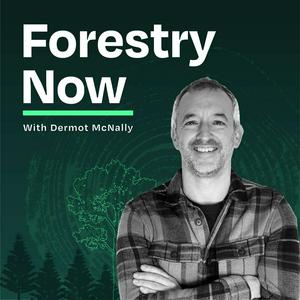
This podcast explores the forces impacting the profitable and sustainable management of commercial forests and natural woodlands. I speak with forest owners, forestry professionals and industry stakeholders on the biggest operational, environmental and economic challenges affecting the sector.
I interview people involved in the harvesting and processing side of the forestry business as well as those who are trying to maximise carbon sequestration and general ecosystem services.
I also investigate political and legislative changes that are coming down the track as well as highlight new technologies and big opportunities that are around the corner. Subscribe to Forestry Now with me Dermot McNally, to hear more.
Podcast websiteListen to Forestry Now, The Other Hand and many other podcasts from around the world with the radio.net app
Get the free radio.net app
- Stations and podcasts to bookmark
- Stream via Wi-Fi or Bluetooth
- Supports Carplay & Android Auto
- Many other app features

 Ireland

