
Listen to this podcast in the app for free: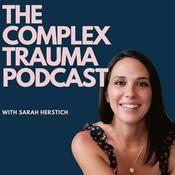 Download for free in the App Store
radio.net
Sleep timer
Save favourites
152 episodes
Why Do I Feel Worse After Therapy? EMDR and Complex Trauma
21/10/2026 | 40 mins.Ever leave a therapy session looking totally fine, then spend the next three days clenching your jaw, snapping at everyone, and wondering if you’re just bad at therapy? Or find yourself completely checked out mid-session with no idea how long you’ve been gone?
In this episode, I answer two listener questions about feeling worse after EMDR and dissociating in therapy sessions. We talk about why therapy can stir so much up when you have complex trauma (CPTSD), the difference between being stirred up and being flooded, and what an EMDR session for complex trauma looks like in my office. That includes pacing, preparation, working with parts, and closing a session so you can actually leave inside your window of tolerance.
We also cover:
Why “looking fine” in therapy is a survival strategy
Why self-blame was protective when you were a kid
The different kinds of dissociation and what each one needs
What to do between sessions when you’re flooded
Signs therapy is working, even when it’s hard
Exactly what to say to your therapist when you need something different
Many of the metaphors in this episode, including the boat and the whale, the barn door, and brakes on a car, come from Thomas Zimmerman’s book EMDR With Complex Trauma, which I highly recommend: EMDRwithComplexTrauma.com
Mentioned in this episode
The Dissociative Spectrum episode
The Beauty and the Work of Complex Trauma Recovery with Thomas Zimmerman
My functional freeze episode
Thanks for listening to The Complex Trauma Podcast!
Be sure to follow, share and give us a review on your favorite podcast platform.
Follow on Instagram: @sarahherstichlcsw
Follow on TikTok: @sarahherstichlcsw
Learn more about EMDR & trauma therapy in Pennsylvania with Reclaim Therapy
This podcast is for educational and informational purposes only. It is not intended as a substitute for professional medical, psychological, or nutritional advice, diagnosis, or treatment.
Remember, I'm a therapist, but I'm not your therapist. Nothing in this podcast is meant to replace actual therapy or treatment. If you're in crisis or things feel really unsafe right now, please reach out to someone. You can call 988 for the Suicide and Crisis Lifeline, text them, or head to your nearest ER.
The views expressed by the host and guests are their own and do not represent the opinions of any organizations or institutions. Reliance on any information provided by this podcast is solely at your own risk.What Greek Myths Reveal About Complex Trauma with Dr. Gillian O’Shea Brown
14/10/2026 | 46 mins.Why do we keep reliving the same painful patterns, even when we can see them coming? In this episode, psychotherapist and complex trauma expert Dr. Gillian O’Shea Brown joins me to explore how Greek myths can help us make sense of complex trauma, CPTSD, and the relational wounds we carry from childhood.
Gillian is SUCH a good storyteller, and she walks us through four myths that might feel a little too familiar.
In this episode, we talk about
Why stories can reach us in ways facts and diagnoses sometimes can’t
Sisyphus and “the bite that fits the wound,” or why we keep reenacting old pain in our relationships
The erotic emotional map, a tool for spotting the patterns in who you’re drawn to
Medea and the parent wound, and what happens when the person you need for safety is also the person who scares you
How defense mechanisms that helped you survive childhood can work against you as an adult
Medusa’s story retold as a story of survival, and why survivors who speak up so often get cast as the problem
Chiron, the wounded healer, and how people make meaning out of pain
Content note: Around the 16 minute mark, Gillian tells Medusa’s story, which includes sexual assault. Please take care of yourself while you listen.
About Dr. Gillian O’Shea Brown
Dr. Gillian O’Shea Brown is an Irish-born, New York based psychotherapist, adjunct professor at NYU, and EMDRIA approved consultant passionate about whole living for all people. Her work on the treatment and healing of complex trauma has been featured in Vogue, Forbes, Marie Claire, HuffPost, and more. Her new book is Psyche’s Awakening: A Guide to Emotional and Somatic Healing Through the Wisdom of Greek Myth (HarperOne).
Connect with Gillian
Free Sisyphus chapter and erotic emotional map mini course
Website
Instagram
Substack
Order Psyche’s Awakening Today!
Thanks for listening to The Complex Trauma Podcast!
Be sure to follow, share and give us a review on your favorite podcast platform.
Follow on Instagram: @sarahherstichlcsw
Follow on TikTok: @sarahherstichlcsw
Learn more about EMDR & trauma therapy in Pennsylvania with Reclaim Therapy
This podcast is for educational and informational purposes only. It is not intended as a substitute for professional medical, psychological, or nutritional advice, diagnosis, or treatment.
Remember, I'm a therapist, but I'm not your therapist. Nothing in this podcast is meant to replace actual therapy or treatment. If you're in crisis or things feel really unsafe right now, please reach out to someone. You can call 988 for the Suicide and Crisis Lifeline, text them, or head to your nearest ER.
The views expressed by the host and guests are their own and do not represent the opinions of any organizations or institutions. Reliance on any information provided by this podcast is solely at your own risk.Is It a Part or Is It Dissociation? OSDD, DID, and CPTSD
07/10/2026 | 32 mins.Everyone has parts. So how do you know when a part is just a part of you, and when it's crossed into a dissociative disorder like OSDD or DID?
This episode came from a listener healing from CPTSD who just found out she has a dissociative disorder. She asked two questions a lot of trauma survivors are carrying. How common are dissociative disorders in trauma survivors? And with parts work like IFS so popular right now, where's the line between ordinary parts and dissociation?
So we're walking the whole dissociative spectrum, from the drive home you don't remember to PTSD, complex PTSD, OSDD, and DID. We'll talk about what clinicians who specialize in dissociation might actually pay attention to, why "not me" matters so much, and why not losing time doesn't rule anything out.
In this episode:
Why "dissociation" means two different things, even to professionals
Structural dissociation, explained in plain language
How common dissociative disorders really are, and why they're so often missed
Six things that help separate everyday parts from dissociative parts
"Am I making this up?" and other fears that come up
Why a diagnosis is a map, not an identity
What healing can look like, including goals your system gets a say in
This episode is for education, not diagnosis. If something here feels familiar, bring it to a therapist trained in trauma and dissociation.
Mentioned in this episode:
Coping With Trauma-Related Dissociation by Suzette Boon, Kathy Steele, and Onno van der Hart
My conversation with Dr. Janina Fisher on dissociative parts
My dissociation Q and A episode
Last week's episode, "Why Do I Want Two Opposite Things at the Same Time?"
This episode's sponsor: Cozy Earth. Get 30% off home and sleepwear at cozyearth.com with code RECLAIM, through Sunday, October 11.
Thanks for listening to The Complex Trauma Podcast!
Be sure to follow, share and give us a review on your favorite podcast platform.
Follow on Instagram: @sarahherstichlcsw
Follow on TikTok: @sarahherstichlcsw
Learn more about EMDR & trauma therapy in Pennsylvania with Reclaim Therapy
This podcast is for educational and informational purposes only. It is not intended as a substitute for professional medical, psychological, or nutritional advice, diagnosis, or treatment.
Remember, I'm a therapist, but I'm not your therapist. Nothing in this podcast is meant to replace actual therapy or treatment. If you're in crisis or things feel really unsafe right now, please reach out to someone. You can call 988 for the Suicide and Crisis Lifeline, text them, or head to your nearest ER.
The views expressed by the host and guests are their own and do not represent the opinions of any organizations or institutions. Reliance on any information provided by this podcast is solely at your own risk.Why Do I Want Two Opposite Things? Conflicting Parts in Complex Trauma
30/09/2026 | 25 mins.Why can you feel lonely and then want everyone to leave you alone, or set a boundary and immediately want to take it back? Today, I explore why conflicting parts and contradictory responses can feel especially intense after complex trauma, drawing from parts work, attachment research, fear learning, and Somatic Experiencing.
You’ll hear why missing someone doesn’t mean the relationship was safe, why guilt doesn’t prove a boundary was wrong, and how the body can move toward something while also putting on the brakes. The goal isn’t to decide which response is the “real you,” but to understand what each one expects, protects, or needs.
The question to take with you: how much might be right for me right now?
Thanks for listening to The Complex Trauma Podcast!
Be sure to follow, share and give us a review on your favorite podcast platform.
Follow on Instagram: @sarahherstichlcsw
Follow on TikTok: @sarahherstichlcsw
Learn more about EMDR & trauma therapy in Pennsylvania with Reclaim Therapy
This podcast is for educational and informational purposes only. It is not intended as a substitute for professional medical, psychological, or nutritional advice, diagnosis, or treatment.
Remember, I'm a therapist, but I'm not your therapist. Nothing in this podcast is meant to replace actual therapy or treatment. If you're in crisis or things feel really unsafe right now, please reach out to someone. You can call 988 for the Suicide and Crisis Lifeline, text them, or head to your nearest ER.
The views expressed by the host and guests are their own and do not represent the opinions of any organizations or institutions. Reliance on any information provided by this podcast is solely at your own risk.Grieving What You Never Had After Emotional Neglect
23/09/2026 | 42 mins.How do you grieve a childhood you never had? If you grew up with childhood emotional neglect, you may have heard that grief is part of complex trauma recovery and still have no idea what you're supposed to be grieving, or what that grief is supposed to feel like.
This episode is built around a listener's question. She grew up without much affection, remembers wanting it, and came to believe that needing it meant she wasn't growing up properly. Decades later, she's wondering whether she has anything to grieve, and whether feeling sad about it is selfish.
We talk through how the grief of emotional neglect works when nothing specific "happened," why you often only recognize the loss through contrast, and why receiving care now can sometimes make you feel worse before it feels better.
In this episode:
Why the grief of childhood emotional neglect is hard to locate, and how a point of comparison can suddenly make it visible
What you're actually grieving when you never had the thing
Why grief can feel like self-pity, and what "my childhood was good overall" might be protecting you from
What this grief can look like, including anger, envy, numbness, disbelief, and trying harder with the parent you still have
Why a partner's hug or a therapist's kindness can make your body brace, and how to read that response
Memory reconsolidation, and how receiving care now may update old emotional learning
Why you don't have to go looking for grief or perform it correctly
What grieving can look like in actual life, without turning it into a checklist
Whether accepting a parent's limitations means giving up on the relationship
When grief gets too big, and what to bring to your therapist
This episode is sponsored by Cozy Earth! I’m so excited to have them supporting The Complex Trauma Podcast. Head to Cozy Earth and use code RECLAIM for 20% off your order.
Thanks for listening to The Complex Trauma Podcast!
Be sure to follow, share and give us a review on your favorite podcast platform.
Follow on Instagram: @sarahherstichlcsw
Follow on TikTok: @sarahherstichlcsw
Learn more about EMDR & trauma therapy in Pennsylvania with Reclaim Therapy
This podcast is for educational and informational purposes only. It is not intended as a substitute for professional medical, psychological, or nutritional advice, diagnosis, or treatment.
Remember, I'm a therapist, but I'm not your therapist. Nothing in this podcast is meant to replace actual therapy or treatment. If you're in crisis or things feel really unsafe right now, please reach out to someone. You can call 988 for the Suicide and Crisis Lifeline, text them, or head to your nearest ER.
The views expressed by the host and guests are their own and do not represent the opinions of any organizations or institutions. Reliance on any information provided by this podcast is solely at your own risk.
More Education podcasts





Trending Education podcasts




















About The Complex Trauma Podcast
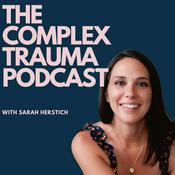
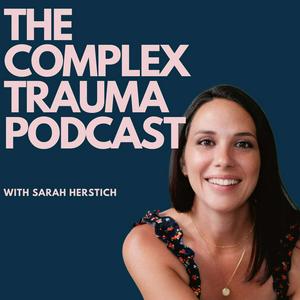
A podcast for anyone healing from complex PTSD, childhood emotional neglect, and the patterns you've been carrying without knowing what to call them.Hosted by EMDR and somatic trauma therapist Sarah Herstich, each episode gets into nervous system healing, trauma responses, and what it actually takes to stop living in survival mode.If you've spent years people-pleasing, apologizing for existing, or holding it together on the outside while unraveling on the inside, this is for you.We talk about the fawn response, toxic shame, hypervigilance, and why your body still doesn't feel safe even when nothing bad is happening. No bypassing, no Band-Aids, just honest conversation about healing from complex trauma and getting your life back.Whether you're just figuring out what CPTSD is or you've been in therapy for years, you'll find nervous system education, somatic practices, and someone who actually understands what you're going through.New episodes every Wednesday.
Podcast websiteListen to The Complex Trauma Podcast, The Mel Robbins Podcast and many other podcasts from around the world with the radio.net app
Get the free radio.net app
- Stations and podcasts to bookmark
- Stream via Wi-Fi or Bluetooth
- Supports Carplay & Android Auto
- Many other app features
Get the free radio.net app
- Stations and podcasts to bookmark
- Stream via Wi-Fi or Bluetooth
- Supports Carplay & Android Auto
- Many other app features

The Complex Trauma Podcast
Scan code,
download the app,
start listening.
download the app,
start listening.
 Ireland
