

Listen to this podcast in the app for free: Download for free in the App Store
radio.net
Sleep timer
Save favourites
22 episodes
Beyond the Hype: What Successful Healthcare AI Really Looks Like
28/08/2026 | 46 mins.Healthcare AI promises earlier interventions, better outcomes and more efficient hospitals—but why do so many implementations fail to gain clinicians’ trust?
In this episode, Dr. Fatih Mehmet Gül speaks with Dr. Suchi Saria, founder and CEO of Bayesian Health and a professor at Johns Hopkins University, about moving healthcare AI beyond impressive demonstrations and into everyday clinical practice.
Dr. Saria shares the personal loss that inspired her work, explains how AI can identify patient deterioration hours earlier, and discusses Bayesian Health’s collaboration with Mayo Clinic to improve access to proactive palliative care. She also reveals how the right implementation strategy helped increase clinician adoption from as little as 1% to more than 85%.
The conversation explores what it takes to build AI that clinicians genuinely trust, how better care can strengthen hospitals financially, and what healthcare leaders should do before making their first major AI investment.
Key takeaways
Healthcare AI creates meaningful value when it helps clinicians intervene proactively instead of responding after a patient’s condition has deteriorated.
In sepsis cases, Bayesian Health’s technology identified at-risk patients a median of 5.7 hours earlier.
AI should support clinical judgment rather than attempt to replace it.
The most effective systems explain why a patient has been flagged and make the appropriate next steps easier for clinicians.
Alert fatigue is often a design and implementation failure rather than evidence that clinicians resist technology.
AI must deliver relevant information within existing workflows without adding more noise or administrative burden.
Clinician trust cannot be created through accuracy alone.
Transparency, adaptability, peer validation, clinical evidence and practical support all influence whether clinicians adopt a new system.
Mayo Clinic and Bayesian Health used AI to identify patients who could benefit from proactive palliative care.
The initiative achieved reductions of approximately 25% to 28% in readmissions and nearly five days in hospital length of stay.
Successful AI implementation depends as much on human-machine teamwork as it does on technical performance.
Bayesian Health increased adoption from approximately 1% in previous hospital initiatives to more than 85% within six months.
Improving care quality can also improve a hospital’s financial sustainability.
Preventing complications, avoidable ICU transfers and unnecessary readmissions benefits patients while reducing the cost of care.
Hospitals should not treat AI as a collection of disconnected products or rely on one technology provider to solve every problem.
They need a focused strategy supported by partners who understand clinical data, workflows, implementation and outcome measurement.
The best starting point for a hospital is its own performance data.
Leaders should identify the clearest opportunities, establish a realistic roadmap and use an achievable first project to build confidence.
Healthcare AI should ultimately make the right clinical action easier to take.
Used thoughtfully, it can reduce low-value work, ease clinician burnout and help restore the human purpose at the heart of medicine.
Check out Dr. Fatih's Connected Care Book on Amazon:
https://www.amazon.com/Connected-Care-Transformation-Human-Centred-Healthcare/dp/9699797118
Listen to the episode and let us know what you think using the contact form on our website: https://www.chiefhealthcareofficer.com.
Follow Dr Fatih Mehmet Gül on LinkedIn - https://www.linkedin.com/in/drfameg/
Visit Dr Fatih's Website - https://www.fatihmehmetgul.com/
Subscribe to the CHO LinkedIn Newsletter - https://www.linkedin.com/newsletters/the-chief-healthcare-officer-6939938177927241728/The Hidden Link Between Patient Safety, Staff Joy, and Hospital Costs
20/07/2026 | 1hWhat if patient safety, staff wellbeing, and hospital financial performance are not separate problems to balance, but one connected system?
In this episode of the Chief Healthcare Officer Podcast, Dr. Fatih Mehmet Gül sits down with Ken Segel, co-founder and former CEO of Value Capture, and Shana Padgett, Value Capture’s current CEO, to explore the philosophy and practice of Zero Harm in healthcare.
Together, they unpack how hospitals can move beyond safety campaigns and improvement projects to build an operating system where harm prevention, psychological safety, frontline problem-solving, staff engagement, cost discipline, and technology all work together.
Ken shares lessons from working alongside the late Paul O’Neill, whose leadership thinking helped bring Zero Harm from high-reliability industries into healthcare. Shana reflects on her own journey from frontline healthcare operations to improvement science, and why she first came to Value Capture partly to challenge the idea that Zero Harm was truly possible.
The conversation also explores why safety cannot be treated as a nursing initiative alone, why hospital leaders must leave their offices and observe real work, how mistakes should become learning rather than punishment, and how AI and digital tools must earn their place by solving real problems at the bedside.
In this episode, you’ll hear about:
What Zero Harm really means in healthcare
Why safety should be the way hospitals run the business, not an extra initiative
How patient safety, staff joy, quality, flow, and cost are deeply connected
Why punitive cultures prevent true improvement
How psychological safety helps frontline teams speak the truth
Why many Lean and improvement projects fail to sustain progress
How hospital CEOs can better understand daily work by going to the frontline
The role of technology, EHRs, and AI in harm-free care
The leadership legacy of Paul O’Neill and the future of Value Capture
This is a conversation for healthcare executives, hospital CEOs, clinical leaders, quality and safety teams, and anyone interested in building safer, more humane, and more reliable healthcare systems.
Check out Dr. Fatih's Connected Care Book on Amazon:
https://www.amazon.com/Connected-Care-Transformation-Human-Centred-Healthcare/dp/9699797118
Listen to the episode and let us know what you think using the contact form on our website: https://www.chiefhealthcareofficer.com.
Follow Dr Fatih Mehmet Gül on LinkedIn - https://www.linkedin.com/in/drfameg/
Visit Dr Fatih's Website - https://www.fatihmehmetgul.com/
Subscribe to the CHO LinkedIn Newsletter - https://www.linkedin.com/newsletters/the-chief-healthcare-officer-6939938177927241728/If We Know How to Stop Patient Harm, Why Is It Still Rising?
22/06/2026 | 1h 4 mins.In this episode of the Chief Healthcare Officer Podcast, Dr. Fatih Mehmet Gül speaks with Dr. Nicholas Testa, Chief Clinical Officer at Sentact, emergency physician, healthcare executive, and educator at the University of Southern California.
The conversation begins with a difficult question: after decades of patient safety work, protocols, root cause analyses, high-reliability frameworks, and major investment in quality programs, why is preventable harm in hospitals still rising?
Dr. Testa argues that the answer is rarely just another protocol. Even the best checklist can fail when a clinician feels it is safer to stay silent. Real patient safety depends on trust, psychological safety, accountability, leadership behaviour, and the daily culture inside hospitals.
Drawing on his experience as an emergency physician, hospital CMO, regional clinical leader across 29 hospitals in California, and now Chief Clinical Officer at Sentact, Dr. Testa explains why healthy safety cultures often report more harm events, not fewer, because people feel safe enough to surface problems.
The episode explores how healthcare leaders can build trust, manage incident reporting without creating fear, balance psychological safety with accountability, use data more intelligently, and make rounding and safety huddles part of the operating rhythm of the hospital.
Topics discussed include:
• Why preventable harm remains a major challenge in hospitals
• Why “zero harm” can become dangerous if it discourages honest reporting
• The difference between safety and quality
• Why trust is the operating system of healthcare
• How leaders unintentionally erode trust under pressure
• Why psychological safety does not mean avoiding difficult conversations
• How to balance accountability and vulnerability as a clinical leader
• Why CMOs must question their data, not just review dashboards
• The role of patient safety organizations and shared learning across hospitals
• Why rounding is one of the most powerful leadership behaviours
• How daily safety huddles can change hospital culture
• What boards and senior leaders need to understand about preventable harm
If this conversation resonates with you, share it with one healthcare colleague who needs to hear it. Patient safety does not improve through quiet agreement. It improves through louder conversations in the right rooms.
Check out Dr. Fatih's Connected Care Book on Amazon:
https://www.amazon.com/Connected-Care-Transformation-Human-Centred-Healthcare/dp/9699797118
Listen to the episode and let us know what you think using the contact form on our website: https://www.chiefhealthcareofficer.com.
Follow Dr Fatih Mehmet Gül on LinkedIn - https://www.linkedin.com/in/drfameg/
Visit Dr Fatih's Website - https://www.fatihmehmetgul.com/
Subscribe to the CHO LinkedIn Newsletter - https://www.linkedin.com/newsletters/the-chief-healthcare-officer-6939938177927241728/The Healthcare Technology Trap Leaders Must Avoid
23/05/2026 | 58 mins.In this episode of The Chief Healthcare Officer, Dr. Fatih Mehmet Gül speaks with Nancy Wright, VP of Commercial Services and Digital Platforms at GE HealthCare, about what it really takes to make healthcare technology work for people.
Nancy brings a unique operations-led perspective to commercial healthcare transformation, helping health systems think beyond equipment and technology procurement. Together, Dr. Fatih and Nancy explore why the future of healthcare is not simply about buying better technology, but about redesigning care around clinicians, patients, workflows, safety and long-term system resilience.
The conversation covers some of the most urgent questions facing healthcare leaders today: workforce shortages, digital transformation, cybersecurity, predictive maintenance, AI-enabled asset management, rural and ambulatory care, cultural safety, and the future role of hospitals.
A key theme runs throughout the discussion: technology must not become another layer of complexity. It should amplify empathy, extend human capacity and make care delivery smoother, safer and more sustainable.
Nancy also explains why healthcare leaders must stop treating digital transformation as a project and start seeing it as a cultural shift. Successful transformation, she argues, requires leaders to “lead from the centre,” create psychological safety, involve clinicians early, understand community needs, and avoid the costly trap of buying technology before defining the problem.
The episode also explores cybersecurity as a patient safety issue, not just an IT concern. Nancy shares why health systems must embed cybersecurity into every technology decision and treat system resilience as part of care quality.
The conversation closes with a powerful look ahead to the future of hospitals, digital twins, and the possibility that every patient may one day have a data-backed “digital carbon copy” that helps healthcare teams deliver more proactive, personalised care.
Key topics covered
Healthcare digital transformation
Human-centred technology
GE HealthCare advanced services
Workforce shortages in healthcare
Cybersecurity as a patient safety issue
Predictive maintenance and medical equipment
AI in biomedical engineering and asset management
Rural healthcare and remote patient monitoring
Ambulatory care and hospital capacity
Cultural safety in digital transformation
The future of hospitals
Digital twins in healthcare
Connected Care and healthcare leadership
Check out Dr. Fatih's Connected Care Book on Amazon:
https://www.amazon.com/Connected-Care-Transformation-Human-Centred-Healthcare/dp/9699797118
Listen to the episode and let us know what you think using the contact form on our website: https://www.chiefhealthcareofficer.com.
Follow Dr Fatih Mehmet Gül on LinkedIn - https://www.linkedin.com/in/drfameg/
Visit Dr Fatih's Website - https://www.fatihmehmetgul.com/
Subscribe to the CHO LinkedIn Newsletter - https://www.linkedin.com/newsletters/the-chief-healthcare-officer-6939938177927241728/The Burnout Cure: Why Transparency is More Profitable Than Efficiency
14/04/2026 | 51 mins.In a healthcare landscape increasingly dominated by administrative load and systemic pressure, physicians often feel like the "last thought" in the design of the systems they work within.
Dr. Graham Walker and Jake Horowitz, the minds behind Offcall, join Dr. Fatih Mehmet Gul in this episode to discuss their mission to build "for and by physicians". The conversation explores the "invisible load" of modern medicine; the cognitive and moral weight of providing individualized care within a system optimized for scale. They share how Offcall provides a first-of-its-kind transparency tool, allowing doctors to anonymously benchmark their contracts and salaries to ensure they are being treated fairly. Finally, the guests offer a "cautious optimist" view of AI, arguing that technology must be deployed as a partner to clinical judgment rather than an administrative burden.
Key Takeaways
- Systemic Abuse of Dedication: Physician dedication and ownership have been exploited by health systems and insurers, leading to a significant loss of autonomy and agency.
- The "Invisible Load": Doctors face a crushing weight of emotional, cognitive, and moral pressures while trying to provide individualized care within a system optimized for scale.
- Contractual Information Asymmetry: There is a lack of standardization in physician contracts, often leaving doctors unaware if their pay, hours, or patient loads are fair compared to their peers.
- The Transparency Solution: Offcall provides a tool for physicians to anonymously benchmark their contracts and salaries against real-time data to restore their negotiating power.
- Failure of Surface-Level Wellness: Traditional "wellness" initiatives, such as pizza parties or yoga sessions, fail to address the core structural issues that cause burnout.
- The AI Participation Gap: While most physicians use AI and find it helpful, over 80% are dissatisfied with how their organizations deploy it because they are denied a seat at the leadership table.
- A Shift Toward Independence: Due to exploitation and lack of autonomy in large systems, there is a growing trend of physicians looking to return to independent practice models.
- The "Win-Win" of Engagement: Transparent compensation and active listening are more effective for retention than simple perks, as it is extremely expensive for a hospital to replace a disgruntled physician.
Check out Dr. Fatih's Connected Care Book on Amazon:
https://www.amazon.com/Connected-Care-Transformation-Human-Centred-Healthcare/dp/9699797118
Listen to the episode and let us know what you think using the contact form on our website: https://www.chiefhealthcareofficer.com.
Follow Dr Fatih Mehmet Gül on LinkedIn - https://www.linkedin.com/in/drfameg/
Visit Dr Fatih's Website - https://www.fatihmehmetgul.com/
Subscribe to the CHO LinkedIn Newsletter - https://www.linkedin.com/newsletters/the-chief-healthcare-officer-6939938177927241728/
More Business podcasts
 Money TalksBusiness
 Understanding Money with Eoin McGeeBusiness, Education, Society & Culture
 A Bit of OptimismBusiness, Careers, Education, Self-Improvement
 Prof G MarketsBusiness, Investing
 The Story of MoneyBusiness, Business News, History, News, Society & Culture
 Inside Business with Ciaran HancockBusiness
 The Other HandBusiness, News, Society & Culture
 The Diary Of A CEO with Steven BartlettBusiness, Education, Society & Culture
 Aspire with Emma GredeBusiness, Entrepreneurship, Society & Culture
 UnhedgedBusiness, Business News, Investing, News
Trending Business podcasts
 The Knowledge ProjectBusiness, Education, Entrepreneurship, Investing, Self-Improvement, Society & Culture, Technology
 Down To BusinessBusiness
 The Psychology of Money with Morgan HouselBusiness
 IPI Planners PodcastBusiness, Management
 Hidden ForcesBusiness, Government
 Money For Couples with Ramit SethiBusiness, Investing, Relationships, Society & Culture
 Leaders with Francine LacquaBusiness, Careers
 声动早咖啡Business, Entrepreneurship, Investing, Technology
 Patrick Boyle On FinanceBusiness, Investing
 Forward GuidanceBusiness, Business News, Investing, News
 The Hidden Hustle PodcastBusiness
 Hot Money: Agent of ChaosBusiness, Health & Wellness, Sexuality, Society & Culture, Technology
 The Diary Of A CEO with Steven BartlettBusiness, Entrepreneurship
 The Compound and FriendsBusiness, Business News, Investing, News
 Ask About WealthBusiness, Education, Entrepreneurship, Investing, Tutorials
 The Tim Ferriss ShowBusiness, Entrepreneurship
 Grey Matter with Declan Kelly: Inside the Minds of the People Who Move the WorldBusiness, Management
 Capital Allocators – Inside the Institutional Investment IndustryBusiness, Investing
 Dodge Woodall NetworkBusiness, Entrepreneurship, Society & Culture, True Crime
- The Story of MoneyBusiness, Business News, History, News, Society & Culture
 The Martin Lewis PodcastBusiness
About The Chief Healthcare Officer
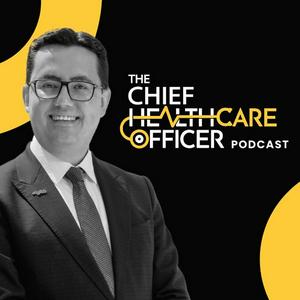
The Chief Healthcare Officer Podcast seeks to decode the secrets of success in healthcare management, dissect the latest trends, and build a community of forward-thinking healthcare leaders… From advancing the healthcare industry to championing sustainability and amplifying patient experiences, the podcast dives into the topics that matter most for healthcare professionals and leaders. Follow Dr Fatih Mehmet Gül on LinkedInhttps://www.linkedin.com/in/drfameg/Visit Dr Fatih's Websitehttps://www.fatihmehmetgul.com/Visit The CHO Podcast Websitehttps://www.chiefhealthcareofficer.com/Subscribe to the CHO LinkedIn Newsletterhttps://www.linkedin.com/newsletters/the-chief-healthcare-officer-6939938177927241728/
Podcast websiteListen to The Chief Healthcare Officer, Money Talks and many other podcasts from around the world with the radio.net app
Get the free radio.net app
- Stations and podcasts to bookmark
- Stream via Wi-Fi or Bluetooth
- Supports Carplay & Android Auto
- Many other app features
Get the free radio.net app
- Stations and podcasts to bookmark
- Stream via Wi-Fi or Bluetooth
- Supports Carplay & Android Auto
- Many other app features

The Chief Healthcare Officer
Scan code,
download the app,
start listening.
download the app,
start listening.
 Ireland