

Listen to this podcast in the app for free: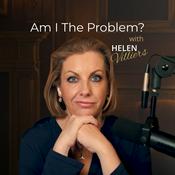 Download for free in the App Store
radio.net
Sleep timer
Save favourites
61 episodes
12. A Work In Progress
05/08/2026 | 8 mins.You’ve spent the last 12 weeks learning how your patterns formed, how they show up, and how they affect your relationships.
And if you’re anything like the brains I work with, there’s a part of you that’s been keeping score.
Noticing every time you apologised for existing.Every time saying no felt difficult.Every time you slipped back into something you thought you’d already worked through.
And quietly deciding that you’re still the problem.
If you were taught that your worth was conditional, it makes sense that you’d measure yourself against perfection. But that standard was never designed to be fair, it was designed to keep you safe.
In this final episode, Helen brings the whole season together, exploring why progress isn’t about never repeating a pattern, but noticing it sooner, responding differently, and learning to do that without turning it into evidence against yourself.
Because healthy doesn’t mean perfect. It means faster awareness, and more kindness when you get it wrong.
Resources mentioned:
Research on conditional self-worth and perfectionismResearch on shame and behaviour change
Aperio Profiles:
Neurodivergent-informed cognitive and personality profiling for individuals, managers, and HR. Not a diagnosis. A functional map of how your brain actually works.
aperioprofiles.co.uk
This is a public episode. If you'd like to discuss this with other subscribers or get access to bonus episodes, visit helenvilliersliberation.substack.com/subscribe11. Conflict Or Control?
29/07/2026 | 39 mins.Someone says, “Can we talk about something?”
Before they’ve even finished the sentence, your stomach drops. You’re already apologising, defending yourself, or preparing for the relationship to end.
If conflict was used to shame, silence, or control you growing up, your nervous system may never have learned the difference between disagreement and danger. In this episode, Helen explores why healthy conflict can feel so threatening, why many people either avoid difficult conversations or assume every disagreement is catastrophic, and how ADHD, autism, and childhood conditioning can make conflict even harder to navigate.
Resources mentioned:
Research on emotional regulation in ADHDResearch on operant conditioning and learning
Go deeper:
This week’s companion episode of Is This A Thing? explores why recovery after conflict can take so much longer for some people, what your nervous system is doing after the conversation has ended, and practical ways to shorten that recovery. Available on The Hub: liberationacademy.co.uk/the-hub
Aperio Profiles:
Neurodivergent-informed cognitive and personality profiling for individuals, managers, and HR. Not a diagnosis. A functional map of how your brain actually works.
aperioprofiles.co.uk
This is a public episode. If you'd like to discuss this with other subscribers or get access to bonus episodes, visit helenvilliersliberation.substack.com/subscribe10. When Green Flags Feel Red
22/07/2026 | 42 mins.You meet someone who’s kind, consistent, and genuinely interested in you. They reply when they say they will. They don’t play games. They don’t leave you guessing.
And somehow... it doesn’t feel right.
If you grew up in a toxic environment, your brain may have learned to treat unpredictability as love and kindness as something to be suspicious of. This episode explores why healthy relationships can feel strangely flat, why emotional intensity is so often mistaken for chemistry, and how early experiences can distort the way you recognise safety, connection, and love.
Resources mentioned:
Research on intermittent reinforcement and conditioningResearch on intimate partner violence and neurodivergenceResearch on identity and healthy relationship development
Go deeper:
The companion episode of Is This A Thing? explores why a strong sense of identity is one of the biggest protective factors against abusive relationships, including how identity develops, what disrupts it, and why rebuilding it changes the way you recognise healthy relationships. Available on The Hub: liberationacademy.co.uk/the-hub
Aperio Profiles:
Neurodivergent-informed cognitive and personality profiling for individuals, managers, and HR. Not a diagnosis. A functional map of how your brain actually works.
aperioprofiles.co.uk
This is a public episode. If you'd like to discuss this with other subscribers or get access to bonus episodes, visit helenvilliersliberation.substack.com/subscribe9. The Fear Of Becoming Your Parent
15/07/2026 | 40 mins.You promised yourself you would never be like them. You would never make your child feel the way you felt. So you do the opposite. You soften every hard edge, struggle to say no, and panic when your child is disappointed in you.
But what if trying so hard not to become your parent is still letting them shape the way you parent?
If you grew up in a toxic family, you may have no reliable benchmark for what healthy parenting actually looks like. This episode explores the parenting pendulum, why fear can push you towards permissiveness, rescuing, hypervigilance or repeating the very patterns you wanted to escape, and how to find the middle ground between control and fear-led parenting.
Resources mentioned:
Research on conditioning and learned behaviourChild development and age-appropriate expectationsResearch on rupture, repair, and relational safety
Go deeper:
The companion episode of Is This A Thing? explores how much of what your child does is actually about you, including why your child’s behaviour can trigger reactions that belong to your own childhood and how to separate the child in front of you from the child you once were. Available on The Hub: liberationacademy.co.uk/the-hub
Aperio Profiles:
Neurodivergent-informed cognitive and personality profiling for individuals, managers, and HR. Not a diagnosis. A functional map of how your brain actually works.
aperioprofiles.co.uk
This is a public episode. If you'd like to discuss this with other subscribers or get access to bonus episodes, visit helenvilliersliberation.substack.com/subscribe8. Is This ADHD or Shame?
08/07/2026 | 17 mins.You have a cupboard full of abandoned hobbies. A project you still can’t bring yourself to throw away. Every unfinished task feels like evidence that you’re lazy, flaky, or incapable.
Except what if it isn’t?
If you have ADHD and grew up in an environment where your differences were criticised, mocked, or misunderstood, it can become almost impossible to separate the way your brain naturally works from the shame that was layered on top of it. This episode explores how ordinary ADHD traits become confused with character flaws, why unfinished projects carry so much emotional weight, and how years of criticism can leave you measuring yourself with a stick that was never built for your brain.
Resources mentioned:
Russell Barkley on ADHD and executive functionResearch on self-handicapping and perfectionismResearch on conditioning, shame, and behaviour change
Go deeper:
The companion episode of Is This A Thing? explores self-handicapping in much more depth, including why shame changes the way we approach goals, how perfectionism develops as a protective strategy, and what the evidence says about breaking the cycle. Available on The Hub: liberationacademy.co.uk/the-hub
Aperio Profiles:
Neurodivergent-informed cognitive and personality profiling for individuals, managers, and HR. Not a diagnosis. A functional map of how your brain actually works.
aperioprofiles.co.uk
This is a public episode. If you'd like to discuss this with other subscribers or get access to bonus episodes, visit helenvilliersliberation.substack.com/subscribe
More Education podcasts
 How to Be a Better HumanEducation, Self-Improvement
 Begin Again with Davina McCallEducation, Health & Wellness, Mental Health, Self-Improvement, Society & Culture
 IMO with Michelle Obama and Craig RobinsonEducation, Self-Improvement, Society & Culture
 Motivation Daily by MotiversityEducation, Health & Wellness, Self-Improvement
 Nuacht MhallEducation, Language Learning
 Know ThyselfEducation, Self-Improvement
 anything goes with emma chamberlainEducation, Personal Journals, Self-Improvement, Society & Culture
 Coffee Break SpanishCourses, Education, Language Learning
 The Comeback with Brenda DennehyEducation, Health & Wellness, Mental Health, Self-Improvement
 Gaeilge WeeklyEducation, Language Learning
Trending Education podcasts
- Nuacht MhallEducation, Language Learning
 Sleep Sounds - White Noise & Sleep Music from Calm CoveEducation, Health & Wellness, Kids & Family, Mental Health, Self-Improvement
 News in Slow French (Intermediate)Education, Language Learning, News
 The Wellness CafeEducation, Self-Improvement
 Easy French: Learn French through authentic conversations | Conversations authentiques pour apprendre le françaisCourses, Education, Language Learning, Places & Travel, Society & Culture
 News in Slow German (Intermediate)Education, Language Learning, News, Politics
 Wedding Planning Collective PodcastEducation, Hobbies, Leisure, Relationships, Society & Culture, Tutorials
 The Rich Roll PodcastEducation, Health & Wellness, Self-Improvement, Society & Culture
 Self Care Club - The Midlife EditionComedy, Education, Health & Wellness, Mental Health, Personal Journals, Self-Improvement, Society & Culture
 How I WriteArts, Books, Education, Society & Culture
 The Intuitive Health PodcastAlternative Health, Education, Health & Wellness, Religion & Spirituality, Self-Improvement
 EconTalkCourses, Education, Philosophy, Science, Social Sciences, Society & Culture
 Italiano con AmoreEducation, Language Learning
 Flow PodcastEducation, Self-Improvement
 The Sinead Says PodcastEducation, Health & Wellness, Mental Health, Relationships, Self-Improvement, Society & Culture
 Hoy Hablamos: Podcast diario para aprender español - Learn Spanish Daily PodcastCourses, Education, Language Learning
 ALIGNED | The Path to PurposeAlternative Health, Education, Health & Wellness, Religion & Spirituality, Self-Improvement, Spirituality
 All Ears English PodcastBusiness, Education, Language Learning
 The Daily MotivationEducation, Self-Improvement
 Good Life ProjectBusiness, Education, Health & Wellness, Self-Improvement, Tutorials
 Positive ProofEducation, Health & Wellness, Mental Health, Relationships, Self-Improvement, Society & Culture
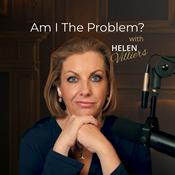
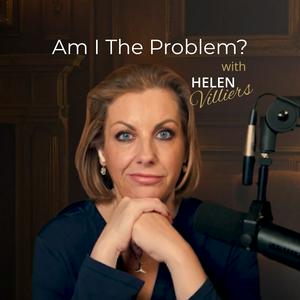
About Am I The Problem?
Answering listener's questions about dealing with narcissistic or toxic people, managing or parenting ADHD and autism. If you have a question for Helen submit it here: https://liberationacademy.co.uk/podcast/
Helen Villiers is a psychotherapist with ADHD and co-author of You're Not The Problem.
Is This A Thing? is the paid for companion episode and goes deeper into concepts mentioned in the main episode.
Podcast websiteListen to Am I The Problem?, How to Be a Better Human and many other podcasts from around the world with the radio.net app
Get the free radio.net app
- Stations and podcasts to bookmark
- Stream via Wi-Fi or Bluetooth
- Supports Carplay & Android Auto
- Many other app features
Get the free radio.net app
- Stations and podcasts to bookmark
- Stream via Wi-Fi or Bluetooth
- Supports Carplay & Android Auto
- Many other app features
Am I The Problem?
Scan code,
download the app,
start listening.
download the app,
start listening.
Am I The Problem?: Podcasts in Family
 Ireland