

Listen to this podcast in the app for free: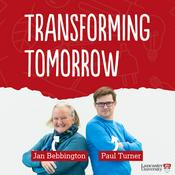 Download for free in the App Store
radio.net
Sleep timer
Save favourites
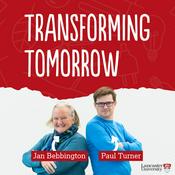
Transforming Tomorrow
The Pentland Centre for Sustainability in Business
Latest episode
132 episodes
From Climate Change to Politics, Ideas, Ideals, Badgers, and more
03/08/2026 | 34 mins.As we wrap up season three of Transforming Tomorrow, we consider how the vast range of subjects out guests have brought into the studio are and attempt to tie these topics together.
This brings us to issues of politics and the law, Artificial Intelligence, and the experiences of businesspeople and researchers that ties them to their subjects.
Join us on a journey that takes us from courtrooms to boardrooms, government chambers to war zones, cotton fields to refugee camps, and it is amazing to see how things fit with each other, and how quickly change can come.
We discuss the optimism and determination of our guests to make a difference, how personal experiences drive them, and how the compassion they have directed their work.
We see how ideas and ideals have come together, think about what the next year might bring, and wonder some more about the next generation and rethinking how things work.
Plus, can Jan pick out the ringer from a list of topics to have been discussed on the show over the last 12 months – the answer is not badgers, but is it the Moomins, Kevin Bacon, Logan’s Run or shampoo?
And, to show us that things really are always changing, since recording this episode, Donald Trump has brought up his desire to control Greenland once again! We suspect we will be mentioning his name again in seasons to come.AI as a Force for Good in Modern Slavery Reporting
27/07/2026 | 36 mins.We’re not the biggest fans of Artificial Intelligence on Transforming Tomorrow, but are our minds about to be changed? We are ready to discover how AI is being used to make a positive difference in the world of sustainability.
Dr Mahmoud Gad, from Lancaster University Management School, returns to the show to talk to us about his work developing an AI platform that can analyse companies’ modern slavery statements both accurately and quickly.
We find out what UK businesses need to do when it comes reporting and mitigating modern slavery in their operations and supply chains; what has changed over recent years as Mahmoud and his colleagues have worked in the area; and learn all about the AI platform he has been building – and why his team has done it.
This podcast highlights the limits of the existing manual processes for reading and analysing reports and how the time such analysis takes limits the number of reports that can be analysed for any given study. We examine interpretation bias by both people and AI when it comes to such analysis. We also find out the importance of how the AI platform is built as well as who builds the platforms.
Plus, Paul shocks Jan, Mahmoud and himself with AI’s description of their dazzling careers and achievements. Why is Paul irked today? And why does one of Jan’s colleagues never want to work on analysis with her again?!?
Details of Mahmoud’s project can be found here: https://www.lancaster.ac.uk/data-science-and-artificial-intelligence/about-us/news/funding-for-lancaster-team-to-develop-ai-tool-to-improve-modern-slavery-reporting
The platform he talks about is here: https://www.antislaveryintelligence.co.uk/
And evidence from a 2022 review of modern slavery reporting in the UK is in this report: https://media.frc.org.uk/documents/FRC_Modern_Slavery_Reporting_Practices_in_the_UK_2022.pdf
Episode TranscriptThe Psychological Threat of Climate Change
20/07/2026 | 35 mins.It’s easy to let climate change get us down. To allow political tide of anti-sustainability rhetoric to carry you away. But while it is easy to feel despondent from time to time, it is important to feel safe when expressing your emotions.
To help us, Dr Nadine Andrews, an Honorary Researcher here at the Pentland Centre, and a facilitator of climate and eco psychology processes, brings her expertise to talk us through the mental and psychological toll climate change can take on us.
We consider how the urgency of climate change can hit us; learn about psycho-social factors and how they affect us; talk about the values-action gap and where that fits in terms of behaviour on sustainability; look at climate change as a psychological threat, and how that manifests in each of us.
Nadine tells us about her work studying sustainability professionals, and how they would suppress their beliefs in the workplace, how they revitalise themselves, and how it could all lead to burnout.
Is it inevitable that the more we know about climate change, the more emotionally affected by it we will be? Nadine gives us the evidence from her work with climate assemblies, and how members felt after their involvement – and after the Scottish government responded.
Plus, we get out the thesaurus to consider vitality, well-being, hope, optimism and thriving in a sustainability context; put negative emotions in the bin in favour of difficult emotions; remember to think about non-human people; and ask if is Paul undercharging for his therapy sessions?
Read about Nadine’s work with climate assemblies here: https://doc.your-brochure-online.co.uk/Lancaster-University_FiftyFourDegrees_Issue_16/22/
Recent research on climate concern can be found here: https://www.lrfoundation.org.uk/news/global-concern-about-climate-change-reaches-record-high
And this is a resource for understanding the values action gap: https://en.wikipedia.org/wiki/Value-action_gap
Episode TranscriptEntrepreneurship as Survival and Empowerment
13/07/2026 | 46 mins.How can marginalised people find a new identity through entrepreneurship? How do women help their families survive in foreign lands by undertaking new endeavours? And all of this when ‘most of all, they just want to go home’.
Dr Sophie Alkhaled, Director of the Academy for Gender Equality and Social Justice Research in Organisations in Lancaster University Management School, joins us to talk about the lives of refugees in camps and communities outside their homelands, and how women there have discovered business to help their families live.
She tells us how her personal life experience and heritage shaped her interest in both refugees and gender equity, from seeing her mother prohibited from driving in Saudi Arabia, to living under the Assad regime in Syria, and travelling to refugee camps that are home to her countrymen and women.
We find out how millions of Syrians were forced to flee their homeland, how entrepreneurship takes hold in unexpected places, and how women came to reimagine what an entrepreneur and business leader is as they try to make sure they have food on the table.
Sophie tells us how entrepreneurship is a means of survival and empowerment for these women; how their Syrian products can keep national identity and pride alive among the refugees; how in many cases the money from these businesses was the only thing ensuring that refugees could eat and pay rent; and we talk about how refugees can leave a country with war or famine and move to another with difficulties of its own.
We also look at the Academy and its work on gender equality in business schools and beyond. This takes the discussion into business realms and countries all around the world, and Sophie talks about the importance of being a hopeaholic when it comes to seeing changes around gender equality.
Plus, why did Jan leave New Zealand? How bad are the All Whites football team if someone who played for Barrow once represented them? And is Paul dead inside?
Find out more about Sophie and her work here: https://www.lancaster.ac.uk/lums/people/sophie-alkhaled
Read about her research on Syrian women refugees here: https://doc.your-brochure-online.co.uk/Lancaster-University_FiftyFourDegrees_Issue_17/26/
And this is where you can discover the Academy for Gender Equality and Social Justice Research in Organisations: https://www.lancaster.ac.uk/lums/research/research-initiatives/gender-equality/
Episode TranscriptResponding to Humanitarian Crises
06/07/2026 | 54 mins.There are always humanitarian crises somewhere in the world. We just don’t know about all of them.
Lancaster University’s Dr Nonhlanhla Dube, an ‘accidental humanitarian’ turned expert humanitarian logistician, joins us to fill in the gaps in our knowledge on the humanitarian sector, particularly on refugees.
We think about how we learn of humanitarian crises around the world, how our knowledge can be limited by what the media in our home countries reports on, and where there might be ‘hidden’ issues in parts of the world we do not think about – including Noni’s home country of Zimbabwe.
We learn what events trigger a humanitarian effort and how long-term issues can tip over to require larger and more immediate responses; consider the Boxing Day Tsunami of 2004 and its effects on 2.3 million people in many countries around the Indian Ocean; and look at how ‘CNN disasters’ can affect why some funding appeals are more successful than others.
Noni tells us about examples of good practice in response operations, how long-term planning is essential, why adapting tents according to your needs plays such a key role, where refugees comes from, how some people can spend most of their lives in a refugee camp, and what individuals and businesses can do to help when a disaster happens.
And we discuss problems and challenges with disaster responses; where good intentions can go wrong; why local people and their needs and perspectives can be ignored by international organisations; and the impact of aid cuts because of political shifts worldwide.
Read about Noni’s work on improving emergency response efforts for refugees here: https://doc.your-brochure-online.co.uk/Lancaster-University_FiftyFourDegrees_Issue_19/34/
An example of organisation that supports people at times of disaster is Doctors without Borders: https://msf.org.uk/who-we-are
Rawls’ veil of ignorance is explained here: https://ethicsunwrapped.utexas.edu/glossary/veil-of-ignorance
Episode Transcript
More Business podcasts
 The Diary Of A CEO with Steven BartlettBusiness, Education, Society & Culture
 Understanding Money with Eoin McGeeBusiness, Education, Society & Culture
 The Economics ShowBusiness, Business News, News, News Commentary
 FoundersBusiness, Entrepreneurship, History, Technology
 Inside Business with Ciaran HancockBusiness
 Money TalksBusiness
 Working Hard with Grace BeverleyBusiness, Education, Health & Wellness, Marketing, Self-Improvement
 A Bit of OptimismBusiness, Careers, Education, Self-Improvement
 UnhedgedBusiness, Business News, Investing, News
 Better With MoneyBusiness, Education, Investing, Self-Improvement, Tutorials
Trending Business podcasts
 Boss Class from The EconomistBusiness, Careers, Management, Society & Culture
 The Pomp PodcastBusiness, Investing
 The Irish FIRE PodcastBusiness, Investing
 In Good Company with Nicolai TangenBusiness
 Masters of ScaleBusiness, Entrepreneurship, Management
 IPI Planners PodcastBusiness, Management
 The Economics of Everyday ThingsBusiness
 The Game with Alex HormoziBusiness, Education, Entrepreneurship, Tutorials
 Prof G MarketsBusiness, Investing
 Morning Brew DailyBusiness, Business News, News
 The Knowledge ProjectBusiness, Education, Entrepreneurship, Self-Improvement, Society & Culture, Technology
 Hot Money: Agent of ChaosBusiness, Health & Wellness, Sexuality, Society & Culture, Technology
 Rule Breaker InvestingBusiness, Investing
 Get Started InvestingBusiness, Education, Investing
 Corporate GossipBusiness, Society & Culture
 The Fifth CourtBusiness, Education, News
 Patrick Boyle On FinanceBusiness, Investing
 Financial AuditBusiness, Education, Investing, Self-Improvement
 Informed Decisions: Ireland's Independent Retirement Planning PodcastBusiness, Education, Investing
 The Martin Lewis PodcastBusiness
 The Entrepreneur ExperimentBusiness, Careers, Entrepreneurship
 Hot Smart Rich with Maggie Sellers ReumBusiness
About Transforming Tomorrow
Sustainability is a key consideration for any contemporary business, from biodiversity to modern slavery, seabeds to factory floors. Transforming Tomorrow guides you through the complex, ever-changing and often exciting (yes, really!!) world of sustainability in business.
Alongside members of the Pentland Centre, international research experts, and business leaders, we cover the theory and practice of mainstreaming sustainability into purposeful business strategy and performance.
Whether you are leading change in your business, or just want to know more about how space weather, human trafficking or architecture may influence the future of sustainability, Transforming Tomorrow is the show for you.
Taking you through it all, hosts Jan and Paul bring insight, perspective, and more than occasional disagreement to their topics.
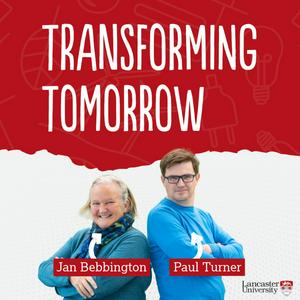
Professor Jan Bebbington is the Director of the Pentland Centre for Sustainability in Business at Lancaster University. Jan is an expert on accounting, benchmarking (to her co-host’s annoyance), and how business and sustainability intersect. She loves nature and wants to protect it – and hopes she can change the world (ideally for the better). She is also motivated to address inequality wherever it is found and especially to eliminate forced, bonded or child labour. Transforming Tomorrow is one small step on that quest.
Paul Turner is a former sports journalist who now works promoting the research activities in Lancaster University Management School – a poacher turned gamekeeper as his former colleagues would have it. He has always been interested in nature and the natural environment – it comes from growing up in Cumbria – and has been a vocal proponent of the work of the Pentland Centre since joining Lancaster University. He does not like rankings and benchmarking, and is not afraid to say so.
Join us every Monday to uncover new insights and become a little more inspired that you can make a difference in sustainability.
Podcast websiteListen to Transforming Tomorrow, The Diary Of A CEO with Steven Bartlett and many other podcasts from around the world with the radio.net app
Get the free radio.net app
- Stations and podcasts to bookmark
- Stream via Wi-Fi or Bluetooth
- Supports Carplay & Android Auto
- Many other app features
Get the free radio.net app
- Stations and podcasts to bookmark
- Stream via Wi-Fi or Bluetooth
- Supports Carplay & Android Auto
- Many other app features

Transforming Tomorrow
Scan code,
download the app,
start listening.
download the app,
start listening.
 Ireland