

Listen to this podcast in the app for free: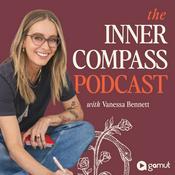 Download for free in the App Store
radio.net
Sleep timer
Save favourites
The Inner Compass Podcast with Vanessa Bennett
Gamut Podcast Network
Latest episode
283 episodes
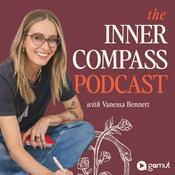
Your Gut Mirrors the Soil: Kelsey Crane on Fertility, Permaculture, and Climate Grief
28/09/2026 | 50 mins.Kelsey Crane found her way from unexplained infertility to the healing intimacy of soil — and from there, to writing climate fiction that refuses to look away from collapse or give up on hope. In this conversation, Vanessa and Kelsey trace the thread between fertility and land, motherhood and creative risk, and what it actually means to become an apprentice of regenerative living. They talk about self-publishing a debut novel in the stolen pockets of a busy life, the difference between despair and grief, and why permaculture's first rule — observe before you act — might be the most important thing any of us can learn about healing the earth and ourselves. This is depth work: about soil, story, and the courage to plant something you may never see fully grown.
For educational purposes only. This isn’t therapy.
If you want to go deeper, check out the written companion on Substack and explore community + training at https://www.vanessaBennett.com.
GUEST LINKS
Kelsey Crane / The Exiles Series
https://www.theexilesseries.com/
The Vanishing — Amazon
https://www.amazon.com/Vanishing-Book-One-Exiles/dp/B0HFCB846K
The Vanishing — Goodreads
https://www.goodreads.com/book/show/253169082-the-vanishing
Shop The Exiles Series
https://the-exiles-series.myshopify.com/collections/products
Instagram — @artforartssake
https://www.instagram.com/artforartssake/
TikTok — @thewildwriter
https://www.tiktok.com/@thewildwriter
Plant A Revolution — Substack
https://substack.com/@plantarevolution
Additional Resources
Explore: VanessaBennett.com
Book: The Motherhood Myth
Community: Inner Compass Collective
Training: Inner Compass Academy
Connect with Inner Compass
Follow on Instagram
Connect with Vanessa Bennett:
Follow on Instagram
Follow on TikTok
Learn more on Substack
Connect with Vanessa Bennett on LinkedIn
See Privacy Policy at https://art19.com/privacy and California Privacy Notice at https://art19.com/privacy#do-not-sell-my-info.The Ego Is Not the Enemy: Laura Day on Intuition, Healing, and The Prism
21/09/2026 | 45 mins.In this episode, Vanessa sits down with New York Times bestselling author and intuitive Laura Day to talk about The Prism, intuition, ego, and what it actually takes to create a different life. Together they explore why transcendence can become a spiritual cop-out, why a strong “I” is necessary for relationship and impact, and how old childhood contracts can keep us recreating familiar patterns even when we think we are choosing something new. Laura brings her signature grounded approach to intuition, showing how practical change often comes through small, safe, repeated actions rather than dramatic reinvention. This is a conversation about ego, alchemy, responsibility, and learning how to recognize the life you say you want when it finally arrives.
GUEST LINKS
Laura Day
• Website: https://lauraday.com/
• The Prism: https://lauraday.com/product/the-prism/
• Events + Boot Camp: https://lauraday.com/events/
• Instagram: https://www.instagram.com/lauradayintuit/
Additional Resources
Explore: VanessaBennett.com
Book: The Motherhood Myth
Community: Inner Compass Collective
Training: Inner Compass Academy
Connect with Inner Compass
Follow on Instagram
Connect with Vanessa Bennett:
Follow on Instagram
Follow on TikTok
Learn more on Substack
Connect with Vanessa Bennett on LinkedIn
See Privacy Policy at https://art19.com/privacy and California Privacy Notice at https://art19.com/privacy#do-not-sell-my-info.Dr. Shefali on Conscious Parenting, Cycle Breaking, and Raising Sons and Daughters
14/09/2026 | 46 mins.In this episode, Vanessa sits down with Dr. Shefali, clinical psychologist, New York Times bestselling author, and pioneer of the conscious parenting movement, for a conversation about parenting as one of the most direct encounters with the parent’s unconscious. Together they explore projection, control, codependency, rupture, repair, and the painful ways parents can use children to soothe their own anxiety or fulfill an unlived life. Dr. Shefali also shares the heart behind her two new books, Raising Conscious Daughters and Raising Conscious Sons, including how screens, algorithms, gender conditioning, and unconscious shame are shaping children today. This is a conversation about raising children by becoming more conscious ourselves—not more perfect, but more honest, attuned, and willing to repair.
Early applications for the next cohort of Inner Compass Academy are now open to the waitlist only.
If you’ve been feeling called toward deeper work with depth psychology, shadow, somatics, the unconscious, relational patterns, and learning how to hold space with more consciousness and integrity, this is the first window to apply.
The early application window is only open for one week. Those who submit during this window will receive early bird pricing, which is $200 off tuition, as well as access to extended payment plan options.
Again, this early application window is for the waitlist only, and it closes in one week.
Join the waitlist and find the application here:
https://www.vanessabennett.com/inner-compass-academy
Connect with Dr. Shefali Tsabary:
Website:
https://www.drshefali.com/
Books:
https://www.drshefali.com/books/
Raising Conscious Daughters:
https://books.google.com/books/about/Raising_Conscious_Girls.html?id=3nihEQAAQBAJ
Raising Conscious Sons:
https://books.google.com/books/about/Raising_Conscious_Sons.html?id=uXihEQAAQBAJ
Conscious Parenting / Dr. Shefali Courses:
https://courses.drshefali.com/
Instagram:
https://www.instagram.com/doctorshefali/
Podcast:
https://www.drshefali.com/podcast/
Additional Resources
Explore: VanessaBennett.com
Book: The Motherhood Myth
Community: Inner Compass Collective
Training: Inner Compass Academy
Connect with Inner Compass
Follow on Instagram
Connect with Vanessa Bennett:
Follow on Instagram
Follow on TikTok
Learn more on Substack
Connect with Vanessa Bennett on LinkedIn
See Privacy Policy at https://art19.com/privacy and California Privacy Notice at https://art19.com/privacy#do-not-sell-my-info.The Three C’s: Codependency and the End of the Fantasy of Control
07/09/2026 | 28 mins.If you grew up learning that the safest thing you could do was manage the emotional environment, this episode is for you. Vanessa explores the Three C’s from codependency and Al-Anon recovery spaces: I didn’t cause it, I can’t control it, and I can’t cure it. Through family systems, Bowen’s differentiation of self, Jungian ego inflation and individuation, detaching with love, and the grief underneath control, this episode looks at why overfunctioning, rescuing, fixing, and emotional caretaking often feel like love while secretly functioning as anxiety management. The invitation is not to stop caring, but to stop confusing love with responsibility for someone else’s healing.
Applications are now open to the public for Cohort 4 of Inner Compass Academy.
ICA is Vanessa’s 10-week depth psychology training for therapists, coaches, space holders, creatives, seekers, and anyone who wants to go beyond surface-level self-help and learn how to work more deeply with shadow, the unconscious, embodiment, relational patterns, dreams, archetypes, and the symbolic life.
This is not a program promising quick formulas or coaching scripts. It is a certificate training rooted in depth, Jungian theory, relationship, liberation psychology, and the kind of inner work that changes how we hold ourselves and others.
Cohort 4 begins September 13.
Learn more and apply here:
https://www.vanessabennett.com/inner-compass-academy
RESOURCES & REFERENCES
Al-Anon: The Three C’s
A reminder that you didn’t cause it, you can’t control it, and you can’t cure it.
https://al-anon.org/pdf/P46_2003_web.pdf
Al-Anon Family Groups
Information and support for people affected by someone else’s drinking.
https://al-anon.org/
Melody Beattie: Codependent No More
A resource on codependency, boundaries, self-care, and the ways we can lose ourselves while trying to help someone else.
https://www.melodybeattie.com/codependentnomore
The Bowen Center: Differentiation of Self
An introduction to staying emotionally connected to others while maintaining a clear and distinct sense of self.
https://www.thebowencenter.org/differentiation-of-self
International Association for Analytical Psychology: Individuation
An introduction to the Jungian concept of individuation—the process of becoming more conscious and more fully yourself.
https://iaap.org/jung-analytical-psychology/short-articles-on-analytical-psychology/individuation-2/
If you want to go deeper, check out the written companion on Substack and explore community + training at https://www.vanessaBennett.com.
Additional Resources
Explore: VanessaBennett.com
Book: The Motherhood Myth
Community: Inner Compass Collective
Training: Inner Compass Academy
Connect with Inner Compass
Follow on Instagram
Connect with Vanessa Bennett:
Follow on Instagram
Follow on TikTok
Learn more on Substack
Connect with Vanessa Bennett on LinkedIn
See Privacy Policy at https://art19.com/privacy and California Privacy Notice at https://art19.com/privacy#do-not-sell-my-info.Taking the Unseen Seriously: Lizzie Tilia on Intuition, Soul, and Earth Practice
31/08/2026 | 1h 18 mins.In this episode, Vanessa sits down with Lizzie Tilia, spiritual guide, psychic, teacher, and founder of Earth Mystery School, for a conversation about intuition, earth-based practice, soul work, and what it means to take the unseen seriously without losing your ground. Together they explore Lizzie’s path from OCD, Catholic conditioning, and fear of the spirit world into psychic development, containment, and a more loving relationship with the unseen. They also talk about Jung’s collective unconscious, pan-cultural wisdom, spiritual performance, ego versus soul versus spirit work, and why some people need stronger ego structure before entering deeper soul or spiritual spaces. This is a conversation about intuition as a skill, discernment as devotion, and learning to become a good spiritual friend to yourself before trying to guide anyone else.
Applications are now open to the public for Cohort 4 of Inner Compass Academy. ICA is Vanessa’s 10-week depth psychology training for therapists, coaches, space holders, creatives, seekers, and anyone called toward deeper work with shadow, the unconscious, embodiment, dreams, archetypes, relational patterns, and the symbolic life.
Cohort 4 begins September 13. Learn more and apply here:
https://www.vanessabennett.com/inner-compass-academy
For educational purposes only. This isn’t therapy.
Connect with Lizzie Tilia:
Website: https://www.lizzietilia.com/
Earth Mystery School: https://www.earthmysteryschool.com/
Instagram: https://www.instagram.com/lizzietilia/
References:
The Archetypes and the Collective Unconscious — C. G. Jung
Pacifica Graduate Institute
The Blackfoot Origins of Maslow’s Hierarchy of Needs
Happier Hour — Cassie Holmes
The Creative Act — Rick Rubin
If you want to go deeper, check out the written companion on Substack and explore community + training at https://www.vanessaBennett.com.
Additional Resources
Explore: VanessaBennett.com
Book: The Motherhood Myth
Community: Inner Compass Collective
Training: Inner Compass Academy
Connect with Inner Compass
Follow on Instagram
Connect with Vanessa Bennett:
Follow on Instagram
Follow on TikTok
Learn more on Substack
Connect with Vanessa Bennett on LinkedIn
See Privacy Policy at https://art19.com/privacy and California Privacy Notice at https://art19.com/privacy#do-not-sell-my-info.
More Health & Wellness podcasts
 Feel Better, Live More with Dr Rangan ChatterjeeAlternative Health, Health & Wellness
 They Mess You Up with Dr. Ciara Kelly and Dr. Richard HoganHealth & Wellness, Mental Health
 Real Health with Karl HenryHealth & Wellness
 Ready To Be Real by Síle SeoigeHealth & Wellness
 The Laura Dowling ExperienceHealth & Wellness, Mental Health, Society & Culture
 ZOE Science & NutritionEducation, Health & Wellness, Nutrition, Science
 On Purpose with Jay ShettyBusiness, Health & Wellness, Mental Health
 The High Performance PodcastEducation, Health & Wellness, Self-Improvement, Sports
 UNTAPPED with Spencer MatthewsEducation, Fitness, Health & Wellness, Mental Health, Self-Improvement
Trending Health & Wellness podcasts
 Attachment Theory in ActionHealth & Wellness, Kids & Family, Mental Health, Parenting
 Mayim Bialik's BreakdownComedy, Health & Wellness, Mental Health, Religion & Spirituality, Society & Culture
 School of Rock BottomHealth & Wellness, Mental Health
 Sleep Wave: Sleep Meditation & Sleepy StoriesHealth & Wellness, Mental Health
 The Dan Buettner PodcastHealth & Wellness
 The Business Athlete ShowHealth & Wellness
 Angela Scanlon's Thanks A MillionHealth & Wellness, Mental Health, Society & Culture
 Steph & LauraHealth & Wellness, Kids & Family, Mental Health, Parenting, Relationships, Society & Culture
 The Wellness ScoopHealth & Wellness, Mental Health, Society & Culture
 Figuring It OutEducation, Health & Wellness, Mental Health, Personal Journals, Self-Improvement, Society & Culture
 The Hunter Williams PodcastHealth & Wellness
 Just Between Us with Jennifer ZamparelliHealth & Wellness, Relationships, Sexuality, Society & Culture
 People Fixing The WorldHealth & Wellness, Science
- Real Health with Karl HenryHealth & Wellness
 The Naked Connection: Master Sex, Dating & RelationshipsHealth & Wellness, Relationships, Sexuality, Society & Culture
 Ozempic DiariesHealth & Wellness, Personal Journals, Society & Culture
 Perform with Dr. Andy GalpinFitness, Health & Wellness, Science
 The Checkup with Doctor MikeHealth & Wellness, Medicine
 Guided Sleep Meditation & Sleep Hypnosis from Sleep CoveHealth & Wellness, Mental Health
About The Inner Compass Podcast with Vanessa Bennett
NEW PODCAST SERIES HOSTED BY VANESSA BENNETTVanessa Bennett, LMFT, is a licensed depth psychotherapist, author, and facilitator known for her no-nonsense yet compassionate approach to healing. She’s the author of The Motherhood Myth and coauthor of It’s Not Me, It’s You, and the founder of Inner Compass Academy. She hosts the Inner Compass Podcast, where she explores the intersection of depth psychology, relationships, and cultural conditioning to support personal and collective liberation.
Podcast websiteListen to The Inner Compass Podcast with Vanessa Bennett, Feel Better, Live More with Dr Rangan Chatterjee and many other podcasts from around the world with the radio.net app
Get the free radio.net app
- Stations and podcasts to bookmark
- Stream via Wi-Fi or Bluetooth
- Supports Carplay & Android Auto
- Many other app features
Get the free radio.net app
- Stations and podcasts to bookmark
- Stream via Wi-Fi or Bluetooth
- Supports Carplay & Android Auto
- Many other app features
The Inner Compass Podcast with Vanessa Bennett
Scan code,
download the app,
start listening.
download the app,
start listening.
The Inner Compass Podcast with Vanessa Bennett: Podcasts in Family
 Ireland