
Listen to this podcast in the app for free: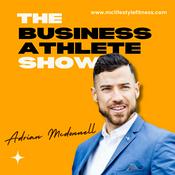 Download for free in the App Store
radio.net
Sleep timer
Save favourites
229 episodes
#228: 7 Game-Changing Nutrition Habits Our Most Successful Clients Swear By
08/07/2026 | 21 mins.Apply for 1:1 Coaching
If this episode resonated with you, the next step is a conversation. McLifestyle works with a small number of men at a time through a personalised coaching system that covers training, nutrition, lifestyle structure, and accountability — built around your schedule, not a generic template.
Apply here → 1:1 Application Form
Connect with Adrian
Instagram: @adrian_mclifestylefitness
If this episode was useful, share it with one man who needs to hear it. That's the best way to support the show.#227: 45 Cheat Codes I Know at 31 That I Wish I Knew at 21
01/07/2026 | 27 mins.In this episode I share the 45 habits that have made the biggest difference — for me and for the men I coach.
These cover nutrition, training, sleep, and mindset.
Every single one is practical and actionable.
If you're a busy man who wants to look better, feel better, and perform at a higher level — this one's for you.
Apply for 1:1 Coaching
If this episode resonated with you, the next step is a conversation. McLifestyle works with a small number of men at a time through a personalised coaching system that covers training, nutrition, lifestyle structure, and accountability — built around your schedule, not a generic template.
Apply here → 1:1 Application Form
Connect with Adrian
Instagram: @adrian_mclifestylefitness
If this episode was useful, share it with one man who needs to hear it. That's the best way to support the show.#226: The Science of Staying Lean — How to Keep the Fat Off After Losing Body Fat
24/06/2026 | 19 mins.Most men can lose weight.
The problem is keeping it off.
In this episode, Adrian breaks down the science of what happens to your body after a fat loss phase — and the exact strategy McLifestyle uses with clients to lock in results permanently.
What You'll Learn in This Episode:
Why your body actively works against you after fat loss — and the four biological responses that drive weight regain
What reverse dieting is, how it works, and why it's the missing piece most men never use
The difference between a reverse diet and a diet break — and when to use each one
How to calculate your new maintenance calories after a cut
The step-by-step weekly calorie increase protocol to rebuild your metabolism without gaining fat
How to train during a reverse diet to maximise muscle retention and strength gains
The half-time rule for timeline expectations — and why patience here pays off permanently
Martin’s full journey — 88kg to 76kg at 50, reverse dieted back to 3,000 calories as his new maintenance
Apply for 1:1 Coaching
If this episode resonated with you, the next step is a conversation. McLifestyle works with a small number of men at a time through a personalised coaching system that covers training, nutrition, lifestyle structure, and accountability — built around your schedule, not a generic template.
Apply here → 1:1 Application Form
Connect with Adrian
Instagram: @adrian_mclifestylefitness
Message me “Longevity Program” on Instagram for more information.
If this episode was useful, share it with one man who needs to hear it. That's the best way to support the show.#225: The Four Pillars of Longevity Every Man Over 40 Needs to Know
17/06/2026 | 26 mins.In this episode, Aido breaks down the four non-negotiable pillars of longevity for men over 40 and how you can optimise all four areas so you can look, feel and perform your utmost best.
Key Takeaways:
After 35, men lose 1–2% of muscle mass per year without structured resistance training. You can't supplement your way out of it and you can't cardio your way out of it. You train for it or you lose it.
VO2 max is the most powerful predictor of cardiovascular mortality in the research — more predictive than smoking, diabetes, or high blood pressure. Most men over 40 don't train it at all.
Body fat percentage — specifically visceral fat — is what drives disease risk, not the number on the scale. Two men can weigh 90kg and be in completely different health categories.
Your GP is checking you're not dying. That's different from checking you're actually thriving. The five markers to ask for: fasting insulin, HbA1c, CRP, testosterone (free and total), and Vitamin D.
Apply for 1:1 Coaching
If this episode resonated with you, the next step is a conversation. McLifestyle works with a small number of men at a time through a personalised coaching system that covers training, nutrition, lifestyle structure, and accountability — built around your schedule, not a generic template.
Apply here → 1:1 Application Form
Connect with Adrian
Instagram: @adrian_mclifestylefitness
Message me “Longevity Program” on Instagram for more information.
If this episode was useful, share it with one man who needs to hear it. That's the best way to support the show.#224: Why the Last 10lbs Won't Come Off
10/06/2026 | 23 mins.The last 10lbs can be harder to shift. Here’s why:
Smaller body = lower calorie needs → deficit shrinks
Metabolic adaptation → body burns fewer calories than expected
NEAT drops → less movement without realising (−200–400 kcal/day)
Hormones shift → ↓ leptin, ↑ hunger, ↓ thyroid/testosterone
Closer to set point → stronger resistance to fat loss
Follow the steps in this episode if you would like to shift it!
Apply for 1:1 Coaching
If this episode resonated with you, the next step is a conversation. McLifestyle works with a small number of men at a time through a personalised coaching system that covers training, nutrition, lifestyle structure, and accountability — built around your schedule, not a generic template.
Apply here → 1:1 Application Form
Connect with Adrian
Instagram: @adrian_mclifestylefitness
If this episode was useful, share it with one man who needs to hear it. That's the best way to support the show.
More Health & Wellness podcasts






Trending Health & Wellness podcasts
















About The Business Athlete Show
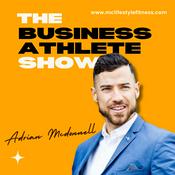
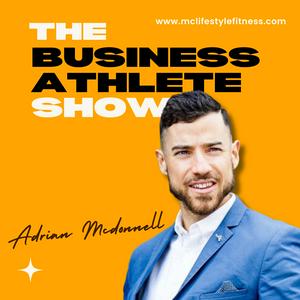
The Business Athlete Show is a weekly podcast for high-performing professionals and business owners who want to improve their physique, energy, and confidence — and perform in life and business like an athlete.
Hosted by Adrian McDonnell, founder of McLifestyle Fitness, the show gives you evidence-based training, nutrition, and mindset strategies designed for busy schedules.
Our mission is simple: help you optimise your body composition, improve your health, change your identity and create a body and lifestyle you’re proud of.
To stay connected follow me on IG: Adrian_mclifestylefitness
Podcast websiteListen to The Business Athlete Show, Health360:Lessons lived and learned and many other podcasts from around the world with the radio.net app
Get the free radio.net app
- Stations and podcasts to bookmark
- Stream via Wi-Fi or Bluetooth
- Supports Carplay & Android Auto
- Many other app features
Get the free radio.net app
- Stations and podcasts to bookmark
- Stream via Wi-Fi or Bluetooth
- Supports Carplay & Android Auto
- Many other app features

The Business Athlete Show
Scan code,
download the app,
start listening.
download the app,
start listening.
 Ireland
