
Listen to this podcast in the app for free: Download for free in the App Store
radio.net
Sleep timer
Save favourites
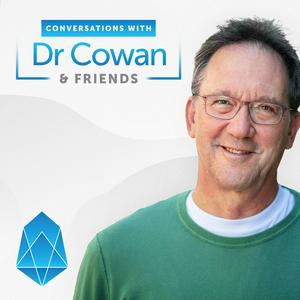
Conversations with Dr. Cowan & Friends
Dr. Tom Cowan
Latest episode
175 episodes
Final Measles Response + Update on the Bailey's Court Case with Dr. Mark Bailey - 10/14/26
14/10/2026 | 56 mins.In this October 14th webinar, Tom is joined by Dr. Mark Bailey for an update on Dr. Sam Bailey’s legal case in New Zealand and the community effort to support her. They then return to Tom’s recent measles discussions, reviewing a commenter’s responses and the evidence presented in support of those claims.
Update on Dr. Sam Bailey’s case:
-Mark describes the proceedings surrounding Sam’s online publications, the financial and personal burden of the case, and her decision to continue publishing her work. He explains that the fundraising campaign is intended to pay outstanding fines and court costs to prevent bankruptcy proceedings scheduled for November 5, 2026.
-At the time of the recording, Mark reports that the campaign had raised $182,000 toward its $250,000 goal. Tom encourages viewers to contribute, while Mark also suggests contacting the Medical Council of New Zealand for those unable to offer financial support.
Dr. Sam Bailey fundraiser link here.
Highlights from this session include:
-Tom and Mark revisit how measles is diagnosed, discussing overlapping symptoms, Koplik spots, and their concerns about distinguishing measles from other illnesses through clinical observations alone.
-They examine historical blood-inoculation experiments, experiments involving monkeys, and contact-tracing data, questioning whether these establish the person-to-person transmission described by the commenter.
-A discussion of cell-culture experiments, cytopathic effects, and experimental controls, with both speakers questioning what those findings demonstrate about the material added to a culture.
-Tom and Mark contrast the use of “isolation” to describe growing a virus in cell culture with their requirement for directly separating and identifying particles from an original sample. Mark also discusses the distinction between obtaining a particle and demonstrating its claimed properties.
-They respond to the commenter’s claims about 1,400-fold measles-virus purification, Enders’ neutralization experiments, and RT-PCR detection, explaining why they dispute the conclusions drawn from these methods.
Throughout the webinar, Tom and Mark emphasize examining methods, distinguishing observations from interpretations, and using precise language. They close by encouraging viewers to review their published work and support Sam’s campaign.
Support the show
Websites:
https://drtomcowan.com/
https://www.drcowansgarden.com/
https://newbiologyclinic.com/
https://newbiologycurriculum.com/
Instagram: @TalkinTurkeywithTom
Facebook: https://www.facebook.com/DrTomCowan/
Bitchute: https://www.bitchute.com/channel/CivTSuEjw6Qp/
YouTube: https://www.youtube.com/channel/UCzxdc2o0Q_XZIPwo07XCrNgA Fresh look at Childhood Illness with Dawn Lester - 10/7/26
07/10/2026 | 57 mins.In this October 7th webinar, Tom is joined by Dawn Lester to discuss her new book, A Fresh Look at Childhood Illness. Together, they explore childhood illness, measles, vaccines, terrain theory, pleomorphism, chronic disease, and the importance of moving away from fear-based thinking.
A link to Dawn Lester's book here.
A link to her SubStack here.
Highlights from this session include:
-Tom opens by asking why we need “a fresh look at childhood illness” when mainstream sources claim vaccines have prevented hundreds of millions of deaths and that children today are healthier than ever.
-Dawn explains that while certain statistics may suggest lower infant mortality, many children today are clearly struggling with chronic conditions, which calls for a deeper look at what health and illness really mean.
-Tom and Dawn discuss whether illnesses such as measles, chickenpox, mumps, diphtheria, and flu are truly distinct biological entities with specific microbial causes.
-Dawn emphasizes that these illnesses have not been proven to be distinct, specific entities and points out that many symptoms overlap across different childhood conditions.
-Tom discusses the problem with defining measles by symptoms such as cough, coryza, conjunctivitis, and Koplik spots, arguing that these do not reliably establish measles as a specific diagnosis.
-They explore how labels can obscure what is actually happening in the body, and Dawn encourages asking what the body is doing rather than relying on disease labels.
-Dawn explains the terrain perspective, where symptoms such as mucus, fever, rashes, vomiting, or diarrhea may be understood as the body’s clearing or detoxification processes rather than evidence of an invading pathogen.
-Tom and Dawn discuss pleomorphism and the idea that bacteria, yeast, fungi, and other forms may arise from fundamental life forms depending on the internal terrain.
-They contrast two views of microbes: one where microbes are fixed, distinct disease-causing species, and another where they shift form based on the body’s needs and conditions.
-Tom points out that if a microbe truly caused a disease, it should be isolated and shown to cause the same disease in a well person or animal, which he argues has not been demonstrated.
-Dawn discusses how chronic conditions may arise when acute clearing processes are repeatedly suppressed with medications, vaccines, or other interventions.
-Tom and Dawn connect this idea to asthma and other chronic childhood conditions, suggesting that the body may need to complete an interrupted clearing process.
-Dawn emphasizes emotional factors, childhood trauma, beliefs, fear, and the importance of asking what is happening in a child’s whole life—not just what symptoms are present.
-They close by discussing how the book is intended to lessen fear, support self-empowerment, and help parents feel confident making informed decisions.
Dawn shares that people can find her on Substack at DawnLester.substack.com, through Dawn’s Writings, and through her podcast, Dawn of Discernment. Her book is available on Amazon in paperback and Kindle.
Throughout the webinar, Tom and Dawn emphasize moving away from fear, questioning disease labels, looking at what the body is actually doing, and helping parents feel confident, informed, and empowered in their approach to childhood illness.
Support the show
Websites:
https://drtomcowan.com/
https://www.drcowansgarden.com/
https://newbiologyclinic.com/
https://newbiologycurriculum.com/
Instagram: @TalkinTurkeywithTom
Facebook: https://www.facebook.com/DrTomCowan/
Bitchute: https://www.bitchute.com/channel/CivTSuEjw6Qp/
YouTube: https://www.youtube.com/channel/UCzxdc2o0Q_XZIPwo07XCrNgMeasles, Contagion & What the Evidence Shows + Q&A - 9/30/26
30/09/2026 | 59 mins.In this September 30th webinar, Tom opens by revisiting the distinction discussed with Jordan Grant between the operationalist and realist perspectives. He emphasizes asking, “What did you do?” and “What did you see?” rather than relying on conclusions, theories, or interpretations.
Highlights from this session include:
-Tom responds to comments from a Rumble thread challenging his previous webinar on measles, especially the claim that the measles virus has been isolated.
-He breaks down the definition of “isolation” and argues that virology uses the word differently from its common meaning: separating one thing from all other things.
-He discusses the Enders measles paper, cell culture experiments, cytopathic effect, and the problem of calling cell breakdown “virus isolation.”
-He reviews a rhesus macaque measles challenge study and questions the claim that monkeys were inoculated with “wild type measles virus,” arguing that what was used was a tissue culture rather than purified virus.
-He examines the issue of measles genotyping and argues that if RNA cannot be sequenced directly from a clinical specimen without first mixing it with cell culture materials, the origin of the sequence becomes unclear.
-He returns to the question of contagion, pointing out that seeing multiple people sick around the same time is not the same as proving transmission from one person to another.
-He discusses the role of belief, expectation, and what people are told in illness experiments, suggesting that belief may be one of the strongest variables in reported contagion studies.
-He reviews a topical DMSO and ascorbic acid study on squamous cell skin lesions, noting that while the lesions may shrink, the larger question is whether the person’s overall health or underlying condition has improved.
-He closes with a broader reflection on modern medicine and argues that the introduction of government-funded healthcare, particularly Medicare, was one of the most consequential events in modern medicine because of its effect on competition, innovation, cost, and centralized control.
Throughout the webinar, Tom emphasizes staying grounded in direct observation, precise definitions, and clear experimental methods. He encourages listeners to focus less on scientific-sounding conclusions and more on the practical questions: What was actually done, what was actually seen, and does the evidence support the claim?
Support the show
Websites:
https://drtomcowan.com/
https://www.drcowansgarden.com/
https://newbiologyclinic.com/
https://newbiologycurriculum.com/
Instagram: @TalkinTurkeywithTom
Facebook: https://www.facebook.com/DrTomCowan/
Bitchute: https://www.bitchute.com/channel/CivTSuEjw6Qp/
YouTube: https://www.youtube.com/channel/UCzxdc2o0Q_XZIPwo07XCrNgEverything you want to know about Measles 9/23/26
24/09/2026 | 1h 1 mins.In this September 23rd webinar, Tom focuses the full session on “everything we need to know about measles.” He explains that his goal is to create a clear reference people can share with doctors, reporters, health freedom advocates, virologists, or anyone asking what we know about measles.
He organizes the discussion around five main questions:
-Is measles a specific biological entity?
-Is measles transmissible, i.e., contagious?
-Does the virus exist?
-Has it ever been isolated?
-Did vaccines actually get rid of this disease called measles?
Highlights from this session include:
-Tom examines whether measles can be accurately diagnosed by signs and symptoms alone, comparing this to other diagnoses such as pregnancy or fractures.
-He discusses different approaches to diagnosis in Western medicine, Chinese medicine, Ayurveda, and homeopathy.
-He reviews the question of whether symptoms such as fever, rash, Koplik spots, nausea, anxiety, or back pain can specifically identify measles.
-He looks at CDC and AI-based responses stating that laboratory confirmation is considered essential because clinical diagnosis alone is not reliable.
-He argues that if measles could not be reliably diagnosed before modern molecular tests, then historical measles statistics become difficult to interpret.
-He examines whether measles has been proven to be transmissible or contagious, including historical claims involving Francis Home’s blood-transfer experiment.
-He discusses why injecting blood from one person into another does not prove a virus or contagious agent was transmitted.
-He reviews the 1954 Enders paper and argues that the cell-culture method used to claim measles virus isolation was not valid proof of isolation.
-He discusses Stefan Lanka’s related control work and the claim that cytopathic effects can occur without any measles sample present.
-He questions antibody, antigen, and PCR-based tests on the basis that they depend on prior isolation of the virus.
-He addresses the claim that measles infection causes immune suppression and offers a different interpretation of antibody changes.
-He closes by discussing the common argument that vaccines got rid of measles, and he offers his view that vaccines changed the expression of childhood illness rather than eliminating a specific viral disease.
Throughout the webinar, Tom emphasizes logic, falsifiability, and the need to distinguish direct observation from assumptions. He encourages listeners to send the webinar to doctors, virologists, health freedom leaders, and others so the claims around measles, transmission, virus isolation, immunity, and vaccines can be openly examined and debated.
Support the show
Websites:
https://drtomcowan.com/
https://www.drcowansgarden.com/
https://newbiologyclinic.com/
https://newbiologycurriculum.com/
Instagram: @TalkinTurkeywithTom
Facebook: https://www.facebook.com/DrTomCowan/
Bitchute: https://www.bitchute.com/channel/CivTSuEjw6Qp/
YouTube: https://www.youtube.com/channel/UCzxdc2o0Q_XZIPwo07XCrNgHas science proven the existence of vitamins and hormones in the blood? - 9/16/26
16/09/2026 | 55 mins.In this September 16th webinar, Tom follows up on his previous conversation with Jordan Grant about the existence of vitamins, hormones, fatty acids, proteins, and other claimed chemicals in living beings.
He opens by clarifying that he is not speaking for Jordan and that any misunderstanding is his own. He then revisits one of the main ideas from their conversation: the difference between the “operationalist” way of thinking, which asks what was actually done and observed, versus the “realist” way of thinking, which often begins with theories or stories.
Highlights from this session include:
-Tom explains why he believes healing begins with careful observation: what do you do, what do you feel, what happens when you change something, and what can be directly seen or tested.
-He shares how this way of thinking shaped his medical interviewing style, even back in medical school.
-He uses Tolkien’s quote, “He that breaks a thing to find out what it is, has left the path of wisdom,” as a summary of the issue with breaking living things apart to claim knowledge of what they are.
-He discusses the difference between whole foods or whole organ preparations and isolated chemicals.
-He explains why he sees chemical hormones, synthetic vitamins, and other isolated substances as having effects, but not necessarily proving that those substances exist in the same form in living beings.
-He contrasts suppressive chemical effects with what he sees as a more restorative approach using whole organ preparations, tissue preparations, herbs, homeopathy, and food.
-He discusses Standard Process, Royal Lee, protomorphogens, and the idea of supporting organ function with homologous tissue rather than isolated chemicals.
-He explains why he still sees a place for certain chemicals, such as liposomal vitamin C, DMSO, chlorine dioxide, or even temporary hormone use, but only with a clear understanding that these are chemical interventions, not proof that those chemicals naturally exist in the body.
-He applies this same thinking to blood tests, IV vitamins, polycystic ovarian syndrome, folic acid in wheat, testosterone replacement, and anxiety.
Throughout the webinar, Tom emphasizes asking “what did you do?” and “what did you see?” rather than starting with theoretical explanations. He closes by encouraging listeners to change the way they think, focus on direct observation, and return to simple experiments and lived experience as the foundation for healing.
Support the show
Websites:
https://drtomcowan.com/
https://www.drcowansgarden.com/
https://newbiologyclinic.com/
https://newbiologycurriculum.com/
Instagram: @TalkinTurkeywithTom
Facebook: https://www.facebook.com/DrTomCowan/
Bitchute: https://www.bitchute.com/channel/CivTSuEjw6Qp/
YouTube: https://www.youtube.com/channel/UCzxdc2o0Q_XZIPwo07XCrNg
More Alternative Health podcasts
Trending Alternative Health podcasts
About Conversations with Dr. Cowan & Friends
All things of interest to Dr. Tom Cowan. Visit our website here https://drtomcowan.com/Socials: https://www.instagram.com/talkinturkeywithtom/https://www.facebook.com/DrTomCowan/https://www.youtube.com/channel/UCzxdc2o0Q_XZIPwo07XCrNg
Podcast websiteListen to Conversations with Dr. Cowan & Friends, Rain Sounds - 10 Hours and many other podcasts from around the world with the radio.net app
Get the free radio.net app
- Stations and podcasts to bookmark
- Stream via Wi-Fi or Bluetooth
- Supports Carplay & Android Auto
- Many other app features
Get the free radio.net app
- Stations and podcasts to bookmark
- Stream via Wi-Fi or Bluetooth
- Supports Carplay & Android Auto
- Many other app features

Conversations with Dr. Cowan & Friends
Scan code,
download the app,
start listening.
download the app,
start listening.
 Ireland
