

Listen to this podcast in the app for free: Download for free in the App Store
radio.net
Sleep timer
Save favourites
106 episodes
Signs of Safe and Unsafe Relationships: What Your Nervous System Knows Before Mind
26/07/2026 | 21 mins.Why Your Body Shrinks Around Certain People?
What if your body already knows which relationships are safe… even when your mind keeps rationalizing them?
In this episode of Exiled & Rising,drawing from somatic healing and nervous system regulation, this episode explores how the body serves as a real-time map of relational safety.
Rather than analyzing relationships solely through thoughts, emotions, or behaviour, Ana examines how the nervous system expresses safety and threat through expansion, contraction, breath, movement, and embodied awareness.
Building on previous episodes about:
humility
nervous system regulation
burnout
relational dynamics
and somatic healing
Ana introduces a deeper layer of somatic awareness:
Expansion vs contraction in the relational field.
This episode explores:
why your body changes around certain people
nervous system activation in relationships
relational trauma and emotional regression
how the body tracks safety vs threat
why you may feel younger, smaller, or voiceless around certain people
somatic signs of healthy vs unhealthy relationships
ventral vagal regulation and freeze states
expansion, contraction, posture, breathing, and emotional safety
how to use the body as a real-time decision-making system
why “the body is never confused, the mind is”
how trauma impacts the nervous system and relationships
how to rebuild self-trust through somatic awareness
Ana also explains how:
space
time
weight
movement
and expansion
work together as a framework for healing relational trauma and restoring nervous system regulation.
This episode is for:
people healing from relational trauma
highly sensitive people
those struggling with emotional exhaustion or confusion in relationships
anyone wanting deeper nervous system awareness and emotional clarity
If you’ve ever felt:
yourself shrinking around someone
emotionally activated without understanding why
disconnected from your body
or unable to trust your instincts in relationships
this episode will help you understand what your nervous system has been trying to communicate all along.
Welcome to Exiled & Rising — a podcast exploring somatic healing, PTSD and trauma recovery, emotional regulation, relational dynamics, spirituality, nervous system work, and embodied healing.
Somatic Trauma Recovery Center
https://www.somatictraumarecoverycenter.com/
Other Ways to Work Together:
Read the book: https://amzn.to/41SjKKL
❤️ Support the podcast: https://exiledandrising.castos.com/donate
Explore all programs: https://exiledandrising.mykajabi.com/store
Chapters
(00:00:00) - Excellent Rising: How to Stop Lying to Yourself
(00:00:59) - The Four Somatic Pillars of Healing Trauma
(00:09:33) - Unsafe Relationships in Somatic Healing
(00:16:18) - How to Heal Your Body After Trauma
(00:21:01) - A New Day: Awakening with YourselfCan You Optimize Gentleness? A Poem on Trauma, the Body, and Reclaiming Your Inner Life
19/07/2026 | 19 mins.This is not a motivational poem. It is a somatic provocation. Eight questions. Each one takes the language of hustle culture — optimize, grind, hack, hustle, invest, scale, dominate, launch — and turns it toward the most neglected territory in your life: your inner world, your body, your emotional depth, and your presence.
In this episode, Ana Mael — somatic trauma therapist, war survivor, and founder of the Somatic Trauma Recovery Center — reads an original poem that stops you before your mind catches up.
It asks what happens when the same relentless energy you give to your career, your productivity, and your financial portfolio is finally — deliberately, even aggressively — turned toward gentleness, rest, kindness, and wonder.
For trauma survivors who are high-functioning on the outside and running on empty on the inside. For healers and helpers who give everything outward and have forgotten the stranger living within them. For anyone whose body has been enduring rather than being truly inhabited.
Ana reads the poem in full. Then she sits inside each question with you — not to explain it, but to let it land where explanation cannot reach.
This is Episode 104 of Exiled & Rising: Trauma Recovery and Somatic Healing.
If this episode finds you at the right moment, it will find you exactly where you are.
Somatic Trauma Recovery Center
https://www.somatictraumarecoverycenter.com/
Read Ana book: https://amzn.to/41SjKKL
❤️ Support the podcast: https://exiledandrising.castos.com/donate
Chapters
(00:00:00) - Can You Build a Loving Home for Your Soul?
(00:01:29) - The Need to Optimize Our Human Being
(00:17:47) - Be Gentle With YourselfThe 4 Somatic Pillars of Trauma and PTSD Healing
12/07/2026 | 34 mins.You’re not stuck because you can’t let go. You’re stuck because your body hasn’t recognized that it’s over.
Why does someone from your past still feel present… even years later?
Why does your body react as if something is happening now… when it’s already over?
In this episode, we move beyond talking about trauma…
and into how your nervous system organizes around relational experiences.
When there has been emotional neglect, unhealthy patterns, or abuse, your system doesn’t just remember—it adapts. It learns to stay alert, to monitor, to carry the weight of what happened.
And unless that organization changes…
you can stay stuck in it for years.
Today, I guide you through a somatic framework for healing relational trauma through four core elements:
Space — learning to recognize that the experience is not happening inside you
Time — differentiating the past from the present moment
Weight — releasing the emotional and physiological burden from your body
Movement — restoring autonomy, direction, and choice
This is not about “moving on.”
It is about helping your nervous system update… so you can finally feel safe again.
If you’ve ever felt:
stuck in the past
hyper-aware of someone who is no longer in your life
emotionally pulled into old patterns
or unable to fully let go
This episode will give you a new way to understand what is happening—and how to begin shifting it.
Somatic Trauma Recovery Center
https://www.somatictraumarecoverycenter.com/
Other Ways to Work Together:
Read the book: https://amzn.to/41SjKKL
❤️ Support the podcast: https://exiledandrising.castos.com/donate
Explore all programs: https://exiledandrising.mykajabi.com/store
Chapters
(00:00:00) - 4 Pillars for Somatic Healing of PTSD and Trauma Recovery
(00:02:33) - Somatic recovery: The Space Between Past and Present
(00:10:57) - Three pillars of trauma healing
(00:24:58) - Soma Work for PTSD Recovery
(00:34:38) - Daily Wisdom for TodayTamed Power: The Trauma Minorities, BIPOC & Exiled People Don't Talk About"
05/07/2026 | 32 mins.They told you it was your personality. It was never your personality — it was the most intelligent survival response to a world that punished you for existing. And that survival became the most tamed, most powerful force inside you.
In this episode of Exiled and Rising, trauma educator, survivor, and author Ana Mael speaks directly to the wound that mainstream mental health has consistently failed to name — the slow, invisible erasure of self that happens not through a single dramatic event, but through years, decades, generations of being taught that your existence is too much, your needs are inconvenient, your voice is unwelcome, and your space belongs to someone else.
This is the specific trauma of minorities. Of BIPOC communities. Of exiled and displaced people. Cast out. Of anyone raised inside families, cultures, and systems that required their disappearance as the price of safety.
Ana draws from living through three wars, surviving genocide, years of homelessness, and displacement to name what so many carry silently: the conditioning into invisibility that gets mislabeled as personality. Introversion. Shyness. Passivity. When it is none of those things. It is intelligence. It is adaptation. It is tamed power waiting to move.
And in this episode she reveals what she has witnessed firsthand — that when crisis comes, when communities face war, displacement, wildfires, pandemics, political collapse — it is never the loudest voices who step forward. It is the silenced ones. The ones who know survival. The ones who carry tamed power.
This episode will shift something in you if:
You grew up in an environment where your needs, opinions, or presence felt dangerous or unwelcome
You are part of a minority, BIPOC, or exiled community navigating identity and trauma
You have spent years waiting for permission to exist, speak, need, or matter
You are a therapist, educator, or advocate working with marginalized communities
You believe trauma recovery must go beyond symptom reduction into full reclamation of self
What Ana explores:
Why shrinking is survival intelligence, not a personality flaw
The generational cost of invisibility on BIPOC and displaced communities
Why the silenced ones lead in times of crisis
What trauma recovery looks like when it includes learning to exist
The questions that begin to unlock tamed power
Somatic Trauma Recovery Center
https://www.somatictraumarecoverycenter.com/
Read the book: https://amzn.to/41SjKKL
❤️ Support the podcast: https://exiledandrising.castos.com/donate
Chapters
(00:00:00) - The Trauma We Don't Talk About
(00:12:26) - Yielding Trauma
(00:21:43) - Who steps forward in a time of uncertainty?You Need Justice, Not Breathwork: How Silence Shaped You & Society (Part 2)
02/07/2026 | 33 mins.Ana is not just teaching about trauma.
She’s renaming the moral and political architecture that protects it.
She dismantles:
Silence as safety
Strength as suppression
Healing as isolation
And replaces them with:
Voice as birthright
Co-regulation as repair
Justice as embodied integrity
“Your voice isn’t too much. It’s exactly what was missing.
And it’s time to speak — even if your voice shakes, even if no one taught you how.”
PRE-SALE FOR HER TEACHINGS STARTS NOW — Save $70
https://exiledandrising.mykajabi.com/offers/KDmX3bhu
Get the Book – The Trauma We Don’t Talk About
https://amzn.to/41SjKKL
Support the Podcast – Independent, unsponsored, unfiltered
https://buy.stripe.com/3cscOqbbXfZp0sU7ss
Join the Free Premium Membership
https://exiledandrising.supercast.com/
CORE THEME
“Silence is not just absence. Silence is the mechanism by which trauma survives.”
Ana reframes silence as complicity, disconnection, and a system of harm — not emotional maturity or grace.
KEY INSIGHTS & TAKEAWAYS
1. Prolonged Silence = Stored Trauma
“If you were able to talk, you would be able to process what happened to you.”
PTSD isn’t just from pain — it’s from being denied the right to speak about pain.
2. Somatic Freeze = Silenced Expression
“When someone has no voice and no movement, we know they have trauma.”
Body shutdown isn’t weakness — it’s survival adaptation.
3. Confusion = Early Symptom of Emotional Abuse
“Feeling confused all the time is a trauma state.”
When someone rewrites your truth, you lose the ability to trust your instincts.
4. Silence Is the Fertilizer of Intergenerational Trauma
“Notice how silence was the fertilizer of your trauma and how it was cultivated and passed down.”
Silence isn’t neutral — it’s a behavior passed down like inheritance.
5. Spiritual Bypassing = Complicity in Oppression
“Spiritual bypassing is not grace. It’s abuse in white gloves.”
Ana critiques how “love and light” language is often used to silence survivors.
6. You’re Not Dysregulated Because You’re Weak
“You are dysregulated because you were silenced.”
This quote shifts blame off the survivor and onto the structures that failed them.
7. What Real Trauma Processing Looks Like
Ana outlines a somatic, embodied roadmap:
Safe relational witness
“Someone to say: Your experience was real.”
Co-regulation during grief
“Grief needs to be met in the body, not solved by the mind.”
Time and space to integrate
“The body takes 7x longer than the brain to integrate.”
SYSTEMS ANA EXPOSES
Loyalty cultures: “Don’t speak. He’s still your father.”
Silencing systems: “Don’t be dramatic. We don’t talk about that here.”
Spiritual industries: “It’s for the higher good. Your trauma is your gift.”
Chapters
(00:00:00) - Start Speaking Out
(00:09:54) - Being silenced in trauma recovery
(00:18:58) - Betrayal in the Spiritual World
(00:31:32) - Exiled and Rising: Moral Courage
More Education podcasts
 Living Your LegacyBusiness, Education, Entrepreneurship, Film Interviews, Self-Improvement, TV & Film
 The Mel Robbins PodcastEducation, Health & Wellness, Mental Health, Relationships, Self-Improvement, Society & Culture
 What the Focal!?Education, Language Learning
 The Rich Roll PodcastEducation, Health & Wellness, Self-Improvement, Society & Culture
 Business Alchemy with Jackie MinskyEducation
 Coffee Break SpanishCourses, Education, Language Learning
 80,000 Hours PodcastEducation, Technology
 Begin Again with Davina McCallEducation, Health & Wellness, Mental Health, Self-Improvement, Society & Culture
 How to Be a Better HumanEducation, Self-Improvement
 Coffee Break FrenchCourses, Education, Language Learning
Trending Education podcasts
 Good Life ProjectBusiness, Education, Health & Wellness, Self-Improvement, Tutorials
 Easy Italian: Learn Italian with real conversations | Imparare l'italiano con conversazioni realiCourses, Education, Language Learning, Places & Travel, Society & Culture
 The Art of AccomplishmentBusiness, Education, Health & Wellness, Management, Mental Health, Self-Improvement
 No More Booze - The PodcastEducation, Self-Improvement
 A Changed Mind | Mindset That MattersEducation, Philosophy, Religion & Spirituality, Self-Improvement, Society & Culture, Spirituality
 Sleep Sounds - White Noise & Sleep Music from Calm CoveEducation, Health & Wellness, Kids & Family, Mental Health, Self-Improvement
 Intermediate French with CarlitoEducation, Language Learning
 The Jordan Harbinger ShowBusiness, Education, Science
 The Gathering Room PodcastBusiness, Education, Entrepreneurship, Self-Improvement
 StoryLearning SpanishEducation, Language Learning
 Why Isn't Everyone Doing This? with Emily FletcherEducation
- 80,000 Hours PodcastEducation, Technology
 Learn Spanish: Fluency in Real Life with HandyspanishEducation
 Nuacht MhallEducation, Language Learning
- Coffee Break FrenchCourses, Education, Language Learning
 How I WriteArts, Books, Education, Society & Culture
 Coffee Break ItalianCourses, Education, Language Learning
 Stretch MarksEducation, Kids & Family, Parenting, Personal Journals, Self-Improvement, Society & Culture
 Español con JuanCourses, Education, Language Learning
 One Thing In A French Day | Stories from Paris in FrenchEducation, Language Learning, Society & Culture
 Learning English ConversationsEducation, Language Learning
 Aware and AggravatedEducation, Health & Wellness, Mental Health, Self-Improvement
- How to Be a Better HumanEducation, Self-Improvement
 The Florence Given ShowEducation, Health & Wellness, Mental Health, Philosophy, Self-Improvement, Society & Culture
About Exiled & Rising: Trauma Recovery & Somatic Healing
What happens to the nervous system when survival becomes identity?
Exiled & Rising is a trauma-focused podcast exploring nervous system regulation, shame repair, displacement, boundaries, and dignity-centered healing in a world that often silences collective trauma.
Hosted by integrative somatic trauma specialist Ana Mael, this podcast bridges advanced trauma science with lived experience of war and collective violence — offering grounded, justice-aware healing beyond surface-level self-help.
Each episode blends:
• Nervous system education
• Somatic trauma recovery tools
• Boundary and shame repair
• Reflections on exile, identity, and belonging
• Conversations on trauma justice and systemic harm
This is not mindset work.
This is bottom-up nervous system repair.
Exiled & Rising is especially relevant for:
• Survivors of war, displacement, and collective trauma
• Immigrants navigating identity rupture
• Adult children of exiled and displaced families
• Those estranged from family or faith communities
• Person seeking somatic approaches to PTSD and complex trauma recovery
• Clinicians interested in dignity-centered trauma frameworks
Rather than isolating healing from context, this podcast examines how trauma lives in the body — and how justice, sovereignty, and regulation must coexist.
Meet Your Host
Ana Mael (MSc, SEP, TEB, TST) is an integrative somatic trauma practitioner and founder of the Somatic Trauma Recovery Center. Her work is informed by lived experience of war and collective violence and grounded in advanced training in Somatic Experiencing®, Transforming Touch®, Interpersonal Neurobiology, Polyvagal Theory, trauma memory reconsolidation, and attachment repair.
She specializes in working with survivors of war, displacement, systemic harm, and complex trauma — helping clients restore nervous system stability, dignity, and embodied sovereignty.
She is the author of the bestselling books The Trauma We Don’t Talk.
Learn more about her work at the Somatic Trauma Recovery Center:
https://www.somatictraumarecoverycenter.com/
—
Support & Resources
Read The Trauma We Don’t Talk About
https://amzn.to/41SjKKL
❤️ Support the podcast
https://exiledandrising.castos.com/donate
Explore all programs: https://exiledandrising.mykajabi.com/store
She lives in Toronto, Canada.
Disclaimer: This podcast is for educational purposes and does not replace individualized mental health care. Please consult a licensed provider for personal treatment.
Podcast websiteListen to Exiled & Rising: Trauma Recovery & Somatic Healing, Living Your Legacy and many other podcasts from around the world with the radio.net app
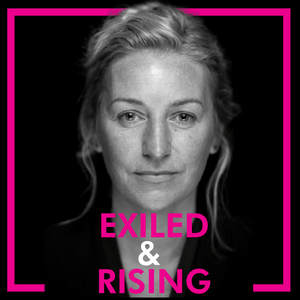
Get the free radio.net app
- Stations and podcasts to bookmark
- Stream via Wi-Fi or Bluetooth
- Supports Carplay & Android Auto
- Many other app features
Get the free radio.net app
- Stations and podcasts to bookmark
- Stream via Wi-Fi or Bluetooth
- Supports Carplay & Android Auto
- Many other app features

Exiled & Rising: Trauma Recovery & Somatic Healing
Scan code,
download the app,
start listening.
download the app,
start listening.
 Ireland