Listen to this podcast in the app for free: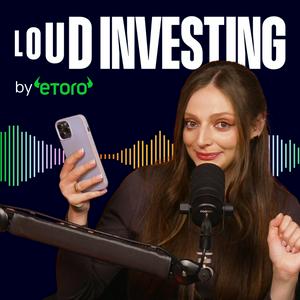 Download for free in the App Store
radio.net
Sleep timer
Save favourites
14 episodes
Inside the Mind of a Global Market Analyst | Big Picture Thinking for Smarter Investing
27/1/2026 | 23 mins.In this episode of Loud Investing, Chanel is joined by Lale Akoner, Global Markets Analyst at eToro, to explore how understanding the bigger picture can completely change the way you invest.
Lale takes us through her journey from studying economics with some of the world’s most influential thinkers, to working on Wall Street and building a career in global markets. Along the way, she breaks down what it really means to be a macro investor and why big picture thinking matters more than trying to predict every market move.
Together, they unpack how human behaviour shapes markets and the economy, why emotions often drive prices more than logic, and how learning to zoom out can help you feel calmer, clearer, and more in control as an investor.
This episode is about building perspective, understanding what’s happening beneath the headlines, and learning how long term thinking can make you a smarter, more resilient investor.
You’ll Hear Highlights On
• What a macro investor actually does and why it matters
• How studying behavioural finance changed Lale’s view of markets
• Why prices move even when fundamentals have not changed
• How human psychology influences markets and the economy
• Why big picture thinking helps reduce stress and emotional decisions
• How beginners can apply macro thinking without feeling overwhelmed
Actionable Steps You Can Take Toward Your Financial Future
1. Start paying attention to the big forces shaping markets, not just daily headlinesFocus on understanding why markets move, not trying to predict every moveNotice when emotions are driving your decisions and pause before reactingUse education tools to simplify complexity rather than avoid it
Key Moments Within the Episode
(01:01) Lale’s current role and her journey from Yale to Wall Street
(03:05) What retail investing really means and why education matters
(03:48) Studying economics through maths, psychology, and human behaviour
(05:21) Learning from Robert Shiller and why markets are not always rational
(12:08) Entering Wall Street after the financial crisis
(15:54) What it really means to be a macro investor
(19:27) How beginners can apply macro thinking to their own portfolio
(22:17) Using AI responsibly to understand markets
(23:31) Final reflections on learning and long-term thinking
Helpful Links
Investopedia: What Is Macroeconomics https://www.investopedia.com/terms/m/macroeconomics.asp
Investopedia: Behavioural Finance Explained https://www.investopedia.com/terms/b/behavioralfinance.asp
Yale School of Management, Behavioural Finance Research https://som.yale.edu/centers/international-center-for-finance
World Economic Forum, Global Economic Trends https://www.weforum.org/topics/economic-growth
Monetary Policy Basics http://investopedia.com/terms/m/monetarypolicy.asp
About Robert Shiller https://www.ubs.com/microsites/nobel-perspectives/en/laureates/robert-shiller.html
About Richard Thaler https://faculty.chicagobooth.edu/richard-thaler
About David Hirshleifer
https://www.marshall.usc.edu/personnel/david-hirshleifer
About Nick Barberis
https://som.yale.edu/faculty-research/faculty-directory/nicholas-c-barberis
Learn more about Loud Investing https://www.etoro.com/LoudInvesting
Important Disclosures
This podcast is for information and educational purposes only and should not be taken as investment advice, a personal recommendation or an offer of or solicitation to buy or sell any financial instruments.
This material has been prepared without taking into account any particular recipient investment objectives or financial situation and has not been prepared in accordance with the legal and regulatory requirements to promote independent research. Past performance is not an indication of future results.The Information Advantage | How to Build a Smarter Investing Mindset
20/1/2026 | 25 mins.In this episode of Loud Investing, Chanel is joined by Naomi Kerbel, a longtime mentor and one of the most experienced leaders in global financial media. Naomi has held senior roles at some of the world’s most respected business and financial news organisations and brings a rare perspective from decades spent at the centre of information, markets, and decision making.
Together, they explore Naomi’s recent journey into investing, how her media background shapes the way she consumes information, and how anyone can build a calmer, more intentional approach to money and media, even with a busy life and competing priorities.
You Will Hear Highlights On
• How Naomi’s career from acting to banking to financial media shaped her relationship with money
• How she went from saving, to saving and investing with intention
• How to think about values, legacy, and long term wealth
• What a solid information diet looks like in practice
• How to reduce emotional reactions to news and social media
• Why conversations about money matter, especially among women
Actionable Steps You Can Take Toward Your Financial Future
Define your valuesThink about what matters to you long term and let that guide how you save and invest.
Curate your informationChoose a small number of trusted sources and build a daily or weekly routine around them.
Create space for reflectionUse quiet moments to review your finances and purchasing decisions rather than reacting to headlines in real time.
Key Moments Within the Episode
(01:27) Naomi’s career journey and early relationship with money
(06:00) How her first shares introduced the idea of investing
(12:00) Investing while managing a busy life and family
(15:00) Thinking about legacy and long term wealth
(18:00) Building a solid and intentional information diet
(36:00) A personal money mistake and lessons learned
(40:00) Traits Naomi sees in highly successful peopleHelpful Links
Asset Allocation and Diversificationhttps://www.investopedia.com/terms/a/assetallocation.asp
Investopedia: How Inflation Affects Investmentshttps://www.investopedia.com/ask/answers/what-is-inflation-and-how-should-it-affect-investing/
Harvard Business Review: How to Make Decisions When Everything Feels Uncertainhttps://www.harvardbusiness.org/wp-content/uploads/2020/03/HBR_Managing_When_the_Future_is_Unclear.pdf
Investing in Gold, CNBC
https://www.cnbc.com/2025/09/06/how-to-invest-in-gold-amid-record-run.html
BBC Radio 4 Today Programmehttps://www.bbc.co.uk/programmes/b006qj9z/episodes/player
Bloomberg Marketshttps://www.bloomberg.com/markets
Mel Robbins, Let Them Theoryhttps://www.melrobbins.com/
Richard Branson, Screw It, Let’s Do It
https://www.virgin.com/branson-family/books/richard-branson/screw-it-lets-do-it
Learn more athttps://www.etoro.com/academy/loudinvesting/
Important Disclosures
This podcast is for information and educational purposes only and should not be taken as investment advice, a personal recommendation or an offer of or solicitation to buy or sell any financial instruments.
This material has been prepared without taking into account any particular recipient investment objectives or financial situation and has not been prepared in accordance with the legal and regulatory requirements to promote independent research. Past performance is not an indication of future results.Mastering Market Chaos | From Beginner to eToro Pro Investor
13/1/2026 | 21 mins.In this episode of Loud Investing, Chanel is joined by Heloise Greeff, an Elite Pro Investor on the eToro platform followed by more than 255,000 people. With a background in computer engineering and a PhD in Computer Science from the University of Oxford, Heloise brings a systems driven approach to investing that prioritises clarity, structure, and long term thinking.
Together, they explore how analytical frameworks, emotional discipline, and technology can help investors stay calm and consistent even in volatile markets.
Actionable Steps You Can Take
Build decision rules before market stress appears
Zoom out when volatility triggers emotional reactions
Use technology to support thinking, not replace it
Focus on durability rather than excitement
Design a strategy that fits your emotional bandwidth
Key Moments Within the Episode
(00:15) Introducing Heloise Greeff and why her background in AI and engineering matters for investing
(01:27) From engineering and machine learning to learning the stock market from scratch
(03:55) How systems thinking helps her zoom out to macro trends and sector dynamics
(06:09) What it means to invest publicly and how copy trading works in practice
(11:14) Communicating decisions clearly when thousands of people are watching
(12:11) Her core investing philosophy focused on steady compounding and controlled risk
(14:02) How she breaks down the AI investment space into clear, practical categories
(19:51) Why starting small matters more than waiting to feel ready
(21:10) Final advice on using AI responsibly and cutting through hype
Important Disclosures
This podcast is for information and educational purposes only and should not be taken as investment advice, a personal recommendation or an offer of or solicitation to buy or sell any financial instruments.
This material has been prepared without taking into account any particular recipient investment objectives or financial situation and has not been prepared in accordance with the legal and regulatory requirements to promote independent research. Past performance is not an indication of future results.
Copy Trading does not amount to investment advice. The value of your investments may go up or down. Your capital is at risk. Past performance is not an indication of future results.Starting to Invest Without Overthinking | Building a Strategy That Sticks
06/1/2026 | 26 mins.Introduction
In this episode of Loud Investing, Chanel is joined by Sarah Glanville, a finance professional with over a decade of experience and currently Senior Account Manager at eToro. Together, they explore what it really takes to move from curiosity to actually taking action as a new investor. Sarah shares how her investing journey began through a personal family experience and why discipline, structure, and emotional awareness are just as important as market knowledge.
This conversation is designed for anyone who feels overwhelmed by where to start and wants a clear, realistic approach to building a strategy that lasts.
You Will Hear Highlights On
• Why it is normal to feel unready when you start investing
• What risk really means for beginners and how to think about it calmly
• How systems help you invest without overthinking
• Why beginners could use dollar cost averaging
• How emotions affect investing and how to manage them
Actionable Steps You Can Take
Pick a simple starting point: Choose one investment method to begin with, such as a broad market ETF, instead of trying to learn everything at once.
Set one automatic habit: Decide on a fixed amount and date each month to invest so consistency does not rely on willpower.
Write down a simple plan: Write down why you are investing, what you are investing in, and what you will do when markets go up or down.
Review, do not react: Schedule a regular check in, for example once every three or six months, instead of reacting to daily market news.
Key Moments Within the Episode
(01:15) Sarah’s personal entry point into investing
(03:00) Why overwhelm is part of the learning curve
(06:00) Building your first investing system
(08:00) Dollar cost averaging explained
(10:30) Managing risk as a new investor
(12:00) ETFs and diversification basics
(16:00) Automating investing for consistency
(20:30) Budgeting without restriction
(25:30) Removing emotion through preparation
Helpful Links
eToro Academy: How to Start Investing https://www.etoro.com/stocks/trading-and-investing-in-stocks/
eToro Academy: Understanding Investment Risk https://www.etoro.com/academy/videos/how-to-manage-risk/
What Is Dollar Cost Averaging https://www.investopedia.com/terms/d/dollarcostaveraging.asp
eToro: What Are ETFs https://www.etoro.com/investing/what-is-etf/
Diversification in Investing https://www.investopedia.com/investing/importance-diversification/
Morgan Housel, The Psychology of Money https://www.collaborativefund.com/blog/the-psychology-of-money/
eToro Demo (Virtual) Account https://www.etoro.com/trading/demo-account/
Important Disclosures
This podcast is for information and educational purposes only and should not be taken as investment advice, a personal recommendation or an offer of or solicitation to buy or sell any financial instruments.
This material has been prepared without taking into account any particular recipient investment objectives or financial situation and has not been prepared in accordance with the legal and regulatory requirements to promote independent research. Past performance is not an indication of future results.The Gift of Conversation | How to Talk About Money And Build Your Investing Mindset
16/12/2025 | 19 mins.In this reflective episode of Loud Investing, Chanel explores one of the most underrated financial tools you have access to at any time, conversation. She explains why silence around money is so expensive, how avoidance fuels anxiety, and what changes when you start saying your fears out loud with people you trust. Drawing on classic investing books and real life experience, she shares practical conversation starters you can use so money talk feels natural, empowering, and even bonding.
You Will Hear Highlights On
• Why now is the perfect time to talk about the future
• How silence around money creates anxiety
• What classic money books have in common about facing reality and uncomfortable truths
• Simple scripts to turn awkward small talk into empowering money conversations
• Why speaking your financial intentions out loud helps both you and the people around you
Actionable Steps
• Choose one person you trust and ask a simple money question
• Use a book as a bridge - share one idea from a money book that changed how you think and explain how you applied it
• Name your first investing fear - describe honestly how you felt the first time you put money into the market and what actually happened
Key Moments Within the Episode
(01:34) How guessing about money creates anxiety and why talking reduces that pressure
(02:38) Three conversation scenarios that turn small talk into empowerment
(09:02) Purchasing power, inflation and why cash can be more risky than investing
(10:25) Why good investing could be sitting still while others panic
(17:48) The end of year challenge to ask one powerful money question and break the silence
Helpful Links
Warwick Business School study on women outperforming men as investors https://www.wbs.ac.uk/news/are-women-better-investors-than-men/
eToro research on the ‘confidence gap’ and women in financial serviceshttps://www.etoro.com/news-and-analysis/investing/is-financial-services-obsession-with-confidence-gap-putting-women-off-investing/
Understanding behavioural finance and emotional biases https://www.etoro.com/investing/understanding-behavioural-finance/
Inflation and how it affects your purchasing power and investments https://www.investopedia.com/ask/answers/what-is-inflation-and-how-should-it-affect-investing/
Benjamin Graham, The Intelligent Investor https://en.wikipedia.org/wiki/The_Intelligent_Investor
Robert Kiyosaki, Rich Dad Poor Dad https://www.richdad.com/
Tony Robbins, Unshakeablehttps://www.simonandschuster.com/books/Unshakeable/Tony-Robbins/Tony-Robbins-Financial-Freedom-Series/9781508232704
Morgan Housel, The Psychology of Money https://www.amazon.com/Psychology-Money-Timeless-lessons-happiness/dp/0857197681
Morgan Housel, The Art of Spending Moneyhttps://www.kiplinger.com/personal-finance/spending/morgan-housel-interview-the-art-of-spending
Guide on how to talk about money with family and friends https://www.letsriseup.com/open-up-about-money-psychotherapist-advice/
eToro press release on Gen Z turning investing into a dinner table topic
https://www.etoro.com/news-and-analysis/press-releases/gen-z-turning-investing-into-dinner-table-topic-younger-investors-far-more-open-discussing-portfolios-with-friends-and-family/
Important Disclosures
This podcast is for information and educational purposes only and should not be taken as investment advice, a personal recommendation or an offer of or solicitation to buy or sell any financial instruments.
This material has been prepared without taking into account any particular recipient investment objectives or financial situation and has not been prepared in accordance with the legal and regulatory requirements to promote independent research. Past performance is not an indication of future results.
More Business podcasts
 UnhedgedBusiness, News, Business News, Investing
 Motley Fool MoneyBusiness, Investing
 The Prof G Pod with Scott GallowayBusiness, Entrepreneurship
 Behind The WallsBusiness
 Money TalksBusiness
 Prof G MarketsBusiness, Investing
 The Other HandBusiness, News, Society & Culture
 Inside Business with Ciaran HancockBusiness
 Boss Class from The EconomistBusiness, Society & Culture, Careers, Management
 Working Hard with Grace BeverleyBusiness, Education, Health & Wellness, Marketing, Self-Improvement
Trending Business podcasts
 The Digital Marketing PodcastBusiness
 Interview BossBusiness, Education, Careers
 The Compound and FriendsBusiness, News, Business News, Investing
 The Room Where It HappenedBusiness, Technology, Entrepreneurship, Management
 Better With MoneyBusiness, Education, Tutorials, Investing, Self-Improvement
 FoundersBusiness, History, Technology, Entrepreneurship
 The Bottleneck PodcastBusiness, Entrepreneurship, Marketing
 The Ramsey Show HighlightsBusiness, Education, Investing, Self-Improvement
 HBR IdeaCastBusiness, Entrepreneurship, Management, Marketing
 MarketplaceBusiness, News
 Dare to Lead with Brené BrownBusiness
 Odd LotsBusiness, News, Investing, News Commentary
 Breakfast BriefingBusiness
 Matheson LLP, Irish Law FirmBusiness
 The Economics of Everyday ThingsBusiness
 Stock ClubBusiness, Investing
 London RealBusiness, Technology, Investing
 HBR On LeadershipBusiness, Education, Entrepreneurship, Management, Self-Improvement
 My First MillionBusiness, Entrepreneurship
 Moonshots with Peter DiamandisBusiness
 Garry TalksBusiness, Society & Culture, Entrepreneurship
 Financial AuditBusiness, Education, Investing, Self-Improvement
 Open Book with Anthony ScaramucciArts, Business, Books, Entrepreneurship
- Inside Business with Ciaran HancockBusiness
 Stock MoversBusiness, News, Business News, Investing
 CNBC's "Fast Money"Business, News, Investing
 Business WarsBusiness, History, Management
 知行小酒馆
知行小酒馆 Barclays BriefBusiness, News, Society & Culture, Business News
About Loud Investing: For Anyone Who Thought It Wasn't For Them
New episodes every Tuesday.
Loud Investing is a podcast by eToro about empowering everyone to close the gender investment gap.
Ever felt like investing is just not for you?
We get it- and you're definitely not alone! Loud Investing is here to change that conversation. Think of us as your supportive friend who's figured out this whole investing thing and wants to share everything they've learned packed with real chat, relatable stories, and down-to-earth advice from people who've been exactly where you are now.
This podcast is for you if you:
Think investing sounds scary or complicated
Want to sort your finances but don't know where to begin
Feel like everyone else has investing figured out (spoiler: they don't!)
Your host is former CNBC London journalist, Chanel Monteine, who swapped the newsroom for entrepreneurship - and had to learn about investing the hard way.
Each week, she shares honest stories, simple exercises you can actually do. .
No jargon, no judgment, just real talk about investing.
Come as you are and get loud with us!
The content discussed is for educational purposes only and is not investment advice. Investing involves risks. The views shared are general in nature and not tailored to any individual. Always do your research before making financial decisions.
Podcast websiteListen to Loud Investing: For Anyone Who Thought It Wasn't For Them, Unhedged and many other podcasts from around the world with the radio.net app
Get the free radio.net app
- Stations and podcasts to bookmark
- Stream via Wi-Fi or Bluetooth
- Supports Carplay & Android Auto
- Many other app features
Get the free radio.net app
- Stations and podcasts to bookmark
- Stream via Wi-Fi or Bluetooth
- Supports Carplay & Android Auto
- Many other app features

Loud Investing: For Anyone Who Thought It Wasn't For Them
Scan code,
download the app,
start listening.
download the app,
start listening.
 Ireland