

Listen to this podcast in the app for free: Download for free in the App Store
radio.net
Sleep timer
Save favourites
404 episodes

#300 'Working for Foundations, Advising Charities on Fundraising', Tara Arnold, Fundraising Consultant
16/08/2026 | 35 mins.Welcoming Tara Arnold back to Purposely Podcast. Tara is a fundraising consultant, engaged by grant making charities including Unbound Philanthropy and Lloyds Bank Foundation to help small and mid sized nonprofits strengthen their income generation. This is her second appearance this year on the show, following an earlier conversation about her work in grant making at Sharegift, and this time the focus turns to what she sees from inside the charities she supports.
Tara works through a funder plus model, where a grant comes bundled with an offer of consultancy support. With Unbound, that support is light touch and opt in, a follow up email after a grant is confirmed. With Lloyds, charities apply directly for up to six days of support across fundraising, finance, volunteering or governance. In both cases Tara is usually introduced at CEO or director level, working on strategy rather than day to day delivery, and she starts every relationship by listening before she advises.
Much of the conversation centres on income diversification. Tara describes charities that dip into difficulty because they lean on a single funding stream, often grants, and never build anything alongside it. She talks through practical, lowcost ways to test new approaches, from a five minute ask at the end of an online event to reviewing untapped supporter bases the charity has never directly asked for money. She is blunt about the discomfort many charities feelaround fundraising itself, describing organisations with long term, loyal supporters who have simply never been asked to give.
A recurring theme is the mismatch between expectation and resourcing. Tara has seen new fundraisers hired with no budget and an unspoken expectation that they raise their own salary in year one. She calls it insanity, and argues that if acharity cannot answer a straightforward question about budget and culture in an interview, that is a warning sign for any fundraiser considering the role. She also flags basics that get missed constantly, including no reserves policy, nofundraiser on the board, and donors thanked late or not at all.
The conversation closes on stewardship, the unglamorous work of keeping donors and funders engaged after the money lands. Tara's examples are small and human, athirty second video from a charity worker, a short case study, a one line thank you email. None of it costs much. All of it, she says, is what actually keeps funding relationships alive.
The funder plus model and how consultancy support gets triggered without being forced on charities
Why income diversification matters and how to test new fundraising approaches cheaply
The real cost of underfunding a fundraiser's role, and what questions to ask before taking the job
Getting buy-in and a genuine fundraising culture across an organisation, not just the fundraising team
Stewardship as the quiet, unglamorous work that keeps donors and funders engaged
Basics that get missed: reserves policies, fundraiser representation on boards, and simply saying thank you
This episode of Purposely isbrought to you by Benevity and Trust Investments.
Key ThemesSHORT Simon Bowden Head of Philanthropic Services at Forsyth Barr
09/08/2026 | 6 mins.moreSHORT 'When Giving Became Part of the Advice' Simon Bowden Head of Philanthropic Services at Forsyth Barr
09/08/2026 | 6 mins.In this SHORT episode of Purposely, we are back with SimonBowden, Head of Philanthropic Services at Forsyth Barr, on why investment firms are bringing philanthropy into the advisory relationship, and what that means in practice.
Simon explains that demand from clients is a big part ofwhat is driving the shift. Generational wealth transfer is bringing people into the conversation who have a strong interest in how their money affects the world around them. Holistic financial advice, the kind that starts with what aperson actually cares about, naturally makes room for that conversation.
He talks through how firms like Forsyth Barr handle thepracticalities. A regular distribution to a charity is straightforward. When it comes to larger gifts or capital, partnerships with community foundations anddonor advised funds mean the money can keep working in perpetuity while the advisor stays involved. It is a model that works for the client, the advisor and the organisations being supported.
And when the giving conversation opens up, something elsehappens. Clients start talking about their values, what they care about, how their wealth was built and who they want to remember. Advisors who have known clients for years often come out of those conversations having learned thingsthey never knew. It deepens the relationship on both sides.
• Why investment firms are building philanthropicservices teams and what is driving client demand
• How donor advised funds and community foundations fitinto the advisory relationship
• Keeping capital working in perpetuity while supportinggood causes
• Generational wealth transfer and the shift in whatclients want from financial advice
• What opening up the giving conversation does for theadvisor-client relationship
This episode of Purposely is brought to you by Benevity and Trust Investments
Key Themes#299 'Resource Follows Vision', Shruthi Vijayakumar, Coach, Facilitator and Founder, Fire Circle
02/08/2026 | 45 mins.Welcoming Shruthi Vijay Kumar, coach, facilitator andeducator based in Aotearoa New Zealand, to Purposely Podcast.
Shruthi works with leaders and organisations trying to shiftfrom extractive to more regenerative ways of working. She draws on indigenous, eastern and western knowledge traditions to do it. She holds an MBA from Oxford, has worked with the World Economic Forum, taught at AUT, and foundedthe Fire Circle, a space for cross-cultural wisdom bringing together indigenous elders from around the world with leaders in business, education and community.
This conversation starts with pain. Shruthi was a highachiever who found her way into a blue chip consulting firm in Melbourne, only to be sat down by a senior partner and told her performance was not where it needed to be. She talks openly about what that did to her, the tears, thecollapse of external validation, and the long process of rebuilding a sense of worth that did not depend on how a company reviewed her every few months. Thatexperience, she says, set her free. Rather than waiting for conditions to change or for someone to give her permission, she left and went to India to work for a small education startup trying to reimagine curriculum throughstorytelling. It was, she says, the most aligned she had ever felt.
From there, a career took shape that sits at the intersection of inner work and outer impact. Shruthi trained as a coach fromher mid-twenties, drawn to a discipline that holds space for people to find their own answers rather than being told what to think. She is clear that the most important thing she has brought to that work is her own inner journey, including time in ashrams in India, with a mindfulness community in theCoromandel, and with spiritual teachers whose presence, she says, has helped her meet the grief and pain that clients bring.
The Fire Circle grew out of the COVID period, when Shruthiand three colleagues from Australia, New York and Arnhem Land asked what it would look like to elevate indigenous and pre-colonial wisdom in conversations about business, leadership and how to build back differently. The circle nowhas eight or nine elders from around the world. It has run online gatherings, retreats with climate leaders, and guest lectures at business schools. The animating idea is that nature is not one priority among many. It is the foundation on which everything else rests.
This episode of Purposely is brought to you by Benevityand Trust Investments.SHORT 'Two Weeks from Closing' Helen Hughes CEO Mountain Sanctuary
26/07/2026 | 7 mins.In this SHORT episode of Purposely, we are back with HelenHughes, Chief Executive of Sanctuary Mountain Mangatautari, on what she found when she lifted the bonnet on one of New Zealand's most remarkable conservation organisations, and what she did about it.
Helen was the seventh CE in twelve years when she arrived.Three months in, she started asking basic questions about how the place was funded, and the answers were not good. The sanctuary had been running at an operating loss of around $50,000 a month, masked by grant funding landing atirregular intervals. At its lowest point, there were two weeks of cash flow left. On top of that, Helen had inherited a team that had grown disconnected under a previous leader who was working remotely and part-time.
Her response was to go to media. She sat with her teamfirst, told them what she was about to do, and went public with the financial reality. It was not an easy call, and it was the right one. Philanthropic funders responded with around $250,000, which bought time and breathing room.But Helen was clear that a rescue was not a strategy. The sanctuary needed to stand on its own feet.
Since then, she has been building new revenue streamsalongside the core grant funding. Tourism is the biggest opportunity: 300 visitors a day at full capacity would bring in $3.5 to $4 million annually. An education programme now brings 6,000 students a year through the sanctuary,with global virtual tours being explored. On-site accommodation generates $40,000 a year through Airbnb. A native nursery, recently taken commercial, is expected to add $90,000 to $100,000 annually, growing rare trees most nurseries cannot access.
And then there is the biodiversity credit programme, builton work started by a previous CE and developed with Sean Weaver at Ecos. It is the only accredited programme within the International Biodiversity Credit Alliance, listed on a major international carbon trading platform within a weekof applying. The model turns the sanctuary's annual operating costs into priced units of conservation work that can be sold to the market. It is early days, but it is genuinely new ground.
• Walking into a funding crisis: what Helen found threemonths into the role
• The decision to go public with financial difficulty,and why it was the right call
• Why grant dependency is not a strategy, and what to doabout it
• Tourism, education, accommodation and nursery: buildingdiversified revenue
• Biodiversity credits: how the sanctuary became theworld's only accredited programme
• What it takes to turn an operating loss of $700,000into near break-even in one year
Key Themes
More Business podcasts
 Prof G MarketsBusiness, Investing
 Get Started InvestingBusiness, Education, Investing
 Money TalksBusiness
 The Diary Of A CEO with Steven BartlettBusiness, Education, Society & Culture
 The Prof G Pod with Scott GallowayBusiness, Entrepreneurship
 The Other HandBusiness, News, Society & Culture
 Stock ClubBusiness, Investing
 Inside Business with Ciaran HancockBusiness
 The Economics ShowBusiness, Business News, News, News Commentary
 Understanding Money with Eoin McGeeBusiness, Education, Society & Culture
Trending Business podcasts
 The ALUX.COM PodcastBusiness, Education, Health & Wellness
 Thoughts on the MarketBusiness, Investing
 The Artificial Intelligence ShowBusiness, Marketing, Technology
 The Economics of Everyday ThingsBusiness
 TrumponomicsBusiness, Investing
 In Good Company with Nicolai TangenBusiness
 The Psychology of Money with Morgan HouselBusiness
 Invest Like the Best with Patrick O'ShaughnessyBusiness, Investing, Technology
 Squiggly CareersBusiness, Careers, Management
 David SenraBusiness
 Money Stuff: The PodcastBusiness, News, Society & Culture
 Breakfast Business with Joe LynamBusiness
 Squawk PodBusiness, Business News, Investing, News
 The Game with Alex HormoziBusiness, Education, Entrepreneurship, Tutorials
 Moonshots with Peter DiamandisBusiness
 The Iced Coffee HourBusiness, Entrepreneurship
 You're Hired! Interview Skills to Get the JobBusiness
 Informed Decisions Independent Financial Planning & Money PodcastBusiness, Education, Investing
 Business DailyBusiness
 声动早咖啡Business, Entrepreneurship, Investing, Technology
 PBD PodcastBusiness
 Build with Leila HormoziBusiness, Education, Entrepreneurship, Management, Tutorials
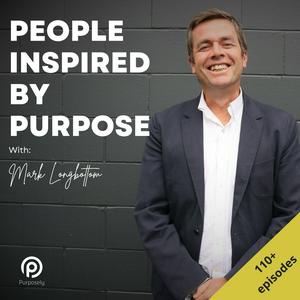
About People Inspired By Purpose - Purposely Podcast
Speaking with people of purpose, those making the world a better place
People Inspired By Purpose - Purposely Podcast amplifies the stories of inspirational people from across the Globe, philanthropy leaders, founders and CEO's of nonprofits, charities, for purpose business leaders as well social entrepreneurs. They are often inspired by their own experiences.
Join the Purposely team www.purposelypodcast.com
Podcast websiteListen to People Inspired By Purpose - Purposely Podcast, Prof G Markets and many other podcasts from around the world with the radio.net app
Get the free radio.net app
- Stations and podcasts to bookmark
- Stream via Wi-Fi or Bluetooth
- Supports Carplay & Android Auto
- Many other app features
Get the free radio.net app
- Stations and podcasts to bookmark
- Stream via Wi-Fi or Bluetooth
- Supports Carplay & Android Auto
- Many other app features

People Inspired By Purpose - Purposely Podcast
Scan code,
download the app,
start listening.
download the app,
start listening.
 Ireland