
Listen to this podcast in the app for free: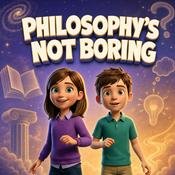 Download for free in the App Store
radio.net
Sleep timer
Save favourites
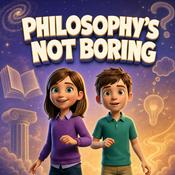
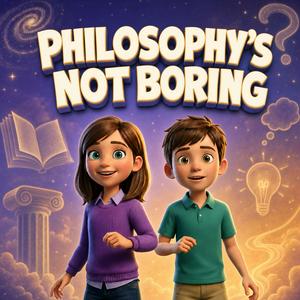
Philosophy for Kids / Philosophy's Not Boring: The Kids Philosophy Podcast
Kidopoly
Latest episode
101 episodes
Why do we pick sides?
01/11/2026 | 11 mins.Have you ever been on the playground and suddenly found yourself in an intense game of "sneakers versus boots"? Why do our brains pick sides so incredibly fast, even over silly, meaningless things? In this mind-bending episode of Philosophy is Not Boring, Mira and Finn uncover the hidden secrets of how humans form groups! First, we travel back to 1970 to meet researcher Henri Tajfel. He discovered that kids would form fiercely loyal teams over something as tiny as picking between two abstract paintings—even if they never actually met their teammates! It gets even wilder when we learn that people will sometimes give up a good deal just to make sure the "other team" loses. But wait, can we stop a rivalry once it starts? Yes! We explore a famous 1954 summer camp experiment called Robbers Cave, where two rival groups of kids learned to get along. How did they do it? By fixing a broken water supply and pulling a heavy food truck out of the mud together! Join us to find out how a shared problem (and a round of milkshakes!) can turn bitter enemies into fast friends!What is Halloween?
31/10/2026 | 10 mins.Get ready to uncover the ultimate mystery of spooky season! Have you ever wondered why we celebrate Halloween on October 31st, or why it is called Halloween in the first place? Join Mira and Finn on Philosophy is Not Boring as they travel back in time to discover the secret history of this famous holiday! It turns out, Halloween comes from an old phrase meaning All Hallows' Eve, the night before the Christian holiday of All Saints' Day. But the story goes back even further! Thousands of years ago, the ancient Celts celebrated a festival called Samhain, where they believed the boundary between the living and spirit worlds grew super thin. From inviting ancestors to dinner, to lighting paper lanterns in Japan for the summer festival of Obon, to building beautiful marigold-covered altars for Mexico's Day of the Dead, people all over the world have incredible ways to remember loved ones! Discover why remembering someone is an amazing superpower, how traditions stack on top of each other, and why death doesn't mean someone stops being part of your family. Hit play and let's explore the beautiful magic of memories!Who was Ibn Sina?
30/10/2026 | 11 mins.Have you ever tried to feel absolutely nothing? It’s almost impossible! You can always feel your toes in your shoes or hear your own heartbeat. But what if you couldn't? Join Mira and Finn on a mind-bending journey back to the early 1000s to meet a brilliant Persian doctor and philosopher named Ibn Sina! During the Islamic Golden Age, Ibn Sina created one of the most famous and spooky thought experiments in history: The Floating Man. Imagine a man created in a single instant, floating in total darkness, with no memories and absolutely no way to feel his own physical body. Would he still know that he exists? Ibn Sina said yes! This wild puzzle proved that our minds, or our "selves," are completely different from our physical bodies. It even inspired the famous philosopher René Descartes to declare, "I think, therefore I am" over 600 years later! Tune in to discover why you are so much more than just a pile of bones and muscles, and explore the ultimate magic of the human mind!How did babies count?
29/10/2026 | 11 mins.Have you ever wondered what is going on inside a tiny baby's head? Do they only know how to sleep, cry, and eat snacks, or are their brains already working super hard? For a long time, famous thinkers believed babies were born with a "blank slate"—like an empty computer with zero programs installed! But in 1992, a scientist named Karen Wynn at the University of Arizona decided to test this with a brilliant experiment. She created a tiny puppet stage with colorful toys to see if five-month-old babies could actually do math! But how do you give a math test to someone who can't even hold a pencil? With a sneaky magic trick! Using a hidden trap door, researchers secretly took a toy away. When the screen dropped, one plus one suddenly equaled one! The babies were so surprised that they stared for a super long time! Does this mean we are all born with a built-in math calculator in our brains, or were the babies just tracking their toys? Join Mira and Finn as we dive into this amazing mystery, discover ancient Roman pebbles, and find out if tiny babies are actually math geniuses!Who was John Stuart Mill?
28/10/2026 | 10 mins.Have you ever wanted to eat a whole gallon of double chocolate fudge ice cream for dinner and thought, 'It's my body, it's my choice!'? Well, get ready to test that idea! Travel back to 1859 England to meet a super-smart philosopher named John Stuart Mill. He was a certified genius who started learning Ancient Greek when he was just three years old! When he grew up, he wrote a famous book called 'On Liberty' and came up with one giant rule for the world: The Harm Principle. This rule says you should be allowed to do whatever you want, as long as you aren't hurting anyone else! Sounds awesome, right? But wait... what actually counts as 'harm'? If you play the drums at 3 AM and make your neighbors grumpy, is that causing harm? What if your bad choices make your family sad? Join Mira and Finn as they untangle the invisible spiderweb of human connection, discover what 'experiments in living' are, and learn why this famous rule doesn't actually apply to kids!
More Education podcasts




Trending Education podcasts














About Philosophy for Kids / Philosophy's Not Boring: The Kids Philosophy Podcast
A groundbreaking podcast for curious kids aged 4-12, and the grown-ups listening with them, that proves philosophy, psychology and religion are anything but dull.Join our fictional AI hosts Mira, a brilliant 9-year-old, and her younger brother Finn, age 7, as they explore philosophy, psychology and religion as one big family of questions about how we make sense of things. Each episode takes a real thinker or idea seriously, from what makes you the same person you were as a baby to why people across the world believe such different things about the soul, and then lands it somewhere in your actual life.We don't hand you the answer and move on. Some questions have one; some have several worth comparing; some nobody has ever settled, and we'll tell you which is which. On matters of faith we stay even-handed: we describe what people believe from the outside, and never tell you what to believe yourself. Because philosophy isn't a pile of hard words to memorize. It's learning to ask a better question, and to sit with it honestly, even when it's uncomfortable.A note on why we use AI. For us, AI allows us to deliver learning at a scale and quality that previously would have been too expensive. If we make the odd technical error, or the sound goes a bit funny, bear with us, we're trying our best. We hope you enjoy the show!
Podcast websiteListen to Philosophy for Kids / Philosophy's Not Boring: The Kids Philosophy Podcast, On Healing and many other podcasts from around the world with the radio.net app
Get the free radio.net app
- Stations and podcasts to bookmark
- Stream via Wi-Fi or Bluetooth
- Supports Carplay & Android Auto
- Many other app features
Get the free radio.net app
- Stations and podcasts to bookmark
- Stream via Wi-Fi or Bluetooth
- Supports Carplay & Android Auto
- Many other app features
Philosophy for Kids / Philosophy's Not Boring: The Kids Philosophy Podcast
Scan code,
download the app,
start listening.
download the app,
start listening.
Philosophy for Kids / Philosophy's Not Boring: The Kids Philosophy Podcast: Podcasts in Family
 Ireland

