
Listen to this podcast in the app for free: Download for free in the App Store
radio.net
Sleep timer
Save favourites
The Leading Edge in Emotionally Focused Therapy
theleadingedgeineft
Latest episode
100 episodes
148. Somatic Cues, Caregiving Instincts: Finding the Heart of Tango Move Four
29/09/2026 | 28 mins.Welcome to the Leading Edge in Emotionally Focused Therapy, hosted by Drs. James Hawkins, Ph.D., LPC, and Ryan Rana, Ph.D., LMFT, LPC—Renowned ICEEFT Therapists, Supervisors, and Trainers. We're thrilled to have you with us. We believe this podcast, a valuable resource, will empower you to push the boundaries in your work, helping individuals and couples connect more deeply with themselves and each other.
How can therapists help a partner respond to vulnerability without supplying the “right” answer? In this episode, Dr. James Hawk and Dr. Ryan Rana explore how to use somatic cues in EFT’s Tango Move Four to invite the caregiving system forward. They discuss why broad questions can sometimes lead a partner away from the other person’s pain, how noticing a shaky voice or tear can open a more embodied response, and why clients’ own instincts matter. The conversation also returns to a central balance: nuance matters, but it must serve attunement.
Top 10 takeaways
Start with attunement. The best intervention depends on what just happened and what the clients are experiencing in that moment.
Use somatic questions when the vulnerability is deep. A shaky voice, tears, or visible hesitation may offer a meaningful opening to the caregiving partner.
Make the partner’s pain specific. Naming what the caregiver just saw or heard can help focus attention on their partner’s experience.
Broad questions can open the wrong door. “What came up for you?” may lead someone into their own story or attachment needs rather than toward their partner’s pain.
Invite, don’t prescribe. Asking what a partner notices in their body—and what that sensation might be urging them to do—can help uncover their own response.
Trust clients’ innate capacity to care. The goal is to help clients reconnect with an existing instinct, not to install a therapist-provided script.
Organic responses can build trust. A response that comes from the partner may feel more genuine and sustainable than one they were coached to deliver.
Be patient with a blocked or hesitant response. Curiosity, validation, and repeated invitations may help a caregiver notice what is happening inside.
Help both partners register the moment. When care is offered and received, slow down to explore its impact on each person.
Balance nuance with attunement. Technique can sharpen the work, but over-focusing on technique—or relying on attunement without enough clinical options—can miss opportunities.
We aim to equip therapists with practical tools and encouragement for addressing relational distress. We're also excited to be part of the team behind Success in Vulnerability (SV)—your premier online education platform. SV offers innovative instruction to enhance your therapeutic effectiveness through exclusive modules and in-depth clinical examples.
Stay connected with us:
Facebook: Follow our page @pushtheleadingedge
Ryan: Follow @ryanranaprofessionaltraining on Facebook and visit his website
James: Follow @dochawklpc on Facebook and Instagram, or visit his website at dochawklpc.com
George Faller: Visit georgefaller.com
If you like the concepts discussed on this podcast you can explore our online training program, Success in Vulnerability (SV).
Thank you for being part of our community. Let's push the leading edge together!147. Brave Love, Great Sex: Bringing the Emotional and Sexual Cycles Together with Dr. Laurie Watson
21/09/2026 | 38 mins.What happens when one partner needs emotional connection before sex, while the other experiences sex as one of the primary ways they feel emotionally connected?
Too often, couples—and even therapists—get caught trying to decide which need should come first. In this episode, Dr. James Hawkins sits down with Dr. Laurie Watson, coauthor of Brave Love, Great Sex, for a rich conversation about why the emotional and sexual bonds in romantic relationships cannot be separated.
Laurie explains how couples can become caught in two interconnected pursue-withdraw cycles: an emotional cycle and a sexual cycle. One partner may pursue emotionally while withdrawing sexually, while the other withdraws emotionally but reaches for connection through sex. Underneath both are familiar attachment questions: Do you want me? Do I matter to you? Will you respond to me? Am I safe needing you?
James and Laurie explore how attachment history, childhood experiences with touch, body image, sexual functioning, anxiety, shame, and vulnerability can all shape what happens between partners in the bedroom. They also discuss why sexual withdrawal is not simply a lack of desire and sexual pursuit is not simply wanting more sex—both can be attempts to manage deeply vulnerable relational needs.
Link to Brave Love Great Sex Podcast
Amazon Link for Brave Love Great Sex Book
Welcome to the Leading Edge in Emotionally Focused Therapy, hosted by Drs. James Hawkins, Ph.D., LPC, and Ryan Rana, Ph.D., LMFT, LPC—Renowned ICEEFT Therapists, Supervisors, and Trainers. We're thrilled to have you with us. We believe this podcast, a valuable resource, will empower you to push the boundaries in your work, helping individuals and couples connect more deeply with themselves and each other.
In this episode of Push the Leading Edge, Dr. James Hawk and Dr. Ryan Rana explore a powerful clinical question: What if, instead of always trying to get underneath protection, we slowed down and worked with it?
Drawing from live sessions with George Faller and their own case work, they unpack how repetitive, honoring validation of protective moves can transform “stuck” couples—especially long-term pairs who have been looping in the same rigid patterns for years.
You’ll hear how protection shows up in withdrawers and pursuers, why it’s more than “resistance,” and how treating protection as a pathway rather than a problem can unlock embodied emotion, reshape shame, and open the door for more organic Stage 2 work.
Top Ten Learning Points
Protection is a doorway, not just a barrier.
Protection (withdrawal, criticism, task-focus, etc.) can be a direct entry point into attachment longings and fears, not just something to get past.
TEMPO as a multi-door model.
TEMPO (Trigger, Emotion, Meaning, Protection) is like a car with four doors; you don’t always have to enter through “E” (emotion)—you can enter through P: protection and still reach the heart.
Rounds and rounds of validation change the nervous system.
George’s method involves extended, layered validation of protection (20–30 minutes), not just a quick nod.
This repeated honoring of the positive intent behind protection visibly reduces pressure and invites live emotion to surface naturally.
Protection is emotional dysregulation, not just “defensiveness.”
Protective moves are embodied dysregulation driven by fear, shame, and threat—not a character flaw.
People often hate the very protections they defend and feel deeply ashamed about them.
Protection serves at least four functions at once.
It protects self,
protects partner,
protects the relationship system,
and preserves a sense of basic safety (e.g., “If I don’t do this, we might lose the family/us”).
Long-term couples are running habits, not conscious choices.
After 7+ years of distress, partners often don’t even know they’re doing their protection move—it’s become automatic, like breathing.
A single powerful enactment doesn’t automatically undo years of patterned protection.
Deep validation reshapes the observing partner’s view.
When one partner’s protection is validated in detail, the other partner gets a front-row, re-framed view of behavior they previously only experienced as hurtful.
This can shift, “You’re just being critical/checked out” into, “Oh, this is your way of trying to protect us and not give up on us.”
You must deal with what’s on top before you earn what’s underneath.
If therapists say, “I want to get underneath that,” but never really work with the protection, they often get blocked.
You “earn the right” to deeper vulnerability by regulating and honoring what’s on top (the protection) first.
This approach especially helps withdrawers, pursuers, and concrete thinkers.
Withdrawers: feel seen in their performance, tasking, and “keeping the peace” superpowers, instead of constantly being pushed to “do more emotion.”
Pursuers: finally have their energy named as a protective, committed force rather than “too much” or “critical.”
Clients wary of emotion / neurodivergent / highly concrete: protection-focused work feels practical and tangible, less abstract than pure emotion work.
Protection work can set up a more organic Tango.
George often spends a long time in Tango 1–2 space around protection—tracking, reflecting, and deepening.
Once protection is truly validated and regulated, emotion tends to emerge organically, making Tango 2–3–4 smoother and more authentic, rather than forced.
For EFT therapists, the episode offers a direct challenge: we already know how to track cycles, explore meaning, evoke emotion, and create new conversations—now we need the courage to bring those same skills into the sexual relationship.
This is a conversation about helping couples develop the courage to open their hearts emotionally and sexually, creating the possibility for both brave love and great sex.
A Core Line for the Episode
Great sex and brave love are not two separate destinations. Emotional and sexual vulnerability can strengthen one another when partners learn to reach, respond, and remain present in both systems.
Top Ten Takeaways
1. Emotional intimacy and sexual intimacy are reciprocal systems.
Treating sex and emotional attachment as separate domains can cause therapists to miss how strongly each influences the other. Couples have multiple pathways toward experiencing security and connection.
2. Couples can become trapped in a “you go first” standoff.
One partner may essentially say, “Connect with me emotionally and then I can open sexually,” while the other says, “Connect with me sexually and then I can feel emotionally close.” Both partners wait for the other to make the first vulnerable move.
3. Couples may have two different pursue-withdraw cycles operating simultaneously.
A person can be an emotional pursuer and sexual withdrawer—or an emotional withdrawer and sexual pursuer. The emotional and sexual positions do not necessarily line up.
4. Sexual behavior carries attachment meaning.
A sexual reach can communicate, “Do you desire me? Will you choose me? Am I important to you?” A missed response can therefore register in the nervous system as much more than simply not having sex.
5. Attachment history matters, but it does not explain everything about sexuality.
Attachment strategies influence how people approach relationships and sex, but hormones, trauma, early sexual experiences, family messages, body experiences, and other developmental factors also shape the sexual system.
6. Sexual withdrawal deserves curiosity rather than judgment.
Pulling away from sex may protect someone from profound vulnerability. A history of insufficient or unsafe touch can make needing physical closeness feel frightening rather than comforting.
7. Sexual pursuit is often about more than sex.
The sexual pursuer may be reaching for reassurance, desirability, closeness, affirmation, or embodied connection. Anxiety about whether the partner will respond can intensify pursuit, just as it does in an emotional cycle.
8. EFT therapists already possess many of the skills needed to explore sexuality.
Questions such as “What happened inside when your partner responded that way?” “What did that mean about you?” and “What did you need in that moment?” translate naturally from emotional-cycle work into sexual-cycle work.
9. Slow the sexual experience down frame by frame.
Therapists can explore not only thoughts and emotions but physiological responses: arousal, loss of arousal, erection, orgasm, touch, tension, and bodily shutdown. Then help partners communicate what is happening rather than silently interpreting one another.
10. Therapist discomfort should not leave couples alone with one of their most vulnerable struggles.
Therapists may worry that talking explicitly about sex is intrusive, inappropriate, or voyeuristic. Laurie’s challenge is to remain gentle, respectful, and specific rather than avoiding the subject altogether. Couples often need help developing language for experiences they have been unable to discuss anywhere else.
We aim to equip therapists with practical tools and encouragement for addressing relational distress. We're also excited to be part of the team behind Success in Vulnerability (SV)—your premier online education platform. SV offers innovative instruction to enhance your therapeutic effectiveness through exclusive modules and in-depth clinical examples.
Stay connected with us:
Facebook: Follow our page @pushtheleadingedge
Ryan: Follow @ryanranaprofessionaltraining on Facebook and visit his website
James: Follow @dochawklpc on Facebook and Instagram, or visit his website at dochawklpc.com
George Faller: Visit georgefaller.com
If you like the concepts discussed on this podcast you can explore our online training program, Success in Vulnerability (SV).
Thank you for being part of our community. Let's push the leading edge together!145. Adult Attachment in Three Hats: Translating Bonding Science for the Therapy Room and Beyond
12/08/2026 | 40 mins.Welcome to the Leading Edge in Emotionally Focused Therapy, hosted by Drs. James Hawkins, Ph.D., LPC, and Ryan Rana, Ph.D., LMFT, LPC—Renowned ICEEFT Therapists, Supervisors, and Trainers. We're thrilled to have you with us. We believe this podcast, a valuable resource, will empower you to push the boundaries in your work, helping individuals and couples connect more deeply with themselves and each other.
In this episode, James and Ryan unpack a simple but powerful metaphor for adult romantic bonds: the red hat (emotional system), blue hat (caregiving system), and purple hat (sexual system). Drawing on attachment science from Phil Shaver, Mario Mikulincer, and Sue Johnson, they show how these three behavioral systems interact in-session and at home—and why you “can’t red-hat your way into connection.” You’ll hear vivid clinical examples, live-process reflections, and practical language you can bring straight to your couples, helping them see their cycle, name their hats, and take the first small blue-hat risks that change everything.
1. The Three Behavioral Systems = Three Hats
Red Hat = Emotional System
The hardwired system that signals inner experience—distress, pain, longings—outward.
“Red” is not bad; it’s the channel for “something is happening in me; I need you to see it.”
Blue Hat = Caregiving System
The instinct to turn toward another’s distress: to be accessible, responsive, and engaged.
In EFT terms, this is the responsive other—and it’s what actually creates and maintains bond.
Purple Hat = Sexual System
The system driving touch, pleasure, and erotic connection in adult romantic bonds.
Not an “add-on” after emotions are fixed, but a co-equal system that interacts with red and blue.
2. You Can’t “Red-Hat” Your Way into Connection
When both partners stay in red, they’re each sending signals but no one is picking up the phone.
That red‑vs‑red pattern feels like:
competing for whose pain “counts,”
chronic explaining, convincing, and defending,
more loneliness after talking than before.
Without at least a little blue hat, the bond cannot form or repair—no matter how much content is shared.
3. The Blue Hat Is Vulnerable Work—for Clients and Clinicians
Putting on the blue hat requires a yielding move (Jim Coan’s language):
setting your own swirl aside for a moment,
letting the other’s pain actually touch you,
allowing yourself to be impacted and guided by their inner world.
For many partners (especially withdrawers), caregiving is wired to feel like a set-up for failure:
“Every invitation is just another chance to get it wrong.”
They often pull their heart back to protect against repeated failure.
As a therapist or coach, you are meant to wear the blue hat for everyone in the room:
If your compassion goes offline for one partner, the cycle has pulled you into red.
Your temporary blue hat often “bridges” when a partner can’t yet offer that responsiveness.
4. Red, Blue, and Purple Are Interlocking Cogs, Not a Straight Line
Traditional framing: fix the emotional system first, and the sexual system will naturally follow.
This episode offers a more mutual, systemic view:
Secure emotional connection supports satisfying sexual connection.
Blocked or painful sexual dynamics also make emotional safety harder.
Deep, responsive sexual moments can reinforce emotional security, and vice versa.
Think of the systems as interlocked gears: when one jams (emotion, caregiving, or sex), the others feel the strain.
5. Simple Metaphor, Heavy Theory Behind It
The hat model is a front-door metaphor for clients that quietly carries:
attachment research (5,000+ studies),
Shaver & Mikulincer’s work on adult bonding systems,
Sue Johnson’s emphasis on responsiveness as the core of love.
Instead of teaching full attachment theory to clients who “can’t even sit on the same couch,” you:
offer two or three hats they can remember in the heat of the moment,
help them name when they’re switching hats, and
anchor micro-interventions: “Right now, everyone has the red hat on. Who can risk 1% of a blue hat?”
6. Seeing the Cycle = Regaining Choice
Clients cannot change what they cannot see; “hats” give them a shared language to see it.
Therapists can track:
When red turns from “open red” (vulnerable sharing) into “shadow red” (mistrust, blame, vague signals).
When a partner briefly has a blue hat on and then flips back into red.
When sexual bids (purple) are met with blue (healing) vs met with red (rejection, mistrust).
Even a 1% blue-hat response (e.g., “I can see how hard that is for you”) can be enough to create real hope.
7. Beyond the Couch: A Call for More Blue Hats in the Culture
The same red‑vs‑red dynamic shows up at the societal level:
“My red hat is bigger/more legitimate than your red hat.”
Lots of pain, very few reliable blue hats.
The episode frames EFT and attachment science as world-facing work:
inviting more blue‑hat moments in communities, justice spaces, and public conversations,
honoring community leaders who quietly build learning communities that increase quality of care everywhere.
We aim to equip therapists with practical tools and encouragement for addressing relational distress. We're also excited to be part of the team behind Success in Vulnerability (SV)—your premier online education platform. SV offers innovative instruction to enhance your therapeutic effectiveness through exclusive modules and in-depth clinical examples.
Stay connected with us:
Facebook: Follow our page @pushtheleadingedge
Ryan: Follow @ryanranaprofessionaltraining on Facebook and visit his website
James: Follow @dochawklpc on Facebook and Instagram, or visit his website at dochawklpc.com
George Faller: Visit georgefaller.com
If you like the concepts discussed on this podcast you can explore our online training program, Success in Vulnerability (SV).
Thank you for being part of our community. Let's push the leading edge together!144. Handling Distortion in Session; Without Gaslighting the Recipient
10/08/2026 | 25 mins.Welcome to the Leading Edge in Emotionally Focused Therapy, hosted by Drs. James Hawkins, Ph.D., LPC, and Ryan Rana, Ph.D., LMFT, LPC—Renowned ICEEFT Therapists, Supervisors, and Trainers. We're thrilled to have you with us. We believe this podcast, a valuable resource, will empower you to push the boundaries in your work, helping individuals and couples connect more deeply with themselves and each other.
In this episode of The Leading Edge in EFT, James Hawkins and Ryan Reyna tackle one of the trickiest tensions in therapy: how to work with distortion and meaning-making without gaslighting your client—especially tender pursuers and highly protected withdrawers.
Using a vivid “watermelon vs. hot sauce” metaphor, they unpack what happens when one partner intends care, but the other receives danger. They explore why the brain distorts on purpose in the name of survival, how to keep honoring the client’s emotional reality, and how to redirect blame away from partners and back to the negative cycle as the true enemy.
You’ll hear a powerful reframe that replaces the potentially invalidating, “What’s the story you’re telling yourself?” with a cleaner, safer question:
“When you see Trigger X, what message does the cycle send to you about how your partner sees you?”
James and Ryan apply this lens not just to couples, but also to race, marginalization, and societal conversations, illustrating how attempts to “correct the facts” can land as gaslighting when bodies are carrying generations of threat. They share moving examples of Stage 2 and Stage 3 work where partners begin catching and correcting the cycle on their own—creating “cycle killer” moments that change everything.
If you’re an EFT therapist, trauma-informed clinician, or a partner trying to understand your own reactions, this episode will help you honor emotion, respect meaning-making, and still gently face distortion—without shaming or silencing anyone.
Top Takeaways
“Distortion” in EFT ≠ Fake or Irrational Emotion
Emotions are never irrational; they always make sense in context.
What may be “distorted” is the meaning-making or thinking, not the feeling.
Watermelon vs. Hot Sauce Metaphor
One partner offers something meant to be sweet and refreshing (watermelon).
The other experiences it as danger or attack (hot sauce).
This gap often comes from old injuries, expectations of being hurt, and the cycle, not badness in either partner.
Why “What’s the Story You Tell Yourself?” Can Feel Like Gaslighting
Although poetic, it can land as, “This is just in your head; you’re making it up.”
For pursuers especially, this repeats a long history of being told they’re “too much” or “misreading reality.”
A Safer, Cleaner Clinical Question
Instead of: “What’s the story you’re telling yourself?”
Use:
“When you see Trigger X, what message does the cycle send to you about how your partner sees you?”
This question:
Honors the client’s internal world and logic.
Externalizes the problem to the cycle, not the partner.
Protects both partners from blame and shame.
The Cycle as the Real Distorter
The negative cycle becomes the “third entity” that scrambles messages.
Seeing the cycle as the enemy helps the therapist stay out of the triangle and helps partners fight the cycle, not each other.
Expected Pain Is Real Pain (Jim Coan’s Research)
The brain responds to anticipated threat almost as if it already happened.
So even if words are technically “distorted,” the body’s reaction is real and valid.
The limbic system amplifies signals to protect, not to be dramatic.
Clinical Target: Lean Into Pain, Not Cognitive Correction
If you pivot too fast to “self-reflection” or cognitive reframe, you may move away from the raw pain where the best enactments live.
Staying with the pain supports deeper Stage 2 work and more powerful enactments.
Personal vs. Clinical Use of Self-Reflection
Personally, it’s healthy to ask, “Is this really what they meant, or is this my story?”
Clinically, putting that question on the client too soon can feel invalidating and gaslighting.
Application to Race, Marginalization, and Power
When someone names patterns of racism or marginalization, responding only with “facts” and statistics often lands as, “You’re crazy; that’s not real.”
Bodies encode generational and societal cycles, so their threat response has good reasons.
Saying, “I can see good reasons your brain codes it this way,” is deeply regulating and dignifying.
Stage 2 & Stage 3: “Cycle Killer” Moments
In de-escalated couples, partners begin to say things like:
“This might be my stuff coming up, but here’s what happens for me…”
“You don’t have to put that part of you away—let’s make space for your fear and my optimism.”
These are Stage 3 moments where partners catch and correct the cycle themselves—sometimes without therapist intervention.
Therapist Posture: Genuine Blame on the Cycle
Effective EFT therapists truly believe that “this is the cycle, not their character.”
Repeated exposure to Stage 2/3 couples reshapes the therapist’s internal frame, making it easier to hold the externalized cycle under pressure.
Therapist Self-Care and Embodiment
Therapy is hard on bodies, not just minds.
Ryan and James emphasize physical health practices (walking, gym, etc.) as non-optional for therapists.
Our bodies are the instrument we bring into the room.
From the Couch to the Culture
The same principles that de-escalate couples can transform societal conversations—about race, oppression, and power.
As Bruce Perry urges, therapists are invited to take what they witness in session and amplify it into the world
We aim to equip therapists with practical tools and encouragement for addressing relational distress. We're also excited to be part of the team behind Success in Vulnerability (SV)—your premier online education platform. SV offers innovative instruction to enhance your therapeutic effectiveness through exclusive modules and in-depth clinical examples.
Stay connected with us:
Facebook: Follow our page @pushtheleadingedge
Ryan: Follow @ryanranaprofessionaltraining on Facebook and visit his website
James: Follow @dochawklpc on Facebook and Instagram, or visit his website at dochawklpc.com
George Faller: Visit georgefaller.com
If you like the concepts discussed on this podcast you can explore our online training program, Success in Vulnerability (SV).
Thank you for being part of our community. Let's push the leading edge together!143. Stage 2 Series: “When Every Path Hurts: Getting the Most from You in Stage 2 EFT”
01/07/2026 | 30 mins.Welcome to the Leading Edge in Emotionally Focused Therapy, hosted by Drs. James Hawkins, Ph.D., LPC, and Ryan Rana, Ph.D., LMFT, LPC—Renowned ICEEFT Therapists, Supervisors, and Trainers. We're thrilled to have you with us. We believe this podcast, a valuable resource, will empower you to push the boundaries in your work, helping individuals and couples connect more deeply with themselves and each other.
In this episode, Dr. James Hawkins and Dr. Ryan Reyna walk into the heart of Stage 2 EFT and ask a hard question: How do you get the most out of YOU when every path forward involves pain?
Drawing on stories from haunted houses, combat medicine, and oncology surgery, they unpack what it means to be the stronger, wiser other—not as a top-down expert, but as a steady, emotionally present guide when clients’ eyes are begging, “Please don’t make me go there.”
You’ll hear how to:
Stay confident and regulated in deep Stage 2 work
Use your own limbic system, intensity, and presence in service of healing
Avoid “over-validating” clients out of depth
Become relentless but attuned when working with shame, trauma, and withdrawer re-engagement
Here are the top 10 points from the episode in bullet format, tailored for therapists:
Therapist consistency is heroic work
Therapists, like elite athletes or Navy SEALs, show up and train relentlessly—session after session—often without recognition, but this consistency is what makes deep Stage 2 work possible.
You are the “stronger, wiser other” in Stage 2
Borrowing from Bowlby, the therapist’s role is to be a grounded, slightly leading presence—not hierarchical, but a steady guide who believes in the clients’ capacity to go deeper.
Clients need your confidence more than your explanations
In Stage 2, detailed EFT mapping is less helpful than a calm, “I know where we’re going; we can do this together” energy.
Tone matters: gentle, invitational, and regulated—not pushy or detached.
Every real option involves pain—but not the same kind of pain
If you back away when clients say “don’t make me do this,” you protect them now but leave unregulated pain to hurt them later.
If you stay with them in the fear and shame, you create constructive, healing pain that opens the door to new patterns.
Self-coaching: what do YOU need to hear in the chair?
Therapists need internal scripts/mantras (e.g., “No one gets left behind on the battlefield”).
Drawing on mentors, attachment figures, faith, or personal values can help you stay present when you want to retreat.
Use your own limbic system—and the partner’s—to share the load
Strategic use of “we” (“We’ll go there together,” “We can face this”) helps clients feel they’re not alone.
The therapist can consciously bring their own emotional presence and the partner’s caregiving energy to bear on the hardest moments.
Relentless, attuned fighting for the client
Ryan names his intensity and even competitiveness as assets: he refuses to let the cycle “win.”
Clients often experience this as, “You fought for us more than we fought for ourselves,” which becomes contagious and regulating—as long as it stays tethered to alliance and repair.
Validation and celebration must be timed and dosed well
Over-validating or celebrating too soon can pull clients out of depth, like doing a cold plunge right after a hard muscle-building workout.
Validation should support staying with the core emotion, not remove the heat from the room prematurely.
Withdrawer re-engagement is “drip by drip” work
Ryan uses the oncologic surgery metaphor: you don’t want to close up while leaving “half the tumor” (unworked shame, trauma, negative self-views) inside.
Stage 2 requires repetition and reps—going back into the “torture chamber” scenes multiple times so the body learns, “I don’t have to do this alone anymore.”
Homework: study your A-game and your use of self
Notice what you do when you’re at your best: your presence, nonverbals, timing, intensity, or way of breathing/pausing.
Ask: How am I regulating me? How am I using me as the tool?
Then intentionally amplify those strengths and clarify what needs adjustment (e.g., less rescuing, more tolerating pain, smarter use of validation).
We aim to equip therapists with practical tools and encouragement for addressing relational distress. We're also excited to be part of the team behind Success in Vulnerability (SV)—your premier online education platform. SV offers innovative instruction to enhance your therapeutic effectiveness through exclusive modules and in-depth clinical examples.
Stay connected with us:
Facebook: Follow our page @pushtheleadingedge
Ryan: Follow @ryanranaprofessionaltraining on Facebook and visit his website
James: Follow @dochawklpc on Facebook and Instagram, or visit his website at dochawklpc.com
George Faller: Visit georgefaller.com
If you like the concepts discussed on this podcast you can explore our online training program, Success in Vulnerability (SV).
Thank you for being part of our community. Let's push the leading edge together!
More Education podcasts







Trending Education podcasts
























About The Leading Edge in Emotionally Focused Therapy
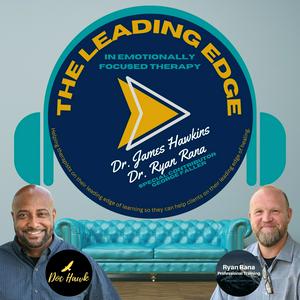
Helping therapists on their leading edge of learning so they can help clients on their leading edge of healing. In each episode, we try to focus on parts/moments of the counseling experience through the lens of Emotionally Focused Therapy, developed by Sue Johnson. We share how we are being pushed in our growth process and things we are learning from our clients in their growth process. We are also thankful for the many EFTSupervisors and Trainers who share their learning nuggets with us to pass on to you. We invite you into a brave space as we all push our leading edges of learning and healing.
Podcast websiteListen to The Leading Edge in Emotionally Focused Therapy, The Mel Robbins Podcast and many other podcasts from around the world with the radio.net app
Get the free radio.net app
- Stations and podcasts to bookmark
- Stream via Wi-Fi or Bluetooth
- Supports Carplay & Android Auto
- Many other app features
Get the free radio.net app
- Stations and podcasts to bookmark
- Stream via Wi-Fi or Bluetooth
- Supports Carplay & Android Auto
- Many other app features

The Leading Edge in Emotionally Focused Therapy
Scan code,
download the app,
start listening.
download the app,
start listening.
 Ireland

