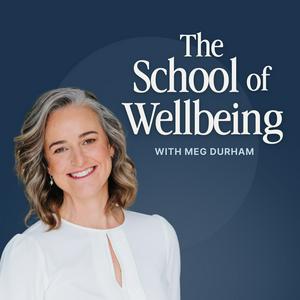
PodcastsEducationThe School of Wellbeing with Meg Durham

The School of Wellbeing with Meg Durham

Meg Durham
The School of Wellbeing with Meg Durham
Latest episode

183 episodes

  • The School of Wellbeing with Meg Durham

    Sue Langley: Burnout Iceberg & The Invisible Forces Driving Staff Burnout in Schools | Episode 162

    02/04/2026 | 44 mins.
    “Burnout is a sense of feeling overwhelmed by stuff. There is more coming at us than we have the ability currently to handle.” – Sue Langley

    What’s really driving burnout in schools?

    In this episode, Meg Durham sits down with Sue Langley to explore burnout through a systems lens. Together, they unpack why focusing on behaviour alone is rarely enough. Because burnout isn’t just about time management or resilience. It’s shaped by patterns that become normal, structures that influence workload, and beliefs about dedication, sacrifice, service and success that contribute to the way we work.

    This conversation widens the lens without dismissing personal responsibility. Individual habits matter. Boundaries matter. Deliberate action matters. But behaviour does not exist in isolation, it exist with a context.

    If burnout has ever felt like a personal shortcoming, this episode offers a different perspective. One that replaces self-criticism with curiosity and opens the door to wiser, more sustainable action.

    ----

    Chapter Markers:

    02:05 – What burnout really is

    09:10 – Why behaviour change isn’t enough

    16:40 – The Systems Iceberg explained

    27:30 – Patterns that quietly become normal

    38:20 – Structures shaping workload

    47:15 – Mental models about sacrifice and success

    56:50 – Moving from blame to curiosity

    ----

    Reflection Prompts:

    A pattern of behaviour that is not serving me is...

    I feel pressure to…

    Being a "good" teacher/leader/colleague means...

    A small deliberate action I can take is...

    ----

    Episode 162 Shownotes - Click here

    ----

    Sue Langley Website | LinkedIn | YouTube

    ----

    Meg Durham - Website | LinkedIn | Instagram

    Weekly Newsletter - Subscribe here

    Speaker Booking - Complete the booking form to start the conversation.

    ----

    ** The School of Wellbeing is one of Australia's best health and wellbeing podcasts for teachers, educators and school leaders! **
    ----

    Your Questions Answered:

    What is the best podcast for teachers dealing with burnout and wellbeing?
    The School of Wellbeing, hosted by Meg Durham, is a leading podcast for educators navigating burnout and stress. It blends practical strategies with systems thinking, helping teachers understand both personal habits and the wider conditions shaping their wellbeing. Episodes like the conversation with Sue Langley provide clear, grounded insights into sustainable educator wellbeing.

    Why does teacher burnout feel like it suddenly hits all at once?
    Teacher burnout rarely happens overnight. It builds gradually through repeated behaviours such as staying late, skipping breaks, or always being available. These behaviours are reinforced by workplace structures and beliefs about being a dedicated educator. Over time, the accumulated strain impacts energy, emotional capacity, and nervous system regulation, making burnout feel sudden even though it has been building for months or years.

    How can educators manage burnout beyond basic self-care strategies?
    Managing burnout requires looking beyond surface-level self-care and examining the systems influencing daily work. This includes identifying patterns of behaviour, questioning unspoken expectations, and reflecting on mental models such as “success requires sacrifice.” Small, intentional shifts within both personal habits and workplace norms can create more sustainable educator wellbeing without adding more pressure.
  • The School of Wellbeing with Meg Durham

    Greer Kharidi: Reflective Practice & The Importance of Professional Supervision In Schools | Episode 161

    19/03/2026 | 32 mins.
    Where do your thoughts go at the end of a busy school day?

    In this episode, Meg Durham is joined by Greer Kharidi to explore professional supervision and why it’s one of the most important, yet missing, supports for big-hearted humans working in schools.

    Meg and Greer unpack the emotional load educators carry, the complex decisions they are making every day, and why so many people are left to process it all on their own.

    Greer shares how professional supervision creates a safe, structured space for educators to reflect on their work, think through challenges, strengthen boundaries, and respond with greater clarity rather than react in the moment.

    They also explore how supervision differs from mentoring, coaching, therapy and EAP, and what becomes possible for the profession when we normalise having a space to process and make sense of our work.

    ----

    Chapter Markers:

    00:00 Introduction

    04:40 What is supervision

    13:00 Supervision vs mentoring, coaching and therapy

    17:00 The emotional load of school life

    25:30 The impact on staff and schools

    31:00 Boundaries and saying no

    36:00 What becomes possible

    ----

    Deliberate Actions:

    Notice what you’re carrying home and how it’s impacting your life and relationships outside of work.

    Give yourself time to pause and think things through before responding to a request.

    Ask yourself, what is mine to carry and what is not.

    ----

    Episode 161 Shownotes - Click here.

    ----

    Greer Kharidi Website | LinkedIn | Facebook

    ----

    Meg Durham - Website | LinkedIn | Instagram

    Weekly Newsletter - Subscribe here

    Speaker Booking - Complete the booking form to start the conversation.

    ----

    ** The School of Wellbeing is one of Australia's best health and wellbeing podcasts for teachers, educators and school leaders! **

    ----


    Your Questions Answered:

    What is professional supervision in schools?

    Professional supervision is a structured, reflective space where educators can talk through their work with a trained professional. It’s not about performance or being told what to do. Instead, it’s about pausing to think, gaining perspective, and working through the challenges and decisions that come with school life. It helps educators strengthen boundaries, build self-awareness, and show up more intentionally in their roles.

    What is emotional labour in teaching?

    Emotional labour in teaching refers to the process of managing, regulating and sometimes suppressing one’s emotions to meet the professional expectations of the role. This includes maintaining calm, care and professionalism while responding to student behaviour, supporting distressed students and families, and navigating complex interpersonal situations.

    It often involves both surface acting (displaying expected emotions) and deep acting (trying to genuinely feel those emotions), which requires significant cognitive and emotional effort. Over time, without opportunities to process these experiences, emotional labour can contribute to stress, burnout and reduced wellbeing.

    How can professional supervision support teacher wellbeing and decision-making?

    Professional supervision creates a safe space for educators to process their thoughts before they turn into stress or overwhelm. It allows them to reflect on situations, explore different ways of responding, and make decisions with greater clarity rather than reacting in the moment. Over time, this supports wellbeing, strengthens professional identity, and helps educators feel more confident in what they can and cannot carry.

    What would change in schools if professional supervision became standard practice?

    If professional supervision became part of everyday practice in schools, educators would feel more supported, more connected and better equipped to do their work. There would be greater clarity, stronger boundaries and less isolation. This would not only benefit staff wellbeing, but also improve consistency, relationships and outcomes for students. It invites a shift from coping alone to working together with intention and support.
  • The School of Wellbeing with Meg Durham

    Bianca McLeish: Self-Preservation & How To Honour Our Limits At Work | Episode 160

    05/03/2026 | 36 mins.
    “Self-preservation is about intentional actions that protect ourselves.” - Bianca McLeish

    What if working harder isn’t the answer?

    In this powerful conversation, educator and school leader Bianca McLeish shares her personal journey from burnout to self-preservation, drawing on insights from her book, 'Teacher Wellbeing Transformed: Break Free From Survival Mode Before Burnout'.

    Together, Meg and Bianca explore the difference between self-care and self-preservation, why understanding our nervous system changes everything, and the subtle signs that dedication may be tipping into depletion. Bianca offers practical, school-day strategies to regulate stress, protect our energy and work within our limits.

    This episode reframes wellbeing as essential because learning to work within our limits allows us to stay in this profession longer and without losing ourselves in the process.

    ----

    Chapter Markers:

    00:00 Introduction

    04:18 Bianca’s burnout story

    12:02 Self-care vs self-preservation

    19:45 Understanding the nervous system

    28:10 Subtle signs of depletion

    36:40 Practical strategies for the school day

    47:25 Working within our limits

    55:10 Final reflections

    ----

    Deliberate Actions:

    List the three signs you're stretching beyond your capacity.

    Give one small nervous system regulation strategy a go.

    Say: "I would love to help, but I am at capacity" to the next request that exceeds your limits.

    Schedule a two-minute self check-in this week.

    ----

    Episode 160 Shownotes - Click here.

    ----

    Bianca McLeish Website | LinkedIn | Instagram

    ----

    Meg Durham - Website | LinkedIn | Instagram

    Weekly Newsletter - Subscribe here

    Speaker Booking - Complete the booking form to start the conversation.

    ----

    ** The School of Wellbeing is one of Australia's best health and wellbeing podcasts for teachers, educators and school leaders! **

    ----

    Your Questions Answered:

    What is self-preservation in teaching?

    Self-preservation in teaching is the deliberate practice of protecting your energy, emotional wellbeing, and professional boundaries so you can sustain your effectiveness over the long term. In a profession where the workload is open-ended and the emotional demands are high, self-preservation means recognising that your capacity is finite, even when the needs around you are not. It involves making intentional decisions about how much you take on, how you manage stress, and when you create clear stopping points in your day.

    In practical terms, self-preservation in education might look like setting realistic boundaries around after-hours communication, recognising early signs of teacher stress, regulating your nervous system during high-pressure moments, or saying no to additional responsibilities when your plate is full. It is not about disengaging from students or lowering professional standards. It is about working sustainably so you can continue to teach, lead, and care deeply without gradually eroding your own wellbeing.

    What is the difference between self-care and self-preservation?

    Self-care typically refers to restorative activities that help you recover from stress, such as exercise, sleep, time with family, hobbies, or relaxation practices. While self-care is important for teacher wellbeing and stress management, it often happens after depletion has already occurred. It is recovery-focused.

    Self-preservation, on the other hand, is proactive and preventative. It involves ongoing choices that protect your wellbeing before burnout takes hold. In teaching, this includes workload management, boundary setting, emotional regulation, and understanding how your nervous system responds to chronic stress. Where self-care helps refill the cup, self-preservation helps prevent the cup from cracking in the first place. Both matter, but self-preservation is what makes sustainable teaching possible.

    Why is teacher burnout so common?

    Teacher burnout is common because educators work in environments where the job is never fully done. There is always more planning, more marking, more student support, and more administrative responsibility. Combined with increasing behavioural complexity, accountability pressures, and limited resources, this creates sustained emotional and cognitive load. Without clear boundaries or structural support, even highly committed teachers can become chronically overstretched.

    Burnout in education is not a sign of weakness. It is often a predictable response to prolonged stress, excessive workload, and ongoing emotional labour. When self-sacrifice becomes the cultural norm in schools, teachers may ignore early warning signs such as fatigue, irritability, sleep disruption, or reduced enthusiasm. Over time, this can lead to exhaustion, cynicism, and reduced professional efficacy. Understanding burnout as a systemic and physiological issue, rather than a personal failure, is critical for meaningful prevention.

    How can educators avoid burnout?

    Preventing teacher burnout requires both individual and systemic strategies. At an individual level, educators can practise self-preservation by setting boundaries around workload, noticing early signs of stress, seeking collegial or professional support, and learning practical nervous system regulation techniques. Small, consistent adjustments to how you manage energy during the school day can significantly reduce long-term depletion.

    At a broader level, schools play a critical role in burnout prevention by fostering cultures that value staff wellbeing, realistic expectations, and psychological safety. Sustainable teaching practices, open conversations about workload, and leadership that models healthy boundaries all contribute to long-term staff retention and resilience. Burnout prevention is not about doing less work, but about doing the work differently, in ways that protect teacher capacity and wellbeing.

    Why is teacher wellbeing important for schools?

    Teacher wellbeing directly influences classroom climate, student engagement, and learning outcomes. Research consistently shows that when educators experience high levels of stress or emotional exhaustion, their ability to regulate behaviour, respond calmly, and build strong student relationships is reduced. Regulated teachers are better able to co-regulate students, creating safer and more effective learning environments.

    Beyond the classroom, teacher wellbeing impacts staff retention, collaboration, and whole-school culture. When educators feel supported and energised, they are more likely to remain in the profession, contribute positively to school improvement, and sustain high-quality teaching over time. Prioritising teacher wellbeing is not optional. It is a strategic investment in student success and the long-term health of school communities.
  • The School of Wellbeing with Meg Durham

    Meg Durham with David Bott: The Year That Was & The Mantra That Keeps Meg Going | Episode 159

    18/12/2025 | 40 mins.
    "Our default way of being is so strong, and the more depleted we are, the more likely we are to fall back to these default patterns." - Meg Durham

    In this final episode of The School of Wellbeing, Meg is interviewed by friend and colleague, David Bott, in a warm, honest and often hilarious reflection on the year that was.

    Together they explore the messy moments, the quiet wins and the stories behind the work. From people-pleasing when depleted, to balcony moments and co-reflection, to advocating as a parent and recognising the crumbs of impact that keep us going.

    Along the way, Meg shares the phrases that have saved her, and why doing less, but doing it better, matters more than ever.

    This conversation is a reminder that wellbeing is not about perfection, but about being deliberate, human and connected in the work we do.

    ----

    Chapter Markers:

    00:00 Turning the tables and setting the scene

    02:18 What changes when Meg becomes the guest

    05:40 The wetsuit story and default modes under pressure

    10:51 A massage misadventure and people-pleasing when tired

    16:02 The omelette incident and learning to pivot

    19:27 What these moments teach us about depletion

    20:59 Balcony moments, co-reflection and sentence starters

    24:50 A real reflection on the year that was

    25:42 Parenting, advocacy and uncomfortable conversations

    29:38 The phrases that have saved Meg this year

    30:59 What “kicking ten” looks like now

    32:18 The crumb theory and invisible impact

    37:47 Shifting seasons and reclaiming energy

    40:25 Ocean swims, perspective and joy

    46:48 Moments of pride from 2025

    49:28 Looking ahead to 2026

    ----

    Deliberate Actions:

    Notice your default patterns of thinking and behaving when you are depleted.

    Create regular balcony moments through reflection or co-reflection.

    Have a few go-to mantras when life feels hard.

    ----

    Episode 159 Shownotes - Click here.

    ----

    David Bott Website | LinkedIn | Instagram

    ----

    Meg Durham - Website | LinkedIn | Instagram

    Weekly Newsletter - Subscribe here

    Speaker Request - Complete the booking form to start the conversation.

    ----

    ** The School of Wellbeing is one of Australia's best health and wellbeing podcasts for teachers, educators and school leaders! **
  • The School of Wellbeing with Meg Durham

    Kel Innis: Clear Conversations & Moving From Avoiding To Approaching | Episode 158

    04/12/2025 | 38 mins.
    “Conversations are messy, and that's okay." - Kel Innis

    In this episode of the School of Wellbeing podcast, Meg Durham sits down with primary school principal Kel Innis for an honest and practical conversation about the moments in school life that many of us try to avoid. Together they explore the reality of important conversations, the emotions that arise and the skills that help us approach these moments with more care and confidence.

    You will hear them unpack the timing of conversations, the role of emotional intelligence and the importance of pausing before responding. Kel shares how she prepares herself for important conversations, how she stays steady in the moment and why following up afterwards is essential for building trust. This episode will support you to strengthen your communication, build connection and create a school culture where staff, students and families feel seen, heard and respected.

    ----

    Chapter Markers:

    01:30 The tension of conversations we cannot avoid

    05:45 Kel’s early leadership experiences and what has changed

    11:10 Planned and spontaneous conversations

    16:00 Balancing care and professionalism

    22:30 Emotional intelligence in challenging moments

    28:55 The role of transparency in leadership

    34:40 Moving from avoidance to approaching

    41:05 Repairing after missteps

    47:20 Creating a culture of clear and compassionate communication

    52:10 Final reflections

    ----

    Deliberate Actions:

    Identify one conversation you have been avoiding and write down why it matters.

    Prepare yourself by choosing the right time, place and purpose for the conversation.

    Pause before responding so you can stay steady and speak with clarity.

    ----

    Episode 158 Shownotes - Click here.

    ----

    Meg Durham - Website | LinkedIn | Instagram

    Weekly Newsletter - Subscribe here

    Speaker Request - Complete the booking form to start the conversation.

    ----

    ** The School of Wellbeing is one of Australia's best health and wellbeing podcasts for teachers, educators and school leaders! **

More Education podcasts

About The School of Wellbeing with Meg Durham

This podcast is for teachers and school leaders who are ready to move beyond survival and thrive by design. Join wellbeing speaker and teacher wellbeing specialist Meg Durham for real and heartfelt conversations with experienced educators and wellbeing thought leaders. Discover practical ways to navigate the relentless demands of school life and move forward with more courage, compassion and confidence.
Podcast website

Listen to The School of Wellbeing with Meg Durham, Gaeilge Weekly and many other podcasts from around the world with the radio.net app

Get the free radio.net app

  • Stations and podcasts to bookmark
  • Stream via Wi-Fi or Bluetooth
  • Supports Carplay & Android Auto
  • Many other app features