
Listen to this podcast in the app for free: Download for free in the App Store
radio.net
Sleep timer
Save favourites
550 episodes
Fear of Intimacy — Why You Shut Down When Love Gets Close
20/10/2026 | 17 mins.Fear of intimacy makes you shut down, pull away, or pick a fight right when love gets close. That isn't a character defect. It's a survival strategy doing a job, and once you see the job, you can change it.
In this video I share a client's story: a hardworking, patient man at work who was hiding from his wife at home, and who kept letting things slide until she pointed them out. When he traced it back, he found the short-term emotional relief underneath every withdrawal, and the childhood that taught him he had to perform to belong.
I break it down through the Worst Day Cycle™ (Trauma, Fear, Shame, Denial), the Authentic Self Cycle™ (Truth, Responsibility, Healing, Forgiveness), and the six steps of the Emotional Authenticity Method™.
Fear of intimacy is the fear of being seen behind the survival persona. The avoidant partner builds a better-than mask to cover how small and insignificant they felt as a child, and closeness threatens to expose it.
Shutting down, withdrawing, defensiveness and detachment are attempts to soothe intolerable, unhealed pain. They give short-term emotional relief, which is why they repeat even when the long-term cost is the relationship.
Negative control is not living up to your own standards so that someone else points it out. It creates distance and a reason to pull away without ever saying no directly.
The Adverse Childhood Experiences Study began in an obesity clinic where the most successful patients kept dropping out. The weight was doing a job, and the answer was childhood.
Kenny Weiss is a relationship, communication and childhood trauma recovery specialist, ICF certified coach, and author of Your Journey to Success and Your Journey to Being Yourself.
TOPICS COVERED: fear of intimacy, intimacy issues, why do I pull away, avoidant partner, shutting down in relationships, emotional withdrawal, negative control, survival persona, childhood trauma
TIMESTAMPS
0:00 Why you shut down when love gets close
1:02 Where the pattern was learned
2:05 The better-than mask and the wall
3:15 What the avoidant is really avoiding
4:09 Not a character defect, a medication
4:58 Negative control and the distance it creates
6:30 What the research shows
7:06 My own recovery
8:42 The Worst Day Cycle™
10:44 The Authentic Self Cycle™
12:46 The six steps of Emotional Authenticity
16:08 You are not to blame
🤖 Talk to my free AI Coach: https://kennyweiss.net
🕺🏼 Schedule a Session: https://calendly.com/kennyweiss/single-session-350
📣 Client Reviews: https://bit.ly/30zFTBN
📚 My New Book: Your Journey To Being Yourself; https://amzn.to/3U1IGNZ
📚 My First Book: 'Your Journey To Success': https://amzn.to/3nfVphr
🌍 My Website: https://www.kennyweiss.net
🎓Online Masterclasses: https://thegreatnessu.com/courses
FREE childhood Assessment: https://kennyweiss.net/childhood-assessment
FREE Emotional Blueprint Quiz: https://kennyweiss.net/emotional-blueprint-quiz
🕺CONNECT WITH ME:
Heal The Hurt Weekly Podcast 🎙https://spoti.fi/46FSmAj
Instagram 📸 @kennyweiss.kw
Facebook 👥 https://www.facebook.com/kennyweiss.net
Newsletter 💌 https://geni.us/kennyweissnewsletter
#FearOfIntimacy #IntimacyIssues #AvoidantAttachment #ChildhoodTrauma #KennyWeissHow to Make Friends as an Adult: The Gas Pedal Rule
13/10/2026 | 18 mins.If making friends as an adult feels impossible, or every friendship turns into you doing all the giving, this is the one rule nobody taught you.
How to make friends as an adult starts with pacing how fast you open up, and reading what the other person does with it.
In this video I walk through a real client session: a woman who had cut off every friend she had, because every friendship became a one-way street where she listened and supported and nobody was there for her. Then the two speeds most of us default to, the Gas Pedal Rule, why a person is not their words but their actions, and the six-step process for rewiring it.
The Gas Pedal Rule for adult friendship: share a little about yourself, about five to eight miles an hour, and watch what the other person does. If they match you, you can go a little faster. If they dump their whole life story in the first hour, that is boundaryless and a red flag. If they wall off and brake to zero, that is a red flag too. Healthy connection is neither speed; it is matching.
Oversharing and walling off are the two survival personas. Slamming the gas pedal to ninety is the love addict. Staying stuck at zero is the love avoidant. Most people bounce between the two because nobody taught them there is a third speed.
A person is not their words, they are their actions. Every time we justify someone's poor actions, minimize them, excuse them, or condone them, we are in self-deception, because they have already shown us who they are and we chose to listen to their words instead.
A 2022 eye-tracking study in Behavioral Sciences found that people with avoidant attachment physically looked away from images of care and comfort, below conscious awareness. Someone can say they want closeness while their body moves the other way, which is why actions are the only thing you can measure.
The frameworks in this video: the Worst Day Cycle™ (trauma, fear, shame, denial) explains how an enmeshed childhood installed the pattern; the Authentic Self Cycle™ (truth, responsibility, healing, forgiveness) is the way out; and the Emotional Authenticity Method™ is the six-step process, including titration and Feelization, that rewires the emotional blueprint.
Kenny Weiss is a relationship, communication and childhood trauma recovery specialist, author of Your Journey to Success and Your Journey to Being Yourself, and creator of the Worst Day Cycle™, the Authentic Self Cycle™ and the Emotional Authenticity Method™.
TOPICS COVERED: how to make friends as an adult, how to make friends, oversharing, why do I overshare, adult friendship, one-sided friendship, enmeshment, love addict love avoidant, codependency recovery, emotional blueprint
TIMESTAMPS
0:00 She cut off every friend she had
0:40 The one-way street friendship
1:48 You just picked your mother
3:08 The only two speeds: floor it or wall off
4:01 The Gas Pedal Rule
6:11 A person is not their words
7:09 Friends at twenty miles an hour
7:46 Where it comes from: the Worst Day Cycle™
9:25 The Authentic Self Cycle™
10:44 The Emotional Authenticity Method™
12:48 Feelization: rewiring how you connect
13:35 Forgiveness comes on its own
🤖 Talk to my free AI Coach: https://kennyweiss.net
🕺🏼 Schedule a Session: https://calendly.com/kennyweiss/single-session-350
📣 Client Reviews: https://bit.ly/30zFTBN
📚 My New Book: Your Journey To Being Yourself; https://amzn.to/3U1IGNZ
📚 My First Book: 'Your Journey To Success': https://amzn.to/3nfVphr
🌍 My Website: https://www.kennyweiss.net
🎓Online Masterclasses: https://thegreatnessu.com/courses
FREE childhood Assessment: https://kennyweiss.net/childhood-assessment
FREE Emotional Blueprint Quiz: https://kennyweiss.net/emotional-blueprint-quiz
🕺CONNECT WITH ME:
Heal The Hurt Weekly Podcast 🎙https://spoti.fi/46FSmAj
Instagram 📸 @kennyweiss.kw
Facebook 👥 https://www.facebook.com/kennyweiss.net
Newsletter 💌 https://geni.us/kennyweissnewsletter
#makefriends #adultfriendship #oversharing #codependency #kennyweissEmotionally Immature Parents: The Wound You Can't Point To
06/10/2026 | 28 mins.Adult children of emotionally immature parents often say their childhood was fine, and still feel responsible for everyone's emotions as adults. This video explains why: an emotionally unavailable parent enmeshes a child just as surely as an overbearing one.
A client of mine cried for twenty minutes after an ordinary phone call with his ex-wife. His earliest memory of that feeling was age five, watching his mother collapse in grief. This video shows how a parent's emotional immaturity makes a child the family's emotional caretaker, and how that job gets repeated with a partner decades later.
Enmeshment is not only a parent who overshares, makes demands, or plays the victim so the child rescues them. When a parent has not developed emotional authenticity, the child feels engulfed by the parent's lack of emotional stability and takes on the job of fixing it. The child then has no time for their own emotions, because they are too busy trying to figure out mom and dad's emotions.
Childhood emotional neglect leaves no scar because nothing looked wrong. Loving a child requires attunement, which is focused emotional attention: the adult puts their own stress aside and is completely emotionally present for the child. Multitask attention is not attunement.
A 2019 study in Child Abuse and Neglect of 249 adults found that adverse childhood experiences do not produce shame directly. They first produce interpersonal sensitivity, the tendency to absorb other people's emotions, and that sensitivity then produces shame.
The Worst Day Cycle™ (trauma, fear, shame, denial) installs the emotional caretaker survival persona. The Authentic Self Cycle™ (truth, responsibility, healing, forgiveness) is the way out, and the Emotional Authenticity Method™ is the six-step practice that rewires the emotional blueprint so you can sit with someone's pain without carrying it for them.
Kenny Weiss is a relationship, communication and childhood trauma recovery specialist and the creator of the Worst Day Cycle™, the Authentic Self Cycle™ and the Emotional Authenticity Method™. He works with high-functioning, emotionally exhausted adults trapped in repeating relationship patterns.
TOPICS COVERED: adult children of emotionally immature parents, emotionally unavailable parents, enmeshment, parentification, childhood emotional neglect, attunement, emotional caretaker, survival persona, codependence recovery
TIMESTAMPS
0:00 The phone call that ended in twenty minutes of tears
0:59 Age five: watching a parent collapse
2:33 My mother wasn't that way: the denial in real time
4:22 Taken for granted, invisible, ignored
6:18 How an emotionally unavailable parent enmeshes a child
8:04 Why you can't point to the wound: attunement explained
9:53 The research: childhood adversity, sensitivity, shame
10:31 They did the best they could
12:11 My own story: the dinner nobody talked about
13:54 The Worst Day Cycle
15:01 The Authentic Self Cycle
16:26 The six steps of Emotional Authenticity
19:28 You are not broken
🤖 Talk to my free AI Coach: https://kennyweiss.net
🕺🏼 Schedule a Session: https://calendly.com/kennyweiss/single-session-350
📣 Client Reviews: https://bit.ly/30zFTBN
📚 My New Book: Your Journey To Being Yourself; https://amzn.to/3U1IGNZ
📚 My First Book: 'Your Journey To Success': https://amzn.to/3nfVphr
🌍 My Website: https://www.kennyweiss.net
🎓Online Masterclasses: https://thegreatnessu.com/courses
FREE childhood Assessment: https://kennyweiss.net/childhood-assessment
FREE Emotional Blueprint Quiz: https://kennyweiss.net/emotional-blueprint-quiz
🕺CONNECT WITH ME:
Heal The Hurt Weekly Podcast 🎙https://spoti.fi/46FSmAj
Instagram 📸 @kennyweiss.kw
Facebook 👥 https://www.facebook.com/kennyweiss.net
Newsletter 💌 https://geni.us/kennyweissnewsletter
#EmotionallyImmatureParents #ChildhoodEmotionalNeglect #Enmeshment #CodependencyRecovery #KennyWeissHow to Stop Obsessing Over Someone: The Love Addict Trap
29/09/2026 | 22 mins.If you can't stop obsessing over someone who barely shows up for you, this video explains why, and it isn't what attachment labels tell you.
How to stop obsessing over someone starts with seeing what the obsession actually protects you from.
In this video I walk through a real client session: two months fixated on a man she'd met a few weeks earlier, unable to remember anything he actually said or did, and then shutting the door the moment he finally opened up. From there we go into why love addicts turn people into a fantasy, why the avoidant partner is the one who gets chosen, where the pattern was installed in childhood, and the exact process for rewiring it.
The love addict carries two fears: a conscious fear of abandonment and a subconscious fear of intimacy. The conscious fear drives the chase. The subconscious fear makes sure real closeness never arrives. The avoidant partner lets the love addict keep the fantasy without ever facing their own fear of connection.
Love addicts build the fantasy out of the ten percent a person actually gives them, then ignore the other ninety percent. The fantasy is not invented from nothing; it is built on real but rare moments, which is why friends cannot talk the love addict out of it.
Intermittent attention is what gets wired in, not love. When a person shows up thirty-five percent of the time, the nervous system develops an emotional chemical addiction to that intensity, so a consistent, available partner registers as boredom rather than love.
A 2025 study of 232 people in the Journal of Ethnicity in Substance Abuse found that anxious and ambivalent attachment, not shame, was the significant predictor of codependency. Anxious attachment forms when a child does not receive consistent attunement.
The frameworks in this video: the Worst Day Cycle™ (trauma, fear, shame, denial) explains how the pattern got installed; the Authentic Self Cycle™ (truth, responsibility, healing, forgiveness) is the way out; and the Emotional Authenticity Method™ is the six-step process, including titration and Feelization, that rewires the emotional blueprint.
Kenny Weiss is a relationship, communication and childhood trauma recovery specialist, author of Your Journey to Success and Your Journey to Being Yourself, and creator of the Worst Day Cycle™, the Authentic Self Cycle™ and the Emotional Authenticity Method™.
TOPICS COVERED: how to stop obsessing over someone, love addiction, limerence, love addict love avoidant, why am I obsessed with someone, anxious attachment, fear of intimacy, fear of abandonment, codependency recovery, emotional blueprint
TIMESTAMPS
0:00 Two months fixated on a man she barely knew
0:42 You turned him into a fantasy
3:33 The love addict’s two fears
4:43 Why intermittent love is so intense
6:04 What chasing an avoidant gives you
7:14 The 10% glimpse and the 90% you ignore
9:10 Where love addiction comes from
10:00 The Worst Day Cycle™ in love addiction
10:49 The Authentic Self Cycle™
12:12 The Emotional Authenticity Method™
14:56 Feelization: rewiring the fantasy
15:38 Forgiveness and grief
🤖 Talk to my free AI Coach: https://kennyweiss.net
🕺🏼 Schedule a Session: https://calendly.com/kennyweiss/single-session-350
📣 Client Reviews: https://bit.ly/30zFTBN
📚 My New Book: Your Journey To Being Yourself; https://amzn.to/3U1IGNZ
📚 My First Book: 'Your Journey To Success': https://amzn.to/3nfVphr
🌍 My Website: https://www.kennyweiss.net
🎓Online Masterclasses: https://thegreatnessu.com/courses
FREE childhood Assessment: https://kennyweiss.net/childhood-assessment
FREE Emotional Blueprint Quiz: https://kennyweiss.net/emotional-blueprint-quiz
🕺CONNECT WITH ME:
Heal The Hurt Weekly Podcast 🎙https://spoti.fi/46FSmAj
Instagram 📸 @kennyweiss.kw
Facebook 👥 https://www.facebook.com/kennyweiss.net
Newsletter 💌 https://geni.us/kennyweissnewsletter
#loveaddiction #limerence #anxiousattachment #codependency #kennyweissHyper-Independence Isn't Strength, It's a Trauma Response
22/09/2026 | 23 mins.If you can't ask anyone for help, and "I've got this, I don't need it" runs your life, this is what it actually is.
Hyper independence is not strength. It is a trauma response, and the one survival persona our culture rewards most.
In this video: the day I described the person who drives themselves to the emergency room bleeding and says "I'm fine," and realized I was talking about me. Then a client who became so needless he couldn't name his needs, the bubble of self-security, where hyper-independence comes from, and the six-step process for rewiring it.
Hyper-independence is the falsely empowered end of the codependence spectrum. The disempowered codependent says "please don't leave me." The falsely empowered codependent says "please don't get too close." Both organize their life around other people, in opposite directions.
Counter dependency is still dependency. The love avoidant who says "I don't need anyone" is expressing the same childhood wound as the person who says "please don't leave me." Underneath the independence is severe abandonment, and underneath the cold, distant exterior is a craving for deep intimacy the person never learned how to have.
A child who is neglected, or whose parent leans on them emotionally, learns that you get love by being needless: I won't have any needs, I won't be any burden, I'll be the easy one you don't have to parent. That needlessness gets rewarded as maturity in adulthood.
A 2024 study in BMC Psychology found that people with avoidant attachment use suppression as their main emotion regulation strategy. Their visible distress went down, but their internal arousal stayed high. The body stays flooded even when the face says "I'm fine."
The frameworks in this video: the Worst Day Cycle™ (trauma, fear, shame, denial) explains how a childhood where nobody came installed the pattern; the Authentic Self Cycle™ (truth, responsibility, healing, forgiveness) is the way out; and the Emotional Authenticity Method™ is the six-step process, including titration and Feelization, that rewires the emotional blueprint.
Kenny Weiss is a relationship, communication and childhood trauma recovery specialist, author of Your Journey to Success and Your Journey to Being Yourself, and creator of the Worst Day Cycle™, the Authentic Self Cycle™ and the Emotional Authenticity Method™.
TOPICS COVERED: hyper independence, hyper independence trauma response, counter dependency, love avoidant, I don't need anyone, falsely empowered codependent, fear of intimacy, asking for help, emotional neglect, codependency recovery
TIMESTAMPS
0:00 The emergency room and "I'm fine"
1:02 "I've got this, I don't need it"
1:28 Codependence that looks like strength
2:32 The needless child: a client story
4:46 The bubble of self-security
5:58 Where hyper-independence comes from
6:45 Severe abandonment underneath the independence
7:39 The research: fine on the outside, flooded inside
8:13 "This is the most real me I know"
9:29 The Worst Day Cycle™
10:33 The Authentic Self Cycle™
12:19 The Emotional Authenticity Method™
14:48 Feelization: stepping out of the bubble
15:38 Forgiveness comes on its own
🤖 Talk to my free AI Coach: https://kennyweiss.net
🕺🏼 Schedule a Session: https://calendly.com/kennyweiss/single-session-350
📣 Client Reviews: https://bit.ly/30zFTBN
📚 My New Book: Your Journey To Being Yourself; https://amzn.to/3U1IGNZ
📚 My First Book: 'Your Journey To Success': https://amzn.to/3nfVphr
🌍 My Website: https://www.kennyweiss.net
🎓Online Masterclasses: https://thegreatnessu.com/courses
FREE childhood Assessment: https://kennyweiss.net/childhood-assessment
FREE Emotional Blueprint Quiz: https://kennyweiss.net/emotional-blueprint-quiz
🕺CONNECT WITH ME:
Heal The Hurt Weekly Podcast 🎙https://spoti.fi/46FSmAj
Instagram 📸 @kennyweiss.kw
Facebook 👥 https://www.facebook.com/kennyweiss.net
Newsletter 💌 https://geni.us/kennyweissnewsletter
#hyperindependence #loveavoidant #codependency #traumaresponse #kennyweiss
More Education podcasts






Trending Education podcasts



















About Heal The Hurt
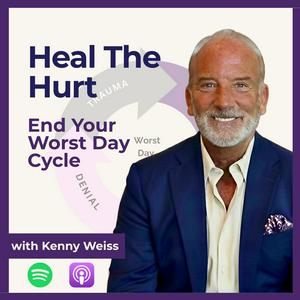
On the Heal the Hurt Podcast, Kenny Weiss helps you heal childhood trauma and break repeating relationship patterns: the same fight every week, partners who shut down, emotionally unavailable men, people-pleasing, codependency, childhood trauma and trauma bonds.
Kenny is a relationship and childhood trauma recovery coach and creator of the Worst Day Cycle, Authentic Self Cycle and Emotional Authenticity Method.
Everything else treats symptoms. This treats the blueprint. You're not broken. You're programmed. And programs can be rewritten. More at kennyweiss.net.
Podcast websiteListen to Heal The Hurt, The Mel Robbins Podcast and many other podcasts from around the world with the radio.net app
Get the free radio.net app
- Stations and podcasts to bookmark
- Stream via Wi-Fi or Bluetooth
- Supports Carplay & Android Auto
- Many other app features
Get the free radio.net app
- Stations and podcasts to bookmark
- Stream via Wi-Fi or Bluetooth
- Supports Carplay & Android Auto
- Many other app features
Heal The Hurt
Scan code,
download the app,
start listening.
download the app,
start listening.
 Ireland

