

Listen to this podcast in the app for free: Download for free in the App Store
radio.net
Sleep timer
Save favourites
35 episodes
35 Isometrics
15/08/2026 | 26 mins.In this episode, Chris and Rob explain [1] what adaptations isometrics are best suited to stimulating, and [2] how to include isometrics in a standard strength training program for stimulating those adaptations. They also talk briefly about some common misunderstandings and misapplications of isometrics in the fitness industry.34 Study review
31/07/2026 | 46 mins.In this episode, Chris and Rob analyze the strength training program used in the study: "Exploring the Upper Limits of Resistance Training Volume for Muscle Hypertrophy and Strength in Trained Athletes" by Räntilä and Ahtiainen, which was published in 2026. The reason for the review is that the subjects were national-level track and field athletes, so the training program reflects what many S&C coaches are currently programming for this population. The paper is currently open access and table 1 shows the training program that we talk about.33 Block periodization
25/07/2026 | 41 mins.Finally, Chris and Rob tackle block periodization, explaining why it makes very little sense for athletes in any strength or power sport. This episode references material covered in previous conversations, especially the preceding two (31 dose-response of adaptations and 32 supercompensation) as well as frequent discussions about the rate of loss of adaptations during detraining and fatigue accumulation.32 Supercompensation
18/07/2026 | 33 mins.As a preparatory topic before covering block periodization, Chris and Rob explain the concept of supercompensation. Supercompensation is the observation that outcome measures (like strength, speed, power) can reduce during a high-volume training block and then rebound (supercompensate) during a subsequent deload or taper. But that does not happen because of a delayed adaptation. It happens because fatigue was accumulating during the high-volume training block and reducing the value of the outcome measure.31 Dose response of adaptations
11/07/2026 | 41 mins.The dose-response of hypertrophy to workout volume is a famous phenomenon. In this episode, Chris and Rob talk about how all adaptations display dose-responses (even though they have not been as carefully studied). That affects how we program for speed, maximum strength, stretch-shortening cycle, and maximum eccentric strength.
More Education podcasts
 The Tamsen ShowEducation, Health & Wellness, Self-Improvement, Society & Culture
 Know ThyselfEducation, Self-Improvement
 The Sabrina Zohar ShowEducation, Health & Wellness, Mental Health, Relationships, Self-Improvement, Society & Culture
 No More Booze - The PodcastEducation, Self-Improvement
 The Daily StoicBusiness, Education, Self-Improvement, Society & Culture
 The Comeback with Brenda DennehyEducation, Health & Wellness, Mental Health, Self-Improvement
 How to Be a Better HumanEducation, Self-Improvement
 The Rich Roll PodcastEducation, Health & Wellness, Self-Improvement, Society & Culture
 Begin Again with Davina McCallEducation, Health & Wellness, Mental Health, Self-Improvement, Society & Culture
 The Mel Robbins PodcastEducation, Health & Wellness, Mental Health, Relationships, Self-Improvement, Society & Culture
Trending Education podcasts
 IELTS Energy English 7+Education, Language Learning
 Hoy Hablamos: Podcast diario para aprender español - Learn Spanish Daily PodcastCourses, Education, Language Learning
 Learn Spanish: Fluency in Real Life with HandyspanishEducation
- The Sabrina Zohar ShowEducation, Health & Wellness, Mental Health, Relationships, Self-Improvement, Society & Culture
 Coffee Break FrenchCourses, Education, Language Learning
 The Calm & Happy HomeEducation, Religion & Spirituality, Self-Improvement, Spirituality, Tutorials
 Platypus Economics with Justin WolfersBusiness, Courses, Education, Science, Social Sciences
- No More Booze - The PodcastEducation, Self-Improvement
 Moments PodcastEducation, Health & Wellness, Kids & Family, Self-Improvement
 ALIGNED | The Path to PurposeAlternative Health, Education, Health & Wellness, Religion & Spirituality, Self-Improvement, Spirituality
 Английский язык по плейлистам. Английский язык с нуля. Полный курсEducation, Language Learning
 The BossticksBusiness, Education
 How to PhD - your academic survival guideEducation, Science, Tutorials
 Choses à Savoir - Culture généraleEducation, Society & Culture
 Therapists Talk TherapyEducation, Health & Wellness, Mental Health
- The Tamsen ShowEducation, Health & Wellness, Self-Improvement, Society & Culture
 The Jordan Harbinger ShowBusiness, Education, Science
 Coffee Break ItalianCourses, Education, Language Learning
 Learn Indonesian | IndonesianPod101.comEducation, Language Learning, Places & Travel, Society & Culture
 Good Life ProjectBusiness, Education, Health & Wellness, Self-Improvement, Tutorials
 PUBLISHING ACADEMIC RESEARCH | Complete Your Scholarship, Thesis, or Dissertation and Maintain Your Mental HealthEducation, Tutorials
 Finding Freedom with Peter CroneEducation, Health & Wellness, Mental Health, Religion & Spirituality, Self-Improvement, Spirituality
 EconTalkCourses, Education, Philosophy, Science, Social Sciences, Society & Culture
 This Naked Mind PodcastEducation, Self-Improvement
 Motivation Daily by MotiversityEducation, Health & Wellness, Self-Improvement
About High Performance Physiology
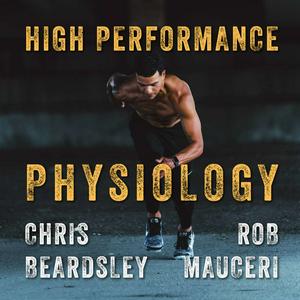
The High Performance Physiology Podcast is co-hosted by Chris Beardsley and Rob Mauceri. Each episode showcases an example of how muscle physiology and biomechanics can be used to identify the best ways to train for athletic performance.
Podcast websiteListen to High Performance Physiology, The Tamsen Show and many other podcasts from around the world with the radio.net app
Get the free radio.net app
- Stations and podcasts to bookmark
- Stream via Wi-Fi or Bluetooth
- Supports Carplay & Android Auto
- Many other app features
Get the free radio.net app
- Stations and podcasts to bookmark
- Stream via Wi-Fi or Bluetooth
- Supports Carplay & Android Auto
- Many other app features

High Performance Physiology
Scan code,
download the app,
start listening.
download the app,
start listening.
 Ireland