
Listen to this podcast in the app for free: Download for free in the App Store
radio.net
Sleep timer
Save favourites
438 episodes
How to Lose Weight While Protecting Muscle
21/10/2026 | 3 mins.Send us Fan Mail
Weight loss can come with muscle loss, even when medication is involved. Dr. H. Jackson Downey shares practical guidance on strength training, protein intake, balanced meals, and smaller portions to help support muscle maintenance and make weight-loss treatment easier to manage.
Be a part of advancing science by participating in clinical research.
Have a question for Dr. Koren? Email him at askDrKoren@MedEvidence.com
Listen on Spotify
Listen on Apple Podcasts
Watch on YouTube
Share with a friend. Rate, Review, and Subscribe to the MedEvidence! podcast to be notified when new episodes are released.
Follow us on Social Media:
Facebook
Instagram
X (Formerly Twitter)
LinkedIn
Want to learn more? Checkout our entire library of podcasts, videos, articles and presentations at www.MedEvidence.com
Music: Storyblocks - Corporate Inspired
Thank you for listening!Trust the Media for Medical News?
14/10/2026 | 48 mins.Send us Fan Mail
Medical headlines shape our food, our drugs, and our fears. But how much should we believe? In this episode, Dr. Michael Koren and Dr. Mitchell Rothstein explore how medical news is made, why headlines can be misleading, and how to tell the difference between evidence and hype.
Learn a simple 4-step practical framework to evaluate health claims: check the claim, evidence, source, and incentives. We discuss study design, relative vs. absolute risk, and reporting on topics like Lp(a), daily aspirin, coconut oil, ivermectin, omega-3 supplements, and others. We also cover dietary supplements, FDA oversight, and marketing claims that may mislead consumers.
Learn to read medical news with more confidence and make more informed health decisions. What health headline has you wondering what to believe?
Be a part of advancing science by participating in clinical research.
Have a question for Dr. Koren? Email him at askDrKoren@MedEvidence.com
Listen on Spotify
Listen on Apple Podcasts
Watch on YouTube
Share with a friend. Rate, Review, and Subscribe to the MedEvidence! podcast to be notified when new episodes are released.
Follow us on Social Media:
Facebook
Instagram
X (Formerly Twitter)
LinkedIn
Want to learn more? Checkout our entire library of podcasts, videos, articles and presentations at www.MedEvidence.com
Music: Storyblocks - Corporate Inspired
Thank you for listening!Gene Editing Moves from Science Fiction to Medical Miracle
07/10/2026 | 42 mins.Send us Fan Mail
Dr. Michael Hafran joins Dr. Michael Koren to discuss new investigational gene editing therapies. They talk about what genes and gene editing are, the history of gene editing, and some of the FDA-approved therapies on the market today. They also address fears people have about gene editing and clinical trials, explain the long and intensive safety measures in place, and reveal that these therapies aren't too different from what the body does naturally, just in a more guided and specific way to address genetic problems. They finish up by talking about an investigational medication designed to reduce an overactive cholesterol-related gene and lower the incidence of heart problems.
Be a part of advancing science by participating in clinical research.
Have a question for Dr. Koren? Email him at askDrKoren@MedEvidence.com
Listen on Spotify
Listen on Apple Podcasts
Watch on YouTube
Share with a friend. Rate, Review, and Subscribe to the MedEvidence! podcast to be notified when new episodes are released.
Follow us on Social Media:
Facebook
Instagram
X (Formerly Twitter)
LinkedIn
Want to learn more? Checkout our entire library of podcasts, videos, articles and presentations at www.MedEvidence.com
Music: Storyblocks - Corporate Inspired
Thank you for listening!Leading the Way in Clinical Research
30/09/2026 | 25 mins.Send us Fan Mail
Leslie Byatt joins Dr. Michael Koren to talk about leadership in the clinical research space. The two research professionals discuss the importance of qualified researchers in a research trial and the qualities that make for a good clinical research leader. They also talk about research as a treatment option and the benefits observed in research patients (even those in the placebo arm). They explain that the attention, care, and time with research professionals leads to better understanding and health for those who join, and that's on top of the altruistic benefits to science and health in general.
Be a part of advancing science by participating in clinical research.
Have a question for Dr. Koren? Email him at askDrKoren@MedEvidence.com
Listen on Spotify
Listen on Apple Podcasts
Watch on YouTube
Share with a friend. Rate, Review, and Subscribe to the MedEvidence! podcast to be notified when new episodes are released.
Follow us on Social Media:
Facebook
Instagram
X (Formerly Twitter)
LinkedIn
Want to learn more? Checkout our entire library of podcasts, videos, articles and presentations at www.MedEvidence.com
Music: Storyblocks - Corporate Inspired
Thank you for listening!The Great Blood Pressure Showdown
23/09/2026 | 42 mins.Send us Fan Mail
A Cardiologist & Nephrologist Go Head-to-Head, er... "Heart-to-Kidney"
Nephrologist Dr. Ali Rawabdeh joins Cardiologist Dr. Michael Koren to debate which is the bigger contributor (and problem) with high blood pressure: the heart or the kidneys. The two doctors discuss this extremely prevalent condition from their competing perspectives and give information on how different body systems can influence blood pressure. they also talk about the importance of understanding that blood pressure varies over time and that individual measurements are not the end-all of determining hypertension. They also dig into lifestyle and medical treatments for high blood pressure and upcoming genetic treatments that are currently being investigated.
Be a part of advancing science by participating in clinical research.
Have a question for Dr. Koren? Email him at askDrKoren@MedEvidence.com
Listen on Spotify
Listen on Apple Podcasts
Watch on YouTube
Share with a friend. Rate, Review, and Subscribe to the MedEvidence! podcast to be notified when new episodes are released.
Follow us on Social Media:
Facebook
Instagram
X (Formerly Twitter)
LinkedIn
Want to learn more? Checkout our entire library of podcasts, videos, articles and presentations at www.MedEvidence.com
Music: Storyblocks - Corporate Inspired
Thank you for listening!
More Education podcasts






Trending Education podcasts















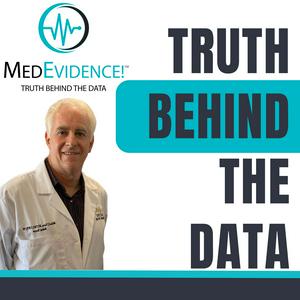
About MedEvidence! Truth Behind the Data
Welcome to the MedEvidence! podcast, hosted by Dr. Michael Koren. MedEvidence, where we help you navigate the real truth behind medical research with both a clinical and research perspective. In this podcast, we will discuss with physicians with extensive experience in patient care and research. How do you know that something works? In medicine, we conduct clinical trials to see if things work! Now, let's get to the Truth Behind the Data. Contact us at www.MedEvidence.com
Podcast websiteListen to MedEvidence! Truth Behind the Data, Gaeilge Weekly and many other podcasts from around the world with the radio.net app
Get the free radio.net app
- Stations and podcasts to bookmark
- Stream via Wi-Fi or Bluetooth
- Supports Carplay & Android Auto
- Many other app features
Get the free radio.net app
- Stations and podcasts to bookmark
- Stream via Wi-Fi or Bluetooth
- Supports Carplay & Android Auto
- Many other app features

MedEvidence! Truth Behind the Data
Scan code,
download the app,
start listening.
download the app,
start listening.
MedEvidence! Truth Behind the Data: Podcasts in Family
 Ireland
