
Listen to this podcast in the app for free: Download for free in the App Store
radio.net
Sleep timer
Save favourites
57 episodes
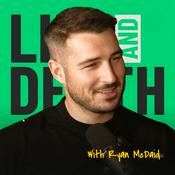
#57 1.6 Million Tons of ILLEGAL Waste: Mobuoy, the Faughan and What Environmental Justice Really Means - Dean Blackwood
16/05/2026 | 1h 32 mins.Dean Blackwood grew up “reared on the River Faughan” – now he’s one of the most persistent voices fighting to stop it being poisoned. From childhood mornings fishing with his great‑uncle Albert to uncovering one of Europe’s biggest illegal landfills at Mobuoy, his life tracks the story of how Northern Ireland treats its rivers and lakes.
In this episode we walk through the Mobuoy illegal dump scandal, wider pollution and planning failures, and what Lough Neagh and the Faughan are telling us about power, accountability and environmental justice in the North.
What we explore
Dean’s early memories on the river: being taken fishing as a young child, homemade “sally rod” from willow, lemon curd sandwiches and how that created a lifelong attachment to the Foyle and Faughan catchments.
His career inside the planning system as a civil servant in the former Department of the Environment, and the moment he realised public authorities were turning a blind eye to developments causing serious harm.
The Mobuoy illegal dump: how quarrying without permission and a so‑called recycling plant combined to bury an estimated 1.6 million tons of mixed and dangerous waste in pits beside the River Faughan – an area the size of roughly 64 football pitches.
How concerns from River Faughan Anglers were first raised formally in 2008 and 2009, and then “disappeared” from government records, and what that says about regulatory culture.
What environmental justice means in practice in Northern Ireland: The Gathering, the Environmental Justice Network Ireland, and why ordinary people end up standing up for nature when institutions stay quiet.
The bigger picture: how Mobuoy connects to pollution crises like Lough Neagh, and why legal frameworks, planning decisions and waste contracts are as important as personal behaviour.
Who this episode is for
People in Northern Ireland (and beyond) trying to understand what is actually happening at Mobuoy, on the Faughan and around Lough Neagh.
Anyone curious how a town planner becomes a full‑time environmental campaigner, and what that costs and gives back.
Listeners drawn to stories where local rivers, bureaucracy and community action collide.
Why it matters
This isn’t a distant climate story. It’s about drinking water, salmon rivers, public money, quiet decisions on planning files and how long‑running pollution crises are allowed to build in plain sight. Dean brings both insider knowledge of the system and the stubbornness of someone who still feels responsible to the river he grew up on.
Micro‑FAQ
What is the Mobuoy illegal dump?
A huge illegal landfill outside Derry, where quarry pits were filled with shredded municipal, builders’ and other potentially dangerous waste without proper permissions or environmental assessment, close to the River Faughan.
How big is it?
Dean cites around 1.6 million tons of waste, spread over an area equivalent to about 64 football pitches.
Was nobody regulating it?
There was historic permission for a quarry and a recycling centre, but later operations breached regulations, lacked proper planning and were effectively treated as legitimate until campaigners forced the issue.
How does this connect to Lough Neagh and other pollution?
Mobuoy is one extreme example of wider problems: weak enforcement, fragmented responsibility and political reluctance to confront powerful interests – all of which show up in the health of rivers and lakes.#56 How Ireland Is Learning to Live with Nature Again | Emmett Johnston
08/05/2026 | 1h 29 mins.Ireland has a national park called *Glenveagh* – “Glen of the Birches” – where most visitors never notice there are almost no birch trees. Emmett Johnston thinks that gap between language and landscape says a lot about how *Ireland* lost, and is slowly rebuilding, its relationship with nature.
In this episode we talk about basking sharks, rewilding in Glenveagh, native woodland, colonisation, Irish place‑names and why *environmentalism* built on guilt often fails to move people.
What we explore
– How Ireland’s history of colonisation and deforestation shows up in both the land and the language, and why place‑names like Glenveagh quietly record what used to be there.
– Emmett’s journey from growing up in Dublin to managing Glenveagh National Park in Donegal and co‑founding the Irish Basking Shark Group.
– What basking sharks can teach us about patience, migration and seeing Ireland as part of a much bigger living system.
– Practical rewilding and restoration inside a national park: native woodland, peatlands, grazing, tourism and working with local communities rather than against them.
– Why he believes environmentalists must move beyond finger‑wagging and guilt, towards offering experiences and futures people actually want to say yes to.
– The hopeful signs he sees: more trees on the land, more action than ever before, and a generation who can still shape the next 50–100 years of how Ireland lives with nature.
Who this is for
– People in Ireland (or anywhere) wondering what “rewilding” and native woodland recovery really look like on the ground.
– Anyone drawn to basking sharks, big coastal landscapes and the human stories behind conservation work.
– Listeners who feel climate and biodiversity news is all doom and guilt, and want a more human, hopeful way in.
Why this conversation matters
Emmett carries both science and story: decades of ecological work, papers, and a day‑job managing a national park, alongside a deep respect for language, history and ordinary people’s lives. Instead of just listing problems, he tries to show what it looks like when nature recovery and human thriving pull in the same direction.
Micro‑FAQ
What is special about Glenveagh?
It’s one of Ireland’s six national parks, set in a glen whose Irish name means “Glen of the Birches,” quietly pointing to a forested past that’s now mostly gone.
Where do basking sharks come in?
Emmett co‑founded the Irish Basking Shark Group and has spent years tracking and protecting these huge, gentle filter‑feeders off the Irish coast.
Is this episode mainly about rewilding?
It’s broader: rewilding and native woodland are part of a bigger conversation about history, language, people and how we choose to live with nature now.
Is it all doom and gloom?
No. Emmett is clear that habitats and species are under pressure, but he’s also convinced there’s “loads of hope” and more restoration activity now than ever before.#55 From Chemicals to Microbes: An Irish Farmer’s Road to Biodynamic, Regenerative Land - Paul Moorhead
03/05/2026 | 1h 30 mins.Most farmers are taught to fight weeds, feed the soil with chemicals and maximise yield. Paul Moorhead went the opposite direction – and the land responded.
This conversation explores how regenerative farming, soil biology and biodynamic principles are quietly reshaping how some Irish farmers think about their land, their food and their role in the wider ecosystem.
If you grow food, eat food or just wonder why modern farming feels so broken, this one is worth your time.
---
What we get into
• What regenerative farming actually means in practice on an Irish farm – beyond the buzzword.
• How soil microbes, fungi and bacteria form the real foundation of healthy food, and why chemical fertilisers can disrupt that system silently over years.
• Why “weeds” are indicators, not enemies – what they’re actually telling you about the health of your soil.
• Biodynamic principles: how Paul uses rhythms, preparations and observation to work with nature rather than against it.
• The emotional and cultural weight of changing how you farm in a system that rewards yield and punishes deviation.
• What’s possible when Irish land is treated as a living ecosystem rather than a production unit.
---
Who this episode is for
• Farmers, smallholders and growers curious about regenerative and biodynamic methods.
• Anyone who eats food and wants to understand where the current model is heading.
• People feeling the pull toward a different relationship with land, nature and growing.
---
Why this conversation might help
This isn’t about perfect farming or utopian ideas. Paul speaks from real experience on real Irish land – what shifted, what was hard, and what he now sees differently when he walks his fields.
---
Micro‑FAQ
What is regenerative farming?
A set of practices focused on rebuilding soil health, biodiversity and ecosystem function rather than just extracting yield – covering crop diversity, minimal tillage, composting and working with natural cycles.
What is biodynamic farming?
A holistic approach to agriculture developed by Rudolf Steiner that treats the farm as a living organism, using natural preparations, lunar rhythms and deep observation of natural cycles.
Are weeds really useful?
Yes. Different “weed” species indicate specific soil conditions – compaction, mineral deficiencies, pH imbalances. Learning to read them is one of the fastest ways to understand what your soil needs.
Is this practical for Irish farms?
Paul answers this directly from Irish conditions – climate, culture, subsidies and all.#54 Fungi, Floods & Fire: How Mushrooms Quietly Hold Our World Together | Joanne Fullerton
24/04/2026 | 1h 38 mins.Fungi, mycelium, floods, fire and food systems – what if the quiet stuff under our feet is holding far more together than we realise?
Life & Depth – Season 2: Nature, Seeds & Growth: https://www.youtube.com/playlist?list=PLp2syVpW_daYjm6lY9I_qG0WuEm0K0e6C
Big Questions, Real Stories: https://www.youtube.com/playlist?list=PLp2syVpW_daYHYo8sp7kF-LrwJJEU26VkWhen Life Knocks You Sideways: https://www.youtube.com/playlist?list=PLp2syVpW_daZa6hx5q_5KTAYXxzikQpvX
In this episode I sit down with facilitator and food‑sovereignty advocate Joanne to explore fungi as the “connective tissue of the earth”, how mycelial networks work with plants and microbes, and why they matter for climate resilience and community life.
If you’re curious about mushrooms beyond psychedelics – soil health, decomposition, remediation, grief and belonging – this one is for you.
What we uncover together
How fungal networks partner with plant roots to move nutrients, pull carbon into soils and turn dirt into a living sponge that can actually hold water.
Why some mycorrhizal fungi act like underground “infrastructure”, connecting trees and crops while we walk above them with no idea.
Joanne’s story of being caught in a Greek wildfire, watching locals mask their fear, and how that moment changed how she sees fire, risk and climate‑driven disasters.
How fungi can help remediate polluted or burnt land, from California fire grounds to flood‑damaged fields in Ireland.
The emotional layer: feeling small inside planetary crises, processing eco‑anxiety and grief, and finding steadier ground through land‑based community work.
Practical entry points if you want to work with fungi where you live – from soil observation and simple experiments to plugging into global underground‑network projects.
Who this episode is for
People who feel the climate crisis in their body but don’t know what to do with that feeling.
Growers, gardeners, farmers and land‑workers curious about soil life, mycelium and living infrastructure.
Anyone drawn to mushrooms, ecology or food sovereignty who wants stories as well as science.
Why this might help you
Instead of only doom or only tech‑fixes, this conversation leans into relationship – between fungi and plants, land and people, floods and fire and the ways communities respond. Joanne brings grounded stories, not hype, and points towards work that is already happening quietly beneath our feet.
Micro‑FAQ
Are we talking about psychedelic mushrooms?
Mostly no. We focus on ecological and soil fungi – mycorrhizal networks, decomposers and remediation work – with just brief mentions of wider fungal culture.
What exactly do fungi do in soil?
They help decompose and recompose organic matter, move nutrients to roots, pull carbon into the ground and create sponge‑like soil structure that holds water.
Can fungi really help with floods and fire?
Certain species and practices can stabilise soil, capture water and support post‑fire recovery and pollution clean‑up. Joanne shares real projects and early results.
How can I start learning without a lab?
Begin with paying attention: local soil, simple cultivation, community workshops, and following organisations mapping underground networks globally.#53 Natural Immune Shots, Inflammation & Starting Again at 30 | Paddy’s Powerful Bottle Story
17/04/2026 | 1h 17 mins.Natural immune shots, turmeric, garlic, cholesterol and arthritis – why did nobody tell us this at 25?
Paddy Diver went from a 20‑something in construction who thought he just had a “bad back” to barely bending down to put on his socks – then built Pat’s Powerful Bottle out of desperation.
If you’re living with inflammation, fatigue or “I’ll sort my health later” thinking, this one’s for you.
*What we really get into*How turmeric, ginger, garlic and other “war‑time” foods can support immune health and lower inflammation when used consistently.
Why most of us never learn how our liver, cholesterol and plaque actually work – and what simple food choices can do over time.
Paddy’s story of ankylosing spondylitis, chronic pain, physio visits on lunch breaks and the moment he realised diet was flaring everything up.
Building a small health‑drink business from his kitchen, while the house was falling down, the money was gone and the regulations said “you can’t claim that.”
Real‑world reviews: arthritis, psoriasis, asthma, blood pressure, type‑2 diabetes – and why Paddy still has to be careful with what he publicly promises.
The cost of being “always on” for customers, giving out his personal number and trying to scale without losing the human touch.
*Who this is for*
People with chronic inflammation, pain, arthritis, autoimmune or “mystery” symptoms. Men and women in their 20s–40s who’ve lived on deli food and only now feel the cost. Anyone curious about grassroots health entrepreneurship and community‑level change.
*Why this conversation might help*
Instead of miracle‑cure hype, Paddy and I walk through what he actually changed – food, mindset, consistency – and what still feels hard. It’s part story, part practical language you can take into your own conversations with doctors, family and yourself.
*Micro‑FAQ*Q:
Is this medical advice?
A: No. This is one man’s story, plus general education about food, inflammation and lifestyle. Always talk to your own doctor.
Q: What’s in Pat’s Powerful Bottle?
A: A mix built around turmeric, ginger, garlic and other anti‑inflammatory ingredients Paddy found helped his own body.
Q: Can it fix arthritis / psoriasis / asthma / diabetes?
A: No drink is a magic fix. Paddy shares real reviews from people who saw changes while also working on their health in other ways.
Q: Where can I learn more?
A: Start by understanding inflammation, gut health and blood sugar, then experiment slowly with food, movement, sleep and stress.
More Education podcasts







Trending Education podcasts












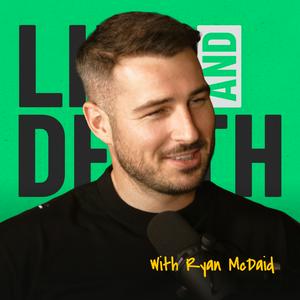
About Life and Depth with Ryan McDaid
Life & Depth with Ryan McDaid is a weekly self‑improvement and mental health podcast on YouTube where entrepreneur Ryan dives into long‑form conversations about life, business, spirituality, psychedelics and the natural world.
If you’re burned out, stuck or searching for deeper meaning, these honest stories from founders, athletes, healers, scientists and everyday people will help you understand your mind, heal past wounds and build a grounded, resilient life you actually want to wake up to.
Podcast websiteListen to Life and Depth with Ryan McDaid, Anseo.net - If I were the Minister for Education and many other podcasts from around the world with the radio.net app
Get the free radio.net app
- Stations and podcasts to bookmark
- Stream via Wi-Fi or Bluetooth
- Supports Carplay & Android Auto
- Many other app features
Get the free radio.net app
- Stations and podcasts to bookmark
- Stream via Wi-Fi or Bluetooth
- Supports Carplay & Android Auto
- Many other app features

Life and Depth with Ryan McDaid
Scan code,
download the app,
start listening.
download the app,
start listening.
 Ireland
