

Listen to this podcast in the app for free: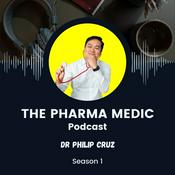 Download for free in the App Store
radio.net
Sleep timer
Save favourites
27 episodes
Season 4 Episode 3 : AI at Work Shouldn’t Mean Outsourcing Your Judgement
09/09/2026 | 22 mins.What happens when AI can give you a polished answer in seconds, but you still have to decide whether it deserves to be trusted?
In Episode 3 of Season 4, “AI at Work Shouldn’t Mean Outsourcing Your Judgement”, I explore what the rapid rise of AI means for Medical Affairs, healthcare and, more broadly, any profession built around expertise and judgement.
AI can already summarise papers, draft scientific content, synthesise information, generate first drafts and help us work faster. That is useful. But speed creates a new challenge: when the output looks convincing, sounds authoritative and arrives almost instantly, how do we know when to trust it, when to challenge it, and when to go back to the source?
The real issue is not whether AI can do the task. Increasingly, it can. The more important question is what happens if it gets the task wrong.
In this episode, I reflect on why fluency is not the same as accuracy, why removing friction from work should not mean removing the thinking, and why professional value may increasingly lie in judgement rather than simply producing the first draft.
I also introduce a simple way of checking AI-supported work: SAFER which stands for Source it, Audit it, Fit it, Explain it, and Remain responsible.
Because ultimately, AI may help us draft, analyse and accelerate. But it cannot take accountability for the decisions we make with its output.
And perhaps that is the real test of the AI era: not whether we become faster, but whether we become better at deciding what deserves our trust.
AI should reduce friction. It shouldn’t reduce standards.
Be curious. Stay credible. Be useful.Season 4 Episode 2 : Truth Lives In The Uncertainty
24/08/2026 | 23 mins.How comfortable are you saying, “I don’t know”?
It sounds simple, but I think it is one of the harder things to say at work, particularly when people expect you to be the expert in the room.
Over the years, I’ve come to realise that expertise isn’t about always having the answer. In fact, sometimes the more experienced you become, the more comfortable you need to be recognising where your knowledge ends, where the evidence becomes less certain and where judgement has to take over.
That is what I explore in this episode of The Pharma Medic.
Uncertainty is everywhere in our working lives. It comes up in conversations about clinical evidence, project deadlines, strategy, recruitment, budgets, career decisions and leadership. Someone asks you a question and, quite often, they would really like a simple yes or no.
But life, science and business rarely work like that.
So how do you give an answer that is useful without pretending to know more than you do? How do you avoid drowning people in caveats while still being honest about what you don’t know? And how do you make a decision when you know you may never have all the information you would ideally like?
I share a simple way I’ve started thinking about this. I call it FOG.
Find the facts. Own the gaps. Go with judgement.
What do I genuinely know?
Where does my confidence start to drop?
What am I assuming?
What information am I missing?
And, perhaps most importantly, does what I don’t know actually change what I should do next?
I also talk about something I think becomes increasingly important as our careers develop. The ability to say, “I don’t know that accurately enough from memory. Let me check.”
There can be a temptation, particularly earlier in our careers, to feel that credibility comes from having an immediate answer. I’ve learned that the opposite can often be true. People remember when confidence gets ahead of the evidence. Saying you will check and then actually coming back with the answer can build far more trust than trying to bluff your way through the moment.
This feels particularly relevant today because we are surrounded by answers. Search engines give us answers. Social media gives us answers. Artificial intelligence can now produce incredibly polished and confident answers in seconds.
The question is increasingly not just, “What is the answer?”
It is, “How confident should I be in this answer?”
For me, that is becoming an important part of modern professional judgement.
As we continue this season’s theme of moving from expert to architect, perhaps our role isn’t always to remove uncertainty for other people. Sometimes it is simply to help them navigate through it.
You may not be able to see the whole road ahead.
You just need enough visibility to make the next good decision.
And perhaps that is the thought I would like to leave you with:
The mark of expertise is not certainty. It’s knowing where certainty ends.
And then having the judgement to decide what to do next.
The Pharma Medic. Be curious. Stay credible. Be useful.The Expert Trap : Why Being Right Is No Longer Enough
12/08/2026 | 20 mins.What happens when being the expert is no longer enough?
In the first episode of Season 4 of The Pharma Medic, I explore a shift that happens in many careers: the point where your value is no longer defined simply by how much you know, but by what happens because of what you know.
We spend years building expertise, gaining qualifications, learning the evidence and becoming the person others come to for answers. But as our careers progress, something changes. Judgement matters more. Communication matters more. Context matters more. And increasingly, our impact depends on whether we can help other people make sense of complexity and make better decisions.
I call this the expert trap: the belief that if we provide enough accurate information, the right conclusion will naturally follow.
In this episode, I reflect on why technically excellent presentations sometimes lead to no real decision, why completeness can occasionally become a form of self-protection, and why there is an important difference between being correct and being useful.
I also introduce a simple framework for important conversations: Data. Meaning. Decision. What do we genuinely know? Why does it matter in this context? And what should happen next?
Although the conversation comes from my experience in Medical Affairs and healthcare, the ideas apply much more broadly to anyone whose career is built around expertise—whether in medicine, science, law, engineering, academia, consulting, business or leadership.
As our careers develop, perhaps the more interesting question is no longer simply:
“What do I know?”
It becomes:
“What happens because I’m here?”
Welcome to Season 4: From Expert to Architect.
Be curious. Stay credible. Be useful.Season 3 Ep.6: Breaking into Medical affairs roles: Why its harder today and what you can do about it. Part 2
11/05/2025 | 12 mins.In Part 2 of this two-part series, we shift from insight to action—focusing on practical strategies for medics looking to break into medical affairs roles in 2025.
Building on Part 1, which explored why it has become increasingly difficult to enter the field, this episode is all about helping you move forward with clarity, intention, and confidence. Whether you’re a doctor, pharmacist, or scientist feeling stuck after multiple job applications, this episode offers real-world advice and guidance to help you build your way in.
Topics discussed in this episode include:
How to skill up for the modern medical affairs role by bridging gaps in business acumen, regulatory knowledge, digital fluency, and strategic thinking.
Creative ways to gain relevant experience—such as starting in adjacent roles, participating in academic-industry collaborations, taking on contract positions, or reframing your clinical and research background in industry language.
Networking tips that actually work, including how to connect authentically on platforms, build your professional presence, and find mentors who have already made the transition.
How to make your application stand out by tailoring your CV, using the STAR format (Situation, Task, Action, Result) to demonstrate impact, and presenting transferable skills in a compelling way.
Why mindset is crucial—especially in a competitive landscape where rejection is often more about positioning than ability. We explore the importance of patience, persistence, and staying connected to your bigger purpose.
If you’ve been wondering what to do next—or how to reposition yourself after hitting repeated roadblocks—this episode is for you. It’s not about having the perfect profile; it’s about taking consistent, intentional steps that bring you closer to your first break in medical affairs.
As we say in the episode:
You’re not unqualified. You’re unpositioned.
It’s not rejection. It’s redirection.
And you don’t need to be perfect. You need to be intentional.
Whether you’re early in your journey or already applying, this episode is designed to give you renewed focus, energy, and encouragement to keep going.Season 3 Ep. 5: Breaking into Medical affairs roles: Why its harder today and what you can do about it.
05/05/2025 | 11 mins.In this first part of a two-part series, we take a deep and honest look at why it’s become significantly harder for medics to break into medical affairs roles in 2025.
This episode explores the major shifts that have taken place in the industry over the past two decades, including how medical affairs has evolved from a back-office support function to a critical strategic pillar within pharmaceutical companies. We unpack why today's hiring criteria have become increasingly stringent, bespoke, and competitive, and why even highly qualified clinicians and scientists are struggling to gain their first foothold in the field.
Key themes covered in this episode include:
The transformation of medical affairs into a strategic leadership function
The growing demand for professionals who can integrate scientific knowledge with business acumen, compliance, and digital fluency
Why many roles now receive 200+ applicants and favor those with specific therapeutic experience
The rise of digital expectations — from omnichannel communication to data-driven engagement
The importance of soft skills, emotional intelligence, and cross-functional collaboration
Regional challenges in Europe and Asia, including regulatory constraints and cultural preferences for local experience
We also explore the emotional toll of rejection, the systemic barriers that make it feel impossible to even get an interview, and the awareness gap many candidates have about what the role actually entails. Importantly, we challenge the myth of the “perfect fit” and introduce the idea of reframing your clinical and academic experience through the lens of transferable skills.
This episode is a blend of realism and encouragement—grounded in industry insight but focused on empowering listeners with a new perspective. It sets the stage for Part 2, which will offer practical strategies, networking approaches, CV positioning tips, and mindset shifts to help you actively build your way into medical affairs.
Whether you’re feeling stuck, burnt out, or just unsure how to reposition yourself for a future in pharma, this episode provides the clarity, context, and encouragement you need to take your next step.
More Business podcasts
 The Diary Of A CEO with Steven BartlettBusiness, Education, Society & Culture
 The Other HandBusiness, News, Society & Culture
 Working Hard with Grace BeverleyBusiness, Education, Health & Wellness, Marketing, Self-Improvement
 Great Business StoriesBusiness, History
 Money TalksBusiness
 Better With MoneyBusiness, Education, Investing, Self-Improvement, Tutorials
 A Bit of OptimismBusiness, Careers, Education, Self-Improvement
 Inside Business with Ciaran HancockBusiness
 Good Bad BillionaireBusiness, Documentary, Entrepreneurship, Society & Culture
 Aspire with Emma GredeBusiness, Entrepreneurship, Society & Culture
Trending Business podcasts
 The Game with Alex HormoziBusiness, Education, Entrepreneurship, Tutorials
 Business DailyBusiness
 HBR IdeaCastBusiness, Entrepreneurship, Management, Marketing
 Garys EconomicsBusiness
 Financial FeministBusiness, Education, Tutorials
 The Memo by Howard MarksBusiness, Investing
 Figuring Out with Raj ShamaniBusiness, Education
 The Master Investor Podcast with Wilfred FrostBusiness, Investing
 Reuters Morning BidBusiness, Business News, Investing, News
 IPI Planners PodcastBusiness, Management
 FED by Farmers PodcastBusiness, Comedy
 Behind The WallsBusiness
 Money Clinic with Claer BarrettBusiness, Business News, Investing, News
 The Psychology of Money with Morgan HouselBusiness
 All the Hacks: Money, Points & LifeBusiness, Education, Investing, Places & Travel, Self-Improvement, Society & Culture
 The Hidden Hustle PodcastBusiness
 The Real Eisman PlaybookBusiness, Investing
 Economics ExplainedBusiness, Documentary, Science, Social Sciences, Society & Culture
 The Entrepreneur ExperimentBusiness, Careers, Entrepreneurship
 World Business ReportBusiness, Business News, News
 In Good Company with Nicolai TangenBusiness
- Better With MoneyBusiness, Education, Investing, Self-Improvement, Tutorials
 Financial AuditBusiness, Education, Investing, Self-Improvement
About The PHARMA MEDIC Podcast
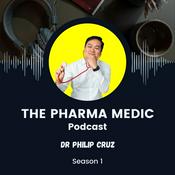
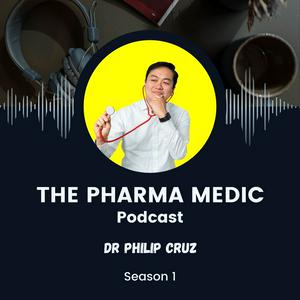
The Pharma Medic Podcast is your go-to source for insights, stories, and expert advice in the dynamic field of medical affairs. Hosted by Philip Cruz, a seasoned medical affairs professional with 20 yrs experience and a passion for healthcare innovation, emotional intelligence, personal growth and development , each episode delves into the critical aspects of medical affairs, from navigating ethical dilemmas and leveraging digital health technologies to embracing patient-centric approaches and climbing the career ladder. Designed for healthcare professionals, aspiring medical affairs experts, and industry veterans alike, or just anyone who is curious of what we do, this podcast offers practical tips, real-world examples, and thought-provoking discussions to help you thrive in your career and make a meaningful impact on patient outcomes. Join us as we explore the evolving landscape of medical affairs and uncover the strategies and skills needed to excel in this vital field.
Podcast websiteListen to The PHARMA MEDIC Podcast, The Diary Of A CEO with Steven Bartlett and many other podcasts from around the world with the radio.net app
Get the free radio.net app
- Stations and podcasts to bookmark
- Stream via Wi-Fi or Bluetooth
- Supports Carplay & Android Auto
- Many other app features
Get the free radio.net app
- Stations and podcasts to bookmark
- Stream via Wi-Fi or Bluetooth
- Supports Carplay & Android Auto
- Many other app features

The PHARMA MEDIC Podcast
Scan code,
download the app,
start listening.
download the app,
start listening.
 Ireland