

Listen to this podcast in the app for free: Download for free in the App Store
radio.net
Sleep timer
Save favourites
1095 episodes
You Can’t Hack Your System, The Body is Way Too Smart With Ian Clark
16/09/2026 | 59 mins.Episode Highlights With Ian
Understanding detox and why harsh ones can be too much for the body
The things you don’t know that you’re breathing in and how to avoid accumulating it
How to avoid becoming an aggregator of air toxins
All of us have been poisoned in some way in the modern world
Can we have perfect health? And what’s the alternative
Why indoor air is more polluted that outdoor air and what to do about it
The sneaky microplastics in most clothing these days
A great reason to open your windows every day
Why to air dry your microfiber cloths in the home
What advanced glycation byproducts do to the body and how to avoid them (pressure cookers don’t produce them!)
How to reverse the damage of AGEs and slow aging
Brazil nuts aren’t the right form of selenium
You can’t hack your system, the body is way too smart, and what to optimize instead
Consistency over intensity for long-term change
Resources Mentioned
Healthy Home Bulbs – Use code wellnessmama for a discount
Activation Products – Use code wellnessmama20 for a discount
Pact organic clothing and Quince clothing
LMNT
I talk often about the health benefits of salt and electrolytes and I am a big fan of LMNT canned drinks and packets. Go to drinklmnt.com/wellnessmana for a special offer.
Just Thrive:
Just Thrive Health has been one of my longtime favorite brands for gut health and they have an amazing Daily Gut Detox. Your immune system, gut barrier, and digestion get the support they need to stay strong and healthy. You can find this and their probiotics at justthrivehealth.com/wellnessmama or use code wellnessmama for 20% off your order.What did Jesus Really Say & What Did Humans Change? With Lauren Geersten
14/09/2026 | 1h 5 mins.Episode Highlights With Lauren
How she went from health blogger to an incredible inner and outer journey to writing about some even bigger topics
Why healing the body can also lead to questioning deeper topics
It’s hard to open to truth when we’ve been manipulated by fear unless we know there is more love on the other side
What did Jesus actually say vs how it has been changed throughout history
Being comfortable in curiosity rather than certainty
When were the gospels actually written and what changed based on who authored them
One thing Jesus never said - that blood atonement was necessary, and he actually resisted this idea in what we know in some of his writings
The Bible itself says it was corrupted, so even if we believe that it is the unquestionable word of God, it says it is corrupted
Why is it necessary for God to have blood or murder to forgive?
Love itself cannot be harmed and God cannot be harmed by the actions of humans
Forgiveness is a human process that humans have to go through and projected onto God
Why was blood sacrifice so prevalent in ancient Judaism and how did it become a cornerstone of Christianity
Was Jesus an Essene and what insight this may give us about his message
The real roots of eternal punishment and the theology of hell - important historical context
Wisdom is the journey to more love and less fear
Some important considerations about the book of Revelation
Resources Mentioned
Lauren's books
Truth Activist podcast
Hiya
Hiya created a super powered chewable vitamin for kids that packs twelve organic fruits and vegetables plus fifteen essential vitamins and minerals into every dose. Try it at hiyahealth.com/wellnessmama.
BONCHARGE
I like so many of their products - from their red light products to their sauna blankets. Red light has been so helpful for me during my recovery from Hashimoto's. To find out more, go to boncharge.com/wellnessmamaIs a College Degree Worth It Anymore? (& What Might Be Better) With Degree Free
10/09/2026 | 57 mins.Episode Highlights With Degree Free
The shocking data around college now, and how many jobs actually require a degree
What has shifted in the last couple of decades, and why new data is important to consider
Most people who are employed in the US do not have college degrees
Less than one in five jobs even mention a degree as preferred
How is this a simple supply and demand problem
The real deal with student loans and the college industrial complex
The Social cost of criticizing certain areas of society and why questions are important
A large percentage of careers that require a degree are marketed to women
Debt will close more doors than a degree will open
Physicians have the highest suicide rates of any profession
The most important career conversations to have with your teenager
Why teens struggle to answer "What do you want to be?"
Important reason not to ask or have these conversations with your teens in a public forum or even around other people
Where the majority of jobs are that are outside of traditional degree jobs or even trade jobs
Why college grads are actually having trouble getting jobs because they don’t have work experience
College grads actually churn at a higher rate in jobs and are sometimes not considered because of their degrees
The very real way having a college degree can now make getting a job more difficult
We are 11 years into the trend of companies down credentialing and not requiring degrees
Resources Mentioned
Follow Hannah Maruyama on Facebook, Instagram, TikTok, YouTube and on X
Degree Free website and podcast
Degree Free Way workbook set
Bioptimizers
I love and use so many products from them, but I especially love the magnesium (Magnesium Breakthrough) and digestive enzymes (Masszymes). Visit bioptimizers.com/wellnessmama to get the best deal!
LMNT
I talk often about the health benefits of salt and electrolytes and I am a big fan of LMNT canned drinks and packets. Go to drinklmnt.com/wellnessmana for a special offer.Dying of Embarrassment: One Part of Health We Don’t Talk About As Much With Scott Hickle
02/09/2026 | 47 mins.Episode Highlights With Scott
How we track so many things, but often don’t know what’s going on with bowel and urinary health
His path into this- both of his parents are doctors
Is there something we can learn from our poop that we are missing?
How stress comes into play with gut health
The big factors related to gut health that people don’t always get right
We know gut health affects the whole body, but we miss some big warning signs with gut health
70% of our calories come from ultra-processed foods, and we are the first generation to experience this
The staggering numbers he sees on gut health-related things
52% of Americans think it is normal to have abdominal pain on a daily basis (it isn’t)
62% of people surveyed said they had some digestive issue that week
The stats on colorectal cancer show that it is now the most deadly cancer in Americans under 50
Colon cancer is the only cancer that is on the rise right now!
1 in 20 people will get colon cancer at some point in their lives
Interesting reason that the DOD funds colon cancer research
Why veterans were at higher risk for colon cancer decades later
How throne is improving hydration levels
Resources Mentioned
Throne Science use code Katie for a discount
Follow Throne on Instagram, on X, and on Facebook
Follow Scott on Instagram, and X
Hiya
Hiya created a super powered chewable vitamin for kids that packs twelve organic fruits and vegetables plus fifteen essential vitamins and minerals into every dose. Try it at hiyahealth.com/wellnessmama.
Just Thrive:
Just Thrive Health has been one of my longtime favorite brands for gut health and they have an amazing Daily Gut Detox. Your immune system, gut barrier, and digestion get the support they need to stay strong and healthy. You can find this and their probiotics at justthrivehealth.com/wellnessmama or use code wellnessmama for 20% off your order.Fast Like a Girl, Eat Like a Girl, and Age Like a Girl With Dr. Mindy Pelz
26/08/2026 | 53 mins.Episode Highlights With Mindy
Cutting through the myth… can women fast and what we need to do differently
How to navigate fasting with a female hormone cycle and why it is so important
The three types of women and how each fasts differently
There are times when women shouldn’t fast and times when it can be a game changer
We have two metabolisms: glucose and ketones and how to use them differently
Somewhere 8-12 hours after food we shift to ketones
The healing switches that turn on when we fast
What flex fasting is and how she helps people find what works best for them
Perimenopause and menopause specific fasting guidelines
The cortisol component and how to pay attention to this part
Can fasting be brain protective post menopause
When to fast and when not to, and the most important meal you eat after fasting
The important nutrients to focus on after fasting and the story about leucine
Let’s stop making beans the enemy! And her take on sardine fasting
Supplements she most often recommends and why
The one food group that kills our ability to make our own GLP (it might surprise you)
Order of food matters, not just the amount and type!
Important concerns with GLPs and how to make your own and not lose muscle!
Resources Mentioned
Mindy's books - Fast Like a Girl, Age Like a Girl and Eat Like a Girl
Mindy's YouTube channel
Stress questionnaire
Live like a girl podcast
Bioptimizers
I love and use so many products from them, but I especially love the magnesium (Magnesium Breakthrough) and digestive enzymes (Masszymes). Visit bioptimizers.com/wellnessmama to get the best deal!
More Education podcasts
 The Ella EraEducation, Self-Improvement, Society & Culture
 Learning English For WorkEducation, Language Learning
 Motivation Daily by MotiversityEducation, Health & Wellness, Self-Improvement
 6 Minute EnglishEducation, Language Learning
 Gaeilge WeeklyEducation, Language Learning
 Learning English ConversationsEducation, Language Learning
 The Comeback with Brenda DennehyEducation, Health & Wellness, Mental Health, Self-Improvement
 Begin Again with Davina McCallEducation, Health & Wellness, Mental Health, Self-Improvement, Society & Culture
 The Daily StoicBusiness, Education, Self-Improvement, Society & Culture
 The Mel Robbins PodcastEducation, Health & Wellness, Mental Health, Relationships, Self-Improvement, Society & Culture
Trending Education podcasts
 Stretch MarksEducation, Kids & Family, Parenting, Personal Journals, Self-Improvement, Society & Culture
 Hoy Hablamos Básico: Aprender español nivel básico-intermedio | Learn SpanishCourses, Education, Language Learning
 Deutsch Podcast - Deutsch lernenEducation, Language Learning
 Self Care Club - The Midlife EditionComedy, Education, Health & Wellness, Mental Health, Personal Journals, Self-Improvement, Society & Culture
 German Stories - Learn German with StoriesComedy Fiction, Courses, Education, Fiction, Language Learning, True Crime
 Coffee Break ItalianCourses, Education, Language Learning
 Le français avec FluiditéCourses, Education, Language Learning
 The Jordan B. Peterson PodcastEducation, Science, Society & Culture
 No More Booze - The PodcastEducation, Self-Improvement
 Luke's ENGLISH Podcast - Learn British English with Luke ThompsonComedy, Education, Language Learning
 How to Sell a Home with MyHomeBusiness, Education, Home & Garden, Leisure, Management, Tutorials
 Conversations with TylerEducation, Society & Culture
 Sober On A Drunk Planet - The PodcastEducation, Personal Journals, Self-Improvement, Society & Culture
- The Ella EraEducation, Self-Improvement, Society & Culture
 ALIGNED | The Path to PurposeAlternative Health, Education, Health & Wellness, Religion & Spirituality, Self-Improvement, Spirituality
 Coffee Break Italian AdvancedCourses, Education, Language Learning
 Learning English from the NewsEducation, Language Learning
 Learn Italian with Joy of LanguagesCourses, Education, Language Learning
 BEING HER with Margarita NazarenkoEducation, Health & Wellness, Relationships, Sexuality, Society & Culture
 Nuacht MhallEducation, Language Learning
 English Learning PodcastEducation, Language Learning
 The Manifest MovementBusiness, Education, Religion & Spirituality, Self-Improvement, Spirituality
 How I WriteArts, Books, Education, Society & Culture
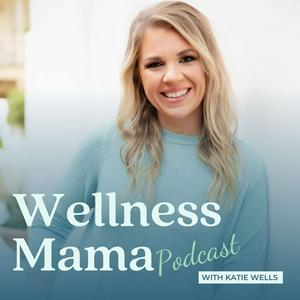
About The Wellness Mama Podcast
The Wellness Mama Podcast is a weekly series covering the topics of holistic health, real food, stress, sleep, fitness, toxins, natural living, DIY, parenting, motherhood, and other health tips to give you actionable solutions to improve your family’s life! Brought to you by Katie Wells of WellnessMama.com
Podcast websiteListen to The Wellness Mama Podcast, The Ella Era and many other podcasts from around the world with the radio.net app
Get the free radio.net app
- Stations and podcasts to bookmark
- Stream via Wi-Fi or Bluetooth
- Supports Carplay & Android Auto
- Many other app features
Get the free radio.net app
- Stations and podcasts to bookmark
- Stream via Wi-Fi or Bluetooth
- Supports Carplay & Android Auto
- Many other app features

The Wellness Mama Podcast
Scan code,
download the app,
start listening.
download the app,
start listening.
The Wellness Mama Podcast: Podcasts in Family
 Ireland