
Listen to this podcast in the app for free: Download for free in the App Store
radio.net
Sleep timer
Save favourites
Pass Your SBR ACCA Exams with Tom Clendon
Tom Clendon | ACCA SBR Online Lecturer & Expert Tutor
Latest episode
103 episodes
SBR Success Strategies: Study Smarter (with ACCA Student Life)
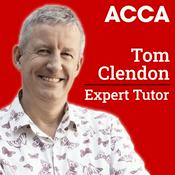
06/11/2026 | 16 mins.Effective study is crucial to success in the SBR Exam - this cannot be denied! In this special feed drop from the ACCA Student Life Podcast, I joined ACCA’s Diana Kokoreva to talk about SBR success strategies and how to study smarter.
We discuss why students can find SBR challenging, the importance of covering the breadth of the syllabus, and why simply knowing the technical content is not enough. To pass, you also need to be able to apply that knowledge under exam conditions.
You’ll hear my advice on planning your studies, using ACCA resources effectively, practising questions to time, and making the transition from learning the syllabus to actually producing exam-standard answers.
We also talk about the final weeks before the exam, why mock practice matters, and what re-sitting students should do differently by reflecting on what held them back last time. The message throughout is simple: don’t just work harder. Work smarter, focus on the areas that will earn you marks, and practice the skills that will help you get to 50 and pass SBR.
If you'd like to listen to more episodes from the "ACCA Student Life" podcast, subscribe wherever you get your podcasts.
Apple Podcasts || Spotify || Website
Thanks for listening to this episode of Pass Your SBR ACCA Exams with Tom Clendon.
If you’d like to view the exam question on screen and see my working, subscribe to the YouTube Channel: https://www.youtube.com/@tomclendonSBR.
For access to on-demand support and guidance for your ACCA SBR Journey, visit my website to see my current course offering: https://tomclendon.co.uk/.
Chapters:
(00:00) Introduction – SBR Success Strategies: How to Study Smarter
(00:47) Welcome to the ACCA Student Life Podcast
(01:19) Tom's Journey and Passion for Teaching SBR
(03:03) Why Students Struggle with SBR
(04:49) The Importance of Planning, Support and Exam Technique
(06:11) Making the Most of ACCA Study Resources
(07:59) Focusing on What Really Matters to Pass SBR
(09:31) Preparing for the Exam: Mock Exams and Timed Practice
(11:57) Building Effective Study Habits
(13:00) Advice for SBR Resit StudentsIAS 37 Provisions with Sarah Ardiles | Old But Gold Series
23/10/2026 | 13 mins.This episode is part of my Old but Gold series, where I revisit some of my earlier podcasts that are still completely relevant for your SBR exam today. The recording may be from the archives, but the knowledge and exam technique are every bit as useful now. In this one, I’m joined by fellow ACCA tutor Sarah Ardiles.
Sarah and I discuss the fundamentals of IAS 37 and what actually makes something a provision. We work through the three recognition criteria: a present obligation arising from a past event, a probable outflow of resources, and an amount that can be estimated reliably. We also explore the important distinction between legal and constructive obligations.
You’ll learn how to apply those principles to practical scenarios such as restructurings, including why a board decision alone may not create an obligation but a sufficiently detailed public announcement might. We also tackle the important difference between recognition and measurement, including why a 60% probability of paying £100,000 does not automatically mean you provide for £60,000. Most importantly for SBR, you’ll see how these basic principles give you the foundation for explaining and discussing provisions in written exam answers.
Thanks for listening to this episode of Pass Your SBR ACCA Exams with Tom Clendon.
If you’d like to view the exam question on screen and see my working, subscribe to the YouTube Channel: https://www.youtube.com/@tomclendonSBR.
For access to on-demand support and guidance for your ACCA SBR Journey, visit my website to see my current course offering: https://tomclendon.co.uk/.
(0:00) Old but Gold introduction
(0:48) Introducing IAS 37 and Sarah Ardiles
(2:10) Why provisions confuse students
(2:46) What is a provision?
(3:47) The three recognition criteria
(5:08) What is a constructive obligation?
(5:48) Restructuring provisions and public announcements
(7:31) What does “probable” mean?
(8:54) Recognition versus measurement
(9:17) The 60% probability example
(10:40) How IAS 37 is examined at FR
(11:31) How provisions are examined at SBRIAS 21: Overseas Subsidiaries and Exchange Differences | Old But Gold Series
09/10/2026 | 10 mins.This episode is part of my Old but Gold series, where I revisit some of my earlier podcasts that are still completely relevant for your SBR exam today. The recording may be from the archives, but the knowledge and exam technique are every bit as useful now.
This episode focuses on IAS 21 and what happens when a group has an overseas subsidiary preparing its financial statements in a different functional currency. I explain how those financial statements are translated into the group’s presentation currency and why exchange differences arise as part of that process.
You’ll learn four key rules: assets and liabilities are translated at the closing rate, income and expenses normally at the average rate, goodwill at the closing rate, and the resulting group exchange differences are recognised in OCI and equity rather than immediately in profit or loss. I also explain how NCI can affect the allocation of exchange differences and what happens to the cumulative exchange difference when the subsidiary is eventually disposed of.
Thanks for listening to this episode of Pass Your SBR ACCA Exams with Tom Clendon.
If you’d like to view the exam question on screen and see my working, subscribe to the YouTube Channel: https://www.youtube.com/@tomclendonSBR.
For access to on-demand support and guidance for your ACCA SBR Journey, visit my website to see my current course offering: https://tomclendon.co.uk/.Goodwill: What You Need to Know to Pass SBR | Old But Gold Series
25/09/2026 | 8 mins.This episode is part of my Old but Gold series, where I revisit some of my earlier podcasts that are still completely relevant for your SBR exam today. The recording may be from the archives, but the knowledge and exam technique are every bit as useful now.
Goodwill is central to group accounting and comes up again and again in SBR. In this episode, I give you a focused tour of what you need to know, starting with the basic goodwill calculation: the parent’s investment, the non-controlling interest and the fair value of the subsidiary’s identifiable net assets at acquisition.
You’ll learn how consideration is measured, how the choice of NCI measurement affects goodwill and impairment, and why fair value adjustments can also create deferred tax. I also cover identifiable intangible assets, contingent liabilities, impairment of goodwill, bargain purchases, step acquisitions, foreign subsidiaries, disposals and the 12-month measurement period. There is plenty here, but the aim is simple: helping you recognise which goodwill rule the examiner wants you to apply.
Thanks for listening to this episode of Pass Your SBR ACCA Exams with Tom Clendon.
If you’d like to view the exam question on screen and see my working, subscribe to the YouTube Channel: https://www.youtube.com/@tomclendonSBR.
For access to on-demand support and guidance for your ACCA SBR Journey, visit my website to see my current course offering: https://tomclendon.co.uk/.
(0:00) Old but Gold introduction
(0:33) What you need to know about goodwill
(1:08) Parent investment and fair value of consideration
(2:07) Measuring the non-controlling interest
(2:30) NCI measurement and impairment
(3:10) Calculating goodwill
(3:26) Fair value adjustments and deferred tax
(4:23) Intangible assets and contingent liabilities on acquisition
(5:27) Goodwill impairment and cash-generating units
(6:10) Negative goodwill and bargain purchases
(6:39) Step acquisitions and foreign subsidiaries
(7:19) Disposals, control-to-control transactions and measurement periodClimate Change 101 and Sustainability Reporting | Old But Gold Series
11/09/2026 | 11 mins.This episode is part of my Old but Gold series, where I revisit some of my earlier podcasts that are still completely relevant for your SBR exam today. The recording may be from the archives, but the knowledge and exam technique are every bit as useful now.
In this episode, I strip climate change and sustainability reporting back to the basics. I explain greenhouse gas emissions, gross and net emissions, carbon credits and, crucially, the difference between Scope 1, Scope 2 and Scope 3 emissions. I also connect this terminology to the broader principles of sustainability reporting.
You’ll learn the language you need before you can confidently tackle an exam requirement on sustainability. I explain Scope 1 as direct emissions, Scope 2 as energy-related emissions and Scope 3 as emissions connected with the wider value chain. We also look at metrics, targets, governance, strategy, risk management and why concepts such as materiality, relevance and faithful representation still matter.
Thanks for listening to this episode of Pass Your SBR ACCA Exams with Tom Clendon.
If you’d like to view the exam question on screen and see my working, subscribe to the YouTube Channel: https://www.youtube.com/@tomclendonSBR.
For access to on-demand support and guidance for your ACCA SBR Journey, visit my website to see my current course offering: https://tomclendon.co.uk/.
(0:00) Old but Gold introduction
(0:57) Why climate change matters in SBR
(1:39) What is climate change?
(2:14) Greenhouse gases and carbon emissions
(3:12) Why accountants are involved in sustainability reporting
(4:00) Net zero, gross emissions and net emissions
(5:04) What are carbon credits?
(6:14) Scope 1 emissions
(6:43) Scope 2 emissions
(7:34) Scope 3 and the value chain
(8:08) Recap of Scope 1, 2 and 3
(8:34) IFRS S2, metrics, targets and materiality
More Education podcasts


Trending Education podcasts











About Pass Your SBR ACCA Exams with Tom Clendon
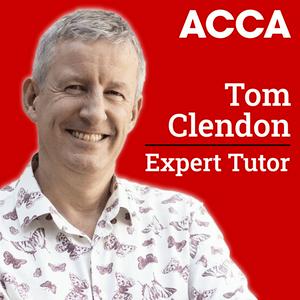
Tom Clendon is an online ACCA SBR Lecturer and Expert Tutor for students of ACCA across the globe. If you're a student currently studying for the ACCA Exams, then you're in the right place!
This is an award winning podcast. In 2023 it was recognised with a PQ award from PQ magazine.
To find out more about how Tom can help you with your ACCA studies, head to TomClendon.co.uk.
Podcast websiteListen to Pass Your SBR ACCA Exams with Tom Clendon, Change is Possible and many other podcasts from around the world with the radio.net app
Get the free radio.net app
- Stations and podcasts to bookmark
- Stream via Wi-Fi or Bluetooth
- Supports Carplay & Android Auto
- Many other app features

 Ireland

