

Listen to this podcast in the app for free: Download for free in the App Store
radio.net
Sleep timer
Save favourites
148 episodes
Ep. 124 Building Rapport Isn’t Enough...How Therapists Become Part of the Intervention
20/08/2026 | 14 mins.Building rapport is important...but rapport isn’t the end goal. It’s the beginning of the therapeutic relationship.
In this episode, I’m breaking down the difference between rapport and the therapeutic relationship and exploring an idea that can completely shift the way we think about therapy: the therapist is part of the intervention.
We’ll talk about what it actually means for a child to experience us as safe, trustworthy, responsive, and attuned - and why autonomy, flexibility, and repair matter just as much as having a “good connection.”
I’ll also introduce therapeutic use of self: intentionally adapting your presence, energy, voice, pacing, body language, expectations, and responsiveness based on what a particular child needs from you.
In this episode, you’ll learn:
The difference between rapport and the therapeutic relationship
Why building rapport shouldn’t simply lead to increasing demands
The roles of trust, safety, autonomy, responsiveness, attunement, and repair
What “therapeutic use of self” means—and what it looks like in practice
How your energy, affect, voice, pacing, and physical presence can shape an interaction
Why being a great pediatric therapist is about more than being fun or likable
How to ask, “What does this child need from me right now?”
If you want to attend the upcoming training: Ready, Set, Connect: The Roadmap to Better Engagement & Communication - then click here to become a paid subscriber on Substack to join this training (plus trainings every month!) https://substack.com/@sensoryslp
And for Chris's upcoming AI Webinar, click here: https://www.speechdude.com/ai-for-slps-webinar-reg-aug-2026Ep. 123 Not Seeing Progress in Speech Therapy? Start Here.
13/08/2026 | 21 mins.Ready to actually start making progress with your autistic clients?
I'm going to show you steps you can take to build regulation, engagement and motivation in a live training on Substack.
Click here to join Substack as a paid subscriber and get access to this training plus my full training archive: https://substack.com/@sensoryslpEp. 122 Screen Time Considerations for Autistic Kids
06/08/2026 | 28 mins.Are screens good or bad for autistic kids? Why are transitions away from the iPad so difficult? And what does the research actually say about screen time and autism?
In this live discussion, pediatric speech-language pathologists Jessie & Chris Wenger explores the complex relationship between screen time, sensory regulation, and autism—without the guilt or fear-based messaging.
We cover why screens can feel incredibly regulating for many autistic children, why ending screen time can trigger intense dysregulation, and how to create healthier, more successful screen time routines while supporting your child's nervous system.
In this episode, you'll learn:
Why screen time can feel so regulating for autistic children
Why transitioning away from screens is often so difficult
The neuroscience behind dopamine, attention, and screen use
What research says about screen time, executive functioning, sleep, and self-regulation
Why the first two years of life are especially important for language and social development
How monotropism and sensory processing influence screen use
Practical, neurodiversity-affirming strategies for reducing transition struggles
Realistic screen time tips for busy families—without shame or perfectionism
Whether you're a parent, speech-language pathologist (SLP), occupational therapist (OT), educator, or caregiver, this conversation will help you better understand why autistic kids often rely on screens as a regulation tool and how to support them through challenging transitions.Ep. 121 The Biggest Sensory Mistakes SLPs Make
02/07/2026 | 30 mins.On this episode, Jessie covers the biggest sensory mistakes SLPs make!
This episode was the Pre-Party for our free training, the Sensory Intensive for SLPs.
While the Sensory Intensive has ended, you can check out our other sensory trainings for SLPs here: Sensory Training for SLPsEp. 120 Why Anxiety is So Common in Autism (And What Actually Helps)
18/06/2026 | 24 mins.Anxiety is incredibly common in autistic people. But what if we're asking the wrong question? Instead of asking, "How do we reduce anxiety?" maybe we should be asking, "What is this anxiety trying to tell us?"
In this episode, we'll explore why anxiety shows up so often alongside autism and why many traditional approaches miss the mark.
You'll learn:
Why anxiety rates are significantly higher in autistic people
The hidden role of uncertainty and unpredictability
How sensory experiences can impact anxiety levels
Why seemingly small things like phone calls, haircuts, and schedule changes can feel overwhelming
The connection between masking and anxiety
Why "pushing through" often makes things worse
What actually helps: predictability, autonomy, sensory supports, and clear communication
How to view anxiety through a neurodiversity-affirming lens
More Education podcasts
 80,000 Hours PodcastEducation, Technology
 IT IS WHAT IT IS!Education, Self-Improvement
 Begin Again with Davina McCallEducation, Health & Wellness, Mental Health, Self-Improvement, Society & Culture
 The Comeback with Brenda DennehyEducation, Health & Wellness, Mental Health, Self-Improvement
 The Daily StoicBusiness, Education, Self-Improvement, Society & Culture
 How to Be a Better HumanEducation, Self-Improvement
 The Mel Robbins PodcastEducation, Health & Wellness, Mental Health, Relationships, Self-Improvement, Society & Culture
 Good Life ProjectBusiness, Education, Health & Wellness, Self-Improvement, Tutorials
 No More Booze - The PodcastEducation, Self-Improvement
 6 Minute EnglishEducation, Language Learning
Trending Education podcasts
 EconTalkCourses, Education, Philosophy, Science, Social Sciences, Society & Culture
 The Tamsen ShowEducation, Health & Wellness, Self-Improvement, Society & Culture
 Japanese podcast for beginners (Nihongo con Teppei)Education, Language Learning
 Law of Attraction Changed My LifeEducation, Kids & Family, Parenting, Religion & Spirituality, Self-Improvement, Spirituality
 Easy Spanish: Learn Spanish with everyday conversations | Conversaciones del día a día para aprender españolCourses, Education, Language Learning, Places & Travel, Society & Culture
 Know ThyselfEducation, Self-Improvement
 The Jordan Harbinger ShowBusiness, Education, Science
 The Middletown Centre for Autism PodcastEducation, Health & Wellness
 Anseo.net - If I were the Minister for EducationCourses, Education, Tutorials
 Dreaming Spanish Podcast – Chats in Beginner SpanishEducation, Language Learning
 Zero to Finals Medical Revision PodcastEducation, Health & Wellness, Life Sciences, Medicine, Science
 All Ears English PodcastBusiness, Education, Language Learning
 French Mornings with ElisaEducation, Language Learning
 ALIGNED | The Path to PurposeAlternative Health, Education, Health & Wellness, Religion & Spirituality, Self-Improvement, Spirituality
 Adult ChildEducation, Health & Wellness, Mental Health, Relationships, Self-Improvement, Society & Culture
 Английский язык по плейлистам. Английский язык с нуля. Полный курсEducation, Language Learning
 How to PhD - your academic survival guideEducation, Science, Tutorials
 Coffee Break GermanCourses, Education, Language Learning
 Listening Time: English PracticeEducation, Language Learning
 Gaeilge WeeklyEducation, Language Learning
 Luke's ENGLISH Podcast - Learn British English with Luke ThompsonComedy, Education, Language Learning
- The Daily StoicBusiness, Education, Self-Improvement, Society & Culture
- How to Be a Better HumanEducation, Self-Improvement
 Learn Indonesian | IndonesianPod101.comEducation, Language Learning, Places & Travel, Society & Culture
 The Jordan B. Peterson PodcastEducation, Science, Society & Culture
 PUBLISHING ACADEMIC RESEARCH | Complete Your Scholarship, Thesis, or Dissertation and Maintain Your Mental HealthEducation, Tutorials
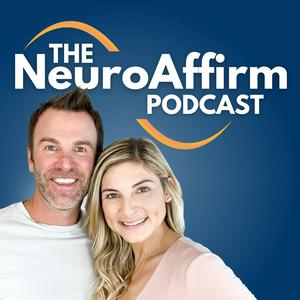
About The NeuroAffirm Podcast
We're Jessie & Chris, an SLP couple from California with 5 boys and a passion for finding better ways to support Autistic kids. Join us weekly to learn neurodiversity affirming ways to strengthen social-emotional development and regulation in your Autistic students.
Podcast websiteListen to The NeuroAffirm Podcast, 80,000 Hours Podcast and many other podcasts from around the world with the radio.net app
Get the free radio.net app
- Stations and podcasts to bookmark
- Stream via Wi-Fi or Bluetooth
- Supports Carplay & Android Auto
- Many other app features
Get the free radio.net app
- Stations and podcasts to bookmark
- Stream via Wi-Fi or Bluetooth
- Supports Carplay & Android Auto
- Many other app features

The NeuroAffirm Podcast
Scan code,
download the app,
start listening.
download the app,
start listening.
 Ireland