
Listen to this podcast in the app for free: Download for free in the App Store
radio.net
Sleep timer
Save favourites
64 episodes
He Was About to Sell SiGMA. Today It’s Worth 5X That - Eman Pulis
21/10/2026 | 35 mins.Before SiGMA, Eman Pulis had a failed business, €16,000 in bank debt and no source of revenue. The bank kept calling. His way out was to return to what he knew best: events.
SiGMA grew from that low point. But Eman kept the old company name, Viking PC Health, on the invoices. He wanted a constant reminder of where he came from.
In this episode of the iGaming Leader podcast, Leo Judkins speaks with SiGMA founder Eman Pulis about the setbacks behind the business, an acquisition that fell through during COVID, and why he now sees that failed exit as a silver lining.
Eman also shares how he leads a global team without expecting everyone to think like a founder, why he prepares for life after an exit, and the question he keeps returning to: how much more time should go into building the business, and how much into the foundation?
ABOUT THE GUEST
Eman Pulis is the founder of SiGMA Group, a global iGaming events and media business that began with a summit in Malta. Alongside SiGMA, he launched Ikigai Ventures and the SiGMA Foundation. His work spans international events, investment in founders and philanthropic initiatives.
IN THIS EPISODE
00:00 Highlights and introduction
03:00 Founder ambition and exit planning
06:00 Growing SiGMA beyond Malta
12:00 The €16,000 failure before SiGMA
16:00 Leading a global team
21:00 A failed exit and crisis leadership
26:00 Calculated risk and reputation
30:00 Business, philanthropy and family
33:00 Finding mentors as a founder
QUOTES FROM EMAN
“The idea of SiGMA came out of that rock bottom moment.”
“I wouldn't want to take away any of the stress, any of the life lessons that came along with the pain.”
“If I look after my team, they look after my business.”
“Focus on the bigger picture, focus on the long term.”
“Looking back, do I want to be in a position where I say, ‘Man, I could have impacted a million more person. Instead, I focus on generating another million euros.’”
IMPORTANT LINKS
Connect with Eman Pulis on LinkedIn:
https://www.linkedin.com/in/emanpulis/
Connect with Leo Judkins on LinkedIn:
https://www.linkedin.com/in/leo-judkins/
Sign up for the iGaming Leader newsletter:
https://www.igamingleader.com/signup
Join the iGaming Leader Mastermind:
https://www.igamingleader.com/
This episode was brought to you by:
Sumsub: the full-cycle verification platform helping iGaming operators onboard players, meet compliance requirements and prevent fraud. Learn more at: https://sumsub.link/8gu
Bloomreach: the AI-powered marketing automation platform helping iGaming operators turn real-time player data into personalised engagement that supports retention and loyalty. Learn more at: https://www.bloomreach.com/en/industries/igaming“You’re Incorrect, Tommy” - Inside Xtremepush’s Culture of Challenge
07/10/2026 | 44 mins.In this episode, Leo talks with Tommy Kearns about how rugby shaped the way he runs a company: trust, loyalty, accountability, direct feedback and a role for everyone. He is clear about what he does not want around him. "I don't want yes men around me." Everything gets challenged until the team reaches alignment, and then everyone commits.
He also covers the harder parts of the story. Tommy lost his money in the property crash after selling his Mexico business. Xtremepush was bootstrapped and profitable within 13 to 14 months. It then took growth capital in 2021 and went negative for nearly 24 months. He also talks about the 2023 Thunderbite acquisition, why Xtremepush put CRM, gamification and loyalty into one platform, and why he thinks trust matters more in the AI era.
ABOUT THE GUEST
Tommy Kearns is CEO and Co-Founder of Xtremepush, a leading company now serving 230 iGaming brands around the world, including more than half of the EGR top 50.
He is a technology entrepreneur with a track record in the global internet and mobile industry. He builds businesses that solve large customer problems for large enterprises, with technology and automation where relevant.
His core skills include customer analytics and engagement, digital strategy, mobile and system application development, innovation, business planning, market entry analysis and deployment, and building commercial partnerships.
IN THIS EPISODE
00:00:00 Introducing Tommy
00:03:00 Rugby career at Connacht and the lessons that carried into business
00:08:00 Challenge and commit: no yes men and the leadership team
00:12:00 Why toxicity is viral, Leaders for Leaders and hiring for urgency
00:19:00 Lean culture: single-digit churn, pod systems and Keep Driving Hard (KDH)
00:22:00 Career path: the Caribbean, Mexico, the 2009 property crash and the origin of Xtremepush
00:28:00 Bootstrapping, growth capital in 2021 and the first acquisition
00:32:00 One platform for CRM, gamification and loyalty, 24 months in the red and the Thunderbite acquisition
00:38:00 Expert OS, agentic AI, trust and the power of saying no
QUOTES FROM TOMMY
"I don't want yes men around me. I want people to challenge my thoughts. My thoughts are directionally very good, but specifically not always correct."
"Toxicity is viral. It needs to be rooted out."
"You can't learn urgency. You either have it or you don't, and you have to test for it."
"You have to have felt failure. You have to feel it. You have to really feel it, not just see it."
"Success is not permanent, but neither is failure."
"Trust is going to become more important, relationships are gonna become more important."
IMPORTANT LINKS
Connect with Tommy Kearns on LinkedIn: https://www.linkedin.com/in/tommykearns/
Connect with Leo Judkins on LinkedIn: https://www.linkedin.com/in/leo-judkins/
Get the iGaming Leader newsletter: https://www.igamingleader.com/signup
Join the iGaming Leader Mastermind: https://www.igamingleader.com/
This episode is brought to you by Sumsub, the full-cycle verification platform for iGaming operators. Player onboarding, AML and fraud prevention, all in one place.
Learn more: sumsub.com/gambling or https://sumsub.link/8guWhy This CEO Works 15-Hour Days Across Two Continents
23/09/2026 | 39 mins.Yoni Sidi wanted to slow down. After 17 years in corporate iGaming, he had a simple plan: build a platform, generate traffic, play golf, and reduce the pressure. Then Winpot took off in Mexico, the B2B business grew to 14 or 15 clients, and he found himself working 14 to 15-hour days across two continents.
In this episode of the iGaming Leader podcast, Yoni, CEO of Wiztech Group, talks about building a bootstrapped operator and tech business from scratch, leading across cultures, and what he would tell his 2022 self.
About the guest:
Yoni Sidi is an experienced Chief Executive and Marketing Leader with a proven track record in the global iGaming and entertainment industry. He is currently driving growth at the intersection of technology, regulated gaming, and customer engagement, with skills across scaling brands, building high-performing teams, and developing data-driven strategies in acquisition, retention, and brand partnerships. He is passionate about bridging innovative digital platforms with real-world experiences and is actively expanding into new markets across LATAM, Europe, and beyond.
In this episode:
00:00 Introduction
00:48 Growing up around Ronnie Rosenthal, Liverpool, and Tottenham
06:29 Three years of military service as a combat instructor and what it taught him about standards
08:14 Building Winpot with no outside funding, brick by brick
12:38 How close he still is to the original vision of slowing down
15:32 Why switching off has been harder than any commercial decision
18:41 Managing two businesses across Cyprus and Mexico in different time zones
26:48 The hard part of leadership is people, not strategy
32:16 Learning to lead across Israeli, Mexican, British, and Cypriot cultures
35:50 What he would go back and tell himself in 2022
Quotes from Yoni:
"My aim and vision was to literally stop generating traffic. I'd be playing golf. No pressure, no stress. We make plans and God laughs."
"The bad times will feel like you have five elephants on your shoulders. The good times will not feel as good as you expect them to be."
"It can be a really lonely place at the top when you're making your own decisions."
"I wasted a lot of my own time and energy and deteriorated my own mental health by being too ashamed to ask for help or for advice."
"I would always choose the people over the speed."
"Everything will be okay. Nothing is life or death. Speak to people. Share your problems."
Connect with Yoni: https://www.linkedin.com/in/yoni-sidi-b5b3a88/
Follow Leo Judkins on LinkedIn: https://www.linkedin.com/in/leo-judkins/
Subscribe to the iGaming Leader newsletter: https://www.igamingleader.com/signup
Join the iGaming Leader Mastermind: https://www.igamingleader.com/
This episode is sponsored by Sumsub, the full-cycle verification platform trusted by top iGaming operators worldwide. Player onboarding, AML, fraud prevention, all in one place.
Learn more at https://sumsub.link/8guOur Biggest Failure Is My Proudest Moment
09/09/2026 | 51 mins.David Carrion started as a dealer on Margarita Island, Venezuela in 1995. Thirty years later, he's Chief Strategy Officer at Gaming1, having run live poker events for PokerStars, launched a casino from scratch in his hometown, and led a four-state US market entry.
In this episode of the iGaming Leader podcast, David walks us through four transitions every leader has to make: from doing to letting do, from knowing everything to knowing very little, from argument to context, and from the smaller to the bigger picture.
In this episode:
00:00 Guest intro
00:03 Dealing cards at 18 on Margarita Island
00:06 Running Casino Buenos Aires for 21 million people
00:10 Launching Casino Asturias from zero
00:16 The PokerStars Caribbean Adventure
00:21 What PokerStars got right about culture
00:36 The PCA 10th anniversary trying to break 10,000 players
00:44 Launching in four US states as a relatively small Belgian company
00:46 The strongest stretch of leadership I have ever went through
Quotes from David:
"Launching USA was one of our biggest failures, and that's why it's one of my proudest moments."
"There's nothing more dangerous than a man that doesn't know what he doesn't know."
"The higher you are, the harder it is to influence."
"Growth is for sure on the other side of comfort."
"There aren't that many superheroes out there. There's a lot of common-sense and hard work."
Connect with David: https://www.linkedin.com/in/david-carrion-82332952/
Follow Leo Judkins on LinkedIn: https://www.linkedin.com/in/leo-judkins/
Subscribe to the iGaming Leader newsletter: https://www.igamingleader.com/signup
Join the iGaming Leader Mastermind: https://www.igamingleader.com/
This episode is sponsored by Sumsub, the leading identity verification provider for iGaming operators. Learn more at https://sumsub.link/8guThe Trap That Destroys Founder-Led Businesses 100% of The Time
26/08/2026 | 37 mins.What happens when you lose 100% of your revenue in back-to-back meetings on the same day?
For Sidharth Swarup, it was the moment that forged everything.
In this episode, Sid shares the real story behind building Ingenuity from a $1,000 investment into a business that in 2014 made more money than the previous 14 years combined. No outside investment. No borrowed money. No diluted equity.
Sid opens up about running on eight treadmills at full speed for decades, fuelled by toxic energy, wearing masks until he had nothing left inside, and what it actually took to rebuild.
He also makes a bold claim: the conventional wisdom of "hire the right people and get out of the way" fails founder-led businesses 100% of the time. And he explains exactly why.
This one goes deep. Leadership, identity, burnout, culture, and one of the most inspiring social impact stories I have heard in years.
About the Guest
Sidharth Swarup is the co-founder and CEO of Ingenuity Gaming, a global game development partner for casino operators and suppliers across regulated markets worldwide. Ingenuity builds high-quality games, platforms, and teams, with craftsmanship at the core.
Sid co-founded the business in 2000 and has grown it without ever taking outside investment or diluting equity. He is a TEDx speaker, a member of YPO, an avid reader, a board game enthusiast, and a father. He cares deeply about how organisations grow, how leaders show up, and how culture is shaped over time.
Key Topics Discussed
00:00 The knockout punch. Losing both anchor clients in one day.
03:00 Growing up in a bubble and believing his family was the richest in the world.
05:00 Boarding school and a deep sense of abandonment.
08:00 Burnout and breakdown: calling a friend asking for help.
12:00 The founding of Ingenuity in 2000 with a $1,000 investment
16:00 Working with his brother. Twenty years of partnership.
19:00 get the right people and get out of the way fails founder-led businesses 100% of the time.
22:00 Founder Mode and why Sid wishes he had read it two years earlier.
24:00 Signal versus noise and why most effort goes into the wrong problems.
28:00 Pulling kids off the streets of Delhi and educating them.
34:00 Embracing the multi-billion-dollar ambition
36:00 Advice for anyone running on eight treadmills
Memorable Quotes
"It's a knockout punch. You're on your knees. You just gotta find a way to get back up."
"You're running on eight different treadmills at the same time, and any day you're not living up to your ideal self, you're miserable. It doesn't matter how many good things are happening in your life."
"Get the right people, but on these fronts, be in the weeds. Make sure nobody forgets."
"They are heroes in their communities. The other kids have their posters up on the walls. They're a source of serious inspiration of what you can pull off."
"The most selfish thing you can do as a human being is to be kind, compassionate, and generous. Because it comes back to you a hundredfold in terms of joy."
"I'm still running on eight different treadmills as fast as I can, even faster than before. But it's a very different fuel now. It's not toxic fuel anymore."
Key Takeaways
Losing 100% of your revenue in a single day is survivable. Ingenuity broke even in year one, turned profitable in year two, and in the year after that made more than the previous 14 years combined.
The conventional wisdom of "hire the right people and get out of the way" fails in founder-led businesses. Founders must stay in the weeds on two things: keeping everyone focused on the most important problem, and protecting the resourcefulness that creates results with very little.
Burnout does not announce itself. It builds under masks that the outside world cannot see. Getting help is not weakness. It is the move that changes everything.
Redefine value in your organisation. Move from roles and responsibilities to problems solved. The question is not "what is your job?" but "what problem are you solving that nobody else can?"
You do not have to change who you are. You have to learn to run on better fuel. Ambition, the need for validation, the drive to prove yourself: these are not flaws to fix. They are engines to redirect.
Social impact and commercial excellence are not opposites. The Navodaya programme at Ingenuity is proof that a business can build high-performance teams and move people out of poverty at the same time.
The conventional wisdom of "hire the right people and get out of the way" fails in founder-led businesses. Founders must stay in the weeds on two things: keeping everyone focused on the most important problem, and protecting the resourcefulness that creates results with very little.
Burnout does not announce itself. It builds under masks that the outside world cannot see. Getting help is not weakness. It is the move that changes everything.
Redefine value in your organisation. Move from role and responsibilities to problems solved. The question is not "what is your job?" but "what problem are you solving that nobody else can?"
You do not have to change who you are. You have to learn to run on better fuel. Ambition, the need for validation, the drive to prove yourself: these are not flaws to fix. They are engines to redirect.
Social impact and commercial excellence are not opposites. The Navodaya program at Ingenuity is proof that a business can build high-performance teams and move people out of poverty at the same time.
Resources and Links Mentioned
Founder Mode by Paul Graham: Referenced by Sid as the piece he wishes he had read two years earlier. https://paulgraham.com/foundermode.html
Follow Leo Judkins on LinkedIn: https://www.linkedin.com/in/leo-judkins/
Subscribe to the iGaming Leader newsletter: https://www.igamingleader.com/signup
Join the iGaming Leader Mastermind: https://www.igamingleader.com/
Sidharth Swarup on LinkedIn: https://www.linkedin.com/in/sidharth-swarup-2773221/
This episode is sponsored by Sumsub, the leading identity verification provider for iGaming operators. Learn more at https://sumsub.link/8gu
More Business podcasts






Trending Business podcasts


















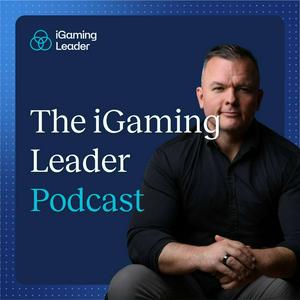
About The iGaming Leader
The iGaming Leader is hosted by Leo Judkins, founder of The iGaming Leader Mastermind.
Every other week, Leo sits down with Founders, C-suite executives, and VPs from across the iGaming industry for conversations you won't hear on a conference panel. The real decisions. The hard calls. What leadership actually looks like from the inside.
No keynote polish. No PR answers. Just honest conversations between people who know the industry.
New episodes every other Wednesday.
Podcast websiteListen to The iGaming Leader, Get Started Investing and many other podcasts from around the world with the radio.net app
Get the free radio.net app
- Stations and podcasts to bookmark
- Stream via Wi-Fi or Bluetooth
- Supports Carplay & Android Auto
- Many other app features
Get the free radio.net app
- Stations and podcasts to bookmark
- Stream via Wi-Fi or Bluetooth
- Supports Carplay & Android Auto
- Many other app features

The iGaming Leader
Scan code,
download the app,
start listening.
download the app,
start listening.
 Ireland
