PodcastsEducationThe Mindful Dog Parent: Dog Training Advice & Calm Support for Overwhelmed Owners

The Mindful Dog Parent: Dog Training Advice & Calm Support for Overwhelmed Owners

Sian Lawley-Rudd - Lavender Garden Animal Services
The Mindful Dog Parent: Dog Training Advice & Calm Support for Overwhelmed Owners
Latest episode

44 episodes

  • The Mindful Dog Parent: Dog Training Advice & Calm Support for Overwhelmed Owners

    What to Do in the Moments Before Your Dog Reacts: How to Use the Window Most Dog Parents Miss

    21/04/2026 | 27 mins.
    If you have a reactive dog and you’ve ever wondered what to do in the moments before they react; this episode gives you a practical framework for exactly that. Today we’re talking about the window: the five to ten seconds between spotting the trigger and your dog reaching full activation, and why it’s the most important moment on the entire walk. In Episode 44 of The Mindful Dog Parent, I’m sharing a four-step framework for using that window well. Not to prevent every reaction, that’s not realistic. But to give you and your dog a better chance of navigating it together, from a more regulated place. This is practical Nervous-System Aware Dog Parenting™ in action. This episode pairs naturally with Episode 7 (The One-Minute Reset) and Episode 40 (the Five-Minute Debrief) as the third piece of a practical walk toolkit - before, during, and after.
    Main Topics
    Understanding the window
    The nervous system progression from noticing to assessing to reacting, and why the assessment phase is where everything happens. Both your dog's nervous system and yours are activating together in that window, co-regulating in real time. Understanding this is empowering because it means the co-regulation can flow in either direction.
    What happens naturally under pressure (and why it makes complete sense)
    The automatic responses, tightening grip, moving faster, talking urgently, freezing, are completely natural nervous system responses to a stressful moment. They make sense. This section validates those responses fully before explaining why having an alternative skill available is useful, framed as adding something new, not correcting something wrong.
    The four-step framework
    Step One: Regulate yourself first - one exhale, soft shoulders, soften the grip. Two to three seconds. The most important and most counterintuitive step.
    Step Two: Create space if you can - a calm, deliberate change of direction. Distance is the most powerful tool in reactive dog walking.
    Step Three: Give your dog something to do - scatter treats, a quiet cue, a piece of high-value food. An alternative for their nervous system to orient toward.
    Step Four: Release the outcome - stop watching and waiting. You’ve used the window well. Let the outcome be whatever it’s going to be.

    Building it into a habit
    You need to be able to access this framework when activated. The way to do that is to practise Step One, the regulation breath and shoulder drop, in low-stakes situations until it becomes automatic. Including right now, while listening.
    Key Takeaway
    The window before your dog reacts is not dead time. It’s the most important five to ten seconds on the entire walk. Regulate first. Create space if you can. Give your dog something to do. Release the outcome.
    Mentioned in This Episode
    Episode 7: The One-Minute Reset - practical walk toolkit piece one
    Episode 40: When the Walk Goes Wrong (Five-Minute Debrief) - practical walk toolkit
    Episode 44: The Window framework - practical walk toolkit piece three
    Nervous-System Aware Dog Parenting™ framework
    The Dog Parent Path™ - lavendergardenanimalservices.co.uk
    Free private podcast series - lavendergardenanimalservices.myflodesk.com/private-podcast-series
    Bonnie - Sian’s dog, whose story features in Step Three

    Related Episodes
    The One-Minute Reset: A Simple Way to Regulate Your Dog (and Yourself) - Episode 7
    When the Walk Goes Wrong: A Simple Way to Reset Before It Ruins Your Day - Episode 40
    Why Your Dog’s Behaviour Feels So Triggering (And What to Do About It) - Episode 5
    When Your Dog’s Behaviour Feels Overwhelming: How to Break the Spiral - Episode 14

    If The Mindful Dog Parent has helped you, the most useful thing you can do is leave a review on Apple Podcasts. It takes two minutes and it’s how other overwhelmed dog parents find the show. Search The Mindful Dog Parent on Apple Podcasts, scroll down, and leave a rating and review. Thank you so much.

    What can you do next?
    Share this episode with a dog parent who struggles on reactive walks
    Leave a review on Apple Podcasts - search The Mindful Dog Parent, scroll down, leave a rating and review
    Sign up for the free private podcast series: lavendergardenanimalservices.myflodesk.com/private-podcast-series
    Find out more about The Dog Parent Path™: thedogparentpath.com (new website under construction)

  • The Mindful Dog Parent: Dog Training Advice & Calm Support for Overwhelmed Owners

    The Comparison Trap: Why You Keep Measuring Your Dog Against Every Other Dog (and How to Stop)

    14/04/2026 | 26 mins.
    If you’re an overwhelmed dog parent who has ever watched a calm, easy dog walk past and felt that quiet sinking feeling, this episode is for you. Today we’re talking about the comparison trap: why you keep measuring your reactive dog (or your dog's behaviour generally) against every other dog, what it’s actually doing to your nervous system (and theirs), and four ways to step out of it for good. In Episode 43 of The Mindful Dog Parent, I’m exploring why comparison is hardwired into us, why social media has made it so much worse for dog parents specifically, and the three stories comparison tells that are almost never true. This is one of the quietest and most corrosive habits in dog parenting, and most people never name it or examine it. This episode sits alongside Episodes 40, 41, and 42 as part of an ongoing arc around building inner resilience as a dog parent, through my Nervous-System Aware Dog Parenting™ framework at the heart of The Dog Parent Path™.
    Main Topics
    Why we compare (and why it’s getting worse)
    Comparison is not a character flaw, it’s hardwired. But social media has given us access to an infinite highlight reel of other people’s dogs. We compare our full, unedited reality to someone else’s best moment. And the in-person comparison, the calm dog in the park, activates something in our nervous system in real time, on the walk itself.
    What comparison actually does
    Comparison activates the nervous system as a social threat, and your dog feels it. Shoulders up, breath shortens, grip tightens on the lead. The cruel irony: comparison about your dog’s reactivity actively makes the next reaction more likely. Your dysregulation feeds theirs (but that's not to say you should just stop being dysregulated - its part of being human, but instead to be aware when you are dysregulated!). Includes the Maisy story.
    The three stories comparison tells (that aren’t true)
    Story One: “That dog is better than mine” - that dog is different from yours, not better
    Story Two: “That owner knows something I don’t” - you’re reading one page of someone else’s book
    Story Three: “If my dog were like that, I’d be a good dog parent” - the most damaging story, tying your worth to your dog’s behaviour

    Four ways to step out of the trap
    Name it when it happens - neutral acknowledgement breaks the spiral
    Redirect to your own dog - physically bring your attention back to who’s actually on the lead or in front of you right now
    Curate what you consume - unfollowing accounts that make you feel worse is self-regulation, not avoidance
    Find your own reference points - measure your dog against themselves, not other dogs (call backs to Episode 41)

    Key Takeaway
    Your dog doesn’t need to be like any other dog. They need to be supported by you, in their own journey, at their own pace. And that’s already what you’re doing.

    Mentioned in This Episode
    Episode 41: You’re Doing Better Than You Think - the evidence audit
    Sian's Nervous-System Aware Dog Parenting™ framework
    My 3 part free private podcast series
    Maisy — Sian’s dog, whose story features in Part Two

    Related Episodes
    When It Feels Like Everyone Else Has the Perfect Dog: How to Stop the Comparison Spiral - Episode 24
    You’re Doing Better Than You Think: The Evidence You Keep Ignoring — Episode 41
    You’re Not a Bad Dog Parent - You’re a Shamed One — Episode 39
    You’re Not Doing It Wrong: The Real Talk Dog Parents Deserve — Episode 3

    Leave a Review on Apple Podcasts
    If The Mindful Dog Parent has helped you, the most useful thing you can do is leave a review on Apple Podcasts. It takes two minutes and it’s how other overwhelmed dog parents find the show. Search The Mindful Dog Parent on Apple Podcasts, scroll down, and leave a rating and review. Thank you so much.
    Things to do next
    Share this episode with a dog parent who you know compares themselves on walks
    Leave a review on Apple Podcasts — search The Mindful Dog Parent, scroll down, leave a rating and review
    Sign up for the free private podcast series
  • The Mindful Dog Parent: Dog Training Advice & Calm Support for Overwhelmed Owners

    When You’re Waiting for Your Dog's Behaviour to Get Better (And It’s Taking So Long)

    07/04/2026 | 32 mins.
    If you’re watching reactive dog progress move slower than you hoped, or feel like your dog’s training isn’t working at all, this episode is for you. Today we’re talking about the wait: why nervous system recovery takes as long as it does, what slow progress actually means, and four things that genuinely help while you’re in the middle of it. In Episode 42 of The Mindful Dog Parent, I’m being honest about something that most dog training content glosses over: progress isn’t linear, the timeline is often longer than anyone wants, and the exhaustion of the wait is real. But slow progress is almost never evidence of failure, and understanding what’s actually happening can change how you carry it. This episode follows on naturally from Episode 41 (the evidence audit) and Episode 40 (the Five-Minute Debrief), forming the third part of a natural arc around processing the hard parts of dog parenting and finding a way through.
    Main Topics
    Why it feels like it’s taking so long
    Nervous system recovery is genuinely slow, not because you’re doing it wrong, but because that’s the nature of how nervous systems heal. Progress isn’t linear: two steps forward, one step back. A good week followed by a week that makes you wonder if you imagined it. This section names the reality honestly, with Bonnie’s story as the personal anchor.
    What the waiting actually means
    Slow progress is almost never evidence of failure, it’s evidence of the complexity of what you’re working with. The unremarkable middle weeks are where the actual change happens: accumulated positive experiences, slightly shifting thresholds, new neural pathways being laid down. The work is happening even when you can’t see it.
    Four ways to wait well
    Measure differently - shift from measuring outcomes to measuring indicators (recovery time, threshold, noticing)
    Find the before and after - use a longer time horizon to see change that’s too close to spot day to day
    Protect your own nervous system - you can’t carry a dog through nervous system recovery on an empty tank (call backs to Episodes 40 and 41)
    Let the timeline be what it is - redirecting the energy spent fighting the timeline into showing up for what is

    A word about hope
    An honest, careful close: things do change. Not always in the ways you hope or on the timeline you want. But the dogs that seemed most stuck, the ones whose owners wondered if anything would ever be different, most of them changed. Because their owners kept showing up.
    Key Takeaway
    Slow progress isn’t failure. It’s what nervous system recovery actually looks like. The work is happening even when you can’t see it. And the going is what gets you there.
    Mentioned in This Episode
    Episode 40: When the Walk Goes Wrong — the Five-Minute Debrief
    Episode 41: You’re Doing Better Than You Think — the evidence audit
    Nervous-System Aware Dog Parenting™ framework
    Free private podcast series — lavendergardenanimalservices.myflodesk.com/private-podcast-series
    Bonnie - Sian’s dog, whose story features in Part One

    Related Episodes
    When the Walk Goes Wrong: A Simple Way to Reset — Episode 40
    You’re Doing Better Than You Think: The Evidence You Keep Ignoring — Episode 41
    Your Dog’s Bad Day Doesn’t Mean You’ve Gone Backwards — Episode 22
    When You Feel Like You’re Failing With Your Dog — Episode 19

    Apple Podcasts Review Ask
    If The Mindful Dog Parent has helped you, the most useful thing you can do is leave a review on Apple Podcasts. It takes two minutes and it’s how other overwhelmed dog parents find the show. Search The Mindful Dog Parent on Apple Podcasts, scroll down, and leave a rating and review. Thank you so much.
    What to do next:
    Share this episode with a dog parent who is in the middle of the wait
    Leave a review on Apple Podcasts - search The Mindful Dog Parent, scroll down, leave a rating and review
    Sign up for the free mini private podcast series: lavendergardenanimalservices.myflodesk.com/private-podcast-series
  • The Mindful Dog Parent: Dog Training Advice & Calm Support for Overwhelmed Owners

    You’re Doing Better Than You Think: The Evidence You Keep Ignoring

    31/03/2026 | 31 mins.
    An evidence audit for overwhelmed dog parents - five areas that prove you’re making more progress than you realise.
    If you’re an overwhelmed dog parent who feels like you’re not making progress, like the dog parent guilt never lifts and nothing is working, this episode is for you. Today I’m sharing what I call the evidence audit: a way of looking at what’s actually there, rather than what your brain keeps telling you. In Episode 41 of The Mindful Dog Parent, I’m exploring why hard moments stick and good ones slide off (the science is real and it’s not your fault), and walking you through five areas of evidence that prove you’re doing better than you think. Because most overwhelmed dog parents aren’t failing. They’re succeeding in ways they’ve completely stopped noticing. This episode is rooted in the Nervous-System Aware Dog Parenting™ framework and is for every dog parent who has ever looked at their dog at the end of a hard week and wondered if they’re enough.
    Main Topics
    Why you can’t see your own progress
    The negativity bias is real - a deeply wired tendency to give more weight to negative experiences than positive ones. In dog parenting, this means hard walks and difficult moments get stored and replayed, while the good moments pass through. This section explains why your self-assessment at the end of a hard week is almost always inaccurate, not because things are going badly, but because you’re running a biased audit on incomplete data. Includes my story with Bonnie.
    The evidence audit - five areas
    You know your dog better than you did: the specific, accumulated knowledge that came from paying attention
    You handle things differently than you used to: the gradual change that’s easy to miss in yourself
    You’re still showing up: why consistency in the face of difficulty is evidence, not a baseline
    Your dog trusts you: what a dog choosing to come to you actually means
    You understand things most dog parents don’t: the nervous system awareness that most people never develop

    What to do with the evidence
    A simple, low-effort practice: write down three things you did okay this week with your dog. Not a journal, just a note. The deliberate act of recording is the counterbalance to the brain’s natural bias. Over time it becomes the data you return to on the hard days.
    Key Takeaway
    You are not the sum of your hardest moments with your dog. You are the sum of everything, and the evidence is already there. You just have to be willing to look at it.
    Mentioned in This Episode
    My Nervous-System Aware Dog Parenting™ framework
    The Dog Parent Path™ — lavendergardenanimalservices.co.uk
    Free private podcast series — lavendergardenanimalservices.myflodesk.com/private-podcast-series
    Bonnie — my dog, whose story features in Part One

    Related Episodes
    You’re Not Doing It Wrong: The Real Talk Dog Parents Deserve - Episode 3
    Carrying Dog Mum Guilt? Let’s Talk About It - Episode 4
    When You Feel Like You’re Failing With Your Dog: The Growth You Can’t See Yet - Episode 19
    You’re Not a Bad Dog Parent, You’re a Shamed One - Episode 39

    Apple Podcasts Review Ask
    If this episode helped you, the best thing you can do is leave a review on Apple Podcasts - it takes two minutes and helps other overwhelmed dog parents find the show. Search The Mindful Dog Parent on Apple Podcasts and scroll down to leave a rating and review. Thank you so much.
    Calls to Action
    Share this episode with a dog parent who needs to hear it
    Leave a review on Apple Podcasts - search The Mindful Dog Parent, scroll down, leave a rating and review
    Sign up for the free private podcast series: lavendergardenanimalservices.myflodesk.com/private-podcast-series
  • The Mindful Dog Parent: Dog Training Advice & Calm Support for Overwhelmed Owners

    When the Walk Goes Wrong: A Simple Way to Reset Before It Ruins Your Day (My 5 minute de-brief)

    24/03/2026 | 30 mins.
    If you’ve ever come home from a hard dog walk and spent the rest of the day carrying it with you - the replay, the frustration, the dread of going out again - this episode is for you. Today we’re talking about what to do after a reactive dog walk or a difficult one, before it quietly ruins the rest of your day.
    In Episode 40 of The Mindful Dog Parent, I’m sharing the Five-Minute Debrief - my simple, five-step nervous system reset you can do as soon as you get home. Not a training review. Not a post-mortem. Just a way to close the loop, come back down, and show up a little more steadily next time. This is practical Nervous-System Aware Dog Parenting™ in action.
    Why hard walks stay with you
    When a walk goes wrong, your nervous system has genuinely been activated, and it doesn’t automatically switch off when you walk through your front door. The body holds onto stress. Without something to help release it, that activation stays in your system as irritability, heaviness, or dread. Over time, difficult walks that aren’t processed compound into burnout, and into the dread of the lead that so many dog parents recognise. This section explains why processing what happened isn’t optional, and why it directly affects how the next walk goes before it’s even started.
    The Five-Minute Debrief — what it is and isn’t
    The Five-Minute Debrief is not a training analysis or a list of things to fix. It’s a nervous system reset — a way of closing the loop on what happened so your brain stops cycling through it. Five steps, one minute each, done wherever you land after a walk.
    The five steps
    Step One: Breathe first — three slow breaths, longer out than in. This activates the parasympathetic nervous system and signals to your body that the threat has passed.
    Step Two: Name what happened — facts only, no interpretation. Separating the event from the story you’re telling about it makes it smaller and more manageable.
    Step Three: Find one thing that went okay — however small. Our brains are wired to find the problem; this step deliberately creates a counterbalance.
    Step Four: Say one kind thing to yourself — out loud if you can. Being unkind to yourself after a hard walk doesn’t make the next one better. It makes it worse.
    Step Five: Choose one small next step — specific and doable. Gives your brain something to do with the experience other than replay it.

    Making it a habit
    Tools only work if you actually use them, especially when you’re dysregulated and the last thing you want to do is a five-step process. This section is honest about that gap, and offers a simple way to decide in advance to reach for the debrief instead of the spiral.
    Key Takeaway
    You don’t have to carry the hard walk home with you. Five minutes of deliberate processing changes what you bring to the next one.
    Mentioned in This Episode
    The Five-Minute Debrief — the tool introduced in this episode
    The Dog Parent Path™ — lavendergardenanimalservices.co.uk
    Nervous-System Aware Dog Parenting™ framework
    Free private podcast series — lavendergardenanimalservices.myflodesk.com/private-podcast-series
    Bonnie — Sian’s dog, whose story features in Step Four

    Related Episodes
    When the Walk Goes Wrong — this episode builds on Episode 39: You’re Not a Bad Dog Parent — You’re a Shamed One
    The One-Minute Reset: A Simple Way to Regulate Your Dog (and Yourself) — Episode 7
    When Your Dog’s Behaviour Feels Overwhelming: How to Break the Spiral — Episode 14
    Why Staying Calm Feels Impossible in Dog Training (And How to Finally Start) — Episode 15

    Next Steps:
    Share this episode with a dog parent who comes home from walks carrying more than they need to
    Sign up for the free private podcast series: lavendergardenanimalservices.myflodesk.com/private-podcast-series
    Leave a review on Apple Podcasts to help other overwhelmed dog parents find the show

More Education podcasts

About The Mindful Dog Parent: Dog Training Advice & Calm Support for Overwhelmed Owners

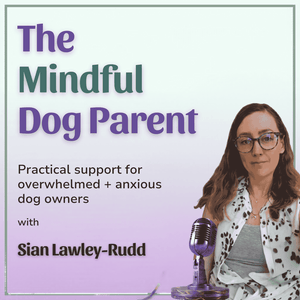
Being a dog parent isn’t just about training cues, it’s about managing emotions, expectations, and the weight of responsibility. The Mindful Dog Parent is the podcast for overwhelmed dog parents and anxious dog owners who love their dogs deeply but feel stuck in cycles of guilt, burnout, and self-doubt. Hosted by trauma-informed coach and ethical trainer Sian Lawley-Rudd, each episode combines dog training advice with real-world tools for emotional wellbeing — so you can find calm, confidence, and connection with your dog. Inside, you’ll hear: - Support for reactive dog help and everyday dog behaviour problems - Why tips don’t work without calm first, and what to do instead - Gentle, ethical approaches to calm dog training that actually fit your life - Honest conversations about guilt, comparison, and dog training burnout - Stories, strategies, and weekly challenges that bring you and your dog closer Perfection isn't the target. It’s about learning to regulate yourself, build connection, and create steady progress with your dog, no matter where you’re starting from. 🎧 Subscribe now and join a growing community of dog parents finding calmer, kinder ways to train and live alongside their dogs.
Podcast website

Listen to The Mindful Dog Parent: Dog Training Advice & Calm Support for Overwhelmed Owners, Living Your Legacy and many other podcasts from around the world with the radio.net app

Get the free radio.net app

  • Stations and podcasts to bookmark
  • Stream via Wi-Fi or Bluetooth
  • Supports Carplay & Android Auto
  • Many other app features

The Mindful Dog Parent: Dog Training Advice & Calm Support for Overwhelmed Owners: Podcasts in Family