

Listen to this podcast in the app for free: Download for free in the App Store
radio.net
Sleep timer
Save favourites
17 episodes
What did we learn over the Summer?
18/09/2026 | 36 mins.The conversation covers a range of topics related to AAC, including personal reflections, writing projects, technical advancements, AI in AAC, representation in literature, and lived experiences of AAC users.
The themes of neurodiversity, communication technology, and the impact of lived experiences are central to the discussion. The conversation delves into the challenges of AAC provision within EHCPs, the need for flexibility, and the importance of considering the dynamic nature of communication environments. It also emphasizes the value of open-mindedness and learning from a wide range of sources.
Links:
How to Help Non-Speaking Children in the Early Years : Supporting Communication through Joy and Connection: Bryony Rust: 9781032295190: hive.co.uk
Howard Wicks
Ali on Instagram: https://www.instagram.com/ali_battye_speech
Ruth on Instagram: https://www.instagram.com/ruth_jones_sltIs it ever too late for AAC?
21/08/2026 | 35 mins.Is it ever too late to introduce AAC?
Ruth Jones and Ali Battye say the answer is no - and they back it up with the kind of real-world examples that can change how you think about communication forever.
If you support an older child, teen, or adult who has never had robust AAC access, this conversation is a must-listen. Ruth and Ali unpack why the "too late" myth keeps showing up, especially for autistic people, people with learning disabilities, and young people whose AAC journey starts later because of access, cost, or outdated assumptions.
They explore what actually changes as children grow, from regulation and attention to executive function, and why those changes can make AAC feel more possible, not less. You'll hear how language continues to grow across the lifespan, why neuroplasticity matters, and how older AAC users often take to text-to-speech or symbol-supported systems with incredible speed once the right tool is in front of them.
Ali shares powerful examples from her practice, including teenagers who suddenly found the words to ask for home, express humour, comment, question, and even move from symbols to typing with ease. We break down the difference between simply requesting and truly communicating.
Ruth and Ali show how AAC can become a way to build language, explore interests, deepen conversations, and support genuine self-advocacy - not just a way to ask for things. If you've ever wondered whether it's "too late" to start, this episode will leave you with a stronger belief in presuming potential, a broader view of communication, and a renewed sense of what's possible when AAC is introduced well. Essential listening for families, teachers, therapists, and anyone supporting older AAC users.
Find us on Instagram:
@ali_battye_speech
@ruth_jones_slt
or on TikTok
@aac_access_all_areasHow to manage AAC overwhelm?
23/07/2026 | 32 mins.In this episode, Ali and Ruth explore practical strategies for supporting adults involved in AAC communication, addressing feelings of overwhelm and emphasizing the importance of flexibility, connection, and personal pacing. Whether you're a parent, teacher, or therapist, discover how to create sustainable AAC practices that honour each individual's unique journey.
The complex roles of family, educators, and therapists in AAC support
Recognising and respecting individual differences in AAC familiarity and expectations
Starting points for AAC implementation: focusing on interests and engagement
The importance of "model without expectation" and mindfulness of building trust
Acknowledging multimodal communication alongside AAC
The significance of community networks and shared experiences
Incorporating embodied caregiver experience into AAC discourse
Embracing natural rhythms and respecting moments when AAC may not be welcomed
Managing your own regulation and recognizing "affective resistance" as positive
Practical tools: weekly mini-goals, tailored vocabularies, and environmental integration
Find us on Instagram:
@ruth_jones_slt
@ali_battye_speech
or on TikTok
@AAC_access_all_areas
Article:
Affective Resistance in Augmentative and Alternative Communication, Gombar & Bach (2025)What if engagement isn't as we expect?
02/07/2026 | 43 mins.Summary
In this episode, Ruth Jones and Ali Battye explore the complexities of AAC engagement, emphasizing patience, understanding fluctuating capacities, and honouring individual communication rhythms. They share practical insights and personal stories to support effective AAC use.
Key Topics
The importance of patience in AAC implementation
Fluctuating capacities and sensory challenges for autistic AAC users
The role of exploration and play in AAC learning
Respecting individual communication rhythms
Practical strategies for supporting AAC users
"Follow the joy and connect through what lights them up."
"AAC use can shift from exploration to meaningful communication."
Find us on Instagram:
@ali_battye_speech
@ruth_jones_sltWhat does early AAC engagement look like?
18/06/2026 | 44 mins.Most children start exploring AAC systems in unexpected ways—and the early moments of engagement can be profoundly simple yet incredibly powerful. Discover how a child's spontaneous interaction with an iPad or communication book can reveal their natural inclination to communicate, even before they use words. If you’re supporting children with complex communication needs, you’ll want to hear what happens when the focus shifts from functional language to playful, joyful interaction—and how that sets the stage for meaningful communication down the line. In this episode, Ali & Ruth share real-life stories that showcase what early AAC engagement really looks like—and bust common misconceptions along the way. You’ll discover concrete strategies for fostering initial interest, like modeling subtly and avoiding pressure, so children feel ownership rather than obligation. We break down the subtle signs of early ownership—like batting away an AAC device or glancing over—instead of expecting instant speech.Key topics covered include:
The dream scenario of instant curiosity sparked by a fun, interesting page
How modelling “little and often” builds engagement without overwhelming
Why exploring favourite characters like Peppa Pig can unlock broader language
The importance of respecting individual differences and processing needs
Practical tips for using communication books versus devices in early engagement
You’ll learn why patience, attunement, and a playful approach create a foundation for both children and adults to build confidence. Avoid overwhelm and set realistic expectations, knowing that language development is a marathon—not a sprint. This episode is perfect for speech therapists, educators, parents, and anyone committed to unlocking every child's potential to connect. Whether you're troubleshooting early AAC success stories or looking for ways to make engagement irresistible, this conversation will renew your perspective on what’s possible—and remind you that the most meaningful moments often happen when we least expect them. Remember: early engagement isn’t just about immediate speech—it's about planting seeds of joy, ownership, and curiosity that will grow into lifelong communication skills.
Get inspired to see the magic in those first tentative interactions—because sometimes, a simple glance or a giggle is the beginning of something extraordinary.
Find us on Instagram
@ali_battye_speech
@ruth_jones_slt
More Education podcasts
 6 Minute EnglishEducation, Language Learning
 The Daily StoicBusiness, Education, Self-Improvement, Society & Culture
 Begin Again with Davina McCallEducation, Health & Wellness, Mental Health, Self-Improvement, Society & Culture
 The Mel Robbins PodcastEducation, Health & Wellness, Mental Health, Relationships, Self-Improvement, Society & Culture
 The Ella EraEducation, Self-Improvement, Society & Culture
 Gaeilge WeeklyEducation, Language Learning
 Motivation Daily by MotiversityEducation, Health & Wellness, Self-Improvement
 Learning English For WorkEducation, Language Learning
 The Comeback with Brenda DennehyEducation, Health & Wellness, Mental Health, Self-Improvement
 The Manifest MovementBusiness, Education, Religion & Spirituality, Self-Improvement, Spirituality
Trending Education podcasts
 Stretch MarksEducation, Kids & Family, Parenting, Personal Journals, Self-Improvement, Society & Culture
 Hoy Hablamos Básico: Aprender español nivel básico-intermedio | Learn SpanishCourses, Education, Language Learning
 Deutsch Podcast - Deutsch lernenEducation, Language Learning
 Self Care Club - The Midlife EditionComedy, Education, Health & Wellness, Mental Health, Personal Journals, Self-Improvement, Society & Culture
 German Stories - Learn German with StoriesComedy Fiction, Courses, Education, Fiction, Language Learning, True Crime
 Coffee Break ItalianCourses, Education, Language Learning
 Le français avec FluiditéCourses, Education, Language Learning
 The Jordan B. Peterson PodcastEducation, Science, Society & Culture
 No More Booze - The PodcastEducation, Self-Improvement
 Luke's ENGLISH Podcast - Learn British English with Luke ThompsonComedy, Education, Language Learning
 How to Sell a Home with MyHomeBusiness, Education, Home & Garden, Leisure, Management, Tutorials
 Conversations with TylerEducation, Society & Culture
 Sober On A Drunk Planet - The PodcastEducation, Personal Journals, Self-Improvement, Society & Culture
- The Ella EraEducation, Self-Improvement, Society & Culture
 ALIGNED | The Path to PurposeAlternative Health, Education, Health & Wellness, Religion & Spirituality, Self-Improvement, Spirituality
 Coffee Break Italian AdvancedCourses, Education, Language Learning
 Learning English from the NewsEducation, Language Learning
 Learn Italian with Joy of LanguagesCourses, Education, Language Learning
 BEING HER with Margarita NazarenkoEducation, Health & Wellness, Relationships, Sexuality, Society & Culture
 Nuacht MhallEducation, Language Learning
 English Learning PodcastEducation, Language Learning
- The Manifest MovementBusiness, Education, Religion & Spirituality, Self-Improvement, Spirituality
 Learning Easy EnglishEducation, Language Learning
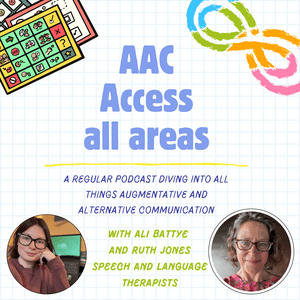
About AAC Access All Areas
Hosted by Ali Battye and Ruth Jones, this podcast dives into everything neurodiversity‑affirming and AAC (Augmentative and Alternative Communication). Each episode explores real questions about what AAC is, how to get it, how to use it, and how to embed inclusive communication in everyday life.We share practical knowledge, lived experience, and professional insight to support AAC users, families, educators, therapists, and support teams across education, health, and social care. Expect clear explanations, honest conversations, and neurodivergent‑affirming perspectives that help you build confidence and competence with AAC.Whether you’re new to AAC or deeply experienced, this podcast opens the door to accessible, inclusive communication for everyone.Got a question? Send it in — we’ll dedicate an episode to answering it.
Podcast websiteListen to AAC Access All Areas, 6 Minute English and many other podcasts from around the world with the radio.net app
Get the free radio.net app
- Stations and podcasts to bookmark
- Stream via Wi-Fi or Bluetooth
- Supports Carplay & Android Auto
- Many other app features
Get the free radio.net app
- Stations and podcasts to bookmark
- Stream via Wi-Fi or Bluetooth
- Supports Carplay & Android Auto
- Many other app features
AAC Access All Areas
Scan code,
download the app,
start listening.
download the app,
start listening.
 Ireland