

Listen to this podcast in the app for free: Download for free in the App Store
radio.net
Sleep timer
Save favourites
47 episodes
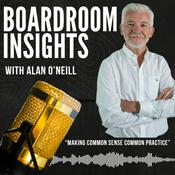
Dr Alan O’Neill speaks with Pius Furlong about Dubai, Saudi Arabia, branded residences, hotel development, and how major hospitality projects move from concept to operation.
05/05/2026 | 50 mins.In this episode of Boardroom Insights, Alan O’Neill speaks with Pius Furlong, founder and CEO of Tara Global and a senior hospitality development specialist with deep experienceacross Ireland, Dubai, Oman and Saudi Arabia.
Pius explains how luxury hospitality and branded residential developments work in the GCC, including the roles of developers, hotel brands, non-hospitality brands,white-label operators, management companies and owners’ associations. He shares insight into projects involving global brands such as W, Missoni, Pagani, Fendi, Nickelodeon and Trump, and explains why branded residences have becomesuch an important part of the development model in Dubai and the wider region.
The conversation also explores the money trail behind these projects, the difference between hotel management agreements and franchise/white-label models, why Dubai continues to show resilience during periods of uncertainty, and why Saudi Arabia and Ras Al Khaimah are becoming major future growth markets for hospitality development.
A fascinating behind-the-scenes look at how major hospitality projects move from idea to site, brand partnership, sale, operation and long-term guest experience.The Startup Journey: Tim Jones of Symphysis Medical
14/04/2026 | 1h 6 mins.In this episode of Boardroom Insights, Alan O’Neill steps slightly outside his usual territory. While he normally interviews leaders of mature, scaling organisations, this conversation explores a very different kind of journey: a startup built from a blank sheet of paper.
Alan is joined by Tim Jones, founder and Managing Director of Symphysis Medical, a Galway-based medtech company developing a device designed to improve independence andquality of life for late-stage cancer patients suffering from fluid build-up in the chest. Their discussion traces the full startup journey, from identifying an unmet clinical need, to research and testing, to funding, regulation, commercialisation and the realities of building a pre-revenue company.
It is a fascinating conversation about innovation, empathy, resilience and the discipline required to turn an idea into a viable business. For anyone interested in startups,medtech, leadership or how real innovation happens, this episode offers a rare and insightful look behind the scenes.Leadership with Dr. Edel Marron
01/04/2026 | 58 mins.In this episode of Boardroom Insights, Alan O’Neill is joined by Dr. Edel Marron, leadership lecturer at Ulster University and founder of COTA Consulting, for a rich and grounded conversation on what truly defines great leadership today.
Together, they explore the shift from outcome-driven leadership to a deeper focus on the enablers of performance emotional intelligence, psychological safety, and genuine human connection. Edel shares insights from her doctoral research on employee engagement, highlighting how leaders who create respectful, communicative environments consistently outperform those who rely on pressure and control.
The discussion moves through three key lenses of leadership:
Self-leadership – the importance of self-awareness, emotional maturity, and humility
Team leadership – creating environments where people feel safe, valued, and able to perform
Business leadership – ensuring strategy translates into execution through strong frontline connection
They examine the dangers of ego, the misuse of emotional intelligence, and the fine line between unhealthy and narcissistic leadership. Real-world examples from frontline operational bottlenecks to boardroom disconnect bring the theory to life.
Edel also offers a fresh perspective from the next generation, sharing what young professionals expect from leaders today: openness, fairness, growth opportunities, and authentic communication.
The episode closes with practical insights into developing leadership capability through structured training, 360 feedback, and sustained behavioural change, not just “sheep-dip” learning.
A thoughtful and practical conversation that reinforces one central truth: Leadership is less about control and outcomes and more about people, trust, and the conditions we create for others to thrive.How the UAE shows resilience and restraint in troubled times.
04/03/2026 | 12 mins.Recent events in the Middle East remind us how quickly the world can feel unpredictable. But moments like this also reveal something important: the strength of the foundations that societies have built over time.
Because I spend a lot of time working in the UAE, I’ve been paying close attention to the response from its leadership and institutions. What stands out is the calmness and confidence among people living there... both Emiratis and the millions of expatriates who call the country home.
That reassurance didn’t appear overnight. It is the result of decades of leadership that has steadily built trust. In leadership terms, trust rests on three pillars: Ability. Dependability. Integrity.
When pressure appears, that accumulated trust either holds firm or it disappears. In the UAE’s case, we are seeing the dividend of many years of consistent leadership. There is also a lesson here for business leaders.
The UAE is one of the most diverse societies in the world. Yet despite that diversity, there is a strong sense of stability and shared direction. That’s what happens when leadership creates a culture where different people can align around a common purpose.
In my work on organisational culture, I often say that resilience rests on three things: trust, tolerance and time horizon. But in moments of uncertainty, one matters most. Trust.
Because trust cannot be manufactured in a crisis. It can only reveal whether it was built long before the crisis arrived.How Nations Build Strategy: Dubai & Cathedral Thinking
21/01/2026 | 10 mins.In this solo KISS episode of Boardroom Insights, Dr. Alan O’Neill reflects on a recent conversation with Farid Badri, a veteran of the Dubai oil industry and former refinery leader.
While their discussion centred on crude oil, refinery economics and geopolitics, Alan zooms out to look at the bigger story: how Dubai has deliberately designed its future over the last 60 years.
Drawing on economist David McWilliams’ concept of “cathedral thinking” — long-term planning that spans beyond the careers of its architects — Alan contrasts Dubai’s approach with the “next election / next quarter” mindset that dominates politics and business today.
He shows how Dubai used limited oil revenues as seed capital to build infrastructure, services and incentives that attracted talent, capital and ideas — from Jebel Ali Port and free zones to Emirates Airline, roads, schools and hospitals — ultimately creating a services-led economy by design, not chance.
Alan then maps Dubai’s journey onto his 7-Steps to Profit framework, exploring how the Emirate executed against:North Star... Culture... Strategy... People... Customer... Proposition... Execution.The episode ends with a provocation for leaders:
What cathedral are you building inside your own organisation?
More Business podcasts
 The Other HandBusiness, News, Society & Culture
 Inside Business with Ciaran HancockBusiness
 Better With MoneyBusiness, Education, Investing, Self-Improvement, Tutorials
 The Prof G Pod with Scott GallowayBusiness, Entrepreneurship
 A Bit of OptimismBusiness, Careers, Education, Self-Improvement
 Understanding Money with Eoin McGeeBusiness, Education, Society & Culture
 Think Fast Talk Smart: Communication TechniquesBusiness, Careers, Comedy, Education, Improv, Language Learning
 Money TalksBusiness
 Stock ClubBusiness, Investing
 Motley Fool Hidden Gems InvestingBusiness, Investing
Trending Business podcasts
 The Memo by Howard MarksBusiness, Investing
 Ones and ToozeBusiness, Business News, History, News
 Irish Employment LawBusiness, Careers, Management
 Inside Dairy TeasersBusiness, Government, News
 Bloomberg BusinessweekBusiness, Business News, News
 Hunger & Heart with Kaila ColbinBusiness, Society & Culture, Sports
 The Twenty Minute VC (20VC): Venture Capital | Startup Funding | The PitchBusiness, Investing, News, Tech News, Technology
 HBR IdeaCastBusiness, Entrepreneurship, Management, Marketing
 Decoder with Nilay PatelBusiness, Technology
 Money Stuff: The PodcastBusiness, News, Society & Culture
 My First MillionBusiness, Entrepreneurship
 BigDealBusiness, Entrepreneurship
 The Economics ShowBusiness, Business News, News, News Commentary
 Breakfast Business with Joe LynamBusiness
 Business HistoryBusiness, History
 She's On The MoneyBusiness, Investing
 The Entrepreneur ExperimentBusiness, Careers, Entrepreneurship
 Business BuildersBusiness, Careers, Entrepreneurship
 Masters in BusinessBusiness, Investing
 Planet MoneyBusiness, News
 Odd LotsBusiness, Investing, News, News Commentary
About Boardroom Insights with Dr. Alan O'Neill
💼 Boardroom Insights is your exclusive pass into the minds of top business leaders, entrepreneurs, and decision-makers shaping the corporate world. Hosted by industry expert Dr. Alan O’Neill, this podcast uncovers the strategies, leadership tactics, and market insights that drive success at the highest level.
Each episode, we go behind the boardroom doors to explore:
✔️ Winning business strategies & corporate growth tactics
✔️ Leadership lessons from top executives
✔️ Navigating change, innovation, and economic shifts
✔️ Real-world case studies & success stories
Podcast websiteListen to Boardroom Insights with Dr. Alan O'Neill, The Other Hand and many other podcasts from around the world with the radio.net app
Get the free radio.net app
- Stations and podcasts to bookmark
- Stream via Wi-Fi or Bluetooth
- Supports Carplay & Android Auto
- Many other app features
Get the free radio.net app
- Stations and podcasts to bookmark
- Stream via Wi-Fi or Bluetooth
- Supports Carplay & Android Auto
- Many other app features

Boardroom Insights with Dr. Alan O'Neill
Scan code,
download the app,
start listening.
download the app,
start listening.
 Ireland