
Listen to this podcast in the app for free: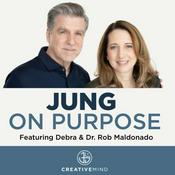 Download for free in the App Store
radio.net
Sleep timer
Save favourites
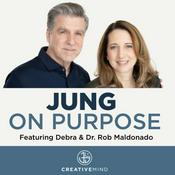
Jung On Purpose | Finding Purpose at Mid-Life
Debra Maldonado and Robert Maldonado PhD Life Coach Training and Personal Transformation Experts
Latest episode
386 episodes
How Do You Know What You Want?
16/11/2026 | 47 mins.How do you know what you really want? Before you can answer, you have to ask who is asking, because the conditioned ego and the deeper Self want very different things.
At midlife, many of us know the life we built isn’t it, but we can’t name what comes next. In this episode, we explore why “What do I want?” is the wrong first question, and why logic, impulse and childhood compensation all keep the ego in charge. We look at what neuroscience says about how the brain constructs our reality, and how the Upanishads and Jung point us inward to the witness.
We share why picking and choosing from every tradition leaves us digging shallow holes, and a simple daily practice of sitting with one profound question. Join us as we turn the question around: who is the one asking?
In this episode, you’ll discover:
Why “I don’t know what I want” can be a defense. Like rescued gorillas hesitating at the edge of open grass, we stay in the familiar box even when something better is right outside.
Why logic and shiny objects both fail. Pros-and-cons lists and impulsive leaps are both run by an ego that wants to stay safe.
How your brain builds the world you see. Neuroscience shows that our reality is actively constructed, which means real change starts on the inside.
What higher knowledge is, and why one path matters. Picking from every tradition keeps us digging shallow holes; following one path all the way leads to the witness, the Self.
A daily practice for self-inquiry. Sit with one profound question you can’t answer yet, and notice what starts to show up.
Recommended reading:
Neuroscience: Anil Seth, Being You
Eastern: Bhagavad Gita and The Upanishads (Eknath Easwaran translations); Ramana Maharshi, Who Am I?; Shankara, Crest-Jewel of Discrimination; Ashtavakra Gita (on the witness)
Western mystics: Meister Eckhart, sermons; The Cloud of Unknowing; Teresa of Ávila, Interior Castle; John of the Cross, Dark Night of the Soul; Thomas Merton, New Seeds of Contemplation; Plotinus, Enneads
Stoicism: Marcus Aurelius, Meditations
Jung: “The Stages of Life” in Modern Man in Search of a Soul
Practical: Wallace Wattles, The Science of Getting Rich
Ready to start your own self-inquiry? Get our Self-Coaching Kit: https://go.creativemindlife.com/self-coaching-kit-sales-page
Need support with your next chapter? Join our coaching membership Second Horizon® for those in transition seeking the inner work to transform and realize their next chapter. SecondHorizonCoaching.com
Share Your Thoughts with Us...
•••
Want to be a Certified Jungian Life Coach? Download our course brochure: https://creativemindlife.com/jungian-life-coach-training-brochure-download/
Stay Connected with Debra and Dr. Rob:
Instagram | LinkedIn | YouTube | Facebook | creativemindlife.com | connect@creativemindmethod.comMidlife Emotions: Why They Intensify and How to Use Them
09/11/2026 | 1h 1 mins.Emotions intensify at midlife because the patterns we inherited and pushed aside in the first half of life rise to the surface, signaling that we’re ready for the next stage of development. Jung called this individuation, and those emotions are energy we can use rather than problems to fix.
Have you noticed your emotions getting louder in your thirties, forties or fifties? In this episode, we explore where our emotions really come from, why so much of our personality is inherited through our genes and our families, and why the feelings we suppressed come back stronger at midlife. We look at why our culture pathologizes what is actually a natural stage of development, and how Jung’s idea of individuation reframes the so-called midlife crisis as a readiness to be born into something new. We share how the witness mind, metacognition and even conscious dissociation help us work with emotions without being swept away, and how to turn fear into creative fuel. Join us to see midlife emotions not as proof that something is broken, but as energy for the life we want to create.
In this episode, you’ll discover:
Why your emotions may not be yours. How genes and the habits you absorbed from your family shape so much of your personality, and why that critical inner voice might be your grandmother’s.
Why feelings intensify at midlife. How the emotions and patterns you swept under the rug come back stronger as you reach a new stage of development.
Why a midlife crisis isn’t a breakdown. How Jung’s individuation reframes the restlessness as a readiness for your next chapter, and why regretting your early choices misses the point.
How to step outside the maze of emotion. How the witness mind and metacognition create space between you and your feelings, so you can see the pattern instead of being trapped inside it.
How to use fear as fuel. Why emotion is psychological energy, and how to put anxiety, fear and even regret to work for creativity and conviction.
Need support with your next chapter? Join our coaching membership Second Horizon® for those in transition seeking the inner work to transform and realize their next chapter. SecondHorizonCoaching.com
Share Your Thoughts with Us...
•••
Want to be a Certified Jungian Life Coach? Download our course brochure: https://creativemindlife.com/jungian-life-coach-training-brochure-download/
Stay Connected with Debra and Dr. Rob:
Instagram | LinkedIn | YouTube | Facebook | creativemindlife.com | connect@creativemindmethod.comMidlife Identity Crisis: Who Are You Beyond the Ego?
02/11/2026 | 56 mins.Feeling a lack of meaning after success and are asking the deep questions?
An identity crisis happens when the identity we built from family roles, career and society’s expectations stops fitting. Jung and Eastern philosophy show us that the ego, the “I” we think we are, is a function rather than the whole of who we are, and that the Self lies beyond it.
A career change, a breakup, a milestone birthday or simply the speed of change in the world can leave us asking, “Who am I, really?” In this episode, we explore what identity actually is, how it was shaped without our permission, and why even good change threatens the ego’s need for predictability. We look at Freud’s three blows to human narcissism, the man who wouldn’t let go of the log, and why Western psychology says we can only rearrange the furniture of our conditioning. Then we turn to Jung and Eastern philosophy to explore non-attachment, the states of awareness, and the Self beyond the persona. Join us to see why a midlife identity crisis isn’t a breakdown but a natural invitation to know who we really are.
In this episode, you’ll discover:
Why your identity feels so fixed. How family roles, genetics and society’s expectations shaped who you think you are, and why that identity often stops fitting at midlife.
Why even good change feels threatening. Why a promotion, a marriage or a new career can rattle the ego as much as a loss, and what keeps you clinging to the log.
What non-attachment really means. Why it isn’t detachment or not caring, and how dropping your attachment to results frees you from the conditioning that keeps you in your lane.
Who you are beyond the persona. How Jung’s Self and the Eastern image of the movie screen point to a part of you that life’s drama never touches.
Where meaning comes from in an identity crisis. Why the success, family and dream home we were promised can feel empty, and how knowing who you really are gives everything meaning.
Need support with your next chapter? Join our coaching membership Second Horizon® for those in transition seeking the inner work to transform and realize their next chapter. SecondHorizon
Share Your Thoughts with Us...
•••
Want to be a Certified Jungian Life Coach? Download our course brochure: https://creativemindlife.com/jungian-life-coach-training-brochure-download/
Stay Connected with Debra and Dr. Rob:
Instagram | LinkedIn | YouTube | Facebook | creativemindlife.com | connect@creativemindmethod.comResistance or Redirection? How to Tell if it is your Ego or a Sign
26/10/2026 | 46 mins.Did you ever get excited about something new but then hit a wall?
When you experience a setback, it could be your ego guarding its comfort zone, while a true redirection comes from a deeper place, and the way to tell them apart is to ask who is asking the question.
In this episode, we explore one of the most common questions our clients bring us: when nothing seems to work, is the universe telling us to change course, or are we simply afraid? We look at how the brain works as a prediction machine, why it reads anything unfamiliar as a threat, and how the ego builds a comfort zone we'll stay in even when we're unhappy. We unpack "spiritual masking," the way the ego borrows spiritual language to make giving up sound wise. Then we introduce the witness mind, the part of you that can observe your thoughts without judging them, and show why positive thinking alone isn't enough until you know who is doing the thinking. Join us for a conversation about acting from the Self instead of from fear.
In this episode, you'll discover:
The relief test. Why feeling relieved when you quit is one of the clearest signs that fear, not wisdom, made the decision.
Your brain's hidden bias. How your mind filters reality to match what it already expects, so you see every reason something won't work.
The real fear behind failure. Why most of us aren't afraid of failing at all, but of the shame of being seen to fail.
The witness mind. A simple giraffe exercise that reveals the quiet observer in your mind and how to use it to guide your thinking.
Flow, the real kind. Why "going with the flow" often means staying comfortable, and what true flow requires first.
Learn about our new Group Coaching Membership program for those who simply want to do the inner work-- Second Horizon. Get direct access and coaching from Debra & Dr. Rob.
http://secondhorizoncoaching.com
Share Your Thoughts with Us...
•••
Want to be a Certified Jungian Life Coach? Download our course brochure: https://creativemindlife.com/jungian-life-coach-training-brochure-download/
Stay Connected with Debra and Dr. Rob:
Instagram | LinkedIn | YouTube | Facebook | creativemindlife.com | connect@creativemindmethod.comHow the Mind Shapes Your Reality
19/10/2026 | 53 mins.How can you rein in your mind to create the life you want?
Your life follows your state of mind, and the Bhagavad Gita names three of those states: tamas (inertia), rajas (restless activity) and sattva (clarity).
In this episode, we explore the three gunas, an idea that goes back thousands of years and still describes the modern mind remarkably well. We look at why most of us bounce between being stuck and being overdriven, and why the overachiever is often running from the person on the couch in their own shadow. We share a moment in New York when sitting still with a racing mind finally broke its spell. Then we offer practical ways to shift states: one small win to get out of tamas, a deliberate pause to calm rajas, and a gentle way to grow sattva. Join us to learn how to recognize your state of mind so it stops running your life.
In this episode, you'll discover:
Why you can't empty the ocean with a spoon: fighting negative thoughts never works, but recognizing the state you're in gives you real freedom.
The hidden link between stuck and driven: tamas and rajas are both tied to the ego, and the super achiever is often running from their own shadow.
Why you can't jump straight to clarity: when you feel stuck, one small, winnable action starts the ball rolling.
What purpose really means in the Gita: action without ego intention, as an expression of your sacred duty, not a career title.
The practice of soft eyes: how compassion toward yourself creates the openness that wisdom grows from.
Want to get coaching with Debra & Dr. Rob? Find out about their new Second Horizon® Coaching Membership: http://secondhorizoncoaching.com
Share Your Thoughts with Us...
•••
Want to be a Certified Jungian Life Coach? Download our course brochure: https://creativemindlife.com/jungian-life-coach-training-brochure-download/
Stay Connected with Debra and Dr. Rob:
Instagram | LinkedIn | YouTube | Facebook | creativemindlife.com | connect@creativemindmethod.com
More Education podcasts






Trending Education podcasts




















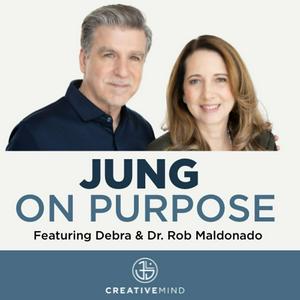
About Jung On Purpose | Finding Purpose at Mid-Life
For mid-life professionals seeking purpose and fulfillment in work, relationships and life. Join life coaching experts and Founders of CreativeMind, Debra and Dr. Rob Maldonado, as they explore personal growth through Jungian Theory, Eastern Spirituality and Social Neuroscience in a deep, but practical way.
Podcast websiteListen to Jung On Purpose | Finding Purpose at Mid-Life, Coffee Break Spanish and many other podcasts from around the world with the radio.net app
Get the free radio.net app
- Stations and podcasts to bookmark
- Stream via Wi-Fi or Bluetooth
- Supports Carplay & Android Auto
- Many other app features

Jung On Purpose | Finding Purpose at Mid-Life: Podcasts in Family
 Ireland

