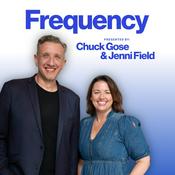
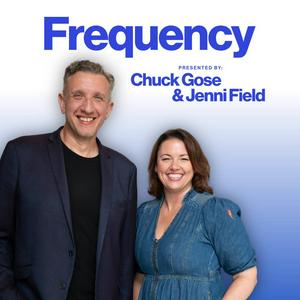
Frequency

Chuck Gose & Jenni Field
Frequency
Latest episode

46 episodes

  • Frequency

    Home Depot's Second RTO Mandate in 12 Months Why 90% Can't Use AI (But Half Think They Can) and Only 1 in 4 Feel Appreciated

    16/2/2026 | 38 mins.
    In this week's episode, Jenni and Chuck unpack the uncomfortable truth behind repeated workplace policies, the widening AI proficiency gap, and why simple acts of appreciation remain the most overlooked retention strategy.

    What we're discussing
    Home Depot's Groundhog Day RTO Announcement Home Depot just announced corporate employees need to return to office five days a week starting April 6th - except they already announced this exact policy in January 2025. Stanford's Nick Bloom reports 17% of companies are on their third RTO policy. When you have to announce the same thing twice, is it a communication problem or a compliance problem? We explore why employees called leadership's bluff and what this says about credibility and culture.

    The AI Proficiency Crisis After three years and hundreds of millions in AI investment, Section's survey of 5,000 knowledge workers reveals: 90% of the workforce doesn't know how to use AI effectively, yet 50% think they're proficient. The gap between perception and reality is the real problem. Meanwhile, 25% don't know what to use AI for, and manager support for AI dropped 11% since May 2025. We discuss the shadow use of AI and whether companies are really this naive.

    Chief Communication Officers Hit $1M+ Salaries CCO compensation now reaches $900K-$1M, with nearly half earning seven figures. More than half command $5M+ budgets, and 70% increase in direct CEO reporting lines since 2023. But here's the catch: one-third still haven't defined their AI-driven communications approach. Internal comms is the second most desired trait when hiring, yet it still takes second fiddle to corp comms and media relations in actual focus.

    The Retention Crisis Is Here Only 1 in 4 employees feel appreciated at work. 34% are actively job hunting. The talent retention crisis everyone predicted after the pandemic is here—and worse than forecast. The fixes aren't complicated: recognition, appreciation, connection. These cost almost nothing, yet companies aren't doing them. We explore why organizations penny-pinch on what matters while CEOs collect seven-figure packages.

    Key takeaways

    Repeating announcements signals policy failure, not employee non-compliance

    The Dunning-Kruger effect is alive and well in AI adoption

    High salaries don't automatically translate to strategic leadership

    Simple recognition programs outperform complex retention strategies

    Links & Resources
    Why Home Depot Keeps Announcing RTO https://flexindex.substack.com/p/why-co-working-is-booming-again

    The AI Proficiency Report
    https://www.sectionai.com/ai/the-ai-proficiency-report

    Korn Ferry Survey Reveals Chief Communications Officers' Rising Influence and Compensation in 2025 https://www.kornferry.com/about-us/press/korn-ferry-survey-reveals-chief-communications-officers-rising-influence-and-compensation-in-2025

    2026 Engagement and Retention Report https://www.achievers.com/resources/white-papers/2026-engagement-retention-awi-report/

    Substack CEO bombs Decoder interview
    https://youtube.com/shorts/RCdJGq_VXTo?si=26VDsqyRIsof-839
  • Frequency

    72% Use AI Without Training: PRSA's ICE Silence and Amazon's 16,000 Layoffs by Email

    09/2/2026 | 38 mins.
    In this episode of Frequency, Jenni Field and Chuck Gose start with a deceptively simple question: where are all the good industry events? That conversation quickly opens up a wider reflection on whether the internal comms and employee experience space has hit a point of stagnation — and what it would take to bring the right people together for deeper, more meaningful conversations.

    The episode moves into weightier territory with a discussion sparked by Shel Holtz’s open letter to PRSA, calling on the organisation to take a stand on ICE operations in Minneapolis. Jenni and Chuck explore the ethics of neutrality, the idea that silence is itself a decision, and the responsibility professional bodies have to model the values they expect communicators to uphold.

    From there, Jenni brings in a Harvard Business Review article urging leaders to get off the “transformation treadmill.” Together, they unpack why constant transformation often signals deeper systemic problems, and why addressing root causes, rather than reacting to symptoms, is the real work leaders tend to avoid.

    Trust takes centre stage with a frank critique of the Edelman Trust Barometer. While the data highlights growing insularity, grievance and distrust, Jenni and Chuck question whether the proposed solutions offer anything genuinely new, and whether organisations are willing to do the uncomfortable, personal work that trust actually requires.

    The episode closes with a look at Gartner’s predicted workplace trends for 2026, including AI, systems thinking and the growing role of HR in risk and readiness. They debate whether these are true trends or hopeful predictions, and why process expertise,  not tech obsession, is likely to matter most.

    As always, they end with their Freak Outs of the week, covering everything from wills and “death wishes” to wellness retreats, rebranding Vegas as self-care, and the importance of stepping back to reflect.

    Thoughtful, challenging and quietly provocative — this episode asks leaders to slow down, look harder, and stop pretending the answers are new.


    Articles mentioned in this episode: 

    An Open Letter to the Public Relations Society of America (PRSA) from Shel Holtz on LinkedIn

    Get off the transformation treadmill

    The danger of insular trust mindset 

    9 Trends Shaping Work in 2026 and Beyond

    Resist & Unsubscribe
  • Frequency

    76% Burnout Persists While 92% Invest in AI: Why Happy Hour's Dead but Busy Work's Not

    02/2/2026 | 37 mins.
    In this episode of Frequency, Jenni Field and Chuck Gose kick things off with a surprisingly revealing conversation about bread — and quickly land on a much bigger question: when recognition misses the point, what does it say about how organisations really value people?

    That idea becomes a thread running through the episode, as they move into a frank discussion about performative communication. Using recent ICE-related events in the US as a backdrop, they explore the growing pressure employees are putting on leaders to take meaningful, visible stands, and why cautious, logo-signed “de-escalation” statements often feel more like corporate self-protection than leadership. Jenni and Chuck question what employees are actually asking for, and whether silence, symbolism or collective action carries the most weight.

    From there, the conversation turns to meetings — why they continue to frustrate people, and what role AI realistically has in fixing them. While tools like AI note-takers and summaries can help with accountability, they argue the real issue is capability, not technology. Poorly run meetings, unclear purpose and a lack of facilitation skills won’t be solved by automation alone. Better meetings still matter — especially for trust, debate and decision-making — and cutting them entirely is not the answer.
    This leads into a wider challenge around AI adoption and productivity. As leaders increasingly point to AI’s potential impact on GDP as justification for rapid rollout, Jenni questions whether economic upside is the right — or sufficient — argument. They unpack research showing many organisations are using AI without investing in training or redesigning how work actually gets done. The risk, they argue, is treating AI as a cost-saving shortcut rather than a capability shift. Without strong foundations, clear processes and proper enablement, AI won’t fix broken systems — it will simply amplify them.

    The episode then tackles Amazon’s latest round of layoffs and the way employees discovered the news through internal errors. Jenni and Chuck reflect on what moments like this signal about leadership control, humanity and trust — and why how information is shared matters just as much as what is shared.

    Finally, they react to reports that AI company Anthropic destroyed large quantities of books to train its models, raising uncomfortable questions about ethics, ownership and optics — especially when legality, public perception and values collide.

    They close with their Freq Out of the week, sharing candid reflections on conference speaker rejections, feedback that stings, and why rejection isn’t always a signal that your work isn’t needed — sometimes it’s just redirection.


    Articles mentioned in this episode:

    Tech workers push CEOs to condemn ICE as Minnesota CEOs issue a “de-escalation” letter
    https://www.axios.com/2026/01/26/tech-workers-ceos-ice https://www.axios.com/2026/01/25/minneapolis-shooting-ice-target-3m-ceos-letter 

    The LinkedIn post that inspired the bread conversation

    Dropbox bets on AI to fix meetings and protect time

    HR Dive: AI could boost GDP, but only if employees are trained

    BBC: Amazon layoffs confirmed after an internal email error

    Ars Technica: Anthropic destroyed millions of print books to train AI

    Remote Work by Chris Dyer and Kim Shepherd (not Scott)
  • Frequency

    60% of Millennials Disengaged: The 30% Gap in What Leaders Call 'Good Communication

    26/1/2026 | 33 mins.
    In this episode of Frequency, Jenni Field and Chuck Gose kick off 2026 with a frank check-in on how the year is going — personally and professionally — before diving into a stack of research that reveals just how disconnected leadership and employees have become.

    The conversation opens with an article on millennial disengagement, where employees say the quiet part out loud: "my leader doesn't know me and doesn't care to know me." Jenni and Chuck explore whether curiosity can really be an antidote to stagnation, and what it takes for leaders to actually demonstrate they care.

    They then tackle Citigroup CEO Jane Fraser's widely reported memo telling staff "we are not graded on effort" — and surprisingly land on the side of her directness. Sometimes, they argue, honesty about expectations beats the flowery alternative.

    A DHR Global study sparks discussion on the culture gap between C-suite and entry-level employees, with 77% of execs calling culture "very important" while only 37% of junior staff agree. The disconnect gets sharper when nearly half of employees describe their culture as reactive and inconsistent.

    Gallup's new span-of-control data brings the manager conversation back into focus, with average team sizes now at 12.1 — nearly 50% larger than a decade ago. Chuck breaks down the math: if you manage 10 people and give each just an hour a week, that's a quarter of your time before you even start your own work.

    Finally, they examine a growing satisfaction gap between leaders and employees on change communication — a 30% divide in 2026 that shows no signs of slowing. The culprit? Communication built for leadership, not the people receiving it.


    Articles mentioned in this episode:

    3 tips to replace employee stagnation with curiosity in 2026

    Citigroup CEO Jane Fraser warns of job cuts and says it's time to raise the bar in a fiery memo to staff: 'We are not graded on effort'

    Global Survey Reveals Workplace Culture Gulf Between Execs and Employees

    Span of Control: What's the Optimal Team Size for Managers?

    The satisfaction gap - what employees and leaders think good communication looks like (Lars Hancke)
  • Frequency

    92% Increasing AI Investment, Only 1% Actually Mature: Amazon's Badge Tracking Problem

    19/1/2026 | 35 mins.
    In this episode of Frequency, Jenni Field and Chuck Gose explore the quiet pressures tightening around modern work - from burnout and broken flexibility promises to the unintended consequences of AI “efficiency”.

    The episode opens with a deceptively simple question: what happened to happy hour? Not as a drinking debate, but as a signal that the informal “third space” of work - where trust, mentoring and belonging once formed, is disappearing. 

    They then unpack Amazon’s evolving performance and office-tracking approach, questioning where healthy accountability ends and surveillance begins, and what communicators should really be saying when trust is already fragile.

    A global frontline study from UKG brings the conversation back to reality, revealing burnout rates of 76% and a widening “two-culture” divide between frontline and office workers. Flexibility and financial security aren’t perks anymore,  they’re retention levers.

    The episode also tackles McKinsey & Company’s idea of “super agency”, asking whether AI’s biggest blocker is actually leadership hesitation, not employee readiness.

    Finally, Jenni and Chuck examine a counter-intuitive risk of AI: when busywork disappears, so does recovery time — unless work itself is redesigned.

    As ever, this is straight-talking, reflective and a little uncomfortable — in the best way. 


    Articles mentioned in this episode:


    What Happened to Happy Hour? 


    Amazon is making big changes to the way it treats workers 


    Global study reveals flexibility and financial wellness are top 2026 priorities for frontline workers


    Superagency in the workplace: Empowering people to unlock AI’s full potential 


    The Downside to Using AI for All Those Boring Tasks at Work

More Business podcasts

About Frequency

Frequency is where internal comms, HR, leadership and employee experience come together with lively conversation, expert insights, and plenty of friendly debate. Hosted by industry firestarters Chuck Gose and Jenni Field, this podcast tackles the big workplace challenges—from reaching frontline employees to shaping a strong company culture—all with a mix of sharp opinions, candid stories, and discussion.Chuck and Jenni bring their unique perspectives and personalities to every episode, ensuring you get more than just the usually-tedious industry insights. Whether it’s sparking new ideas or challenging the status quo, Frequency is the conversation you didn’t know you needed.Tune in for a weekly dose of everything you need to know about leadership, workplace culture and employee engagement.a3cffaee93e954f93bbedfafc22bc42959cf432b
Podcast website

Listen to Frequency, Inside Business with Ciaran Hancock and many other podcasts from around the world with the radio.net app

Get the free radio.net app

  • Stations and podcasts to bookmark
  • Stream via Wi-Fi or Bluetooth
  • Supports Carplay & Android Auto
  • Many other app features

Frequency: Podcasts in Family

Social
v8.6.0 | © 2007-2026 radio.de GmbH
Generated: 2/18/2026 - 10:54:08 AM