
Listen to this podcast in the app for free: Download for free in the App Store
radio.net
Sleep timer
Save favourites
9 episodes
Oriental Tales and Their Influence
26/03/2013 | 27 mins.Prof. Warner and Prof. Ballaster begin their conversation with Antoine Galland's translation into French from Arabic of the 'Alf Layla wa-Layla' as the first two volumes of 'Les Mille et Une Nuit' in the first decade of eighteenth century. The twelve-volume text that became known in the English-speaking world as 'The Arabian Nights Entertainments' was woven together from manuscript and verbal sources as well as added to with apparently invented tales by Antoine Galland himself. Warner and Ballaster open their discussion by considering whether Galland's tales provide a better window on the French salon culture of the early eighteenth century than Islamic empire medieval or modern.Kipling, the Elton John of his age?
08/10/2012 | 10 mins.Professor Elleke Boehmer discusses why Kipling's writing, and his poetry of the late nineteenth and early twentieth centuries in particular, launched him to international fame across the British Empire. By comparing him to contemporary popular figures such as Elton John and Paul McCartney, she offers insight into how Kipling's verse captured the popular imagination of the common people throughout the age of imperialism.Postcolonial Women Writers
08/10/2012 | 19 mins.Professor Elleke Boehmer notes the distinct lack of women writers on the Post/Colonial Writing page of the Great Writers website, and explores why this is the case. She draws attention to the phenomenon of double colonization and, taking Scottish/South African author Zoe Wicomb as an example, looks at the marketing and publishing industries to discuss why postcolonial women writers are less well-known than their male counterparts.DH Lawrence: A Postcolonial Writer?
28/08/2012 | 25 mins.Professor Peter McDonald draws on the work of Indian novelist and literary critic, Amit Chaudhuri, to open up new ways of how we can think about D.H. Lawrence, not only as a Modernist, but also as a Post/Colonial writer. Peter then turns to Lawrence's short story, 'The Woman Who Rode Away' (1924), set in rural Mexico, in order to demonstrate how his literature runs against the grain of distinctly Western modes of thought.Joseph Conrad and Postcoloniality - Part 2: Heart of Darkness and Lord Jim
28/08/2012 | 24 mins.Professor Peter McDonald talks to Great Writers Inspire about the Post/Colonial aspects of Joseph Conrad's writing. In this second part, Peter closely analyses the narrative functions in Heart and Darkness and Lord Jim in order to consider what can be gained in reading these texts within the framework of post/colonial criticism.
More Education podcasts






Trending Education podcasts

















About Interviews on Great Writers
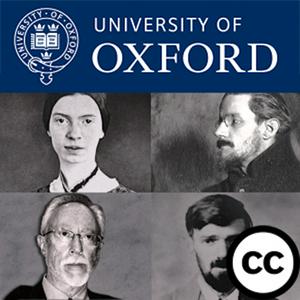
A series of interviews with academic experts on a number of great writers. Part of the Great Writers Inspire project.
Podcast websiteListen to Interviews on Great Writers, All Ears English Podcast and many other podcasts from around the world with the radio.net app
Get the free radio.net app
- Stations and podcasts to bookmark
- Stream via Wi-Fi or Bluetooth
- Supports Carplay & Android Auto
- Many other app features
Get the free radio.net app
- Stations and podcasts to bookmark
- Stream via Wi-Fi or Bluetooth
- Supports Carplay & Android Auto
- Many other app features

Interviews on Great Writers
Scan code,
download the app,
start listening.
download the app,
start listening.
Interviews on Great Writers: Podcasts in Family
 Ireland

